Tag Archives: Dante

I Could Not Keep Your Hands in My Own: Two Poems from Osip Mandelstam’s Tristia

The Building of the Trojan Horse. Giovanni Domenico Tiepolo. 1760. National Gallery, London

What do Ovid, Dante and Mandelstam all have in common? All three men were exiled from their homes for political reasons and infuse their poetry with the sadness, pain and loneliness of that separation. I was reading Mandelstam’s essay on Dante in the NYRB edition of his Selected Poems when I decided to linger on his Tristia verses which are included in the collection. Tristia is the name that Ovid gives to his collection of writings that are composed Ex Ponto, in the Black Sea region to which place the Emperor Augustus condemned him to live out his remaining years. I have always found it extremely difficult to translate Ovid’s Tristia; gone is the vigorous, lively poet we know of from the Amores and the Metamorphoses and in his place we encounter a melancholy man desperately longing to see his home, his family and his friends once again.

Tristia, literally meaning “sad things, sorrows, lamentations” is a fitting title for Mandelstam’s collection which he wrote in self-imposed exile while in the Crimea in the early 1920’s. The dire and desperate personal consequences of war and revolution drove him to this region of Russia which was more isolated from civil war. His time away from the north inspired him to produce these poems that are filled with images of separation, loss, darkness and exile. It is chilling that the poems also serve as a glimpse into the poet’s future which will include arrest, torture, and forced exiles to the Urals and Voronezh. He must have known, deep down in his soul, that his first, temporary, voluntary exile was a harbinger of tribulations to come in later years.

The first poem I share is numbered 116, and is filled with images of bees and honey. I see allusions to both Vergil and Tolstoy for whom the workings of a beehive are metaphors for the life and activity of humans working as a group. (I’ve written about this in more detail here.) Aeneas (an exile) encounters Dido (also an exile) and her fellow citizens building Carthage—they are as busy and industrious as an active beehive. Lucretius metaphorically uses honey to sweeten the rim of a cup of medicine from which his readers drink in his didactic poetry. And Tolstoy inverts Vergil’s beehive metaphor to describe the dying and deserted Moscow as Napoleon’s troops are marching on the city and destroying it. Mandelstam’s poem, I think, incorporates aspects of both Vergil, Tolstoy and even Lucretius—he reminds us of the energy of a beehive and the sweetness of its honey, but laments the death of such an active, supportive community:

Take from my palms, to sooth your heart,
a little honey, a little sun,
in obedience to Persephone’s bees.

You can’t untie a boat that was never moored
nor hear a shadow in its furs,
nor move through thick life without fear.

For us, all that’s left is kisses
tattered as the little bees
that die when they leave the hive.

Deep in the transparent night they’re still humming,
at home in the dark wood on the mountain,
in the mint and lungwort and the past.

But lay to your heart my rough gift,
this lovely dry necklace of dead bees
that once made a sun out of honey.

The line that keeps haunting me is “You can’t untie a boat that was never moored.”

The second poem I wish to share is numbered 119, also from the Tristia selections. I was naturally drawn to it because of the classical references and, in particular, I see allusions to Vergil Aeneid 2 in this poem:

I could not keep your hands in my own,
I failed the salt tender lips
so I must wait now for dawn in the timbered Acropolis.
How I loathe the ageing stockades and their tears.

The Achaeans are constructing the horse in the dark,
hacking out the sides with their dented saws,
Nothing quiets the blood’s dry fever, and for you
there is no designation, no sound , no modelled likeness.

How did I dare to think you might come back?
Why did I tear myself from you before it was time?
The dark has not faded yet, nor the cock crowed,
nor the hot axe bitten wood.

Resin has seeped from the stockade like transparent tears
and the town is conscious of its own wooden ribs,
but blood has rushed to the stairs and started climbing
and in dreams three times men have seen the seductive image.

Where is Troy, the beloved? The royal, the queenly roof.
Priam’s high bird house will be hurled down
while arrows rattle like dry rain
and grow from the ground like shoots of a hazel.

The pin-prick of the last star vanishes without pain,
morning will tap at the shutter, a gray swallow,
and the slow day, like an ox that wakes on straw,
will lumber out from its long sleep to cross the rough haycocks.

The penultimate stanza brings to mind the scenes in Aeneid 2 where Aeneas is making his way through the ruined city of Troy and witnesses the destruction of the palace and the death of King Priam. All this will result in the long exile of Aeneas—dawn and a new day will bring a completely different reality for the hero and his lost city.

This poem is especially reminiscent of Ovid’s first book of his Tristia which touches on his very personal losses suffered because of exile. He grieves over the distances that now separate himself and his friends, family and his wife. In Mandelstam’s poem the personal becomes that hand which he is not able to hold on to, and that haunting question, “How did I dare to think that you might come back?” The poem describes not just exile, but any personal loss—death, separation, estrangement—that results in grief.

11 Comments

Filed under Classics, Osip Mandelstam, Poetry

A Sense of Expectation and Agonizing Impatience: Some Thoughts on Dante’s Purgatory

Aeneas and the Shade of Creusa. Giuseppe Maria Mitelli. 1663. Engraving

Osip Mandelstam’s essay on the Divine Comedy, “Conversation about Dante” is a magnificent work of art in and of itself.  The Russian poet uses the most sublime language to describe the complexities of Dante’s poetic speech,  rhythm and structure; he compares various parts of the Divine Comedy to the intricate workings of a beehive, the elaborate geological structure of granite and marble, and the rich timbre of a cello:

Dante’s cantos are scores for a special chemical orchestra in which, for the external ear, the most easily discernible comparisons are those identical with the outbursts, and the solo roles, that is, the arias and ariosos, are varieties of self-confessions, self-flagellations, or autobiographies, sometimes brief and compact, sometimes lapidary, like a tombstone inscription: sometimes extended like a testimonial from a medieval university; sometimes powerfully developed, articulated and reaching a dramatic operatic maturity, for example, Francesca’s famous cantilena.

The density of the cello timbre is best suited to convey a sense of expectation and of agonizing impatience.  There exists no power on earth which could hasten the movement of honey flowing from a tilted glass jar.  Therefore the cello would come about and be given form only when the European analysis of time had made sufficient progress, when the thoughtless sundial had been transcended and the one-time observer of the shade stick moving across Roman numerals on the sand had been transformed into a passionate participant of a differential torture and into a martyr of the infinitesimal.  A cello delays sound, hurry how it may.  Ask Brahms—he knows it.  Ask Dante—he has heard it.

Mandelstam uses Inferno, Canto XXXIII and the description of the death of Ugolino and his sons by starvation at the hands of Archbishop Ruggieri of Pisa to prove his point about music and the cello.  But the scene in Purgatory, Canto II, of Dante’s attempted embrace of his beloved friend Cascella is, to me, equally “encased in a cello timbre, dense and heavy…”: (trans. Robin Kirkpatrick)

And one drew forward now, I saw to me
to take me in his arms with such great warmth
it moved me, so I did the same to him.
Ah shadows, empty save in how they look!
Three times I locked my hands behind his back
As many times I came back to my breast.
Wonder, I think was painted over me.
At which the shadow smiled, and so drew back,
while I, pursuing him, pressed further on.

Any good commentary will explain that these lines are an allusion to Aeneid 6 where Aeneas has traveled to the Underworld and sees and tries to embrace the spirit of his beloved father, Anchises: (All translations of Latin and Ancient Greek are my own)

Aeneas speaks to his father: “You, oh father, and the sad image of your spirit appearing to me so often are what drove me to seek out these thresholds. My ships wait on the Tyrrhenian sea. Allow me to grasp your hand, father, allow me father, and do not shrink away from my embrace. Speaking thus his face was soaked with large tears. Three times he tries to embrace his father’s neck with his arms; but three times the shade, grasped in vain, escapes his hands, similar to light winds or a winged dream.

As I was reading this Canto, however, what came to my mind, before the scene with Anchises, was a similar encounter earlier in the Aeneid between Aeneas and his lost wife Creusa in Book 2.  For me this double allusion increases the pathos of the futile attempts at embrace that occur in the Roman underworld and in Dante’s Purgatory.  As he is trying to escape Troy that is burning down around him, Aeneas loses his wife and tries to go back to the city to save her.  But he only finds Creusa’s spirit whose parting words to him are to continue loving their son and as a final gesture Aeneas tries to embrace her.  The lines in Latin are exactly the same as those in Aeneid 6:  “Three times he tries to embrace his wife’s neck with his arms; but three times the shade, grasped in vain, escaped his hands, similar to light winds or a winged dream.  The additional knowledge of the exchange between Aeneas and Creusa (it’s a shame that most commentaries don’t mention it)  makes a greater emotional impact when reading Dante’s reunion with Cascella and creates what Mandelstam describes as “a sense of expectation and agonizing impatience.”

The volucri somno—winged dream—is specifically Homeric and is Vergil’s allusion to Odysseus’s encounter with his mother in the underworld of the Odyssey.  Mandelstam’s concept of that delay of sound as applied to the Divine Comedy seems especially appropriate for these images of shades that reach back to Homer.  Homer and Ancient Greek were not available to Dante so it is only later generations of readers of Purgatory that truly hear the echoes from Book 11 of the Odyssey as Odysseus describes his attempts to embrace his mother, Anticleia:

After she spoke to me I was anxiously wishing to embrace the soul of my mother.  Three times my soul stirred me to embrace her, and I approached her, but three times she escaped from my hands like a shadow or a dream.  And the pain in my heart became even sharper to me.

The number three is often used in Ancient epics but I have always found it particularly fitting for this trope—three embraces are the perfect amount before a person becomes fully and painfully aware of loss and grief.  Any fewer than three would lessen the agony of each of these scenes and any more would make them melodramatic and overwrought.   The first is a naïve attempt to reach out and touch the person that was, in life, so important; the second attempt highlights a sense of denial and disbelief of the loss; the third and final attempt and failure to embrace brings about the painful reality of a physical absence.  This seems like a fitting metaphor for the grief one experiences with death or with any other loss we go through in life.  Cue the heavy, slow music of the cello…

12 Comments

Filed under Classics, Italian Literature, Literature in Translation

To Reach the Opposite Side of the Shore: Dante’s Inferno

Dante’s Inferno Canto 3 lines 107-108, drawn by Gustave_Doré 1861-1865

Reading Eliot’s Daniel Deronda recently has inspired me to do a complete reread of Dante’s Divine Comedy which she brilliantly alludes to in her novel. It has been far too many years since I have looked at any part of that Italian masterpiece and I felt I ought to revisit it. I had three immediate, intense reactions to the first few Cantos of The Inferno, in Robert Kirkpatick’s translation, which I will share here. There is nothing new or earthshattering in my thoughts, these are simply my gut, instinct reactions to a text which I have come back to after many years.

First—how can I even put this–*Vergil. Yes, Vergil. I knew he was lurking everywhere in The Inferno but when I was younger and less experienced in translating The Aeneid I had no real appreciation for Dante’s reworking of and allusions to that Roman poet and his Epic. As I was slowly making my way through the Cantos, I kept thinking that—and I truly do not mean to offend with this statement—it is just not possible to have a deep appreciation for Dante without reading The Aeneid, or at least reading Books 1, 4 and especially 6 of The Aeneid. I highly recommend the Fagles, Fitzgerald or Ferry translations; or better yet, find a friend, neighbor, colleague, long lost family member or a lover who knows Latin and make them translate it for you from the original. Trust me—it will enhance your admiration for and understanding of the Divine Comedy like nothing else.

Secondly, as Vergil is showing Dante around the place before they get to the circles of Hell proper, they come upon a kind of limbo in which all of the important ancient authors dwell. This is Vergil’s own resting place (if you can call it that) and Dante specifically points out four other names he thinks are worthy of Vergil’s company: Homer, Horace, Ovid and Lucan. Yes, Lucan! I think that when I read The Inferno for the first time that I had no idea who Lucan was. But now that I am older and more experienced (certainly not wiser, just more experienced) his named jumped out at me and gave me such joy to see. Anyone who knows me well knows that I have a serious soft spot for Silver Age writing, especially Seneca and Lucan. I don’t think it’s necessary to read Lucan’s De Bello Civile to understand Dante’s references to this Roman epic, but I encourage you to read this masterpiece anyway. Dante has inspired me to pick up my Latin texts of Lucan and translate my favorite sections once again. More on Lucan in another post…

Finally, I was moved by Dante’s reworking of one of my favorite passages in Aeneid Book 6. When souls are lined up on the shores of the Styx, waiting for Charon to take them to their final resting place, Vergil describes them as a countless mob, desperate to reach the other side of the river where either the Elysian fields or Tartarus awaits them (3.305-312-translation is my own):

Here this entire, sprawling mob was rushing to the riverbanks—mothers and men and the bodies of great heroes devoid of any life, boys and unmarried girls, and young men placed on the funeral pyre before the very eyes of their parents: the number of souls standing there can be compared to the vast number of leaves in a forest, sliding from their places during the first frost of autumn, that fall to the ground; or to the many flocks of birds that are gathered on the land from the deep ocean, when the cold part of the season drives them across the sea and sends them to warmer climates. These souls stand there praying to be the first to make the crossing and stretching out their hands in great desire to reach the opposite side of the shore.

In Vergil’s underworld, however, an incalculable number of these souls will not be allowed to make the journey across the Styx and are doomed to roam about in a type of limbo; those whose bodies were never properly buried and any person that has committed suicide must tragically accept this fate of nothingness. Dante applies Vergil’s metaphor to his version of Hell in Canto 3 as Charon, too, is waiting to bring across a vast number of souls onto his raft to cross a black swamp. What I found chilling and brilliant and fascinating about Dante’s version is that these souls will all make it across, eventually, but this immense number of spirits are waiting to gain their entrance into The Inferno; this is not limbo, this is not a state of nothingness, this is a place where countless souls are waiting to enter into a state of pain, and suffering, pure Hell (106-118):

And then they came together all as one,
wailing aloud along the evil margin
that waits for all who have no fear of God.
Charon, the demon, with his coal-hot eyes,
glared what he meant to do. He swept all in.
He struck at any dawdler with his oar.
In autumn, leaves are lifted, one by one,
away until the branch looks down and sees
its tatters all arrayed upon the ground.
In that same way did Adam’s evil seed
hurtle, in sequence, from the river rim,
as bird’s that answer to their handler’s call.
They off they went, to cross the darkened flood.

I will conclude with a quote by George Steiner who says in his book Real Presences about the tradition of these epic masterpieces: “Virgil reads, guides our reading of, Homer as no external critic can. The Divine Comedy is a reading of The Aeneid, technically and spiritually ‘at home’, ‘authorized’ in the several and interactive senses of that word, as no extrinsic commentary by one who is himself not a poet can be.” Nothing has enhanced my reading of and awe for Vergil more, in recent memory anyway, than making my way slowly through the Divine Comedy.

*The Roman poet’s full name is Publius Vergilius Maro, so this name in English his name becomes Vergil. Gilbert Highet in The Classical Tradition, discusses the popularly of the misspelling, Virgil, which began early, possibly as the result of Vergil’s nickname Parthenias which was based on the poet’s sexual restraint. In the Middle Ages, the name Virgil was thought to refer to his magical (as in the virga magic wand) powers. For whatever reason, Virgil seems to be the popular way of spelling his name even today but I only use the original spelling of Vergil. I put this note here to stop anyone from correcting me on the spelling of his name which irks me to no end. I mean, come on. How can a classicist be accused of misspelling the name of one of antiquity’s most important authors! (It’s happened more times than I care to discuss.)

14 Comments

Filed under Classics, Italian Literature

Chinoiserie and Invidia: My Unwritten Books by George Steiner

Each of the seven chapters in this book is an essay about a book that George Steiner did not write.  The first two chapters, “Chinoiserie” and “Invidia” are dedicated to Joseph Needham and Cecco d’Ascoli, authors whose works were just too large of a scope for Steiner to tackle.  But, in usual Steiner fashion, he uses the writings of Needham and d’Ascoli as a starting point to explore other ideas.  At times the level of erudition in his essays is astounding.
Joseph Needham (1900-1995) was a British scientist, historian and sinologist whose body of writing, even to someone as erudite as George Steiner, is overwhelming:

So far as I am aware, there is no definitive bibliography of Needham’s opera omnia.  The catalogue of lectures, articles, monographs and books extends well beyond three hundred.  Their range is awesome.  It comprises technical publications in biochemistry, in biology and comparative morphology, in crystallography by one of the ranking members of the Royal Society.  There are voluminous studies, both monographic and summarizing, on the history of the natural sciences, theoretical and applied, on instrumentation and technology, from antiquity to present.

In addition, Needham published historical novels that dealt with the Cromwellian period.  And Needham’s largest work, begun in 1937 and carried on until his death in 1995,  is Science and Civilization in China.  Steiner discusses and tries to grapple with Needham’s difficult-to-categorize, massive work on Chinese science and culture:

By 1948, Needham had outlined seven volumes.  These were to range from Chinese contributions to physics and mechanical engineering all the way to Chinese medical botany, navigation and physiological alchemy.  Before long, the proposals for SCC, as it became known internationally, ran to ten monumental parts (some in double volumes).  Soon even this manifold blueprint was overtaken by the plethora of new materials and queries.  The eighteen volumes which Needham intended to write himself—several installments being simultaneously in the pipeline—would require an estimated sixty years of unbroken labor plus the immense task of preliminary research and bibliography.  Literally hundreds of sources, many recondite and difficult to locate, would have to be combed.

Needham would have had to live to the age of one-hundred and seven to finish SCC according to this schedule.  It is said that he worked on it up until two days before his death at the ripe, old age of ninety-four.  Steiner compares the literary style and scope of the SCC to a number of authors whose work is equally as erudite, comprehensive and voluminous as Needham’s magnum opus.  Pieces of A.E. Housman’s body of work, Nabokov’s four volume translation and commentary of Eugene Onegin, Proust’s Recherché and Burton’s The Anatomy of Melancholy  are all discussed in relation to the SCC.  But none of these other narratives in their entirety, however, is exactly like the SCC.  Steiner concludes, “SCC, however, belongs to a more special genre.  One that has not, so far as I can tell, been properly identified, let alone elucidated.”  It is no wonder why this project defeated Steiner.

The other author whose writing that Steiner felt was too daunting a task to analyze is Francesco degli Stabili (Cecco d’Ascoli) (1257-1327).  The only pieces of d’Ascoli’s writing that has survived is an incomplete epic entitled l’Acerba, two astrological treaties, and a handful of sonnets.  Steiner says of d’Ascoli’s literary reputation: “During the sixteenth century, the theme which surfaces is that of Cecco’s intellectual boldness, of an unyielding proto-scientific integrity which makes of him a true predecessor to Giordano Bruno and Galileo.” In later centuries De Sanctis, Carducci, Petrarch and Goethe all praise Cecco’s intellectual and literary merits.  So why, then, was Cecco burned at the stake along with all of his writings in 1327 and why has he not obtained the same level of fame as Dante, his literary contemporary?

Steiner speculates that invidia (envy) was at the core of Cecco’s failures and he uses Cecco’s life as a starting point for a fascinating discussion of invidia as it has been portrayed in mythology and literature.  Steiner argues that Cecco’s fate, when matched up against Dante’s, was doomed from the start:

What is it like to be an epic poet with philosophic aspirations when Dante, as it were, in the neighborhood?  To be a contemporary playwright when Shakespeare is out to lunch?  ‘How can I be if another is’ asks Goethe.  Outside my door at the Institute for Advanced study in Princeton I heard J. Robert Oppenheimer fling at a junior physicist the demand, ‘You are so young and already have done so little.’ After which, the logical option is suicide.  Themes of rivalry, of jealousy, of envy have been perennially cited and dramatized.  They are as ancient as Saul’s rage of David’s meteoric ascent and the venomous derisions spat out by Homer’s Thersites.

Steiner ends his essay on Cecco’s life and the theme of invidia on a personal note and gives us the reason for not writing this book: “I did not write the study of Cecco d’Ascoli.  It might have been of some interest.  But it came too near the bone.”

I’ve only highlighted the first two essays in this collection; Steiner’s level of knowledge and scholarship is astounding.  My favorite passages are those in which he inserts personal anecdotes.  His chapter on sex, eros, and language are intriguing, to say the least.  I have to gather my thoughts first and process his writing if I am going to write about that chapter…


Leave a comment

Filed under British Literature, Essay, Nonfiction

My Pilgrimage from Dante to Catullus to Sappho

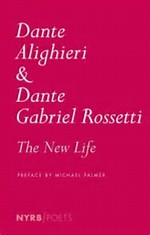
The fifth chapter of Dorothy Richardson’s Pilgrimage  describes Miriam attending a Dante lecture. As I was reading  Interim I remembered that I had bought a copy of Vita Nuova translated by Dante Gabriel Rossetti that was reissued by the NYRB poets series in 2011.  And from Dante I was led to Catullus and then to Sappho.  I am sure that entire dissertations have been written about this topic, but here are my scattered thoughts anyway.

When reading Dante’s Vita Nuova, a comparison between the Italian poet and Catullus immediately comes to mind.  Some of the similarities are so basic and superficial that they can be considered coincidences.  Both poets, for instance, humbly call their collections a “little book” (libello in Italian and libellus in Latin.)  The poetry of both men is deeply personal and autobiographical, although specific details such as dates for events are difficult to glean from their writings.   The Italian and the Roman, both of whom were upper class, wealthy citizens, each fall in love with a woman that is inaccessible and married to another man—Beatrice is for Dante what Clodia (Lesbia) is for Catullus.  And finally, both men are the novi poetae of their respective generations, breaking free from the traditional conventions of their craft (Catullus rejects epic in favor of short, personal poetry; Dante writes in Italian instead of Latin.)

Beginning from the age of nine, Dante writes about each of his encounters with his beloved Beatrice.  On one such occasion, a gathering to celebrate a wedding (some believe it is Beatrice’s own wedding), he sees her with a group of other young women and he is struck dumb by the sight of her.  The loss of all of his senses  is described in a sonnet that was written about this chance meeting with her:

Even as the others mock, thou mockest me;
Not dreaming, noble lady, whence it is
That I am taken with strange semblances,
Seeing thy face which is so fair to see:
For else, compassion would not suffer thee
To grieve my heart with such harsh scoffs as these.
Lo! Love, when thou art present, sits at ease,
And bears his mastership so mightily,
That all my troubled senses he thrusts out,
Sorely tormenting some, and slaying some,
Till none but he is left and has free range
To gaze on thee. This makes my face to change
Into another’s; while I stand all dumb,
And hear my senses clamour in their rout.

The last five lines are similar enough to Catullus Poem #51 to suspect a case of intertextuality. Many scholars have speculated that this poem captures Catullus’ first encounter with Clodia who is sitting with another man at a party while the poet looks on (translation is my own):

This situation steals away all of my senses,
I who am so wretched; For as soon as I looked at you, Lesbia,
nothing else exists for me. But my tongue swells up,
a thin flame simmers beneath my limbs,
my ears are ringing, and darkness covers
both of my eyes.

Catullus 51 is the Roman poet’s translation of Sappho #31 in which poem she is similarly frozen while beholding her lover. Some scholars have speculated that Sappho sees the object of her desire at a wedding, which is an interesting parallel with the setting of Dante’s sonnet (translation is my own):

When I look at you, even for a short time,
I am no longer able to speak.

But my tongue breaks,
and at once a small fire assails me under my skin
my eyes do not see and my ears are ringing.

I am contemplating another reread of Dante’s Divine Comedy and I have Dorothy Richardson to thank for rekindling my interest in the Italian poet and bringing me back to some of my favorite poems from Catullus and Sappho.

For the extra curious here are links to the original languages: Catullus, Sappho, Dante

And here is an abstract of an excellent article about Dante’s influence in Pilgrimage: https://www.research.manchester.ac.uk/portal/en/publications/dantes-pilgrimage-in-dorothy-richardson(6bff1f93-85f3-4b23-99a1-05ddfef79ef4).html

4 Comments

Filed under Classics, Italian Literature, New York Review of Books Poetry, Poetry