Category Archives: Classics

Rage—Sing Goddess: Some initial thoughts on Logue’s War Music

war-music

Homer’s Iliad begins: μῆνιν ἄειδε θεὰ Πηληϊάδεω Ἀχιλῆος and the best translation I have ever seen of these first words of the epic is from Robert Fagles: “Rage—Goddess, sing the rage of Peleus’ son Achilles…”

I was disappointed, at first, how Logue chose to begin War Music, his modern reimaging of the Iliad.   As a classicist I naturally expected some version of the first line of the Iliad. The Fagles translation is my favorite because he just nails the translation of Homer’s first line—he puts “wrath” first, which is what Homer very deliberately does in the Ancient Greek. And every ancient epic after that in the tradition of the Iliad follows suit and puts the most important word, the word that sets the tone for the entire poem, as the very first word. So not to see this line at all was a bit startling. But,  I was immediately drawn in and excited by the exchange between Achilles and his mother. Logue manages to bring Achilles extreme form of rage to the forefront in just a few words. I quickly realized that Logue captures the spirit, the essence and the central concepts of Homer’s war poem and he does it with his own unique poetic style that, at times, is quite startling.

In the opening dialogue with his mother, Achilles is telling Thetis about the quarrel he has had with King Agamemnon. When his mother interrupts him we get the first small glimpse of his anger with a short, abrupt dialogue that is typical of Logue’s style:

Will you hear me or not?
Dear Child…
Then do not interrupt.

And when Achilles and Agamemnon almost come to blows:

Achilles’ face
Is like a chalkpit fringed with roaring wheat
His brain says: Kill him. Let the Greeks sail home
His thigh steels flex.

And when Achilles asks his mother to help destroy his own Greeks:

Let the Greeks die.
Let them taste pain.’
Remained his prayer
And he for whom
Fighting was breath, was bread,
Remained beside his ships
And hurt his honour as he nursed his wrong.

Xenia is an important part of the mores of the ancient Greeks during the Bronze Age and the main conflict in the epic poem is caused because of a violation of this custom.  Xenia is translated as “guest-friendship” or “hospitality” and it covers three important circumstances.  First, if a person welcomes a guest into his home the expectation is that the host provides a warm place to sleep, good food, a bath, wine and entertainment.  In the Odyssey, Polyphemus perpetrates a horrible violation of this aspect of xenia when, instead of feeding Odysseus and his men, he eats some of his guests.

The next area that xenia covers is the mutual respect due to a host when one is a guest in another man’s home.  A house guest is expected to be polite, grateful and provide a gift to the host.  There is also a violation of this concept of xenia in the Odyssey when the suitors  have placed a burden on Telemachus and Penelope by overstaying their welcome, eating all of their food and being rude to their hosts.  The suitors are the ultimate bad house guests.

The conflict that is central to the plot of the Iliad also begins with a violation of xenia by Paris who was a guest in Menelaus’s home and stole something very important, Menelaus’s wife.  Instead of providing Menelaus with a gift, he takes something from his host that does not belong to him. Logue eloquently and simply writes: “Troy harbours thieves.” Menelaus, his warmongering brother Agamemnon and the rest of the Greeks are attempting to scale the walls of Troy to get Helen back, or so it seems.  They each have very different motives for being at Troy, which I will discuss a little later.

The final aspect that is associated with the concept of xenia is that of respect towards a suppliant.   If a Greek is approached by another man as a suppliant, begging for a favor and offering rich gifts in return for that favor, a Greek must be respectful and capitulate.  Logue, in two short pages, has a powerful and succinct description of Agamemnon’s violation of this aspect of xenia.  Cryzia, the Priest of Apollo, approaches Agamemnon as a suppliant and offers a ransom to get back his daughter whom Agamemnon has taken as his prize:

Two shipholds of amphorae filled with Lycian wine,
A line of Turkey mules,
2,000 sheepskins, cured, cut, and sewn,
To have his daughter back.

Agamemnon not only refuses Cryzia’s request as a suppliant but he also insults and threatens him:

If, priest, if
When I complete the things I am about to say
I catch you loitering around our Fleet
Ever again, I shall with you in one,
And in my other hand your mumbo rod,
Thrash you until your eyeballs shoot.

Logue’s style is fast-paced, poetic, graphic, and shocking. In just a few words he presents the spirit of xenia through the pleading words of the Priest and the enormity of the gift he is offering. And with Agamemnon’s violent and startling retort, he lays out the enormity of the violation of xenia by this arrogant and self-centered king.  One example of Logue’s writing genius is his handling of Agamemnon’s character with a focus on Agamemnon’s mouth. “Mouth, King Mouth,” Achilles shouts to Agamemnon when they are fighting over Agamemnon’s unacceptable and dangerous behavior.  The king listens to no one, he is brash, and he is all mouth. By contrast Nestor says about Achilles: “Your voice is honey and your words are winged.”

There is one final to mention about Logue’s first chapter.  In the argument between Agamemnon and Achilles, Achilles brings up the oath that these men have taken about Helen when she is married to Menelaus.  The myth of Helen’s betrothal is a very specific piece of the Troy Saga and it struck me that it would be nearly impossible for a reader to understand Logue without being familiar with Homer as well as other parts of the Troy cycle.  In a conversation with Tom whose blog is  Wuthering Expectations, we both agreed that reading the Iliad first is a must before one begins to understand Logue on any level.  I am curious if anyone has tried to read Logue without first being familiar with Homer and the myths of Troy.

I have decided to cover Logue’s masterpiece over the course of several posts and talk about his brilliant rendering of more Homeric values in War Music. Why are these men really there? Could their sole motivation really be to recapture another man’s wife, despite any oath they might have? The answers lie in the Greek concept of kleos and arête. I am hoping that my posts will encourage readers to pick up both the Iliad and War Music.   Stay tuned…

12 Comments

Filed under British Literature, Classics, Historical Fiction, Literary Fiction

My Literary jouissance of 2016

This year has been a tough one for many reasons.  It is hard to believe that there could be a “best of” list for anything related to 2016 and I really wasn’t going to bother making a book list.  But Grant from 1st Reading  twisted my arm a bit and I was reminded that if there is one thing that kept me moving forward in 2016 it was the plethora of fantastic books I came across this year.

The French philosopher Jean-Luc Nancy, in his most recent book entitled Coming, explores the French word jouissance (pleasure) and the similarities between sexual pleasure and artistic pleasure.  Sexual jouissance and orgasm are irresistible desires for humans which we can never fully satisfy and thus we are constantly coming back and reaching for The Other.  Nancy argues that even when an artist produces a jouissance in his or her viewers, there is always a constantly renewed dissatisfaction that keeps the artist working again and again.  I would extend Nancy’s argument about renewed desire and satisfaction to include Bibliophiles such as myself who wallow in the aftermath of a great piece of literature.  We, as avid readers, are always attempting to renew that high, that euphoria, that bliss which slowly creeps up on us when we close the last page of a great book.  Some of us, after a good read, might even have the same expression on our faces as Caravaggio’s Ecstasy of Mary Magdalene which is depicted on the cover of Nancy’s book.  So the list of books below were the ones that brought me jouissance this year; or if I may be so bold as to say they were the standout books that caused me to experience a literary orgasm.

coming

Two Lines 25 is published by Two Lines Press and this 192-page volume contains fascinating literature translated from Bulgarian, Chinese, French, German, Hebrew, Japanese, Korean, Norwegian, Russian and Spanish.  What excited me most about this collection is that it introduced me to the philosophy and writings of Jean-Luc Nancy.

The writing of Jean-Luc Nancy is one of my favorite literary and philosophical discoveries this year.  I have read three of his books: Corpus, Listening and Coming.  His philosophy explores what it means to be human and he deals with subjects of touching, listening, desiring and loving.  My review of Coming will be out next month and I have so many thoughts about this slim volume that is only 168 pages.

Oblivion by Sergei Lebedev is a haunting reflection on what life was like for the author during the years of the Soviet Union.  Lebedev’s prose is dense and poetic and so thoughtful that I found myself rereading entire sections of the book multiple times.  I am very excited that Lebedev has another novel forthcoming from New Vessel Press entitled The Year of the Comet.

War Music by Christopher Logue is a book that I dismissed as soon as I saw it in the FS&G catalog because I don’t usually read any time of modern retellings of Ancient myths.  But Anthony at Times Flow Stemmed had such great things to say about it that I decided to give it a try and I am so glad that I did.  I have so many things to say just about the first 50 pages of this book that I am not sure how I am going to handle a review.  I am thinking of doing several short pieces on each section of Logue’s poem.  As far as retellings are concerned, I also discovered Christa Wolf based on his suggestion and I thoroughly enjoyed her Medea and Cassandra.

Seagull Books Catalog.  It’s unusual to find a catalog on a best of list, but the one that Seagull publishes each year is very special.  It includes writing from authors, translators and even bloggers from all over the world.  This year I was invited to contribute to the catalog and some of my favorite literary bloggers also have pieces in the catalog.  Selections from Roughghosts, Times Flow Stemmed,   Tony’s Reading List and of shoes ‘n ships can all be found in this fabulous collection of art and literature.

The Brother by Rein Raud is a fast-paced, hard-hitting, short book that uses the plot structure of a western as an allegory for demonstrating the balance of good and evil in the world. It my favorite title from Open Letters this year whose books are fantastic.

The Noise of Time by Julian Barnes is a skillfully written and poetic novel which serves as a fictional biography of the Russian composer Dmitri Shostakovich. The ways in which he must navigate his life and his art around the Soviet regime are heartbreaking.

The Parable Book by Per Olov Enquist is a true literary book that reads like philosophy, meditation, autobiography and parable. Sometimes we are given a very specific story from the author’s life, other times we are given an unclear stream-of-consciousness narrative, and still at other times we encounter a list of questions that the author poses on an entire page of the book. Enquist gives us the totality of a life that includes pivotal childhood memories, a bout of alcoholism that nearly destroys him, and the reflection of his elderly days during which he is waiting by the river to be taken to the other side. For anyone who enjoys serious literary fiction this book is a must-read. So far the English translation has only been published in the U.K. I am hoping it will also be available here in the U.S. This is a book that I look forward to reading multiple times.

A Lady and Her Husband by Amber Reeves from Persephone Books is a charming and entertaining look into the life of a middle-aged British couple that has been married for twenty-seven years. This book was written in 1914 so it brings up many political and social issues that were relevant at the turn of the last century and which continue to be discussed into the 21st Century. Debates that have taken place during the recent elections in the U.S. have reminded us that women are still paid less than their male counterparts, the minimum wage for workers continues to be too low, and millions of Americans still do not have access to proper healthcare.

Berlin-Hamlet: Poems by Szilárd Borbély is my favorite collection of poetry this year published by NYRB Poetry.  The layers of imagery, references and allusions to great figures like Kafka, Walter Benjamin, Attila József and Erno Szép are stunning. I find it so sad and tragic that the author succumbed to his deep sense of sadness and took his own life.

American Philosophy: A Love Story by John Kaag is another work of non-fiction that was one of my favorites this year.  Kaag’s journey from Hell to Redemption in his own personal life via the 10,000 books in Ernest Hocking’s personal library gave me an entirely new appreciation for American philosophers. Kaag also reminds us of the amazing resiliency of the human spirit and that no matter what we might suffer we must keep moving forward.


20 Comments

Filed under British Literature, Classics, Favorites, Literary Fiction, Literature in Translation, New York Review of Books Poetry, Nonfiction, Persephone Books, Philosophy, Poetry, Russian Literature, Seagull Books

A Rite of Passage: My Review of Samskara by U.R Ananthamurthy

samskara_1024x1024The word Samskara or Sanskara is from Sanskrit and is a central concept to many of the ideas embodied in Hinduism.  There are several definitions for this word including: “A rite of passage or life cycle ceremony”, “forming well, making perfect”, “the realizing of past perceptions”, and “preparation and making ready.”
Samskaras are also, in one context, the diverse rites of passage of a human being from conception to cremation, which mark specific events in an individual’s journey of life in Hinduism.  In U.R. Anathamurthy’s novel, Samskara specifically refers to “a rite for a dead man” and it is this compulsory rite which is given to Brahmins at their passing that becomes the central controversy of this book.  When the story begins, a Brahmin community is presented with the dilemma of deciding who will perform the samskara for one of the members of their community who had become a heretic.  The leader of this orthodox Brahmin community (agrahara), Praneshacharya, has to decide what to do with the body of his fellow Brahmin who drank, ate meat, fished in sacred waters and, worst of all, was living with a sensual, lower caste woman.

Praneschacharya has adopted an extreme form of asceticism by living with a sickly, invalid wife and having a sexless marriage.  He cares for and baths his wife on a daily basis and views the denial of his physical needs as a form of penance that will garner him blessings in this life and the next.  But when Praneschacharya has his first sexual encounter, a whole new world of pleasure causes him to question his orthodox beliefs.  As he tries to make the best decision about the heretic’s burial and comes to grips with his crisis of faith, it is Praneshacharya who has his own samskara or rite of passage in his life.

Read my full review of this classic piece of Indian literature on Asymptote.


3 Comments

Filed under Classics, Literature in Translation, New York Review of Books

Beauty and Love: My Bookstore Adventure in Maine

maine-books-2
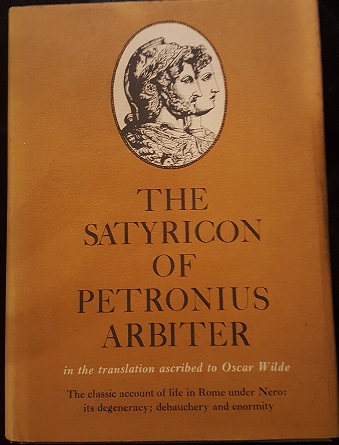
I had the chance to spend some time vacationing in Maine over the Thanksgiving Holiday.  Like any truly dedicated bibliophile, I seek out used bookstores wherever I go and Maine has some great selections.  I browed a rather large one in Wells which not only has rooms and rooms full of books but also has a rather large selection of maps.  I came home with an interesting mix of books, the first of which is a copy of Petronius’s  Satyricon.  Now why would a classicist need another translation of Petronius’s bawdy novel, you might ask.  This copy that I found was published in 1931 and is the translation attributed to Oscar Wilde.  It is attributed to Wilde but no one is quite sure if he actually did the translation himself or if he translated it from the original Latin text.  There are large parts of the translation that were borrowed from three previous translations.  In addition, the original copies of the book were published without naming the translator on the title page but instead the publisher sent out each copy with a slip indicating that the translator was Sebastian Melmoth, Wilde’s pseudonym.  For more information on this interesting literary hoax, here is a link to an excerpt of an article that was written about this translation: https://muse.jhu.edu/article/373513/pdf

wilde-satyricon

The next book I found as I wandered the many rooms of this bookstore was a copy of Thackeray’s Ballads published in 1856.  He is, of course, most famous for his longer work Vanity Fair and it was nice to discover that he had written this short volume of Ballads.  It’s interesting that this author who was known for his satirical works also wrote love poems and some short narrative poems.  The particular bookshop seems to have many editions of very old books.  This particular book of Thackeray’s Ballads is not valuable and I only paid $7.50 for it, but it is now one of the oldest books I have on my shelves.

ballads-2

ballad-inscription

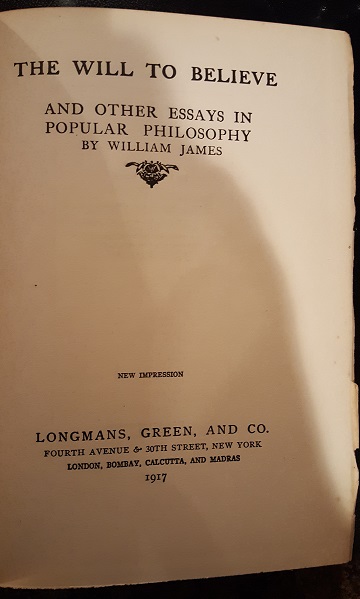
Next, I was specifically looking for a copy of anything I could find by William James, the American pragmatist philosopher.  I recently read American Philosophy by John Kaag and his discovery of a long-forgotten library with over 10,000 books, some of which beloved to James, renewed my interest in American philosophy.  I was surprised when the bookstore clerk said that books by American philosophers are very popular and I was lucky to find this copy of James’s essays published by Longmans, Green, and Co. in 1917.  This collection of essays includes some of his most famous such as “Is Life Worth Living” which was delivered at Harvard’s Holden Chapel in 1985.

james-book

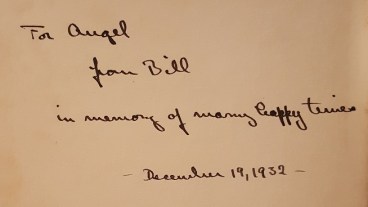
The final book that I found is my favorite of the collection.  At the entrance to the bookshop there is a huge table with stacks of books on the table and around the table that are the shop’s most recent arrivals that haven’t been categorized yet.  I walked up to these piles, which are rather daunting, and plucked a slim volume of poetry off the top.  The author of the book is William Dwight Crane and I noticed that there is a handwritten inscription inside the book that reads, “For Angel, From Bill in memory of many happy times.  December 19, 1932.”  The book is also signed by the author.  I researched the author’s name on the Internet and could find no biographical information on him or titles of other books that he wrote.  This lonely, slim volume might have been sitting on a pile in that bookshop all but forgotten for years.  I am happy to give it a new home with my other books will it will be used and read from time to time.

crane-1

crane-2

crane-3

The poems are a bit simple, but they are clearly from the heart and there is something about their simplicity that captivated me.  I will share one such poem entitled “Beauty and Love” from the collection:

Beauty is the soul of man’s desire
A blessed synthesis of pity, joy, and pain
Burned from out the centre of that fire
Of Passion which else were but a stain
Upon our shields, a funeral pyre
On which in each succeeding age have lain
The ashes of the deeds to which men’s hearts aspire,
Only to rise on phoenix-wings to urge men on again,
Beauty of form, and subtle harmony of line,
Beauty of thought and faery fantasy,
Beauty of deed, which makes the thought divine
Compose this substance born of ecstasy,
We need but fashion it with gentile hands,
And, lo! the image Love before us stands.

My daughter, who also inherited the reading gene, found some books to add to her own growing collection, including one about the ocean.  True bibliophiles know that used bookstores can be such great places of adventure and discovery.  What are your favorite bookshop finds?

14 Comments

Filed under British Literature, Classics, Opinion Posts, Poetry

Review: Twenty-Four Hours in the Life of a Woman by Stefan Zweig

I received a review copy of this title from Pushkin Press via Netgalley.  This novella was published in the original German in 1925 and this English version has been translated by Anthea Bell.

My Review:
twenty-four-hoursStefan Zweig is a master at writing short stories that are full of descriptive details, interesting characters and surprise plot twists.  It is truly amazing that he manages to do this all within the span of 100 pages.  The setting of this short piece is a hotel on the French Riviera where a group of upper class citizens from various countries are vacationing.  A shocking social incident has occurred within their social circle and this scandal has all of the guests arguing and gossiping.
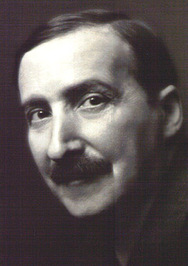
The narrator, who never gives us his name, is staying on the Riveria and interacts with the other guests, incluing a German husband and wife, a “portly” Dane, an Italian married couple, and a distinguished and older English lady.  This group of strangers usually just engage in small talk and mild jokes while eating their meals, but the disappearance of Madame Henriette has disturbed their peaceful routine.  A young, handsome and garrulous Frenchman arrived at the hotel on the previous day and captivated everyone’s attention.  Zweig shows his skill at describing characters with just the right mix of adjectives and metaphors:

Indeed everything about him was soft, endearing, charming, but without any artifice or affectation.  At a distance he might at first remind you slightly of those pink wax dummies to be seen adopting dandified poses in the window displays of large fashion stores, walking-stick in hand and representing the ideal of male beauty, but closer inspection dispelled any impression of foppishness, for—most unusually—his charm was natural and innate, and seemed an inseparable part of him.

The shock comes when Madame Henriette, the wife of a wealthy businessman, disappears with the Frenchman after knowing him for only a couple of days.  All of the guests at the hotel are very quick to condemn and judge Henriette for throwing away her marriage, her children and her reputation.  The narrator is the only person who comes to Henriette’s defense and reminds the guests that it might have been possible that Henriette was caught in a “tedious, disappointing marriage” and thus had a valid reason for running off with a young man who was virtually a stranger.  This heated debate has a profound effect on Mrs. C, the distinguished English lady, who requests a private meeting with the narrator.

The story that Mrs. C. tells the narrator involves an incident in her life when she was forty-two, some twenty years earlier.  The incident had left her so embarrassed and mortified that she never told a word of it to another soul, until now.  Henriette’s impulsive decision to run away with the Frenchman has brought up old memories for Mrs. C. and she wants to unburden her soul from the guilt of her own folly.  Mrs. C. tells the narrator that, as a widow who lost her husband to an unexpected illness, she traveled around Europe while grieving for her beloved spouse.  Alone and miserable, she finds herself in Monte Carlo, one of her husband’s favorite places for entertainment, and meets a twenty-four-year old man with a serious gambling problem.

The events that unfold between Mrs. C. and the gambler bring up feelings of passion, anger, redemption, impulsivity and regret.  I don’t want to give away what happens between the widow and the young man, but I will say that Zweig has a gift for writing shocking and unexpected plot turns.  I never would have guessed the ending to Mrs. C’s story and I was riveted until the very last page of this short book.  Zweig shows us that he is an astute observer of human emotions; love, loneliness, passion and sexual desire can make us lose our minds and do irrational things which are completely out of character.

One final aspect of Zweig’s writing that must be mentioned is his careful attention to detail, even in a short work like this novella.  When Mrs. C. arrives at the casino, she describes the chiromancy—guessing a person’s moves by observing their hands— that her husband had taught her.  This English woman spent hours observing the players’ hands which are much more telling than facial expression.  Zweig writes about Mrs. C’s practice of chiromancy:

All those pale, moving, waiting hands around the green table, all emerging from the ever-different caverns of the players’ sleeves, each a beast of prey ready to leap, each varying in shape and colour, some bare, others laden with rings and clinking bracelets, some hairy like wild beasts, some damp and writhing like eels, but all of them tense, vibrating with a vast impatience.

Zweig’s description of the players via their hands is absolutely fascinating and absorbing and is another surprising gem found within the pages of this short piece.

November is German Lit. Month hosted by Lizzy’s Literary Life and Beauty is a Sleeping Cat.  The full list of reviews for this event can be found here: http://germanlitmonth.blogspot.co.uk/ and on Twitter #GermanLitMonth.

About the Author:
Stefan Zweig was one of the world’s most famous writers during the 1920s and 1930s, especially in the U.S., South America and Europe. He produced novels, plays, biographies and journalist pieces. Among his most famous works are Beware of Pity, Letter from and Unknown Woman and Mary, Queen of Scotland and the Isles. He and his second wife committed suicide in 1942.

Zweig studied in Austria, France, and Germany before settling in Salzburg in 1913. In 1934, driven into exile by the Nazis, he emigrated to England and then, in 1940, to Brazil by way of New York. Finding only growing loneliness and disillusionment in their new surroundings, he and his second wife committed suicide.

Zweig’s interest in psychology and the teachings of Sigmund Freud led to his most characteristic work, the subtle portrayal of character. Zweig’s essays include studies of Honoré de Balzac, Charles Dickens, and Fyodor Dostoyevsky (Drei Meister, 1920; Three Masters) and of Friedrich Hlderlin, Heinrich von Kleist, and Friedrich Nietzsche (Der Kampf mit dem Dmon, 1925; Master Builders). He achieved popularity with Sternstunden der Menschheit (1928; The Tide of Fortune), five historical portraits in miniature. He wrote full-scale, intuitive rather than objective, biographies of the French statesman Joseph Fouché (1929), Mary Stuart (1935), and others. His stories include those in Verwirrung der Gefhle (1925; Conflicts). He also wrote a psychological novel, Ungeduld des Herzens (1938; Beware of Pity), and translated works of Charles Baudelaire, Paul Verlaine, and mile Verhaeren.

Most recently, his works provided inspiration for the 2014 film ‘The Grand Budapest Hotel’

13 Comments

Filed under Classics, German Literature, Novella, Pushkin Press