Tag Archives: Seagull Books

Review: in field latin by Lutz Seiler translated by Alexander Booth

Lutz Seiler was born in the former East Germany in the Langenberg district of Gera, Thuringia.  He first had a career as a skilled construction worker as both a bricklayer and carpenter.  It was during his service in the National People’s Army that he first took an interest in poetry and literature. Since 1997 he has been the literary director and custodian at the Peter Huchel Museum in Wilhelmshorst.  He has won numerous awards for his writing including the Ingeborg Bachmann Prize for his short story volume Turksib.

in field latin, published by Seagull Books in 2016, is Seiler’s debut volume of poetry translated into English.  Divided into seven sections which include between one and eleven poems, this collection gives us an interesting glimpse into life in the former East Germany via lyrics that describe landscapes, personal reflections and ghosts.

The most striking images that Seiler weaves throughout this collection are those of nature; in the first poem, entitled “Departure” he invites us into his bucolic world:

bed against window, the trip
into the wood, ever more softly
shifting gears & sleep: every

dream begins uphill, at the fence
onto the street where
someone squats like you, where

the resinous poppy with its
capsules clings to your ears, where
above already blossom edges have

gone to grey…leaf
after leave put into place
& uncompleted sent away.

The short, startling lines in this first poem are typical for the entire collection where images of reality and dreams are mingled and blurred.  His poetry is both personal reflection but also captures the universal feeling of calm while walking in the woods in autumn.  In “autumn” he writes:

is silence & custom. autumn
is rake, wood, is a mild
chill upon the eyes &

unexpected gooseflesh.  is also
the good old ready-to-fight feeling, soft, secret, skull-still
designs maturing.  the leaves all burnt, sand

still warm beneath the ashes, you
feel it now upon your hand: something
wants to flee &something never leave…

The ghosts of the past, both personal and political, also pervade his poetry.  The phrase “all the wasted time” in the following poem entitled “the stay” in particular stood out to me as an interesting commentary on the collapse of the Iron Curtain and the reunification of his country:

one evening they came
the dead of my house
back from the train-station.  one

after the other, with
balled fists, reminiscent
of tulips in their

nigh-reserve, reminiscent,
in the long being-dead, of all
the wasted time.

In a poem entitled “culmitzsch” Seiler weaves together images of landscapes, ghosts and life in the former East Germany.  The translator includes some excellent and helpful notes in the back of this edition and for this poem he explains that Culmitzch was a village in the GDR whose inhabitants were forced to move in order to make room for one of that former country’s largest uranium mines.  Seiler’s poem about this abandoned place is chilling:

in the evening the sheep go rusty
over the wasted land, birds
as if snowed therein & darkened…

only under the rubble
the farmyards are still warm.  the spoons
there by the spoons, the polish
by the boots & that little door
to the boot-room which moves you
to tears…

As always, Seagull Books has brought into English translation a fascinating collection of poetry.  I had the opportunity to interview Alexander Booth, the translator of this collection which can be read here.

3 Comments

Filed under German Literature, Poetry, Seagull Books

My Reading List for Poetry Month

Since April is poetry month I thought I would share a few of the poetry collections that I intend to read and write about this month.

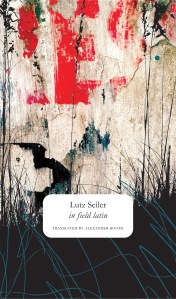
I have two poetry books from my favorite small press, Seagull Books.  The first is a collection entitled in field Latin by German author Lutz Seiler and translated by Alexander Booth.  Seiler grew up in the former East Germany and his poetry is full of images that deal with the borders and boundaries of landscapes.

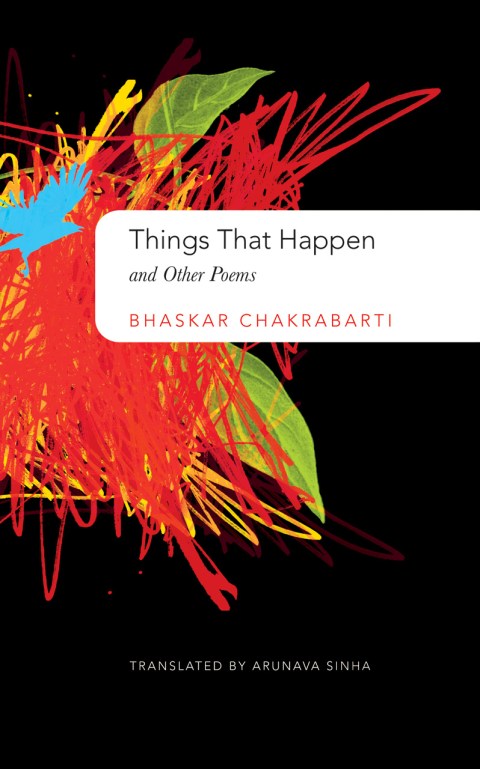
Things that Happen and Other Poems by the Bengali poet Bhaskar Chakrabarti , also published by Seagull Books, has been translated by Arunava Sinha. A deep sense of melancholy pervades Chakrabarti’s poems.

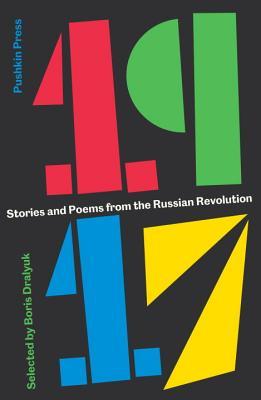
I am especially looking forward to the collection of poetry entitled 1917: Stories and Poems from the Russian Revolution. This volume was edited by Boris Dralyuk whom I had the great fortune to interview about his translation of Odessa Stories.

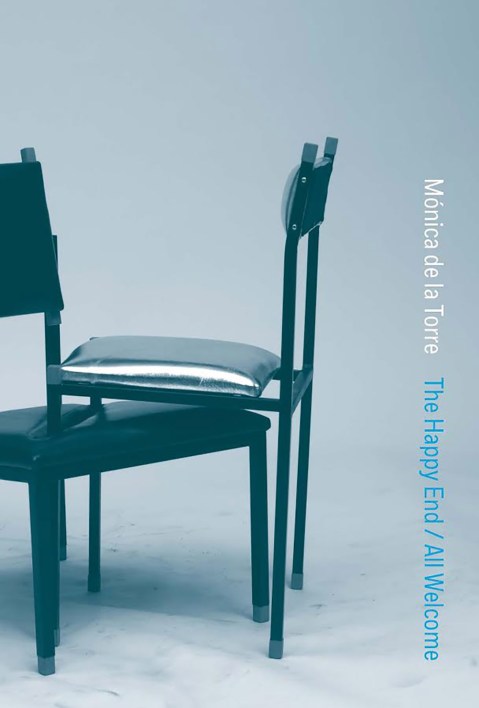
I also have a collection of poetry from Ugly Duckling Presse entitled The Happy End/All Welcome by Monica de la Torre. The setting for these poems is a job fair by the Nature Theater of Oklahoma from Kafka’s unfinished novel Amerika. So far I have found the first few poems to be both clever and witty.

Finally, I intend to read Dante’s The New Life translated by Dante Gabriel Rossetti which was reissued by The New York Review of Books Poetry. I have not taken the time to read any Dante in quite a while so I am particularly looking forward to reading this work.

What is everyone else reading for poetry month?

6 Comments

Filed under German Literature, Italian Literature, New York Review of Books Poetry, Poetry, Pushkin Press, Russian Literature, Seagull Books

Respice Futurum: Reading Plans for 2017

books-2017

I have the privilege every day of going to work at a place that I love and that has a long and rich tradition of education.  The Woodstock Academy, founded in 1801, is one of the oldest public schools in the United States and it has a simple yet profound Latin motto which reflects and respects this tradition: Respice Futurum– “Look back at your future.” (For the philologists out there, respice is a present active imperative, a compound made up of the prefix re (back, again) and the verb spicio (to look) and futurum is the accusative, singular of the noun futurum which is formed from the future active participle of sum.)

These two simple Latin words capture the idea that one moves towards the future while also reflecting on the past.  My husband likes to say that this motto is the equivalent of moving forward on a train while sitting in a seat that is facing backward.  I thought Respice Futurum is apt for a reflection on books as well;  it seems fitting to look ahead to my reading plans for 2017 while also reflecting on the types of books I have encountered over the past year and how they will influence my reading choices moving forward.

According to my list on Goodreads I read 105 books, a total of 24, 484 pages in 2016.  A few books were left off this list such as Pascal Quignard’s Roving Shadows and The Sexual Night. The Goodreads list also doesn’t include a few volumes of poetry I’ve read and some collections of essays.  And my list does not include any of the Latin or Greek authors I’ve translated or retranslated in 2016.   This was not a bad year for me, but not my best either.   The books in translation I have read have come from the following languages:  French, German, Spanish, Estonian, Russian, Italian, Bulgarian, Korean, Malayalam, Kannada, Hungarian, Swedish, Turkish, Slovene, Icelandic, Hebrew, Norwegian, Portuguese.

In looking at this list of lit in translation, I would like to explore more books from Asia and Africa which are not well-represented on my list.  I would also love to explore more books translated from Arabic which is a huge gap in my translated fiction.  If anyone has suggestions, please leave them in the comments!

Almost all of the books I have read have been published by small presses which will continue to be my main source of reading: Seagull Books, New Vessel Press, Open Letter and Deep Vellum, Archipelago, New York Review of Books and Persephone Books. 

My first read of 2017 has been The Story Smuggler by Georgi Gospondinov.  This is #29 in the Cahier Series and the first one I’ve read from this series.  I loved it so much that I went back and bought six more titles from the series, so there will be more Cahier titles in my future.

Gospondinov’s book The Physics of Sorrow is my favorite book from the Open Letter Catalog and one of my first reads in 2017 that I just started is another title from Open Letter, Justine by Iben Mondrup. 

A book that I have already started in 2016 and will finish in 2017 is The Collected Prose of Kafka from Archipelago Press.  This is a title that I am slowly making my way through and savoring.  Archipelago has managed to collect some of Kafka’s best short pieces into one volume.

I have discovered the works of French philosopher Jean-Luc Nancy this year and reading his extensive backlist published in English should keep me busy for a very long time.  Next up on my list of books written by him is his title on Sleeping.

Speaking of French writers, I am eager to read Pascal Quignard’s Terrace in Rome and All the World’s Mornings in 2017.

I was lucky enough to get an advance review copy of  Russian author Sergei Lebedev’s The Year of the Comet which is being published in 2017 by New Vessel Press.  I am very excited that I will have an interview with Lebedev coming up in an issue of Numero Cinq, for which literary magazine I am also privileged to continue to do production editing, to scout and recruit translators and to write reviews.   I am also looking forward to two additional lit in translation titles from New Vessel:  Moving the Palace (from Lebanon) and Adua (from Italy.)

I am always eager to read whatever Seagull Books publishes and thanks to their wonderful catalog I have discovered some classics of Indian literature.  I am also looking forward to reading Goat Days by Benyamin which is already sitting on my bookshelf.  I also understand that Seagull is publishing more works from Tomas Espedal in English translation which I am very eager to get my hands on.  A long-term, very long-term goal of mine is to read the entire backlist from Seagull Books.  I will do my best to put a large dent in that list this year.

This year I discovered Ugly Duckling Presse and I am eager to explore their backlist of poetry as well as their essays.  I have a copy of To Grieve by Will Daddario on my shelf already.  I would like to read more essays this year, so please leave suggestions for essays in the comments!

Finally, I would like to read more classics in 2017, especially Tolstoy, Pushkin and other Russian masters.  I have a collection of Tolstoy’s short stories and a copy of The Complete Prose of Pushkin sitting on my shelf that I have yet to read.  I also look forward to the reissues of classics from NYRB who is publishing more books my Henry Green.  I am hoping to have read all six reissued Green books by the end of 2017.  And, as always, I look forward to whatever classics from British, (mostly) female authors that Persephone Books has in store.

And as far as posts on my blog are concerned, I have always shied away from writing about Latin and Greek and classics, but my reading of Logue’s War Music has inspired me to continue writing about The Iliad and to do some of my own translations and interpretations of various Latin authors.

classics-booksA sampling of some of my most cherished classics books; the Loebs are nestled snugly on the bottom shelf.

Well, I could go on and on about my reading plans for 2017 or I could just go and actually get to reading.  Happy new year to all of my fellow bibliophiles.  I hope you also get a chance to Respice Futurum.

chair-bookroomThe cozy spot where much of my reading takes place.  It is overlooked by a print of The Roving Shadows cover done by Sunandini Banerjee, Seagull Books artist.


36 Comments

Filed under British Literature, Classics, Favorites, French Literature, German Literature, Hungarian Literature, Italian Literature, Literary Fiction, Literature in Translation, New York Review of Books, Opinion Posts, Persephone Books, Seagull Books

My Literary jouissance of 2016

This year has been a tough one for many reasons.  It is hard to believe that there could be a “best of” list for anything related to 2016 and I really wasn’t going to bother making a book list.  But Grant from 1st Reading  twisted my arm a bit and I was reminded that if there is one thing that kept me moving forward in 2016 it was the plethora of fantastic books I came across this year.

The French philosopher Jean-Luc Nancy, in his most recent book entitled Coming, explores the French word jouissance (pleasure) and the similarities between sexual pleasure and artistic pleasure.  Sexual jouissance and orgasm are irresistible desires for humans which we can never fully satisfy and thus we are constantly coming back and reaching for The Other.  Nancy argues that even when an artist produces a jouissance in his or her viewers, there is always a constantly renewed dissatisfaction that keeps the artist working again and again.  I would extend Nancy’s argument about renewed desire and satisfaction to include Bibliophiles such as myself who wallow in the aftermath of a great piece of literature.  We, as avid readers, are always attempting to renew that high, that euphoria, that bliss which slowly creeps up on us when we close the last page of a great book.  Some of us, after a good read, might even have the same expression on our faces as Caravaggio’s Ecstasy of Mary Magdalene which is depicted on the cover of Nancy’s book.  So the list of books below were the ones that brought me jouissance this year; or if I may be so bold as to say they were the standout books that caused me to experience a literary orgasm.

coming

Two Lines 25 is published by Two Lines Press and this 192-page volume contains fascinating literature translated from Bulgarian, Chinese, French, German, Hebrew, Japanese, Korean, Norwegian, Russian and Spanish.  What excited me most about this collection is that it introduced me to the philosophy and writings of Jean-Luc Nancy.

The writing of Jean-Luc Nancy is one of my favorite literary and philosophical discoveries this year.  I have read three of his books: Corpus, Listening and Coming.  His philosophy explores what it means to be human and he deals with subjects of touching, listening, desiring and loving.  My review of Coming will be out next month and I have so many thoughts about this slim volume that is only 168 pages.

Oblivion by Sergei Lebedev is a haunting reflection on what life was like for the author during the years of the Soviet Union.  Lebedev’s prose is dense and poetic and so thoughtful that I found myself rereading entire sections of the book multiple times.  I am very excited that Lebedev has another novel forthcoming from New Vessel Press entitled The Year of the Comet.

War Music by Christopher Logue is a book that I dismissed as soon as I saw it in the FS&G catalog because I don’t usually read any time of modern retellings of Ancient myths.  But Anthony at Times Flow Stemmed had such great things to say about it that I decided to give it a try and I am so glad that I did.  I have so many things to say just about the first 50 pages of this book that I am not sure how I am going to handle a review.  I am thinking of doing several short pieces on each section of Logue’s poem.  As far as retellings are concerned, I also discovered Christa Wolf based on his suggestion and I thoroughly enjoyed her Medea and Cassandra.

Seagull Books Catalog.  It’s unusual to find a catalog on a best of list, but the one that Seagull publishes each year is very special.  It includes writing from authors, translators and even bloggers from all over the world.  This year I was invited to contribute to the catalog and some of my favorite literary bloggers also have pieces in the catalog.  Selections from Roughghosts, Times Flow Stemmed,   Tony’s Reading List and of shoes ‘n ships can all be found in this fabulous collection of art and literature.

The Brother by Rein Raud is a fast-paced, hard-hitting, short book that uses the plot structure of a western as an allegory for demonstrating the balance of good and evil in the world. It my favorite title from Open Letters this year whose books are fantastic.

The Noise of Time by Julian Barnes is a skillfully written and poetic novel which serves as a fictional biography of the Russian composer Dmitri Shostakovich. The ways in which he must navigate his life and his art around the Soviet regime are heartbreaking.

The Parable Book by Per Olov Enquist is a true literary book that reads like philosophy, meditation, autobiography and parable. Sometimes we are given a very specific story from the author’s life, other times we are given an unclear stream-of-consciousness narrative, and still at other times we encounter a list of questions that the author poses on an entire page of the book. Enquist gives us the totality of a life that includes pivotal childhood memories, a bout of alcoholism that nearly destroys him, and the reflection of his elderly days during which he is waiting by the river to be taken to the other side. For anyone who enjoys serious literary fiction this book is a must-read. So far the English translation has only been published in the U.K. I am hoping it will also be available here in the U.S. This is a book that I look forward to reading multiple times.

A Lady and Her Husband by Amber Reeves from Persephone Books is a charming and entertaining look into the life of a middle-aged British couple that has been married for twenty-seven years. This book was written in 1914 so it brings up many political and social issues that were relevant at the turn of the last century and which continue to be discussed into the 21st Century. Debates that have taken place during the recent elections in the U.S. have reminded us that women are still paid less than their male counterparts, the minimum wage for workers continues to be too low, and millions of Americans still do not have access to proper healthcare.

Berlin-Hamlet: Poems by Szilárd Borbély is my favorite collection of poetry this year published by NYRB Poetry.  The layers of imagery, references and allusions to great figures like Kafka, Walter Benjamin, Attila József and Erno Szép are stunning. I find it so sad and tragic that the author succumbed to his deep sense of sadness and took his own life.

American Philosophy: A Love Story by John Kaag is another work of non-fiction that was one of my favorites this year.  Kaag’s journey from Hell to Redemption in his own personal life via the 10,000 books in Ernest Hocking’s personal library gave me an entirely new appreciation for American philosophers. Kaag also reminds us of the amazing resiliency of the human spirit and that no matter what we might suffer we must keep moving forward.


20 Comments

Filed under British Literature, Classics, Favorites, Literary Fiction, Literature in Translation, New York Review of Books Poetry, Nonfiction, Persephone Books, Philosophy, Poetry, Russian Literature, Seagull Books

Tempus, Aevum, Aeternitas: a review of December by Alexander Kluge and Gerhard Richter

This title was published in the original German in 2010 and this English version has been translated by Martin Chalmers and published by Seagull Books.

My Review:
decemberDecember comes from the Latin word decem, meaning ten because in the original Roman calendar December was the tenth month of the year.  When two new months were added to the beginning of the Julian calendar, thus pushing back December to become the twelfth month, no one bothered to change the name.  As the month which concludes the Julian and Gregorian calendar years it is naturally a month of reflection, of looking back, of becoming more aware of the passage of time.  Kluge and Richter use this last month of the year for the inspiration behind their collection of stories and photographs; there is one entry for each day of the month in December and together the writings and art work serve as a philosophical and poetic commentary about time, fate, choice and even love.

The entries or pieces of writing for each day in December are a mixture of short story, poetry and philosophy.  The dates for the entries vary widely, from 12,999 B.C. to 2009 A.D.  Kluge does tend to favor the events of December 1941 and 2009 as many of the entries are set during one of these two years.  My favorite entry is the one for December 18th, 1941 entitled, “A WRONG DECISION IN WARTIME.”  Kluge describes Marita, the wife of the surgeon Dalquen, who had come to Berlin from her provincial town to stay at the Grand Hotel Furstenberg on Potsdamer Platz.  She falls in love with First Lieutenant Berlepsch but refuses to make love to him on that night because she had not wanted to prematurely hasten their relationship by engaging in one evening of unbridled passion.  Kluge writes, “Only three weeks later she would regret her decision.  The young officer fell in the fighting in northern Russia.”  Marita is deeply upset because she did not take the chance to be with the First Lieutenant when she was presented with a choice.  When Marita is faced with the opportunity later in the war to have one night of passion she takes it, and although it is not with Berlepsch whom she truly loved, she does not regret it.  Kluge’s last quotation in this story is very striking:

For one night full of bliss

 I would give my all

december-1

Kluge’s story about Marita and her fallen love brings up many more questions than answers.  Do we live our lives to the fullest and take advantage of every precious moment, whether there is a war or a crisis raging around us or not?  Do we take time to embrace and appreciate those whom we love?  And if we make the wrong choice is it irrevocable? Or can we find a way to learn from our mistakes and move on?

December is the month of the winter solstice in the northern hemisphere, so the cold and the snow and the shorter days feature  prominently in Kluge’s stories and in Richter’s photographs.  Another story that stands out is the one dated the 20th of December, 1832: “UNEXPECTED CONVERSION OF A HEATHEN.”  Dr. Wernecke has just helped a woman give birth in the village and is setting out through the snow and the woods to go back home.  Kluge writes:

At first he took the path which the villagers, either out of habit or out of superstition, had created as a kind of VILLAGE EXIT INTO DEAD NATURE, because in this hard-frozen winter such a ‘track’ led into nothingness.

As the doctor gets farther along on his snowy journey he becomes increasingly tired and bewildered.  He keeps on moving so he doesn’t freeze but he is becoming tired and disoriented.  The snow and the woods around him are closing in:

The endless expanse of snow produced a certain brightness in the night.  Wernecke could neither say ‘I don’t see anything at all’ nor ‘I see something.’ For that a clue would have been needed, a difference in the monotony of the snow-covered land.

december-2The doctor estimates that he has about four or five hours to live when suddenly he sees a faint, flickering light in the distance.  He isn’t sure if this light is a figment of his bewildered mind but he chooses to follow it anyway.  The light, which is indeed the very thing that saves him, was the lamp of the cathedral verger who at that precise moment was climbing the stairs of the cathedral to ring the nightly bells.

Dull-eyed, Dr. Wernecke nevertheless resolved to trust the light that had soon disappeared.  The light had guided his obstinate heart.  So the doctor found his way to the first houses of the town.

Because the good doctor is saved by this light, he, the “heathen” pays to have an iron lamp installed in the tower next to the bells.  Once again, Kluge poses many deep, philosophical questions with this brief story.  Why do we choose to follow certain paths and not others?  When a light appears in life do we choose to let it guide us, or do we let our obstinate heart convince us to take a less fortunate and unhappy path?  Do we choose to trust and to follow the light like Dr. Wernecke did, or do we ignore it at our own peril?

Each of the 39 photographs in the collection are a variation of trees in a forest that are covered with snow.  The photos are taken up close and give one the feeling of being closed in by the forest and the snow.  Dr. Wernecke’s description of his time in the snow-covered forest, as being able to see something and yet nothing at all, is a fitting description for Richter’s art.  In one picture there is, in the distance, a tiny image of a deer and in the very last photo in the collection a small cottage appears in a clearing through the trees.  Like Dr. Wernecke, can we make our way out of this claustrophobic woods and find that faint glimmer of light?

The second part of the book entitled, “CALENDARS ARE CONSERVATIVE” contains various discussions and meditations on calendars, time, and the passage of time.  One passage in particular caught my attention because of its reference to Latin words for time.  In “Tempus, Aevum, Aeternitas’, an Islamic astrophysicist from Bangladesh and a European ambassador who is a medievalist are discussing different kinds of time by using the Latin names for them.  TEMPUS is time associated with the clock, with checking our watches, it is earthly time that we are always fighting against.  AEVUM, however, is celestial time, experienced only by the angels or other celestial beings.  In Latin it can be literally translated as “Time regarded as the medium in which events occur, indefinite continuous duration, the time series.”  It is oftentimes translated as a “span of time,” a “generation,” or an “age.”  Finally AETERNITAS is brought up by the scholars which, they argue, is the sense of time experienced only by the highest divinity.  It is translated as “infinite time,” eternity,” or “immortality.”  This tricolon crescendo of time presented by the men makes us step outside ourselves and think about time as something other than that ticking clock on the wall or that alarm that wakes us up or that watch which is constantly staring up at us from our wrists.

Seagull Books has published another extraordinary, thought-provoking, beautiful book.  This book is worth owning not only for the literature, philosophy and poetry contained within, but the beautiful prints reproduced on glossy, heavy weight paper make it a very special piece.

About the Author:
Alexander Kluge is one of the major German fiction writers of the late- twentieth century and an important social critic. As a filmmaker, he is credited with the launch of the New German Cinema movement.

About the Artist:
Gerhard Richter is one of the most respected visual artists of Germany, and his seminal works include Atlas (1964), October 18, 1977 (1988) and Eight Grey (2002).

december-3


4 Comments

Filed under Art, German Literature, History, Literature in Translation, Seagull Books, Short Stories