Author Archives: Melissa Beck

Melissa Beck's avatar

About Melissa Beck

My reading choices are rather eclectic. I enjoy reading a wide range of books especially classics, literature in translation, history, philosophy, travel writing and poetry. I especially like to support small, literary presses.

My Literary jouissance of 2016

This year has been a tough one for many reasons.  It is hard to believe that there could be a “best of” list for anything related to 2016 and I really wasn’t going to bother making a book list.  But Grant from 1st Reading  twisted my arm a bit and I was reminded that if there is one thing that kept me moving forward in 2016 it was the plethora of fantastic books I came across this year.

The French philosopher Jean-Luc Nancy, in his most recent book entitled Coming, explores the French word jouissance (pleasure) and the similarities between sexual pleasure and artistic pleasure.  Sexual jouissance and orgasm are irresistible desires for humans which we can never fully satisfy and thus we are constantly coming back and reaching for The Other.  Nancy argues that even when an artist produces a jouissance in his or her viewers, there is always a constantly renewed dissatisfaction that keeps the artist working again and again.  I would extend Nancy’s argument about renewed desire and satisfaction to include Bibliophiles such as myself who wallow in the aftermath of a great piece of literature.  We, as avid readers, are always attempting to renew that high, that euphoria, that bliss which slowly creeps up on us when we close the last page of a great book.  Some of us, after a good read, might even have the same expression on our faces as Caravaggio’s Ecstasy of Mary Magdalene which is depicted on the cover of Nancy’s book.  So the list of books below were the ones that brought me jouissance this year; or if I may be so bold as to say they were the standout books that caused me to experience a literary orgasm.

coming

Two Lines 25 is published by Two Lines Press and this 192-page volume contains fascinating literature translated from Bulgarian, Chinese, French, German, Hebrew, Japanese, Korean, Norwegian, Russian and Spanish.  What excited me most about this collection is that it introduced me to the philosophy and writings of Jean-Luc Nancy.

The writing of Jean-Luc Nancy is one of my favorite literary and philosophical discoveries this year.  I have read three of his books: Corpus, Listening and Coming.  His philosophy explores what it means to be human and he deals with subjects of touching, listening, desiring and loving.  My review of Coming will be out next month and I have so many thoughts about this slim volume that is only 168 pages.

Oblivion by Sergei Lebedev is a haunting reflection on what life was like for the author during the years of the Soviet Union.  Lebedev’s prose is dense and poetic and so thoughtful that I found myself rereading entire sections of the book multiple times.  I am very excited that Lebedev has another novel forthcoming from New Vessel Press entitled The Year of the Comet.

War Music by Christopher Logue is a book that I dismissed as soon as I saw it in the FS&G catalog because I don’t usually read any time of modern retellings of Ancient myths.  But Anthony at Times Flow Stemmed had such great things to say about it that I decided to give it a try and I am so glad that I did.  I have so many things to say just about the first 50 pages of this book that I am not sure how I am going to handle a review.  I am thinking of doing several short pieces on each section of Logue’s poem.  As far as retellings are concerned, I also discovered Christa Wolf based on his suggestion and I thoroughly enjoyed her Medea and Cassandra.

Seagull Books Catalog.  It’s unusual to find a catalog on a best of list, but the one that Seagull publishes each year is very special.  It includes writing from authors, translators and even bloggers from all over the world.  This year I was invited to contribute to the catalog and some of my favorite literary bloggers also have pieces in the catalog.  Selections from Roughghosts, Times Flow Stemmed,   Tony’s Reading List and of shoes ‘n ships can all be found in this fabulous collection of art and literature.

The Brother by Rein Raud is a fast-paced, hard-hitting, short book that uses the plot structure of a western as an allegory for demonstrating the balance of good and evil in the world. It my favorite title from Open Letters this year whose books are fantastic.

The Noise of Time by Julian Barnes is a skillfully written and poetic novel which serves as a fictional biography of the Russian composer Dmitri Shostakovich. The ways in which he must navigate his life and his art around the Soviet regime are heartbreaking.

The Parable Book by Per Olov Enquist is a true literary book that reads like philosophy, meditation, autobiography and parable. Sometimes we are given a very specific story from the author’s life, other times we are given an unclear stream-of-consciousness narrative, and still at other times we encounter a list of questions that the author poses on an entire page of the book. Enquist gives us the totality of a life that includes pivotal childhood memories, a bout of alcoholism that nearly destroys him, and the reflection of his elderly days during which he is waiting by the river to be taken to the other side. For anyone who enjoys serious literary fiction this book is a must-read. So far the English translation has only been published in the U.K. I am hoping it will also be available here in the U.S. This is a book that I look forward to reading multiple times.

A Lady and Her Husband by Amber Reeves from Persephone Books is a charming and entertaining look into the life of a middle-aged British couple that has been married for twenty-seven years. This book was written in 1914 so it brings up many political and social issues that were relevant at the turn of the last century and which continue to be discussed into the 21st Century. Debates that have taken place during the recent elections in the U.S. have reminded us that women are still paid less than their male counterparts, the minimum wage for workers continues to be too low, and millions of Americans still do not have access to proper healthcare.

Berlin-Hamlet: Poems by Szilárd Borbély is my favorite collection of poetry this year published by NYRB Poetry.  The layers of imagery, references and allusions to great figures like Kafka, Walter Benjamin, Attila József and Erno Szép are stunning. I find it so sad and tragic that the author succumbed to his deep sense of sadness and took his own life.

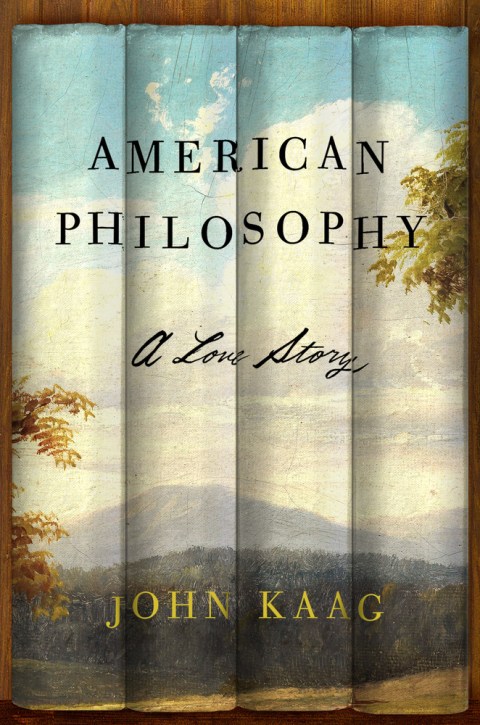
American Philosophy: A Love Story by John Kaag is another work of non-fiction that was one of my favorites this year.  Kaag’s journey from Hell to Redemption in his own personal life via the 10,000 books in Ernest Hocking’s personal library gave me an entirely new appreciation for American philosophers. Kaag also reminds us of the amazing resiliency of the human spirit and that no matter what we might suffer we must keep moving forward.


20 Comments

Filed under British Literature, Classics, Favorites, Literary Fiction, Literature in Translation, New York Review of Books Poetry, Nonfiction, Persephone Books, Philosophy, Poetry, Russian Literature, Seagull Books

A Rite of Passage: My Review of Samskara by U.R Ananthamurthy

samskara_1024x1024The word Samskara or Sanskara is from Sanskrit and is a central concept to many of the ideas embodied in Hinduism.  There are several definitions for this word including: “A rite of passage or life cycle ceremony”, “forming well, making perfect”, “the realizing of past perceptions”, and “preparation and making ready.”
Samskaras are also, in one context, the diverse rites of passage of a human being from conception to cremation, which mark specific events in an individual’s journey of life in Hinduism.  In U.R. Anathamurthy’s novel, Samskara specifically refers to “a rite for a dead man” and it is this compulsory rite which is given to Brahmins at their passing that becomes the central controversy of this book.  When the story begins, a Brahmin community is presented with the dilemma of deciding who will perform the samskara for one of the members of their community who had become a heretic.  The leader of this orthodox Brahmin community (agrahara), Praneshacharya, has to decide what to do with the body of his fellow Brahmin who drank, ate meat, fished in sacred waters and, worst of all, was living with a sensual, lower caste woman.

Praneschacharya has adopted an extreme form of asceticism by living with a sickly, invalid wife and having a sexless marriage.  He cares for and baths his wife on a daily basis and views the denial of his physical needs as a form of penance that will garner him blessings in this life and the next.  But when Praneschacharya has his first sexual encounter, a whole new world of pleasure causes him to question his orthodox beliefs.  As he tries to make the best decision about the heretic’s burial and comes to grips with his crisis of faith, it is Praneshacharya who has his own samskara or rite of passage in his life.

Read my full review of this classic piece of Indian literature on Asymptote.


3 Comments

Filed under Classics, Literature in Translation, New York Review of Books

Sacrificed on the Altar of Truth: My Review of American Philosophy—A Love Story by John Kaag

laocoon_and_his_sons_vatican

Laocoon and His Sons, Vatican Museum

In Book 2 of Vergil’s Aeneid, the poet relates the story of the Trojan Horse and the sack of Troy in vivid and horrifying detail.  The Trojans are standing on the beach which was recently deserted by the Greeks and debating whether or not to bring the massive wooden horse they find into their city.  Laocoön, a priest of Apollo, warns the Trojans about accepting any gift from the Greeks and utters one of Vergil’s most famous lines:

equo ne credite, Teucri.
Quidquid id est, timeo Danaos et dona ferentis.

Do not put your trust in the horse, Trojans.
Whatever it is, I fear Greeks even when they are bearing gifts.*

After Laocoön warns the Trojans about the dangers of the horse and launches his spear at the monstrous structure, two deadly serpents slither out of the sea and grab not only Laocoön but also his two sons that are standing nearby.  The Trojans assume that Laocoön is being punished by the Gods for defiling the horse.  But the opposite is true: Laocoön is right in his fears about the horse and the gods are trying to silence him with this horrific punishment. The Trojans stand on the beach in terror as they watch Laocoön and his sons being swallowed up by the sea serpents:

Tum vero tremefacta novus per pectora cunctis
insinuat pavor, et scelus expendisse merentem
Laocoonta ferunt, sacrum qui cuspide robur
laeserit et tergo sceleratam intorserit hastam.

Then indeed a new terror made the hearts of all the Trojans
tremble and they say that Laocoon had paid the price for
his deserved crime, Laocoon who struck the sacred wood
with his spear and hurled his wicked weapon against
the horse’s back.

John Kaag, author of the book American Philosophy: A Love Story stumbles upon the library of Ernest Hocking in New Hampshire, a priceless collection of over 10,000 books, many of which are rare first editions.  When Kaag finds Hocking’s library, he is in the midst of a personal crisis as his first marriage is crumbling and has been for many years.  As Kaag takes on the task of attempting to catalog and to save some of Hocking’s most valuable books, he finds a large bronze bust in Hocking’s library that was a replica of the famous Laocoön and His Sons statue from the Vatican Museum.  Kaag reflects on the story of  Laocoön and the tragedy of being punished for attempting to do the right thing:

This is what happens to people who have the bad luck of being painfully honest.  Maybe being less honest and alive was better than being self-righteously dead, I thought.  My recent experiment with honesty had been rather brutal.  I’d harbored secret doubts about my marriage for years, but as I edged toward thirty, it had become harder and harder to remain silent.

Days before his birthday Kaag sold his wedding ring and this resulted in an epic fight during his birthday party which their families and friends witnessed.  Kaag remarks that in the end he didn’t die, but there were many occasions during the dissolution of his marriage that he wished he had died..

Kaag concludes about the Laocoön story: “Being punished for telling a lie made sense, but being sacrificed on the altar of truth seemed cruel.”

To learn more about Kaag’s journey from hell to redemption in his personal life, his discovery and cataloguing of Hocking’s collection, and his reflection on American philosophy read my full review in the December issue of Numero Cinq.

*All translations of Latin in this post are my own. My translation style is very literal which can be viewed by some as awkward and clunky, but that’s how I roll with my Latin.

american-philosophy-a-love-story-book-cover

5 Comments

Filed under Nonfiction, Philosophy, Uncategorized

Review: Written in the Dark—Five Poets in the Siege of Leningrad

My Review:
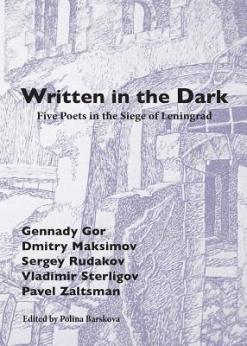
written-in-the-darkThe official, state sponsored view of the Siege of Leningrad was one of heroism and valor and any piece of writing whether it be fiction, non-fiction or poetry that did not align with the Soviet vision of the Siege was suppressed.  The dark and shocking works of the five poets in this collection were written in secret and not uncovered or published until many years after the war and after the fall of the Soviet Union.  The Nazi siege of this Russian city lasted from September 1941 until January of 1944 with an estimated death toll reaching nearly 1,000,000 lives.  The Soviet Union propogated a version of this event that portrayed stoic Russians valiantly enduring the long, German offensive;  the brutality and horror that occurred in the city were buried with those who died during the Siege.  In the introduction to the collection, Polina Barskova writes about the official, state approved, Soviet poetry that was allowed to be published about the Siege:

The “exemplary” Siege self presented to the world in this kind of literature was that of the stoic Soviet soldier.  Even women, children and the elderly were depicted as warriors and likened to the city’s monuments —carved of marble and decorated with gold.  It is these ubiquitous monuments that told, as I recall from my Leningrad childhood, the retouched story of the Siege—filled with hypocritical pathos and barren of the horrific truth.  The truth, however, does emerge, sooner or later.

During the era of perestroika, poetry that was written during the Siege and suppressed by the Soviet regime began to emerge and to give the world a more accurate glimpse into the suffering and death that was thrust upon this city during World War II.  The poets in this collection include Gennady Gor (1907-1981), the artist and film set director Pavel Zaltsman (1912-1985), the philologist Dmitry Maximov (1904-1987), the avant-garde painter Vladimir Sterligov (1904-1973), and the poet-philologist Sergey Rudakov (1909-1944).

The most brutally shocking poems in the book are written by Gennady Gor who became a well-known scholar, science fiction writer and collector of the art of Northern ethnicities when the war was over.  There is an emphasis throughout his poems on cannibalism which is believed to have been widely practiced during the height of the Siege. Even carrion birds are deprived of any meals because there simply is nothing left:

I ate Rebecca the girl full of laughter
A raven looked down at my hideous dinner.
A raven looked down at me like at boredom.
At hwo slowly this human was eating that human.
A raven looked down but it was for nothing.
I didn’t throw it that arm of Rebecca.

Lenigraders on Nevsky Prospect during the Siege, 1942. RIA Novosti archive, image #324 / Boris Kudoyarov via Wikimedia Commons

Lenigraders on Nevsky Prospect during the Siege, 1942. RIA Novosti archive, image #324 / Boris Kudoyarov via Wikimedia Commons

Gor’s poems are obsessed with rotting and cold body parts, even when they are not being eaten.  His emphasis on descriptions of  body parts evokes the images of citizens lying in the streets, completely forgotten. His description of the pervading darkness reminds us of the black nights endured by the citizens because they were constantly under attack by the Germans. Even the moon is not welcome under these horrendous circumstances. Gor reveals the mental and emotional toll that this Siege took on its survivors, which stark details were forbidden to be written about in the official, Soviet poetry:

With a shock wave in my ears,
A cold moon in my soul,
I am a shot to insanity. I am both
Check and mate to myself. I am mute. Now I
Am nothing and running toward nothing.
Now I am no one’s and rushing to no one.
A shock wave in my mouth,
A cold moon in my dark,
A leg in my corner, an arm in my ditch,
The eyes that fell out of my sockets,
A finger forgotten in one of the clinics,
An unneeded moon in my dark.

After reading Vladimir Stergilov’s poems I was stunned that this man could not only survive the Siege, but also serve at the Leningrad Front, and then after the war return to this city where he became a successful artist in the underground, unofficial, avant-garde world of art.  One wonders how could a man who wrote this poem go on after these experiences:

Raised a spoon to your lips—Death
Stretched out your hand to hello—Death
Saw a little goldfinch—Death
On the branch of a little leaf—Death
On a walk with your friends—Death
Looked at the cabbage on the plate—Death
Seeing your friends off, two of them—Death
Happened to glance to the side—Death.

Stergilov’s use of epistrophe with the word “Death” underscores the sheer terror that hovers over the most mundane, daily activities like eating or greeting a friend or walking in the park.

One final poet in the collection that stands out is Sergey Rudakov who elevates the themes of his poetry to encompass the larger event that is the destruction of Leningrad,  a once proud and prosperous stronghold of the Russian state.  He is the only one of these five poets who mentions his native city repeatedly in his Siege poems. In this first excerpt there is a feeling of nostalgia for his beloved city which is no longer recognizable to him:

The poor heart is both happy and unhappy
To recognize in searchlight crosses, to the west,
The native sky of Leningrad.

In the next poem in which he mentions the city there is an emphasis on the wasteland that  his city has become with its empty apartments, streets and shops:

In the wasteland of Leningrad
Clocks still tell time somewhere.
But do not trust their wheels’ gait
Nor the arc of their springs.
Blind Charon keeps idle:
There are no normal burials.

RIA Novosti archive, image #324 / Boris Kudoyarov via Wikimedia Commons

Leningraders on Nevsky Prospect during the Siege, 1942. RIA Novosti archive, image #324 / Boris Kudoyarov via Wikimedia Commons

And in one final poem he uses the city’s former name, perhaps in an attempt to remember what a great city it once was before the Germans invaded. There is also an emphasis in this poem on the scores of unburied dead that were strewn on the city streets:
x

…In those far off years
Which future grandchildren
Will never come to know
In pale accounts of science,
Those days immemorial
Were lost in dreadful frosts.
In makeshift huts, the futile fires
Warmed soups of glue
And glucose for the living.
The dead outnumbered coffins.
The rout of Petersburg abandoned
Without a burial their own.

As difficult as these poems are to read, they are a reminder of the remarkable resiliency of the human spirit.  Rudakov aptly writes that future grandchildren will not come to know the true brutality of the Siege because as time slips by, so do our memories fade.  Our minds, our hearts, our souls have the greatest capacity to overcome the most unspeakable tragedies; this collection of poems puts into perspective the seemingly trivial problems that we might have on a day to day basis—trivial, at least, in comparison to surviving the Siege of Leningrad.

For more information on each of the authors of the collection as well as the editor visit Ugly Duckling Presse.


7 Comments

Filed under Poetry, Russian Literature

Review: Cassandra by Christa Wolf

This title was published in 1983 in the original German and this English version has been translated by Jan van Heurck

My Review:
cassandraCassandra is most famous in Greek mythology for possessing the gift of prophecy but this unique gift came with one problem: no one ever believes her true predictions.  In Aeschylus’s Agamemnon, Cassandra says that she agreed to have sex with the God Apollo in exchange for the gift of prophecy, but when she went back on her promise and refused the Sun God’s advances, Apollo made sure that her prophecies would never be believed.  When she predicts the future her friends and family treat her as nothing more than a babbling and a raving mad woman.  I have a distinct memory of first translating the Agamemnon and how difficult Aeschylus’s Greek is to unpack.  But the parts in the narrative in which Cassandra is speaking were a nice break because oftentimes she just rants and raves; the various “oi” and “oimoi” noises she makes are a welcome respite from the complex grammatical structures of Aeschylus’s sentences.

Christa Wolf’s Cassandra is an ambitious novel in that it tries to cover the entire scope of the Trojan epic cycle by telling it through the eyes of this doomed and unlucky Trojan princess.  Priam, Hecuba, Helenus, Achilles, Aeneas, Troilus, Briseis, Calchas, Agamemnon, Menelaus, Polyxena and Paris, are just a few of the characters that make an appearance or are mentioned in Wolf’s narrative.  Cassandra, the narrator of this story,  is the daughter of Priam, King of Troy, and his first and most favored wife, Hecuba.  From a very young age Cassandra wants nothing more than to become a priestess of the God Apollo and possess the gift of prophecy.  But once she is given this gift she is subjected to a plethora of other misfortunes which lead to her tragic death.  Wolf’s narrative is so wide-ranging and covers so many characters and actions from the Trojan saga that it is impossible to mention everything she touches on in one review.  So I am going to write about the aspects of Wolf’s story that were the most striking and memorable for me.

In the original myths and stories involving the origin of the Trojan War, Paris, the prince of Troy, visits King Menelaus of Sparta and with the help of the Goddess Aphrodite, absconds with his wife Helen.  In order to get his wife back, Menelaus asks his warmongering brother, King Agamemnon of Mycenae, to help him get an army together, sack Troy, and find his wife.  Wolf makes her story less a matter of love, pride and recapturing a straying wife and instead makes the inception of the war more of a political issue.  Priam’s sister has been taken by the Greeks and there are three separate, and unsuccessful expeditions to bring her back; on the third and final ship, Paris sets sail with the other men and when he cannot get his aunt back he takes Menelaus’s wife instead.  Paris is portrayed as an arrogant and brash young man who uses the pretext of the expedition to take for himself a woman who is said to be the most beautiful in the world.  Christa’s Paris is much more bold than Homer’s Paris, but in both tales Paris has no forethought or concern for anyone other than himself.

When the Greeks attack Troy, Cassandra has already seen this event coming and predicted that it will destroy her home and her family.  She has a dream when she is a child that Apollo spits in her mouth and this is the sign that she can foretell the future but no one will believe her.  When she has one of her prophetic visions she foams at the mouth, has fits that mimic the symptoms of a seizure and drives everyone away from her because they think she is a babbling lunatic.  Cassandra’s narrative about her childhood, how she acquired her gift of prophesy, the destruction of Troy and its aftermath are all told in a stream-of-conscious narrative.  Wolf’s Cassandra constantly moves around between different time periods and this cleverly reflects the anxious ramblings of her tormented mind.  She oftentimes dwells on her earlier years when she was first given the ability to prophesy and became a priestess of the God Apollo.  She is King Priam’s favorite daughter and her position as favorite as well as her ability to predict the future cause her to have complicated relationships with her siblings, her mother, and other men in her life.

When Troy is sacked, all of the Trojan women who survive are divided up among the Greek Kings and taken back to Greece to become their household and sexual slaves.  Cassandra is taken back to Mycenae by King Agamemnon and her interactions with this narcissistic man cause her to reflect on the other complicated relationships she has had with men throughout her life.   Wolf portrays Cassandra as having a great desire to be a priestess of Apollo and remain a virgin, but even her desire to remain untouched is conflicted.  There is a strange scene that Wolf includes in which all of the young women in Troy are placed within the sanctuary of a temple and one by one they are chosen by Trojan youth for a ritual deflowering.  It is oftentimes the tendency for non-Greek, Eastern cultures to be portrayed as being more sexually open and even promiscuous.  In the Ancient Greek myths Priam is basically described as possessing a harem with multiple wives and fifty children. Even though this is not necessarily emphasized in Homer, Wolf seems to pick up on the sexual differences between the Greeks and the Trojans.  When Cassandra does finally become a priestess, she puts up with the head priest visiting her nightly for sexual trysts and she endures it because she pretends she is sleeping with Aeneas whom she loves very much.

Cassandra views Agamemnon as a self-centered, rash and dangerous man who is also sexually impotent.  In Cassandra’s eyes Achilles is not any better a man than Agamemnon and  she describes Achilles as a murderous, selfish brute who takes what he wants, including Cassandra’s sister Polyxena.  The only male in the story that Cassandra has any positive thoughts for is Aeneas, a Trojan youth who is the only hero to escape from Troy when it is burning.  In the ancient Greek myths Aeneas and Cassandra are cousins but they don’t have any real connections other than Cassandra’s prediction that Aeneas will escape Troy.  I am curious as to why Wolf chose Aeneas at the only male in the Trojan saga with any redeemable characteristics.  The depressed, hopeless, confused, Cassandra in Wolf’s narrative becomes a completely different person when Aeneas is around.  The only time when Cassandra has positive, loving thoughts are when she is around Aeneas:

At the new moon Aeneas came…I saw his face for only a moment as he blew out the light that swam in a pool of oil beside the door.  Our recognition sign was and remained his hand on my cheek, my cheek in his hand.  We said little more to each other than our names; I had never heard a more beautiful love poem.  Aeneas Cassandra.  Cassandra Aeneas.  When my chastity encountered his shyness, our bodies went wild.  I could not have dreamed what my limbs replied to the questions of his lips, or what unknown inclinations his scent would confer on me.  And what a voice my throat had at its command.

One final male in the story that is not portrayed in a positive light is Hector, the prince of Troy and first son and heir of King Priam.  In the Iliad he is, I would argue, the most heroic of the men on either side because he has a sense of honor and courage that no other warrior possesses.  So I was disappointed that Wolf refers to him as “Dim-Cloud” and Cassandra remarks, “A number of my brothers were better suited than he to lead the battle.”  To have veered so far off the mark from the Hector of the Iliad was disappointing to me.

When I teach about the God Apollo and Cassandra and her doomed gift of prophecy, my students always have a hard time with the fact that time and again Cassandra prophesies the truth but not a single person ever believes her.  My interpretation of Cassandra has always been that she represents that person who tells us the very thing we don’t want to hear about ourselves or our actions that we continue to ignore.  Cassandra is the classic case of being mad at and ignoring the person who tells us the truth and is honest but who we will cast aside anyway because the truth is too hard to bear.  Wolf writes a spectacular rendition of  Cassandra and brings to the forefront this allegory of ignoring our better judgement and the better judgement of others and suffering the negative consequences for it.

I could really go on and on about my impressions of Wolf’s writing and her exploration of the Trojan saga through the eyes of Cassandra.  I would love to hear what other readers have thought about this book.  What were the most memorable parts of the book for you?  Had you read any of the original myths before encountering this books?  Why do you think Wolf chose Aeneas as a companion for Cassandra?  What do you think of Wolf’s rendition of Cassandra?

About the Author:
c-wolfAs a citizen of East Germany and a committed socialist, Christa Wolf managed to keep a critical distance from the communist regime. Her best-known novels included “Der geteilte Himmel” (“Divided Heaven,” 1963), addressing the divisions of Germany, and “Kassandra” (“Cassandra,” 1983), which depicted the Trojan War.

She won awards in East Germany and West Germany for her work, including the Thomas Mann Prize in 2010. The jury praised her life’s work for “critically questioning the hopes and errors of her time, and portraying them with deep moral seriousness and narrative power.”

Christa Ihlenfeld was born March 18, 1929, in Landsberg an der Warthe, a part of Germany that is now in Poland. She moved to East Germany in 1945 and joined the Socialist Uni A citizen of East Germany and a committed socialist, Mrs. Wolf managed to keep a critical distance from the communist regime. Her best-known novels included “Der geteilte Himmel” (“Divided Heaven,” 1963), addressing the divisions of Germany, and “Kassandra” (“Cassandra,” 1983), which depicted the Trojan War.

She won awards in East Germany and West Germany for her work, including the Thomas Mann Prize in 2010. The jury praised her life’s work for “critically questioning the hopes and errors of her time, and portraying them with deep moral seriousness and narrative power.”

Christa Ihlenfeld was born March 18, 1929, in Landsberg an der Warthe, a part of Germany that is now in Poland. She moved to East Germany in 1945 and joined the Socialist Unity Party in 1949. She studied German literature in Jena and Leipzig and became a publisher and editor.

In 1951, she married Gerhard Wolf, an essayist. They had two children.


11 Comments

Filed under German Literature, Historical Fiction, Literature in Translation, Uncategorized
