
 I have to admit that I was drawn to this book because of its autobiographical aspect. Having just lately read quite a bit of Virginia Woolf’s extensive and varied forms of writing, I was curious to get a glimpse into her personal life with her husband. Published in 1914, Woolf began to compose this biting satire of English life in the early 20th century on his honeymoon. Harry Davis, the male protagonist in the novel who thinks he is very different from the other young people that live in his London suburb, is a harsher and more cantankerous version of Woolf himself. Harry has just moved outside of London to Richstead with his parents and his younger sister Hetty. Upon their arrival the Davis family is invited over by their new neighbors, The Garlands—four unmarried, virgin young women and their widowed mother. Harry hates everything about their ordered and conventional life and these women view Harry as a discontented man whose behavior is strange and sullen.
Harry is restless and the last thing he wants to do is settle down with one of the virgins he meets in the suburbs and live a boring, formulaic life as a husband, father and businessman. He reads deep, philosophical novels, he paints and he prefers to spend his time with other interesting people. His painting at a local studio causes him to come in contact with a woman named Camilla Lawrence who is believed to be based on Virginia Woolf. Camilla, unlike the Garlands, is urbane, sophisticated, educated and aloof. Harry visits Camilla, her sister Katharine and their father and engages in witty conversation with people whom he feels are his equals. Harry’s interactions with her make him contemplate the meaning of love and how one falls into it. Camilla’s lack of mutual desire or interest in Harry is, at times, a harsh portrayal of Leonard and Virginia Woolf’s own courtship. Harry’s thoughts about love are depressing and confused:
It seemed ridiculous that one human being could affect another human being like this. Love? Was it all imagination, a fantastic dream of this absurd little animal, man? It was impossible at moments to believe that he felt anything for Camilla at all. After all, what had he asked of her? To say: ‘I love you.’ Would that have thrown him into ecstasies—for twelve hours, or at most, to judge from what seemed best among others, for a few hours spread over twelve months.
Even though he has fallen in love, Harry continues to mock people like the Garlands and when Gwen, the youngest daughter, asks to borrow one of Harry’s books he has some harsh opinions of her and the other virgins in Richstead:
Harry did not forget to send Dostoevsky’s Idiot to Gwen, and he laughed to himself not unkindly as he handed it to the Garlands’ maid. He was putting strong wine into the mouth of a babe with a vengeance. He hoped it would not completely upset her digestion, yet he had not much compunction if it should make her feel a little uncomfortable, because, after all, that was what in his opinion these virgins of Richstead really needed—something to show them that life was not all Richstead, virginity and vicars, needlework and teas. And when he had said ‘For Miss Gwen, please,’ he did not give very much thought to her or The Idiot.
In the end, however, Harry’s arrogance causes him to be hoisted with his own petard. A comment that Mr. Lawrence makes to Harry is rather fitting for his tragic fate in the novel: Video meliora proboque, deteriora sequor (I see better things and approve of them, but I follow worse things–Ovid, Met. 7.20) The ending was quite a surprise for me and I won’t give it away but I will say that the title of Woolf’s novel is both ironic and sarcastic. I highly recommend this book to those who are interested in taking a peek at Woolf’s mindset while he was on his honeymoon with Virginia.

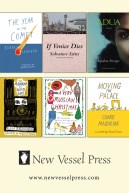 New Vessel Press: A subscription of New Vessel books includes all six of their books for the publication year. Subscribers also get to choose one book from their backlist. The cost is $80 which amounts to about 25% off of the cover prices. I haven’t read a book from New Vessel yet that I haven’t enjoyed. This year’s titles include If Venice Dies and A Very Russian Christmas so this subscription is definitely worth it.
  includes twelve of their titles is $170. A full-year of ebooks is $70 and a half year subscription for six books is also $70. They provide a lot of choices depending on one’s budget. Subscribers who are really passionate about their books and want to spend some money up front can also purchase two or three year subscriptions.
  The New York Review of Books: This press also specializes in reissuing lost classics from different countries around the world. They call their product a “book club” but it is essentially a subscription service. For $140 members receive a book every month for 12 months and the membership automatically renews. For a limited time NYRB is also offering a four issue subscription to The Paris Review when readers purchase a membership. I can’t get enough of the books from NYRB classics and I might have to buy a storage unit to house all of my books from their catalog. I will pretty much read anything they publish and $140 is a pretty good bargain for a year’s worth of their books.
 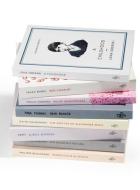 Pushkin online bookshop, and a free copy of Stefan Zweig’s novella Confusion. The Pushkin Collection is a series of paperbacks typeset in Monotype Baskerville, based on the transitional English serif typeface designed in the mid-eighteenth century by John Baskerville. It was litho-printed on Munken Premium White Paper and notch-bound by the independently owned printer TJ International in Padstow, Cornwall. The cover, with French flaps, was printed on Colorplan Pristine White paper.
 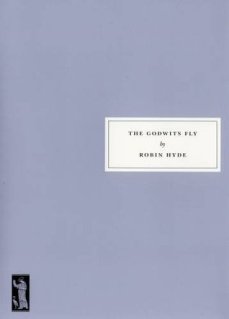 This is the latest release from Persephone Press whose classic fiction I adore. This book is unlike any other I have read from their catalog so far. The entire time I was reading it I felt as if I were in the midst of a dream with lots of sounds and imagines, some vivid and some out-of-focus. And the dialogue was sparse and poetic, sometimes difficult to understand. The main character, a girl named Eliza, is an aspiring poet from a very tender age so it is no wonder that the author chose such a lyrical style for her novel.
 Iris Wilkinson (1906-39), who wrote as Robin Hyde, is one of New Zealand’s major writers. Brought up in Wellington (her father was English and her mother Australian), she was encouraged to write poetry. At 17 she began work as a newspaper journalist. Hospitalised after a serious knee injury, she later gave birth to two illegitimate children – the first died, but her son, Derek Challis b. 1930, was fostered (and would wrote her biography in 2004). Despite two breakdowns, she continued to work ferociously hard, notably during 1934-5 at Auckland Mental Hospital when she wrote half of her total output; here she began her autobiographical novel
  This latest release from Persephone Books is a charming and entertaining look into the life of a middle-aged British couple that has been married for twenty-seven years. When the book begins Mary is being told by her second eldest daughter, Rosemary, that she is engaged to be married. Mary tries very hard to be stoic about this announcement even though she is upset because another one of her children is flying the coop. Mary married John at a very young age and she has been a devoted wife and mother for her entire adult life. The thought that of all three of her children no longer need her makes her sad and she feels lost.


 The Book Binder's Daughter