

I have the privilege every day of going to work at a place that I love and that has a long and rich tradition of education. The Woodstock Academy, founded in 1801, is one of the oldest public schools in the United States and it has a simple yet profound Latin motto which reflects and respects this tradition: Respice Futurum– “Look back at your future.” (For the philologists out there, respice is a present active imperative, a compound made up of the prefix re (back, again) and the verb spicio (to look) and futurum is the accusative, singular of the noun futurum which is formed from the future active participle of sum.)
These two simple Latin words capture the idea that one moves towards the future while also reflecting on the past. My husband likes to say that this motto is the equivalent of moving forward on a train while sitting in a seat that is facing backward. I thought Respice Futurum is apt for a reflection on books as well; it seems fitting to look ahead to my reading plans for 2017 while also reflecting on the types of books I have encountered over the past year and how they will influence my reading choices moving forward.
According to my list on Goodreads I read 105 books, a total of 24, 484 pages in 2016. A few books were left off this list such as Pascal Quignard’s Roving Shadows and The Sexual Night. The Goodreads list also doesn’t include a few volumes of poetry I’ve read and some collections of essays. And my list does not include any of the Latin or Greek authors I’ve translated or retranslated in 2016. This was not a bad year for me, but not my best either. The books in translation I have read have come from the following languages: French, German, Spanish, Estonian, Russian, Italian, Bulgarian, Korean, Malayalam, Kannada, Hungarian, Swedish, Turkish, Slovene, Icelandic, Hebrew, Norwegian, Portuguese.
In looking at this list of lit in translation, I would like to explore more books from Asia and Africa which are not well-represented on my list. I would also love to explore more books translated from Arabic which is a huge gap in my translated fiction. If anyone has suggestions, please leave them in the comments!
Almost all of the books I have read have been published by small presses which will continue to be my main source of reading: Seagull Books, New Vessel Press, Open Letter and Deep Vellum, Archipelago, New York Review of Books and Persephone Books.
My first read of 2017 has been The Story Smuggler by Georgi Gospondinov. This is #29 in the Cahier Series and the first one I’ve read from this series. I loved it so much that I went back and bought six more titles from the series, so there will be more Cahier titles in my future.
Gospondinov’s book The Physics of Sorrow is my favorite book from the Open Letter Catalog and one of my first reads in 2017 that I just started is another title from Open Letter, Justine by Iben Mondrup.
A book that I have already started in 2016 and will finish in 2017 is The Collected Prose of Kafka from Archipelago Press. This is a title that I am slowly making my way through and savoring. Archipelago has managed to collect some of Kafka’s best short pieces into one volume.
I have discovered the works of French philosopher Jean-Luc Nancy this year and reading his extensive backlist published in English should keep me busy for a very long time. Next up on my list of books written by him is his title on Sleeping.
Speaking of French writers, I am eager to read Pascal Quignard’s Terrace in Rome and All the World’s Mornings in 2017.
I was lucky enough to get an advance review copy of Russian author Sergei Lebedev’s The Year of the Comet which is being published in 2017 by New Vessel Press. I am very excited that I will have an interview with Lebedev coming up in an issue of Numero Cinq, for which literary magazine I am also privileged to continue to do production editing, to scout and recruit translators and to write reviews. I am also looking forward to two additional lit in translation titles from New Vessel: Moving the Palace (from Lebanon) and Adua (from Italy.)
I am always eager to read whatever Seagull Books publishes and thanks to their wonderful catalog I have discovered some classics of Indian literature. I am also looking forward to reading Goat Days by Benyamin which is already sitting on my bookshelf. I also understand that Seagull is publishing more works from Tomas Espedal in English translation which I am very eager to get my hands on. A long-term, very long-term goal of mine is to read the entire backlist from Seagull Books. I will do my best to put a large dent in that list this year.
This year I discovered Ugly Duckling Presse and I am eager to explore their backlist of poetry as well as their essays. I have a copy of To Grieve by Will Daddario on my shelf already. I would like to read more essays this year, so please leave suggestions for essays in the comments!
Finally, I would like to read more classics in 2017, especially Tolstoy, Pushkin and other Russian masters. I have a collection of Tolstoy’s short stories and a copy of The Complete Prose of Pushkin sitting on my shelf that I have yet to read. I also look forward to the reissues of classics from NYRB who is publishing more books my Henry Green. I am hoping to have read all six reissued Green books by the end of 2017. And, as always, I look forward to whatever classics from British, (mostly) female authors that Persephone Books has in store.
And as far as posts on my blog are concerned, I have always shied away from writing about Latin and Greek and classics, but my reading of Logue’s War Music has inspired me to continue writing about The Iliad and to do some of my own translations and interpretations of various Latin authors.
 A sampling of some of my most cherished classics books; the Loebs are nestled snugly on the bottom shelf.
Well, I could go on and on about my reading plans for 2017 or I could just go and actually get to reading. Happy new year to all of my fellow bibliophiles. I hope you also get a chance to Respice Futurum.
 The cozy spot where much of my reading takes place. It is overlooked by a print of The Roving Shadows cover done by Sunandini Banerjee, Seagull Books artist.

 This is the latest release from Persephone Press whose classic fiction I adore. This book is unlike any other I have read from their catalog so far. The entire time I was reading it I felt as if I were in the midst of a dream with lots of sounds and imagines, some vivid and some out-of-focus. And the dialogue was sparse and poetic, sometimes difficult to understand. The main character, a girl named Eliza, is an aspiring poet from a very tender age so it is no wonder that the author chose such a lyrical style for her novel.
 Iris Wilkinson (1906-39), who wrote as Robin Hyde, is one of New Zealand’s major writers. Brought up in Wellington (her father was English and her mother Australian), she was encouraged to write poetry. At 17 she began work as a newspaper journalist. Hospitalised after a serious knee injury, she later gave birth to two illegitimate children – the first died, but her son, Derek Challis b. 1930, was fostered (and would wrote her biography in 2004). Despite two breakdowns, she continued to work ferociously hard, notably during 1934-5 at Auckland Mental Hospital when she wrote half of her total output; here she began her autobiographical novel
  This latest release from Persephone Books is a charming and entertaining look into the life of a middle-aged British couple that has been married for twenty-seven years. When the book begins Mary is being told by her second eldest daughter, Rosemary, that she is engaged to be married. Mary tries very hard to be stoic about this announcement even though she is upset because another one of her children is flying the coop. Mary married John at a very young age and she has been a devoted wife and mother for her entire adult life. The thought that of all three of her children no longer need her makes her sad and she feels lost.
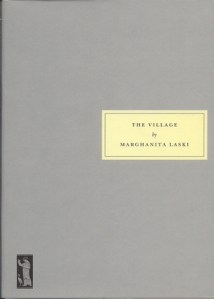 This novel opens in 1945 on the day in which the end of World War II has just been announced in the small village of Priory Dean. Everyone is celebrating and dancing in the streets but Martha Trevor and Edith Wilson still show up to their post duty at the Red Cross. During the course of their conversation we learn that they are from very different social classes; Martha is part of the upper-class gentry that live on the Hill in town and Edith is part of the working class families that live on the other end of town. At one point Edith worked as Martha’s housekeeper before Martha’s family hit some financially hard times.



 The Book Binder's Daughter