Category Archives: New York Review of Books

Review: Hill by Jean Giono

I received an advanced review copy of this title from NYRB classics.  The original title was written and published in French in 1928 and this English edition has been translated by Paul Eprile.

My Review:
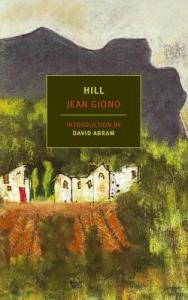
HillFour families live quiet and simple lives at the foot of a hill in Provence in the early twentieth century.  Their small community consists of four white houses and a small shack for an old bachelor that also lives among these peasants.  Their days consist of working the land, drinking wine and telling stories.  But their bucolic life is threatened when day when a black cat crosses their paths.

Janet, the eldest of the group, has lived at the foot of this hill for most of his life and the last time that this black cat came around it also meant trouble for their little village.  Janet’s son-in-law, a man named Gondran, as well as the other neighbors are all on high alert as they are anticipating some kind of calamity to happen to them.  The peasants believe in many old wives tales and different forms of superstition and to them a black cat is the ultimate sign of bad fortune about to strike.

When their well runs dry and they are desperate for water, the villagers decide that it is finally time to consult Janet about what to do.  But Janet is on his deathbed and spends his days laying in bed and mumbling gibberish.  Janet also has strange visions and at one point he thinks there are snakes coming out of his fingernails.  They are doubtful as to whether or not they can pry some useful information out of this delirious old man.

What Janet gives them is a beautiful and timeless commentary on mother earth and a lesson on how we ought to treat and respect nature.  Janet paints for them a picture of an earth where everything is alive and has feeling.  Every time we chop down a tree, or drive a spade into the dirt or hunt an animal the earth feels it and it hurts her.  The idea that the earth senses pain and actually cries out every time we use a foreign object to dig into the soil was one of the most powerful points in the book for me.

Giono personifies the earth through language rich with spiritual terms; he imagines a supreme protector of the earth who walks around in a sheep skin that was gifted to him by the animals.  And humans have harmed earth so much that the kindly, supreme being can no longer heal her many wounds.

The commentary on the spirituality of nature and our abuse and misuse of the limited resources that the earth gives us is a timely theme that we continue to discuss in the twenty-first century.  We must realize that the pollutants we put into the air, the poisons we put into the ground and the extraction of natural resources all have a negative effect on our environment.  Giorno’s words are just as applicable today as they were almost one-hundred years ago when he wrote this brief yet powerful little story.

The plot itself of this book is not necessarily a page-turner, but the inspirational language and social commentary are well worth the read.

About the Author:
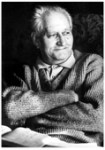
Jean GionoJean Giono, the only son of a cobbler and a laundress, was one of France’s greatest writers. His prodigious literary output included stories, essays, poetry,plays, filmscripts, translations and over thirty novels, many of which have been translated into English.

Giono was a pacifist, and was twice imprisoned in France at the outset and conclusion of World War II.

He remained tied to Provence and Manosque, the little city where he was born in 1895 and, in 1970, died.

Giono was awarded the Prix Bretano, the Prix de Monaco (for the most outstanding
collected work by a French writer), the Légion d’Honneur, and he was
a member of the Académie Goncourt


12 Comments

Filed under Classics, France, New York Review of Books

Review: The Voronezh Notebooks by Osip Mandelstam

My Review:
MandelstamThis edition of Mandelstam’s Voronezh Notebooks, recently published by the New York Review of Books, is a collection eighty nine verses the Russian poet wrote while he was exiled to the city of Voronezh.  During the early 1930’s Mandelstam wrote and published poetry that mocked and criticized Stalin and so it is no surprise that he was arrested and sent into exile.  During part of his exile he was allowed to live in Voronezh which was a bit more civilized as far as Russian exiles were concerned.  He was lucky that his wife Nadezhda was allowed to go with him and if it were not for her then much of his poetry would have been lost to us.

The first notebook contains poetry written between April and July of 1935.  All of the poems are numbered as well as dated.  In this first series of poems we understand that Mandelstam is relieved to be in Voronezh although he by no means feels at home in this city.  He lives is a crowded boarding house that he describes as a “coffin” in the first poem.  He and his wife have no privacy and they hear every movement and sound of their neighbors.  In the third poem he begs Voronezh to have mercy on him and “restore” him but throughout these poems we get the sense that he feels hemmed in, claustrophobic and hopeless.

The second Notebook beings in December of 1936 and goes through February of 1937.  The imagery of winter that one encounters in these poems are particularly striking.  He describes this season as a “postponed present” because the length of its extent is always uncertain.  Poem #37 is one of my favorites from this collection; he admires the goldfinch who “curses the sticks and perches of his prison.”  He admires this  bird who makes so much noise and is “disobedient.”

The final notebook is written between March and May of 1937.  As I have already hinted at through his writing of winter and the goldfinch, Mandelstam’s lines abound with images of nature and the forest.  In the introduction to this volume, Andrew Davis, the translator, tells us that Mandelstam composed these verses in his head while he was walking.  He seems to have done a great deal of exploring his natural surroundings and appreciated, even for a few hours, the illusion of freedom which they provided.  But Mandelstam realizes that his stay in Voronezh is not his own choice and he is still a captive of a fascist regime.  In Poem #72, for example, he writes of the night sky and the stars which he is fighting against as they hem him in and suffocate him; although the sky appears limitless, he is stuck under the sky that only encompasses this city.    In Poems #76 he declares, “I am ready to roam where the sky is greater.”

Finally, in his introduction to the collection Davis points out that the Notebooks were saved through the extraordinary efforts of his wife who, even after his death, saved pieces of them in teapots and other small places hidden around her apartment.  Each day she would practice memorizing them and Davis explains that “she made it her life’s work to preserve her husband’s poetry.”  Because of her act of devotion and bravery this seemed to me like a fitting collection to review as we celebrate and acknowledge those we love on this upcoming Valentine’s Day.


About the Author:
OsipOsip Mandelstam was a Russian poet and essayist who lived in Russia during and after its revolution and the rise of the Soviet Union. He was one of the foremost members of the Acmeist school of poets. He was arrested by Joseph Stalin’s government during the repression of the 1930s and sent into internal exile with his wife Nadezhda. Given a reprieve of sorts, they moved to Voronezh in southwestern Russia. In 1938 Mandelstam was arrested again and sentenced to a camp in Siberia. He died that year at a transit camp.

The translator has written a wonderful article about the difficulties of translating Mandelstam’s poems from Russian to English that I encourage everyone to read: https://psa.fcny.org/psa/poetry/crossroads/own_words/Osip_Mandelstam/


14 Comments

Filed under Literature in Translation, New York Review of Books, Osip Mandelstam, Poetry, Russian Literature

Review: My Marriage by Jakob Wassermann

I received an advanced review copy of this title from The New York Review of Books.  The original novel was published in German in 1934 and this English translation has been done by Michael Hofmann

My Review:
My MarriageWassermann presents us with the story of Alexander Herzog and his disastrous marriage to a woman from a middle-class German family named Ganna.  Alexander begins his tale with a history of Ganna’s childhood which seems to have a profound effect on her mental stability as an adult.  Ganna is one of six daughters, fifth in line, and is described as a duckling among swans.  She is not as pretty, graceful or demure as her sisters.  Her disobedience and lying often result in brutal beatings from her father.  No one ever thinks that Ganna could attract a man to marry; but Alexander, a young and up-and-coming writer, enters the scene and Ganna is smitten with him.
The beginning of the story has a light and funny tone as Alexander tells us about Ganna’s devotion to him and his writing.  She follows him around like a puppy and adores anything and everything he writes.  During this time Alexander is not able to make a successful living from the sales of his books so he is often in debt and wondering where his next meal will come from.  It starts to wound his pride when he is forced to rely heavily on the charity and pity of his friends.  Ganna suggests marriage to him because her rather sizeable dowry would mean the end of his financial woes.  Alexander dismisses Ganna’s suggestion of marriage as ridiculous, first and foremost because is not the one- woman, settling-down type of man.  But Ganna is relentless and finally wears him down, even threating to jump off a balcony if Alexander doesn’t agree to marry her.

Alexander lets Ganna and her world wash over him and he accepts his fate as her husband and a member of her extended family.  But Alexander’s passivity is his greatest flaw and he ignores the many warning signs of his impending misery and doom.  I kept reading the book and cringing because of all the gloomy foreshadowing.  The marriage starts to unravel rather quickly because it is evident that Ganna is mentally unstable, volatile, paranoid, and quite possibly psychotic.  She yells at the servants and then plays the part of the victim; she makes quick and intimate friends with various people in society and just as quickly makes them her mortal enemy.  Ganna and Alexander fight constantly and all the while Alexander keeps believing that he can change Ganna, calm her down, make her see reason.

After about ten years of marriage Alexander has many affairs which Ganna accepts as something that Alexander needs to do;  she is content with the fact that she is the lawful wife and that he will always come home to her.  But when Alexander meets and falls in love with a woman named Bettina, all of this changes.  Bettina is kind and patient and happy and Alexander, possibly for the first time in his life, falls deeply in love with her.  After carrying on their affair for several years, Alexander finally decides that he must ask Ganna for a divorce.  This divorce pushes Ganna over the edge to the point at which she is completely obsessed with making Alexander’s life miserable.  She employs one lawyer after another to ring more  and more money out of him and to drag out the divorce for years.  At one point it is estimated that she has a team of forty lawyers working to make Alexander’s  life miserable.  The last third of the book goes on for pages about the awful mess that Ganna makes out of everyone’s life and the horrible stress she causes to Alexander and Bettina.

I really should not have finished reading this book before bed because I laid awake for quite awhile thinking about it.  The combination of Alexander’s passivity and Ganna’s mental instability causes a perfect storm of misery for both of them.  The book is also an interesting commentary on mental illness and the far-reaching effects it has on a family.  How does one deal with a person who is so completely irrational, paranoid and volatile?  I think if Ganna were written about in the 21st century should would probably be diagnosed with a personality disorder or a psychosis.

The New York Review of Books has reissued another great classic from the German Language which I highly recommend if you enjoy books that explore marriage, psychological issues and unforgetable characters.


About the Author:
J WassermannBorn in Fürth, Wassermann was the son of a shopkeeper and lost his mother at an early age. He showed literary interest early and published various pieces in small newspapers. Because his father was reluctant to support his literary ambitions, he began a short-lived apprenticeship with a businessman in Vienna after graduation.

He completed his military service in Nuremberg. Afterward, he stayed in southern Germany and in Switzerland. In 1894 he moved to Munich. Here he worked as a secretary and later as a copy editor at the paper Simplicissimus. Around this time he also became acquainted with other writers Rainer Maria Rilke, Hugo von Hofmannsthal, and Thomas Mann.

In 1896 he released his first novel, Melusine. Interestingly, his last name (Wassermann) means “water-man” in German; a “Melusine” (or “Melusina”) is a figure of European legends and folklore, a feminine spirit of fresh waters in sacred springs and rivers.
From 1898 he was a theater critic in Vienna. In 1901 he married Julie Speyer, whom he divorced in 1915. Three years later he was married again to Marta Karlweis.

After 1906, he lived alternatively in Vienna or at Altaussee in der Steiermark where he died in 1934 after a severe illness.
In 1926, he was elected to the Prussian Academy of Art. He resigned in 1933, narrowly avoiding an expulsion by the Nazis. In the same year, his books were banned in Germany owing to his Jewish ancestry.

Wassermann’s work includes poetry, essays, novels, and short stories. His most important works are considered the novel Der Fall Maurizius (1928) and the autobiography, My Life as German and Jew (Mein Weg als Deutscher und Jude) (1921), in which he discussed the tense relationship between his German and Jewish identities.

12 Comments

Filed under Classics, German Literature, Literature in Translation, New York Review of Books

2015: A Banner Year for Indie Presses

I have been very quiet on the blog for the last couple of weeks because decking the halls and wrapping the gifts have taken up much of my time.  But like my fellow bloggers on the web, I have been thinking about my list of favorite books for 2015.  As I was looking through my reviews and thinking about all of the fantastic books I have read throughout the year, I immediately noticed a similarity among the books: most of them are published by independent presses.  I have gravitated more and more to independent press releases and have come to the point at which I seek out books from these brave, hardworking and smart publishers.  So here is my list for 2015.

Indie Press Favorites for 2015:
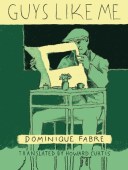
I have to start out with one of the very first small press books I read in 2015 and absolutely adored and that is Guys Like Me from New Vessel Press.  When I read this book I was so moved by its simple, character driven plot that I wanted to read anything else I could get my hands on by this publisher.  And I was not Guys Like Medisappointed.  I have read many of the books in their catalogue and I would add two more of their titles to my 2015 favorites list as well:  I Called Him Necktie and Alexandrian Summer.  If you want books with interesting characters and thought-provoking, emotional themes then I highly recommend giving these titles a try.
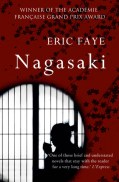
Next up, I have on  my list two titles from Gallic BooksGeorge’s Grand Tour and Nagasaki.  Gallic Books was founded in 2007 and it’s mission is to find the best books written in French and make them available to the English-speaking world.  Both of these titles will warm your heart and restore your faith in humanity.  They are actually great books to read around the holidays.Nagasaki

The Physics of Sorrow appealed to me because of the parallels drawn between the main character in the book and the Greek mythological figure of the Minotaur.  However, I learned so much more in this book than I ever expected.  The lasting effects of communism on a country like Bulgaria are astounding.  This book made me reflect on the fact that as Americans we oftentimes take our freedom for granted and we forget what citizens of countries like Bulgaria suffered under decades of oppressive regimes.  This title is published by Open Letter and since reading this I have been very excited to explore their wide range of translated titles.

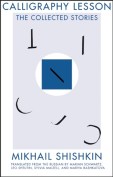
Speaking of communism and its aftermath, another favorite title of mine this year was Calligraphy Lesson, which is actually a collection of short stories.  In this Calligraphy Lessoncollection, Shishkin, one of Russia’s most famous contemporary authors, offers stories about himself and various members of his family and the devastating impact of Soviet rule had on their lives for generations.This title is brought to us by Deep Vellum , which has a catalogue rich with titles in translation from all over the world.
A list of small presses with fantastic titles published in 2015 would not be complete without a mention of a  Melville House title.  You might have heard of them because of their famous Twitter war with Penguin Random House.  If you haven’t read this little exchange, it is definitely worth a quick look for the hilarious jokes and barbs.  My first introduction to their books was through the novel The Scapegoat.  This novel is translated from the Greek and not only contains an interesting murder mystery, but it also teaches us an important lesson about what we can learn from history.  In addition,  Melville House has also published a fantastic collection of classic novellas which are definitely worth a look.  I have bought and reviewed several titles from their novella collection this year as well.

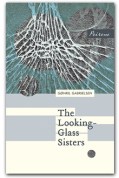
I must give a nod to Peirene Press, which I discovered by reading White Hunger.  This small British press specializes in publishing novellas translated into Looking Glass SistersEnglish.  Their books may be small, but they pack a powerful, emotional punch.  One of the best books of the year, in my humble opinion, is their novella The Looking Glass Sisters.  This book did not get as much attention as I think it should have; it is one of those reads where you think about its plot and characters long after you close the last page.
And the final independent press that I discovered late in the year thanks to Joe over at Roughghosts, is Istros Books.  I would say that their novel Dry Season is one of my favorites of the entire year.  Since finishing this book I have acquired several more of their titles which I am very excited to read and review in 2016.  Istros specializes in translating fiction from Eastern Europe.

There are two very special small publishers that I must mention from whose catalogues I own many, many books.  These two publishers deserve their own special categories as they have entire shelves on my bookcases dedicated to their titles.

Persephone Books:
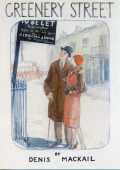
Original-Greenery-Street-cover-422x600A friend of mine, who is always spot on with his recommendation for me, turned me on to Persephone Books.  Persephone is an Independent British publisher that specializes in reissuing lost classics which are mostly written by female authors.  I fell in love with the first book I read from them, Greenery Street, and even since I have read one or two of their books per month.  I just can’t get enough of them.  It was very difficult to come up with only a couple of my favorites from 2015 but I have to go with Greenery Street and Patience.  Both books are funny, sweet and so well-written.   Persephone has quite an extensive catalogue and I would eventually like to work my way through all of their books.  There will most definitely be many more Persephone reviews to come in 2016.


New York Review of Books Classics:
AkenfieldThe first book I read from the NYRB classics collection was Stoner and ever since then I cannot get enough of their books.  This year I once again read several titles from their catalogue.  The Door, a book translated from the Hungarian which has been on many top ten book lists of the year, was also one of my favorites.  I would also add two additional books to my favorites list which they published in 2015.  Akenfield: Portrait of an English Village by Blythe was on of my favorite non-fiction books of 2015.  This book gives us a glimpse into all the of aspects of an English village in the 20th Century.  This is a must read for anyone who is a fan of British Literature.  The final book on my list for 2015 from NYRB classics is  Ending Up by Kingsley Amis.  This book is absolutely hilarious as it chronicles the final days of a group of septuagenarian roommates.  I have big plans to review several more of the NYRB books in 2016!

That pretty much wraps it up for me as far as 2015 is concerned.  In the new year I have titles on my TBR piles that include books from all of these Indie Presses.  Merry Christmas, Happy Holidays, Io Saturnalia and Happy New Year!

-Melissa, The Book Binder’s Daughter


17 Comments

Filed under British Literature, Classics, Favorites, Literature in Translation, Literature/Fiction, New York Review of Books, Nonfiction, Novella, Opinion Posts, Persephone Books, Short Stories

Review: Our Spoons Came from Woolworths by Barbara Comyns

My Review:
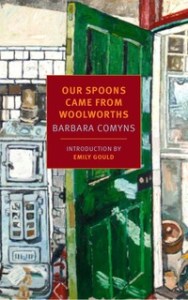
Our Spoons come from WoolworthsThis book is narrated by Sophia Fairclough, the main character of the book and deals with her rather difficult life during the 1930’s in London.  The language is very simple and straightforward, which is so fitting for Sophia; it’s as if we are reading her diary or sitting and listening to her story over an afternoon cup of tea.


Sophia meets Charles and they instantly fall in love and decide that they want to get married.  Even though they are only twenty-one years old and his family does not approve of her at all, they decide to get married.  They settle on a “secret” and “private” marriage at the local church, but they tell so many people that on the day of the ceremony the church is full of friends, family and odd acquaintances.

The book starts out on a very humorous tone as Sophia is extremely naïve about marriage, sex and motherhood.  Charles is an artist, a bit of a delicate genius, who can’t possibly put aside his art to get a proper job to support his wife.  Sophia is the main bread winner of the family and Charles is a terrible manager of their money.  Whenever they have a few extra shillings he spends it on frivolous things like painting supplies, wine and dinners.  Sophia is too naïve about living life as an adult to ask that her husband go out and get a job.  When she becomes pregnant and is forced to quit her job Charles is annoyed at having a baby in the house and having his only source of income cut off.

The scenes in which Sophia finds out about her pregnancy are absolutely hilarious.  She is genuinely surprised that she could be having a baby at all;  she thinks that if she wills herself not to be pregnant then she won’t have a baby.  When she goes to the hospital to have the baby she is shocked by the poking and prodding and the indignity of the whole process, right down to the horrible hospital bed clothes that she is forced to wear.

It is obvious from the very first sentence of the book that Sophia and Charles’ marriage does not end well.  As their marriage becomes increasingly difficult financially, emotionally and physically, Charles stays away from their home for longer and longer periods of time.  The humor that was spread throughout the first part of the book is noticeably absent in the send half of Sophia’s tale.  She suffers a great deal as her marriage disintegrates.

But in the end, Sophia learns an important lesson about resiliency and happy endings.  Even though she has suffered many trials and tribulations with and because of Charles she never becomes jaded or bitter.  She is guarded, yes, but never bitter.

The New York Review of Books has brought another brilliant classic to our attention.  I highly recommend this book for its humor, interesting storyline, and strong female character in the form of Sophia.


About the Author:
B ComynsBarbara Comyns Carr was educated mainly by governesses until she went to art schools in Stratford-upon-Avon and London. Her father was a semi-retired managing director of a Midland chemical firm. She was one of six children and they lived in a house on the banks of the Avon in Warwickshire. She started writing fiction at the age of ten and her first novel, Sisters by a River, was published in 1947. She also worked in an advertising agency, a typewriting bureau, dealt in old cars and antique furniture, bred poodles, converted and let flats, and exhibited pictures in The London Group. She was married first in 1931, to an artist, and for the second time in 1945. With her second husband she lived in Spain for eighteen years.

11 Comments

Filed under British Literature, Classics, Literary Fiction, New York Review of Books