Author Archives: Melissa Beck

Melissa Beck's avatar

About Melissa Beck

My reading choices are rather eclectic. I enjoy reading a wide range of books especially classics, literature in translation, history, philosophy, travel writing and poetry. I especially like to support small, literary presses.

Review: War, So Much War by Mercè Rodoreda

I received an ARC from Open Letter Press through Edelweiss.  This English edition has been translated by Martha Tennent

My Review:
War So Much WarAdrià Guinart lives in Barcelona with his mother and adopted younger sister.  But at the first chance he gets he leaves his home and joins an unnamed war that is ravaging the countryside.  He is only fifteen-years-old and what he sees while the war is raging forms the bulk of this bizarre and surreal narrative.  The book almost reads like a series of shorts stories, each of which is based on a different character that Adria meets while he is away from home at war.

There is very little fighting or war that Adria actually sees while he is roaming the countryside.  He stumbles upon the after affects of the war by meeting some wretched people along the way.  He meets a woman named Eva who is a miller’s daughter.  The book reads like a fantasy and sometimes the story is very disjointed and his episode with a woman named Eva is a perfect example.  As he is wading in a river with her for a while he learns that she is a miller’s daughter.  Their time together is very brief and when he parts from her he makes his way to the mill that her father owns.  At the mill he is tied up and beaten by the miller and eventually escapes.  He later meets up with Eva again, which second encounter seems even more random than the first.  They have a brief conversation and she leaves him again.

Another strange episode that Adria experiences takes place at a farmhouse that he stumbles upon in the woods.  When he first sees the owner of the house he is mercilessly beating his dog who has stolen a morsel of food.  The farmer explains that there is nothing in this world that he despises more than a thief and so he unleashes his anger on the family pet.  Adria stays with the farmer and his family for about two weeks doing chores for them in exchange for food and shelter.  One night the farmer’s daughters take Adria to a hidden pantry where Adria steals a ham.  When the farmer finds the ham, Adria suffers the same type of vicious beating that the dog received.  At this point he is forced to leave the farmhouse and once again roam the countryside.

The randomness and lack of smooth transitions from one scene to the next give the book a dreamlike quality.  It’s as if we have a front row seat to a viewing of Adria’s never ending nightmare.  Adria comes upon a castle whose owner has been tied up and held hostage in his own home.  He then wanders off once again and finds a girl on a beach who pledges her undying loyalty to him.  When he rejects her, she walks into the sea and commits suicide.  While walking along the sea Adria encounters a beach house where the owner welcomes him and feeds him.  He ends up staying with the man who owns the beach house, Senyor Ardevol,  for weeks and when the man dies he leaves his home and his possessions to Adria.

For the second part of the book Adria meets a series of interesting characters on the road whose stories are told in greater length.  Adria starts with Ardevol’s story and how he came to live in the beach house and how he came to see the strange image in the mirror in his foyer.  Adria also meets a cat man, a hermit and a man with a never-ending appetite, all of whom have strange tales to tell.  Even with the shift of focus in the book from Adria himself to the people he meets on the road, the stories in the second part of the book are just as fantastical and surreal as Adria’s experiences in the first part.

I have mixed feelings about this book but I think that is due to my preference for more realistic fiction.  The overall idea of the book is interesting but some of the shorter encounters of the main character, especially in the first half of the book, did not keep my attention.  Has anyone else read any other books by Mercè Rodoreda?  I am wondering if they are similar to this title.


About the Author:
Merce RMercè Rodoreda i Gurguí was a Spanish / Catalan novelist.

She is considered by many to be the most important Catalan novelist of the postwar period. Her novel “La plaça del diamant” (‘The diamond square’, translated as ‘The Time of the Doves’, 1962) has become the most acclaimed Catalan novel of all time and since the year it was published for the first time, it has been translated into over 20 languages. It’s also considered by many to be best novel dealing with the Spanish Civil War.

5 Comments

Filed under Classics, Literature in Translation, Novella, Spanish Literature

Review: Bird by Noy Holland

I received an advanced review copy of this title from Counterpoint Press through Edelweiss

My Review:
BirdThis is a bizarre and surreal book that follows two different periods in the life of a woman named Bird.  And actually Bird doesn’t even seem to be her real name, but a strange nickname given to her by a former boyfriend named Mickey.  When the book opens, we are given a glimpse into a typical day in the life of Bird, a housewife and a mother of two young children.  Her oldest child, although a little boy of an indeterminate age,  is apparently old enough to go to school, is getting ready to catch the bus.  Bird is trying to get her son ready for his day at school and make him breakfast while also dealing with the needs of her infant daughter.  From all outward appearances, Bird seems to have a happy and content domestic life.

But in between her domestic tasks Bird keeps remembering the time she spent with her old boyfriend named Mickey.  Bird met Mickey when she was very young and they lived on very little money in horrible, decrepit apartments.  For quite some time, they carried on a vagabond existence fueled by drugs and sex.  When Bird finds out that she is pregnant, she and Mickey could not be happier and they immediately name their unborn child Caroline.  Even though they have little money and no jobs, they are happy and want to make a life together with their baby.  But when Bird has an unexpected miscarriage, things begin to come apart in their relationship.  Mickey starts wandering off for days at a time and his moods and behavior become unpredictable and erratic.

After the miscarriage, Bird and Mickey go on a road trip, traveling part of they way in his old car and eventually ending up on foot and hitchhiking.  The parts that describe their journey are very strange and disjoined, especially when compared against the backdrop of Bird’s current, orderly life.  At one point when Bird is home alone with her baby, she drinks rum and takes a hot bath with her baby.  This episode of drinking during the day makes us wonder if there is some discontent in Bird’s life, or if she maybe at least has a longing for the chaos and freedom that she experienced with Mickey in her youth.  Bird also revisits her past through conversations with her old friend Suzie with whom she speaks to a several points throughout her day.  And Bird further recounts letters that she has written to her mother which express the extremes of happiness and sorrow that she experiences in her life with Mickey.

I also have to mentioned the language of the book which takes some getting used to.  When I first started reading the story I almost gave up because I found the disjointed and choppy sentences very distracting from the story.  Some paragraphs even go on for half a page with single words that serve as sentences.   However, as I read the more cohesive parts of the story, I  became very interested in Bird’s narrative.  I also started to view the disjointed language as something very fitting for the turmoil that Bird feels in her mind.  On the one had she loves her husband and children, but on the other hand she can’t help but feel pulled back by the memories of her past.  I don’t think Bird would give up her family to find and be with Mickey again, but her time with him has left an indelible and ineradicable impression on her memory and on her soul.

About the Author:
Noy HollanNoy Holland’s debut novel, Bird, is forthcoming from Counterpoint in Fall 2015. Her collections of short fiction and novellas include Swim for the Little One First (FC2), What Begins with Bird (FC2), and The Spectacle of the Body (Knopf.) She has published work in The Kenyon Review, Antioch, Conjunctions, The Quarterly, Glimmer Train, Western Humanities Review, The Believer, NOON, and New York Tyrant, among others. She was a recipient of a Massachusetts Cultural Council award for artistic merit and a National Endowment for the Arts Fellowship. She has taught for many years in the MFA Program for Poets and Writers at the University of Massachusetts, as well as at Phillips Andover and the University of Florida. She serves on the board of directors at Fiction Collective Two.

Leave a comment

Filed under Literary Fiction

Review: Montaigne by Stefan Zweig

I received an advanced review copy of this title from Pushkin Press through Edelweiss.  Montaigne was originally written in German in 1941 and this English translation is done by Will Stone. This is my second contribution to German Literature Month, hosted by Lizzy’s Literary Life and Beauty is a Sleeping Cat.  Please visit their blogs for more great German Literature in translation and to see the full list of blogs that are participating.

My Review:
MontaigneStefan Zweig was forced to flee his home in Austria as the Nazis were taking control of his motherland.  For years he wandered around Europe as a nomad with no real place to call home.  As Europe is ravaged by war, he finds his way to the German community of Petropolis in Brazil and in 1941 he decides to write this brief biography of Michel de Montaigne with whose life he identifies on many levels.

Montaigne comes from a long line of hardworking ancestors.   His father’s family were fishermen and made their fortune by eventually owning their own fleet of ships.  His mother’s family were Jewish bankers from Spain who fled that county to avoid the Inquisition.  Montaigne’s grandfather buys a chateau and a vast estate in Bordeaux and intends to further the family’s aristocratic status through his purchase of land and a title.

Montaigne is brought up in the lap of luxury and it was very important to his father that his eldest son receive the best education possible.  As a result it was mandatory that Montaigne be fluent in Latin, for which purpose his father hired a German tutor when Montaigne was only four years old.  Montaigne was only allowed to speak in Latin and even the rest of the family and the household servants were required to learn some basic Latin phrases in order to communicate with the young boy.  As a result of this immersion in the language Montaigne is said to have been more comfortable speaking and writing in Latin than in his native French.  As a classicist I couldn’t help but simile at and appreciate this part of Montaigne’s story.  If only it were possible to educate all of my students in this way!

When Montaigne’s father dies he takes over as the head of household..  This foists a large responsibility on a man who sees his familial and civic responsibilities as mundane and tiresome occupations.  Zweig highlights Montaigne’s detachment from his family whom he even seems to view at times as a burden.  He never has fond words for his wife or the institution of marriage and at one point Zweig says that Montaigne is not even really sure how many children he has that are still alive.  Montaigne’s isolation from his family is further deepended when, at the age of thirty-eight, he decides that he wants to retire from his life, lock himself in the study in his tower, and read the precious books with which he has surrounded himself.

Montaigne’s view of books and reading is also noteworthy in Zweig’s account of his life.  Montaigne wants to absorb as much information and knowledge as possible and he scribbles notes in his books as various thoughts occur to him.  Montaigne states about his collection: “Books are my kingdom.  And here I seek to reign as absolute lord.”  It is during this time of self-imposed retreat and isolation that Montaigne tries to attain individual freedom and seeks to know himself as a man and as a human being on a deeper level.  His intentions, like other philosophers, is not to give his readers a specific ideology to follow.  Instead his thoughts and writings are introspective and intensely personal.

Ten years later, at the age of forty-eight, Zweig decides that he has had enough of his retirement and so decides to travel across Europe.  This journey becomes very painful for him since he suffers debilitating pain from kidney stones.  While he is away on his journey, the citizens of Bordeaux elect him in absentia as their mayor so at this point he decides to go back and serve his people.  Zweig reminds us, though, that Montaigne is no hero and his selfish habits come to the forefront once again when the plague breaks out in Bordeaux and he abandons his people to find for themselves.

Whether or not one is familiar with Montaigne, Zweig’s account of him is definitely worth a read.  Zweig was at a critical point in his life where he saw the world erupt in violence because of fascism and communism.  He commiserated with Montaigne who also saw his world torn apart by religious wars and fanaticism.  Zweig commits suicide in 1942 and this was one of the last things that he wrote.  Many believe that Zweig took Montaigne’s advice as far as death is concerned and decided to die on his own terms instead of living through a miserable exile imposed on him by outside forces.

About The Author:
Stefan Zweig was one of the world’s most famous writers during the 1920s and 1930s, especially in the U.S., South America and Europe. He produced novels, plays, biographies and journalist pieces. Among his most famous works are Beware of Pity, Letter from and Unknown Woman and Mary, Queen of Scotland and the Isles. He and his second wife committed suicide in 1942.

Zweig studied in Austria, France, and Germany before settling in Salzburg in 1913. In 1934, driven into exile by the Nazis, he emigrated to England and then, in 1940, to Brazil by way of New York. Finding only growing loneliness and disillusionment in their new surroundings, he and his second wife committed suicide.

Zweig’s interest in psychology and the teachings of Sigmund Freud led to his most characteristic work, the subtle portrayal of character. Zweig’s essays include studies of Honoré de Balzac, Charles Dickens, and Fyodor Dostoyevsky (Drei Meister, 1920; Three Masters) and of Friedrich Hlderlin, Heinrich von Kleist, and Friedrich Nietzsche (Der Kampf mit dem Dmon, 1925; Master Builders). He achieved popularity with Sternstunden der Menschheit (1928; The Tide of Fortune), five historical portraits in miniature. He wrote full-scale, intuitive rather than objective, biographies of the French statesman Joseph Fouché (1929), Mary Stuart (1935), and others. His stories include those in Verwirrung der Gefhle (1925; Conflicts). He also wrote a psychological novel, Ungeduld des Herzens (1938; Beware of Pity), and translated works of Charles Baudelaire, Paul Verlaine, and mile Verhaeren.

Most recently, his works provided inspiration for the 2014 film ‘The Grand Budapest Hotel’.

German Lit Month

9 Comments

Filed under German Literature, Literature in Translation, Nonfiction

Review: Narcissus and Goldmund by Hermann Hesse

This is my first contribution to German Literature Month, hosted by Lizzy’s Literary Life and Beauty is a Sleeping Cat.  Please visit their blogs for more great German Literature in translation and to see the full list of blogs that are participating.

My Review:
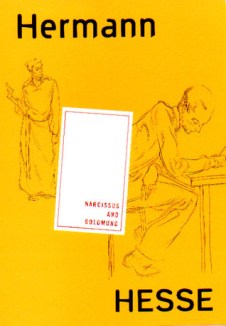
Narcissus and GoldmundThis is one of those classic books that is very difficult to review and do it justice because there are so many ideas contained within the book.  It is a coming-of-age story, a commentary on existential philosophy and a beautiful description of a life long friendship.  Narcissus is a teacher’s assistant in the cloister of Mariabronn and fully intends to take his vows as a monk.  Narcissus is a very talented scholar and it is evident that he will one day serve the church and even become the Abbot of the cloister.  He is a cerebral man who values the intellect but his emphasis on the rational also prevents him from having any real friendships or meaningful love in his life.  But this all changes when a young boy by the name of Goldmund is dropped off at the cloister by his father.

Goldmund has been raised solely by his father and his father has done everything in his power to erase Goldmund’s memories of his gypsy mother.  Goldmund’s father drops him off at the cloister with the intention of Goldmund being a pupil and eventually taking a vow to become a monk.  Goldmund’s father tells him that he must dedicate his life to God in order to make up for his mother’s sins.  But Goldmund does not possess the intellectual detachment of Narcissus and love and art and seduction are things which he cannot deny himself in order to become a monk.  Narcissus helps Goldmund realize that cloister life is not for him and when Goldmund learns the pleasures of sex from a gypsy woman he knows that Narcissus is right and he immediately flees the cloister.

Most of the book is a description of Goldmund’s restless journey as a wanderer.  Wherever he stays, whether it be in a modest farmhouse, the castle of a knight or a large city, he manages to satisfy his sexual desires by seducing countless women.  Goldmund is kind and loving and handsome so oftentimes a single look or a caress is enough for a woman to fall in bed with him.  But he never stays in one place long enough to have a lasting and deep friendship like the one he had with Narcissus.  The longest he stays at any place is the Bishop’s city where he becomes an apprentice to a master artist named Niklaus.  Niklaus teaches Goldmund the finer points of sculpting and Goldmund’s greatest masterpiece is a sculpture of St. John that is done in the likeness of his greatest friend Narcissus.  Even though Narcissus and Goldmund are very far apart for many years, their friendship still has a great influence on Goldmund’s life.

Narcissus does come back into Goldmund’s life at a critical point in the book when Goldmund is most in need of help.  Goldmund eventually goes back to live in the cloister as the artist in residence and he works on many sculptures with which to grace the beloved halls of his boyhood home.  Goldmund has had many hardships while on his travels and he puts all of his experiences into his artwork.  There is a heavy emphasis in the book on the close relationship between ecstasy and suffering.  When we give our heart to someone, whether it be a friend, a lover or a relative, we always run the risk of being harmed.  Goldmund had a deep fondness with his mother whom he barely remembers and throughout the book he is looking for that mother-relationship again that made him feel so safe during his very early years.    His culminating sculpture at the monastery, one that he wants to keep to himself and not share, is a mother figure done in the likeness of one of his most influential lovers named Lydia.

Narcissus and Goldmund is a classic novel that I will reach for again and again on my bookshelf.  It is a novel with so many layers that I a sure that each time I reread it I will have new insights and thoughts about this plot.  I look forward to reading another Hesse novel for German Literature month.  What German Literature have you read that you would highly recommend?

German Lit Month


About The Author:
HesseHermann Hesse was a German-Swiss poet, novelist, and painter. In 1946, he received the Nobel Prize in Literature. His best known works include Steppenwolf, Siddhartha, and The Glass Bead Game (also known as Magister Ludi) which explore an individual’s search for spirituality outside society.

In his time, Hesse was a popular and influential author in the German-speaking world; worldwide fame only came later. Hesse’s first great novel, “Peter Camenzind”, was received enthusiastically by young Germans desiring a different and more “natural” way of life at the time of great economic and technological progress in the country.

Throughout Germany, many schools are named after him. In 1964, the Calwer Hermann-Hesse-Preis was founded, which is awarded every two years, alternately to a German-language literary journal or to the translator of Hesse’s work to a foreign language. There is also a Hermann Hesse prize associated with the city of Karlsruhe,Germany.

28 Comments

Filed under Classics, German Literature

Review: Stoner 50th Anniversary Edition by John Williams

I received an advance review copy of this title from New York Review of Books.

My Review:
Stoner 50thFor those of you that are not new to my blog, you might have noticed that this book has a place in my “favorites” section. In this book we are introduced to William Stoner who is born at the turn of the century into a very poor farm family in rural Missouri.   Stoner would have also become a farmer like his father and when he is given a scholarship to the state university, he fully intends to study agriculture.  But through the influence of a tough but inspiring English professor, Stoner changes his major to English and he himself becomes a University English professor.


One of the aspects that I enjoyed most about the book is Stoner’s contemplation about what it means to be a good teacher. He also doesn’t always play the university politics game and his career suffers for it.  He is forced to teach Freshman English courses over and over again and he does so in a stoic manner without protest.  Whether he is in a graduate seminar class or a beginning Freshman English class he always gives his best teaching to his students.

Stoner meets a charming young woman at the home of his professor and he immediately decides that he wants to marry her.  He courts Edith for about two weeks and they have a modest wedding ceremony at her parent’s house.  But Edith soon reveals her mental instability and Stoner realizes very quickly that his marriage is a miserable failure.   But Stoner never even contemplates leaving Edith and instead he endures a miserable life at home with a wife who is crazy and unpredictable. I was glad to see that at one point in the book, though, he does find real love and intimacy, which I think is what he craves all along.

The prose in this book is exceptionally elegant. This is one of those books that my thoughts keep wandering to over and over. It makes one contemplate so many different ideas: career, family, love, marriage, and even death.  The 50th anniversary edition issued by the New York Review of Boks is a hardcover book with an introduction by John McGahern.  Even if you have already read Stoner on the Kindle or in the original paperback, this beautiful hardcover edition is very special and worth having on one’s bookshelf.

About The Author:
John WilliamsJohn Edward Williams was born on August 29, 1922, in Clarksville, Texas, near the Red River east of Paris, Texas and brought up in Texas. His grandparents were farmers; his stepfather was a janitor in a post office. After flunking out of junior college and holding various positions with newspapers and radio stations in the Southwest, Williams enlisted in the USAAF early in 1942, spending two and a half years as a sergeant in India and Burma. Several years after the war, Williams enrolled in the University of Denver, where he received his B.A. in 1949 and an M.A. in 1950. During this period, his first novel, Nothing But the Night, was published (1948), and his first volume of poems, The Broken Landscape, appeared the following year. In the fall of 1950, Williams went to the University of Missouri, where he taught and received a Ph.D. in 1954. In the fall of 1955, Williams took over the directorship of the creative writing program at the University of Denver, where he taught for more than 30 years. Williams’s second novel, Butcher’s Crossing, was published by Macmillan in 1960, followed by English Renaissance Poetry, an anthology published in 1963 by Doubleday which he edited and for which he wrote the introduction. His second book of poems, The Necessary Lie, appeared in 1965 and was published by Verb Publications. In 1965 he became editor of University of Denver Quarterly (later Denver Quarterly) until 1970. In 1965, Williams’s third novel, Stoner, was published by Viking Press. It has been recently been re-issued by The New York Review of Books. His fourth novel, Augustus, was published by Viking Press in 1973 and won the prestigious National Book Award in 1973 and remains in print.

The critic Morris Dickstein has noted that, while Butcher’s Crossing, Stoner, and Augustus are “strikingly different in subject,” they “show a similar narrative arc: a young man’s initiation, vicious male rivalries, subtler tensions between men and women, fathers and daughters, and finally a bleak sense of disappointment, even futility.” Dickstein called Stoner, in particular, “something rarer than a great novel — it is a perfect novel, so well told and beautifully written, so deeply moving, it takes your breath away.”

After retiring from the University of Denver in 1986, Williams moved with his wife, Nancy, to Fayetteville, Arkansas, where he resided until he died of respiratory failure on March 3, 1994. A fifth novel, The Sleep of Reason, was left unfinished at the time of his death

8 Comments

Filed under Classics, Favorites, New York Review of Books