
This title was published in the original Estonian in 2011. This English edition has been translated by Adam Cullen and is being published by Dalkey Archive in April 2017.
My Review:
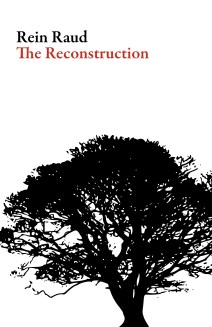 Enn Padrick, the narrator of The Reconstruction begins writing in a journal in order to catalog his private investigation into his young, adult daughter’s bizarre death: “I didn’t know it when I began, but I do now: I don’t want to blame anyone or anything; or if I do, then only myself. But I needed clarity. I don’t want to find fault; I want to find out—if I only can.” Enn’s daughter, Anni, had been living in a quasi-religious commune with three other friends, all of whom died in a fire on their isolated, Estonian farmstead. All four residents were found lying side by side in a second floor bedroom and each one of them had a small packed suitcase; a fifth suitcase was found in another room on the first floor, indicating that an additional resident had escaped this tragedy. Enn has been diagnosed with a fatal form of cancer and decides that he wants to spend his last several months trying to unpack the mystery of his daughter’s strange death.
The Reconstruction is divided into two parts, the first of which, entitled “Fish Tracks in Water” is taken up with Enn’s description of his early days at Tarfu State University where he studied Ecology and met his wife, Maire. I found the descriptions of Enn’s life in Estonia during the Russian occupation particularly fascinating. Rein Raud captures the general mood of what I would call a resentful acceptance of Soviet occupation through Enn’s memories of his earlier life: “I was a Pioneer and a member of the Komsomol (the Leninist Young Communits League) and hated the Soviet regime just like everyone else—not especially believing that it would even end, but also not of the opinion that it could be served with integrity.” Soviet rule lingers in the background of Enn’s life and has a great effect on his relationships, especially his marriage and his interactions with his in-laws.
Enn’s father-in-law had risen to an important rank in the Soviet hierarchy through the agricultural sector and enjoyed all of the privileges and perks to which he was entitled by the system. They lived in a nice apartment in a coveted area and Enn and Maire live with them for the first part of their married life and when their daughter is young. Enn has no ambitions to become a politician or work for the Soviet system like his father-in-law, so there seems to be some resentment on Maire’s part that her husband can’t provide luxuries for their family. When Anni, their only child, is a little older they do manage to get their own apartment through Maire’s father’s connections. Even though they are living on their own, in a different city, Enn’s obligation to his in-laws is still evident: “Life was hard during those final years of the Soviet Union, of course—shelves were empty, and if we hadn’t had Maire’s parents’ access to the privileged grocery stores, our diet would definitely have been much more meager than it was; but even that wasn’t so important.” The last part of this clause is particularly striking because, although he is still dependent on his in-laws and the old Soviet system, Enn is beginning to experience personal freedom as he lives apart from his in-laws and political freedom as the Soviet hold over Estonia is coming to its end.
As Anni gets older and the remnants of Soviet occupation fall away, opportunities are opened up to her and other Estonian youth that would have been unheard of a decade earlier. Anni graduates high school with honors and is number one on the university acceptance list for French studies. Anni moves to Paris and studies sociology and politics in that city for a few years. Part of Enn’s journey takes him to Paris where he discovers more about the nature of her studies and the types of people she interacted with while in Paris. Enn and Maire are proud of their daughter, but while reflecting back on those years Enn realizes that even at that point in her life he did not know his daughter very well at all: “What did I really know about my daughter at that point—about her as a person? I can honestly say: almost nothing.” Enn’s realization that his adult daughter was a stranger to him is one of the saddest and most poignant revelations in the entire book; it is only well after her tragic death that he begins to understand anything about her experiences and her life.
The theme of religion and how we each deal with our own mortality pervades Rein’s narrative. Enn is facing the end of his life due to a chronic illness as he investigates his daughter’s death. He doesn’t adhere to any particular religious beliefs but he feels that being a good person, the best that he is capable of, is important for him during his final days. Gaining a deeper understanding of his daughter feels like, for him, the good and right thing to do. The second part of the book, entitled “Birchback” is mostly taken up with Enn’s interviews of Anni’s friends as he tries to piece together her final year of life on the religious commune. Birchback was originally the home of an artist named Joel and his wife Veronika. They decide to open up their estate, which is a former farm and homestead, as a type of retreat where people can come and do workshops and practice self-reflection and self-improvement. There is no specific brand of religion that any of the residents at Birchback practice, but there are many discussions about the benefits and dangers of religious beliefs, especially when devotees take their spiritual practices to an extreme.
It is not unusual for young adults who are trying to figure out their place in this world to have some type of an existential or religious crisis. The scattered and confused characters at Birchback who do strange things in the name of religion, like shaving their heads and taking a vow of silence, become a symbol in the book for the crisis of faith and mortality that happens for Estonian youth after the Soviet occupation. Estonians were forbidden for so long to practice any type of Christianity that when they are faced with a freedom of religion, many young people like Anni and her friends experiment with different and unusual types of spirituality. After Enn comes to a better understanding of the strange and tragic path his daughter’s life had taken, he reflects on the role that religion can play in the life of a person who is having a vulnerable moment:
As far as I understand it, experts on religious psychopathy often say that the tendency to turn to religion is simply a human trait that some have and others don’t. Something like musicality or mathematics skills. That’s complete bullshit. No one is protected from it. Someone simply appears in your life at the exact moment you’ve hit a dead end, presses the right buttons (comforting some, questioning some, or simply being near others,) and then even the most rational mind, the most cheerful spirit is capable of withdrawing from his or her former principles.
One final theme that should be mentioned which pervades The Reconstruction as well as Raud’s previous book The Brother is that of familial relationships. Both of Raud’s novels are very different in plot and writing style, however, each story thoroughly explores the different and pivotal roles that family members play in our lives. Raud delves into relationships between siblings, spouses, in-laws, children and parents with careful attention to detail and imagery. Through Enn’s investigation into his daughter’s life, we are reminded that relationships are never easy and we can never become complacent with or take for granted a person that is truly important to us.
About the Author:
 Rein Raud is the author of four books of poetry, six novels, and several collections of short fiction. He’s also a scholar in Japanese studies and has translated several works of Japanese into Estonian. One of his short pieces appeared in Best European Fiction 2015.
 In 2013, Will Daddario experienced the loss of his father, grandmother, friend, and cat all within a span of five months. In early 2014, he and his wife were expecting their first child, a baby boy whom they were going to name Finlay, but their precious gift died during delivery. Daddario writes this short, philosophical, moving chapbook to serve as a chronicle of his grieving process and as a tribute to those he loved and lost. He introduces his writing: “While grieving, I have turned to multiple sources to guidance. What follows here is my own attempt to act as guide for others who encounter such loss, though, truthfully, the primary audience is myself.”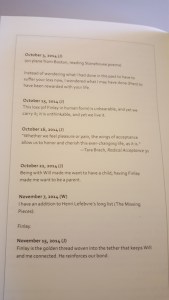
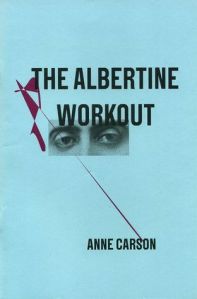 Anne Carson writes in the appendix to this chapbook: “Habit, suffering, boredom, memory, tea drinking, tea biscuits and the inscrutable banality of existence are topics Beckett and Proust have in Common. They anatomize them differently. What is located in the head, the mouth or the mind for Proust moves lower down the body in Beckett.” Carson uses this theory to help us better understand one of Proust’s most elusive characters.



 Transit, Cusk’s second book in what will be a trilogy of fictional autobiographies about the aftermath of her divorce, begins with an unsolicited email that Faye, the narrator, receives from a psychic. The self-proclaimed astrologist says that she is in possession of specific details about Faye’s life: “She wished me to know that a major transit was due to occur shortly in my sky.” Just as in Outline, the narrator deliberately leaves details about herself out of the narrative; we only get passing glimpses of her life through her interactions with others. A visit to the hairdresser, a trip to a literary festival, a date, and a party at a friend’s home all become the backdrop for intriguing conversations and interactions that partly reveal Faye’s own story.


 The Book Binder's Daughter