Category Archives: Literature in Translation

Review: Farewell, Cowboy by Olja Savicevic

I received a review copy of this title from the publisher, Istros Books.  They are a small, independent British press that specializes in bringing the best literature from Eastern Europe into English translations.  Please visit their website for more information and additional titles: http://www.istrosbooks.com

My Review:
Farewell, CowboyDada has grown up in a small town in Croatia from which she escaped as soon a she could at the age of eighteen.  But she is drawn back to this bizarre town by the horrible suicide of her younger brother, Daniel.  The book is told from Dada’s point of view and we are given information about her life and hometown as Dada remembers it.  She speaks of memory being like a tape that “rolls forward and backwards.  Fw-stop-rew-stop-rec-play-stop, it stops at important places, some images flicker dimly frozen in a permanent pause, unclear.”  The narrative runs in the same way that Dada describes a tape: sometimes we get a passage that is an old memory and then all-of-sudden we are thrust into her present; Dada also likes to fast forward to her future and speculate on what she will do next.

The setting is a coastal town in Croatia which is hot, dirty and badly polluted.  Dada’s own father died from an acute case of asbestos poisoning.  People in the town, especially the children, love old westerns and when they were young,  Dada and her brother Daniel act out scenes from the westerns they have watched at the local movie theater.  Like a typical American western that takes place on the border between civilization and the vastly unorganized territory, Croatia at the time also occupies a space somewhere between civilization and a strange wilderness.  The western theme is fitting for a place like Croatia which was torn apart by war in the Balkans and it is Dada’s generation that is still trying to recover from this conflict.

Dada describes many eccentric characters that she has known since childhood; many residents of this town that she calls the “Old Settlement” do not seem to conform to what most would consider normal social behavior.  For example, her great-grandmother, who was a diabetic invalid, is described as the “insatiable one” because of her reputation for sex.  Professor Herr, a neighbor of Dada’s family and the local vet, has his home ransacked by a group of young people and he mysteriously disappears soon after.  It also seems that he is the only one who has any answers about Daniel’s mysterious and puzzling death.

The cowboy and western theme is further developed when a group of actors and extras show up to film a western-style movie.  All of the extras hang around the Old Settlement with their big hats and belt buckles.  Some of them even start shooting chickens with their pistols.  Dada has a very brief and passionate affair with one of these extras named Angelo.  It appears that Angelo also knew Dada’s brother Daniel and although he denies it, he might have some knowledge about Daniel’s mysterious death.

The final part of the book comes to a very fast-paced and dramatic conclusion.  The circumstances of Daniel’s death are revealed amidst a showdown between the fake cowboys and one of the eccentric villagers.  I was not surprised to learn that this author is also a poet since many of the lines in this book blur the distinction between lyric and prose.  In the end, we are reminded that cowboys, although a nice fantasy as a short distraction, are not real and that oftentimes there will never be a hero riding into town on that white horse.  Sometimes the bad guys do win.


About the Author:
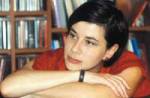
oljasavicevic_514b20764bd97_250x800rOlja Savičević is an awarded poet and novelist, who burst onto the authorial stage with her short story collection Make the Dog Laugh in 2006. Last year, her collection of poems Mamasafari and Other Things was short-listed for the ‘Kiklop Award for Best Collection of 2012’, awarded annually by the Pula Book Fair. Her best-selling book Farewell, Cowboy has already achieved great success in the region, and was even adapted into a stage play. The book was translated by Celia Hawkesworth and published by Istros Books in April, 2015.
5 Comments

Filed under Literature in Translation

2015: A Banner Year for Indie Presses

I have been very quiet on the blog for the last couple of weeks because decking the halls and wrapping the gifts have taken up much of my time.  But like my fellow bloggers on the web, I have been thinking about my list of favorite books for 2015.  As I was looking through my reviews and thinking about all of the fantastic books I have read throughout the year, I immediately noticed a similarity among the books: most of them are published by independent presses.  I have gravitated more and more to independent press releases and have come to the point at which I seek out books from these brave, hardworking and smart publishers.  So here is my list for 2015.

Indie Press Favorites for 2015:
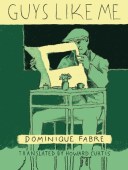
I have to start out with one of the very first small press books I read in 2015 and absolutely adored and that is Guys Like Me from New Vessel Press.  When I read this book I was so moved by its simple, character driven plot that I wanted to read anything else I could get my hands on by this publisher.  And I was not Guys Like Medisappointed.  I have read many of the books in their catalogue and I would add two more of their titles to my 2015 favorites list as well:  I Called Him Necktie and Alexandrian Summer.  If you want books with interesting characters and thought-provoking, emotional themes then I highly recommend giving these titles a try.
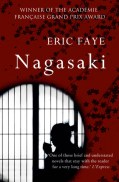
Next up, I have on  my list two titles from Gallic BooksGeorge’s Grand Tour and Nagasaki.  Gallic Books was founded in 2007 and it’s mission is to find the best books written in French and make them available to the English-speaking world.  Both of these titles will warm your heart and restore your faith in humanity.  They are actually great books to read around the holidays.Nagasaki

The Physics of Sorrow appealed to me because of the parallels drawn between the main character in the book and the Greek mythological figure of the Minotaur.  However, I learned so much more in this book than I ever expected.  The lasting effects of communism on a country like Bulgaria are astounding.  This book made me reflect on the fact that as Americans we oftentimes take our freedom for granted and we forget what citizens of countries like Bulgaria suffered under decades of oppressive regimes.  This title is published by Open Letter and since reading this I have been very excited to explore their wide range of translated titles.

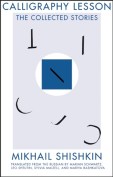
Speaking of communism and its aftermath, another favorite title of mine this year was Calligraphy Lesson, which is actually a collection of short stories.  In this Calligraphy Lessoncollection, Shishkin, one of Russia’s most famous contemporary authors, offers stories about himself and various members of his family and the devastating impact of Soviet rule had on their lives for generations.This title is brought to us by Deep Vellum , which has a catalogue rich with titles in translation from all over the world.
A list of small presses with fantastic titles published in 2015 would not be complete without a mention of a  Melville House title.  You might have heard of them because of their famous Twitter war with Penguin Random House.  If you haven’t read this little exchange, it is definitely worth a quick look for the hilarious jokes and barbs.  My first introduction to their books was through the novel The Scapegoat.  This novel is translated from the Greek and not only contains an interesting murder mystery, but it also teaches us an important lesson about what we can learn from history.  In addition,  Melville House has also published a fantastic collection of classic novellas which are definitely worth a look.  I have bought and reviewed several titles from their novella collection this year as well.

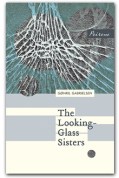
I must give a nod to Peirene Press, which I discovered by reading White Hunger.  This small British press specializes in publishing novellas translated into Looking Glass SistersEnglish.  Their books may be small, but they pack a powerful, emotional punch.  One of the best books of the year, in my humble opinion, is their novella The Looking Glass Sisters.  This book did not get as much attention as I think it should have; it is one of those reads where you think about its plot and characters long after you close the last page.
And the final independent press that I discovered late in the year thanks to Joe over at Roughghosts, is Istros Books.  I would say that their novel Dry Season is one of my favorites of the entire year.  Since finishing this book I have acquired several more of their titles which I am very excited to read and review in 2016.  Istros specializes in translating fiction from Eastern Europe.

There are two very special small publishers that I must mention from whose catalogues I own many, many books.  These two publishers deserve their own special categories as they have entire shelves on my bookcases dedicated to their titles.

Persephone Books:
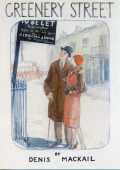
Original-Greenery-Street-cover-422x600A friend of mine, who is always spot on with his recommendation for me, turned me on to Persephone Books.  Persephone is an Independent British publisher that specializes in reissuing lost classics which are mostly written by female authors.  I fell in love with the first book I read from them, Greenery Street, and even since I have read one or two of their books per month.  I just can’t get enough of them.  It was very difficult to come up with only a couple of my favorites from 2015 but I have to go with Greenery Street and Patience.  Both books are funny, sweet and so well-written.   Persephone has quite an extensive catalogue and I would eventually like to work my way through all of their books.  There will most definitely be many more Persephone reviews to come in 2016.


New York Review of Books Classics:
AkenfieldThe first book I read from the NYRB classics collection was Stoner and ever since then I cannot get enough of their books.  This year I once again read several titles from their catalogue.  The Door, a book translated from the Hungarian which has been on many top ten book lists of the year, was also one of my favorites.  I would also add two additional books to my favorites list which they published in 2015.  Akenfield: Portrait of an English Village by Blythe was on of my favorite non-fiction books of 2015.  This book gives us a glimpse into all the of aspects of an English village in the 20th Century.  This is a must read for anyone who is a fan of British Literature.  The final book on my list for 2015 from NYRB classics is  Ending Up by Kingsley Amis.  This book is absolutely hilarious as it chronicles the final days of a group of septuagenarian roommates.  I have big plans to review several more of the NYRB books in 2016!

That pretty much wraps it up for me as far as 2015 is concerned.  In the new year I have titles on my TBR piles that include books from all of these Indie Presses.  Merry Christmas, Happy Holidays, Io Saturnalia and Happy New Year!

-Melissa, The Book Binder’s Daughter


17 Comments

Filed under British Literature, Classics, Favorites, Literature in Translation, Literature/Fiction, New York Review of Books, Nonfiction, Novella, Opinion Posts, Persephone Books, Short Stories

Review: Boredom by Alberto Moravia

This book was originally written and published in Italian in 1960 and this English translation has been done by Angus Davidson.

My Review:
BoredomThis is another selection from the New York Review of Books Classics category.  My first experience with Moravia was another NYRB Classic release of his entitled Agostino  which I thoroughly enjoyed.  One notices immediately from these books that Moravia is an author who is interested in exploring the depths of the human, male psyche.  He is not afraid to explore taboo subjects and depict flawed characters who are trying to grapple with the trappings of their own minds.
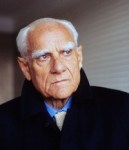
Dino has grown up in the lap of luxury due to the fact that his mother is rather wealthy.  She lives in an opulent home on the Via Appia in Italy and employs several servants, a gardener and a cook.  Dino, however, decides that he wants to be a painter and he rejects his mother’s wealth and lives on his own in a shabby apartment in Rome.  Since he is a thirty-five year old man, it should come as no surprise that he wants freedom from any type of parental control.  But his rejection of wealth does not come from an altruistic motivation to spread social and economic equality.  His basic problem, as he tells us, is that he is bored.  Dino has been bored for as long as he can remember, going all the way back to early childhood.  Even when he takes up something for which he has an initial passion, like painting, he inevitably becomes bored with it.

Dino’s long and tiresome explanation of his boredom was, indeed, boring.  He is not a sympathetic character at all and at times his boredom comes across more as depression than as boredom.  He has no interest in things around him, he alienates himself from his family, especially his mother, and he suddenly wants nothing to do with tasks that he used to have a passion for.  This sounds more to me like depression than boredom.

When Dino meets a very young woman named Cecelia he begins an intense sexual relationship with her.  She shows up at his flat every day at the same time, takes her clothes off, and they instantly make love.  But after a while, Dino finds all of this terribly mundane and he becomes bored with her.  In order to make her seem more interesting he even experiments with treating her cruelly, but he quickly comes to his senses and decides that the best thing to do is to end the relationship.  This is the point in the story where things become interesting for Dino.

Just as he is about to break the affair off with  Cecelia she starts to become detached from him and begins missing their daily meetings.  Dino is convinced that she is having an affair with someone else behind his back.  All of a sudden Dino’s boredom has turned to an obsession- an obsession to find out more about this woman, an obsession to find out what she does when she is not with him and an obsession to find out what her family is like.  At this point Dino can’t think of anything but Cecelia and he actually longs for boredom and to be rid of what he calls his love for Cecelia.  He proposes marriage to her because, in his twisted sense of logic, he feels that she will settle down and have children and then he will finally be bored of her and can finally cure himself of this love.  To use marriage in order to fall out of love and become bored with one’s spouse is Dino’s twisted, ridiculous and morally backwards plan.

The book does not have a conclusive ending, as one might expect with an existential novel such as this one.  But Dino does vow to get over Cecelia, one way or another.  But in the end, it was I who became bored with his never ending desire to attain boredom in his relationship with Cecelia.

Has anyone else read any other Moravia titles?  I have enjoyed both Boredom and Agostino.  Let me know if you have any other recommendations in the comments!

About the Author:


Alberto Moravia, born Alberto Pincherle was one of the leading Italian novelists of the twentieth century whose novels explore matters of modern sexuality, social alienation, and existentialism.


7 Comments

Filed under Literature in Translation, Literature/Fiction, New York Review of Books

Review: August by Christa Wolf

I received a review copy of this title from Seagull Books.  This book was originally published in German and this edition has been translated by Katy Derbyshire.  This is my final contribution to German Literature Month.  This has been a fantastic event with over 130 titles reviewed by bloggers.

My Review:
Layout 1The author, Christa Wolf, wrote this 74 page book in a single sitting as an anniversary gift to her husband.  It is a beautiful, heartwarming story that shows us that even in the most extreme and unfortunate circumstances love and kindness can make everything tolerable.  August and his mother were forced from their home in East Prussia at the end of World War II and as these refugees were traveling by train to escape the atrocities of war, an accident takes August’s mother.  As an orphan August is placed in a hospital, which is actually a former castle turned into a hospital that treats tubercular and consumptive patients.

August is surrounded by sickness and death and sorrow but what he remembers most about his time at the hospital is an older girl named Lilo.  Lilo is a teenager, so she is a bit older than August, but her warmth and kindness are something that August constantly wants to be around.  Her songs and stories make him forget, at least for a little while, that he is an orphan living in a hospital.  No matter how sick or close to death another patient might be, Lilo still visits and tenderly cares for many of the children at the hospital.

August is now a sixty-year-old man looking back on his life and remembering his time in the hospital after the war.  It is a testament to the resilency of the human spirit that August doesn’t remember all of the death and destruction around him, but what stands out in his mind is the compassion and generosity of Lilo.  August has lived a full and happy life and he is able to look back on it with a warm feeling in his heart and no regrets.  August is also very thankful for the wonderful life he has shared with his wife and for his job of driving tourists back and forth from Prague to Dresden.  He is a simple man and is so grateful for what might seem to many as insignificant memories.

Written in beautiful, concise prose, Wolf is the perfect example of the fact that even a very short novella can have a powerful and far reaching impact on readers.

About the Author:
C WolfA citizen of East Germany and a committed socialist, Mrs. Wolf managed to keep a critical distance from the communist regime. Her best-known novels included “Der geteilte Himmel” (“Divided Heaven,” 1963), addressing the divisions of Germany, and “Kassandra” (“Cassandra,” 1983), which depicted the Trojan War.

She won awards in East Germany and West Germany for her work, including the Thomas Mann Prize in 2010. The jury praised her life’s work for “critically questioning the hopes and errors of her time, and portraying them with deep moral seriousness and narrative power.”

Christa Ihlenfeld was born March 18, 1929, in Landsberg an der Warthe, a part of Germany that is now in Poland. She moved to East Germany in 1945 and joined the Socialist Unity Party in 1949. She studied German literature in Jena and Leipzig and became a publisher and editor.

In 1951, she married Gerhard Wolf, an essayist. They had two children.


4 Comments

Filed under German Literature, Literature in Translation, Novella

Review: Zbinden’s Progress by Christoph Simon

This is my third contribution to German Literature Month.  This has been such a fun event with so many bloggers reviewing great German books.  To see a complete list go to the #GermanLitMonth hash tag on Twitter.  This title was originally published in German in 2010 and this version is translated into English by Donal McLaughlin.

My Review:
Zbinden's ProgressLukas Zbinden lives in a nursing home in Germany and even though he isn’t as fast as he used to be, one of his favorite activities is still taking his daily walk.  Most of the book entails Lukas taking walks with Kazim, one of the newly-hired caretakers at the home.  On their walks Lukas describes to Kazim the other inhabitants of the home, Lukas’ former life before the nursing home, and Lukas’ philosophical musings on the importance of walking.

Lukas and his deceased wife, Emilie, have one son named Markus and much of Lukas’ story deals with his son and his inability to connect with Markus even as an adult.  Markus is a chemist and when Lukas asks him about his work and his lab Markus’ answers are short and nondescript.  Lukas stretches his memory back to Markus’ childhood during which Emilie did most of the parental nurturing.  But Lukas was by no means a distant father; he oftentimes tries to get involved in his son’s life, such as the time he tries to console Markus after his first love breaks his heart.  For whatever reason, Lukas and Markus are never able to connect on a deeper, emotional level.

Lukas had a long and successful career as a teacher and his stories about his students and his various jobs are very funny.  After an episode in which his wife tells him to be quiet, she even slaps him to get her point across, Lukas decides to be completely silent in his classroom.  The situation that unfolds is at first uncomfortable as the students can’t decide what is going on with Herr Zbinden.  But as they try to take control of the learning environment themselves, chaos ensues.  Lukas has to break his silence to stop the fighting and excessive swearing of his out-of-control students.

One of the things I liked most about Lukas is his ability to talk to and make friends with anyone.  He even tries to reach out to and chat with the more reticent and crabby members of the nursing home.  He makes friends with all sorts of people on his daily walks.  There is not very much substance to the plot of this book, but instead it is one of those stories that is driven by a single, strong and heartwarming character.  It was a pleasure to accompany Herr Zbinden on his literal walk down the stairs of the nursing home and his metaphorical walk through the memories of his full and rich life.

About the Author:
Christoph-SimonChristoph Simon was born in 1972 in Emmental, Switzerland. After travels through the Middle East, Poland, South America, London and New York, he has settled in Bern. His first novel, Franz, or Why Antelopes Run in Herds (2001) has sold over 10,000 copies, while Planet Obrist (2005) was nominated for the Ingeborg Bachmann Prize. Zbinden’s Progress is his fourth novel and won the 2010 Bern Literature Prize.
German Lit Month

4 Comments

Filed under German Literature, Literature in Translation