Category Archives: Literary Fiction

Review: Aurora Leigh by Elizabeth Barrett Browning

My Review:
Aurora LeighAurora Leigh is a beautiful, sublime poem written in blank verse.  The language, however, is not the only strong point of the poem.  The character of Aurora is fierce and compassionate, as she adapts to her new life in Britain despite her stern aunt.  Aurora is born to an English father and an Italian mother and happily spends her childhood among the mountains in Italy.  Aurora’s mother dies when she is only four, but her father continues to raise her in Italy among her mother’s people.  Aurora’s father also tragically dies when she is at the young and pivotal age of thirteen, and Aurora is shipped off to live in England with her father’s sister.  Her aunt is a stern spinster who makes Aurora learn what she believes are appropriate skills for a proper English girl.

But Aurora is resilient and even though her life is more restrained and cumbersome in England, she still finds pleasure in books and poetry.  The beautiful estate on which her aunt lives becomes the inspiration for Aurora to begin writing her own poetry.  She takes quiet walks in the early morning before the rest of the house is awake and develops her skill as a writer.  Furthermore, Aurora doesn’t take what would be the easy way out by marrying her cousin Romney Leigh when he proposes to her.  Marriage and financial security would have been a much easier fate for Aurora; but even when her aunt dies and Aurora is disinherited, she moves to London where she works and supports herself as an author.

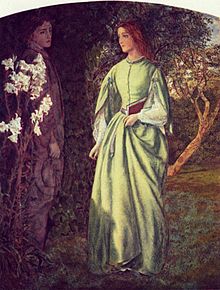
Browning weaves the theme of class struggles throughout the poem and she especially highlights this social problem through the character of Romney.  The  poor are depicted as wreteched and even ugly; Romney makes it his life’s work to help out the poor and destitute.  After his marriage proposal is Aurora's Dismissal of Romneyrejected by Aurora, he saves a woman named Marian Erle from her miserable life and proposes to her next.  Marian is the daughter of tramps that roam around the countryside finding any work they can.  Marian’s father is abusive and when her mother tries to sell her off to a local squire,  Marian finally runs away from her parents in horror.  Romney decides that, even though Marian is well-below his social class, she will make a perfect wife to help him in his charitable missions. But we are left wondering if these two are really suited as husband and wife.  Does Marian truly love Romney or does she simply worship him as her savior.  Does Romney really have feelings of love for Marian or is he still in love with his cousin Aurora?
The upper class don’t fair any better in Browning’s verse.  They are depicted as vain, judgmental, and petty.  The character of Lady Valdemar is the epitome of a greedy upper class English woman who will do everything in her power to fulfill her selfish desires.  Lady Valdemar is in love with Romney and once she finds out that he is going to marry a lower class woman like Marian, she sets in motion a series of events that have devastating consequences for all involved in this love triangle.  Lady Valdemar’s singular focus of getting Romney to the altar makes her a despicable and opportunistic character.

At the end of the poem Browning brings the characters back to the place where everything was simpler and happier: Aurora’s native land of Italy.  There Aurora finds peace once again as she is finally away from the petty gossip and prying eyes of the upper classes in England.  Aurora does, however, admit that despite her new surroundings,  there is still something missing in her life.  She is a successful author who has become famous for her poems and novels about love.  But will she ever experience this elusive feeling for herself?  You will have to read Browning’s beautiful poem to find out.

About The Author:
Elizabeth Barrett BrowningElizabeth Barrett Browning was one of the most respected poets of the Victorian era.
Born in County Durham, the eldest of 12 children, Browning was educated at home. She wrote poetry from around the age of six and this was compiled by her mother, comprising what is now one of the largest collections extant of juvenilia by any English writer. At 15 Browning became ill, suffering from intense head and spinal pain for the rest of her life, rendering her frail. She took laudanum for the pain, which may have led to a lifelong addiction and contributed to her weak health.

In the 1830s Barrett’s cousin John Kenyon introduced her to prominent literary figures of the day such as William Wordsworth, Mary Russell Mitford, Samuel Taylor Coleridge; Alfred, Lord Tennyson, and Thomas Carlyle. Browning’s first adult collection The Seraphim and Other Poems was published in 1838. During this time she contracted a disease, possibly tuberculosis, which weakened her further. Living at Wimpole Street, in London, Browning wrote prolifically between 1841 and 1844, producing poetry, translation and prose. She campaigned for the abolition of slavery and her work helped influence reform in child labour legislation. Her prolific output made her a rival to Tennyson as a candidate for poet laureate on the death of Wordsworth.

Browning’s volume Poems (1844) brought her great success. During this time she met and corresponded with the writer Robert Browning, who admired her work. The courtship and marriage between the two were carried out in secret, for fear of her father’s disapproval. Following the wedding she was disinherited by her father and rejected by her brothers. The couple moved to Italy in 1846, where she would live for the rest of her life. They had one son, Robert Barrett Browning, whom they called Pen. Towards the end of her life, her lung function worsened, and she died in Florence in 1861. A collection of her last poems was published by her husband shortly after her death.
 

4 Comments

Filed under British Literature, Classics, Literary Fiction, Poetry

Review: The Last Weynfeldt by Martin Suter

I received an advanced review copy of this title from New Vessel Press through Edelweiss.  This book was originally written and published in German and this English translation has been done by Steph Morris.

My Review:
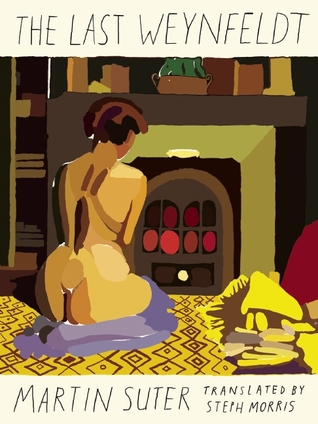
The Last WeynfeldtNew Vessel Press will publish the English translation of this book in February of 2016, but the book was so good that I couldn’t wait that long to review it.  The central figure of the book, Adrian Weynfeldt, is just what the title suggests: he is the last of his family and he is not married and has no children.  Adrian’s parents had him later in life and when they died they left Adrian an extensive inheritance which includes two buildings that are prime real estate in Zurich.

Fifty-year-old Adrian lives alone on the top floor of one of his opulent buildings.  His massive apartment is filled with costly art work and antique furniture.  Because of his family’s wealth Adrian doesn’t have to work, but he does because he loves his occupation as an expert art historian for an auction house in Zurich.  The descriptions of various artwork and the process of art auctions is a fascinating aspect of the book that captivated my attention.

Adrian is mannered to a fault.  He doesn’t ask questions when he should and he is always paying for his friends’ lavish dinners and funding their attempts at careers.  Every Thursday is lunch with his younger friends and Adrian always excuses himself towards the end of the meal and quietly pays the very expensive bill.  Adrian is kind, polite and unassuming and it as very sad to see his so-called friends take advantage of his good nature.

This book is one of those page turners that grabs you right from the first scene.  Adrian is sitting at one of his favorite bars in Zurich when in walks an interesting woman, in her mid-thirties who basically invites herself up to Adrian’s apartment.  He realizes that she is rather intoxicated, so in true Adrian fashion, he feels it would be wrong to sleep with her.  In the middle of the night, Adrian wakes up to find this woman, whose name he figures out is Lorena, standing on his balustrade and ready to jump to her death.  After he talks her off the ledge, Adrian finds that he can’t stop thinking about Lorena even though he doesn’t know very much about her.

It turns out that Lorena has tried to barely squeak out a living by modeling for small companies and catalogues.  She has had a tough life and her latest relationship ended disastrously when she found out her boyfriend had a wife and three children.  Lorena teams up with a small-time con artist named Pedroni and together they decide to try and swindle Adrian out of some of his money.  But Lorena seems to have fallen for Adrian, more so than she is willing to admit to herself, and we are left wondering if she can really cheat him after all.

Adrian and Lorena also become involved in an attempted art forgery and a great part of the suspense of the book lies in wondering whether or not Adrian’s keen eye for art will be able to detect the forgery and stop the sale of this piece before it ruins his career.  But Lorena’s influence has most definitely thrown some chaos into his otherwise ordered and neat life.  The circumstances surrounding the forged art, the sexual tension between Adrian and Lorena and the fascinating character of Adrian himself kept me wondering what was going to happen and wanting more.

I highly recommend that everyone put this on their “to read” pile for 2016.  There are just so many interesting aspects to this story-from the strong characters to the intricate descriptions of art to a mystery of an art fraud.  New Vessel Press has quickly become one of my favorite independent presses and with THE LAST WEYNFELDT they have chosen another fantastic book to bring us in translation.

About The Author:
M SuterMartin Suter (b. February 29, 1948, Zürich) is a Swiss author. He became known for his weekly column Business Class in the Weltwoche newspaper (1992–2004), now appearing in the Tages-Anzeiger, and another column appearing in “NZZ Folio”. Suter has published seven novels, for which he received various awards. He is married and lives in Spain and Guatemala.


8 Comments

Filed under German Literature, Literary Fiction, Literature in Translation

Review: The Looking Glass Sisters by Gøhril Gabrielsen

I received an advanced review copy of this novella from Peirene Press.  This is the third book in their Chance Encounter Series.  This title was originally written and published in Norwegian and this English translation has been done by John Irons.

My Review:
Looking Glass SistersThis is an emotionally intense and sinister book that will leave you thinking about relationships with close family members long after you finish the last page.  The focus of the book is on the codependence of two sisters who are each other’s only remaining relatives after their parents die.  When the book opens they are middle-aged and have been living together in isolation on the outskirts of rural Norway for almost 30 years.

The first sister, the one who is the unnamed narrator of the story, has been physically handicapped since she was a little girl.  She contracted a high fever which caused her to be in the hospital for several weeks and the illness left her paralyzed from the waist down.  She must rely on her parents for all of her needs and when her parents die the only other person she has left in her life is her older sister, Ragna.  The sisters live in a remote house that no one ever visits and the only way to reach the local village for supplies is by snow sled.

But one day the routine of the sisters’ lives changes when a man named Johan moves into the area and starts to court Ragna.  We get the sense that Ragna has been resentfully taking care of her sister for years and has never really developed any life of her own because of the constant needs of  her invalid sister.  Ragna seems bitter and at times she is emotionally and physically cruel to her disabled sister.  There is one scene in the book that is particularly painful to read;  the handicapped sister has to use the bathroom and drags herself out of bed with her crutches and just before she reaches the bathroom, Ragna runs in and locks the door.  Ragna refuses to come out of the bathroom and the crippled and helpless sister is forced to relieve herself in her pants.  Her dignity is further eroded when she then must be cleaned up and carried back to bed by Ragna.

When Johan comes along and decides to marry Ragna, it seems that Ragna could not be happier now that she has the opportunity to rid herself of the burden of her sister.  At times I felt sorry for both sisters.  On the one hand, the handicapped sister cannot help her situation and she has no choice but to be constantly asking her sister for everything she needs.  On the other hand, Ragna must constantly be at her sister’s beck and call and Ragna feels that her sister is never grateful for what Ragna does for her.  We also get the feeling throughout the narrative that the disabled sister has a very narrow view of the world and doesn’t understand what is going on outside her room or how her constant demands affect her sister.  At times she appears paranoid and melodramatic.

This novella brings up some interesting thoughts about family members and our obligations to them.  If we are the only ones left to take care of a loved one are we obligated to do so to the detriment of our own lives?   But if we can’t rely on our family, then who else is there to depend on in times of need?  In the end, Ragna and Johan make a selfish decision in favor of making peace and quiet for themselves.

The novellas published by Peirene are meant to be read quickly, in a matter of a few hours.  But I found this book so dark and intense that I could only read it a few pages at a time over the course of several days.  The final book in the Chance Encounter series is a stunner that is the perfect way to finish out this set of novellas.

About The Author:
G GabrielsenGøhril Gabrielsen, born in 1961, grew up in Finnmark, the northernmost county in Norway, and currently lives in Oslo. She won Aschehoug’s First Book Award for her 2006 novel Unevnelige hendelser (Unspeakable Events), and was the recipient of the 2010 Tanum Scholarship for Women. Since the publication of her debut novel she has brought out two further books to great acclaim in her native Norway, Svimlende muligheter, ingen frykt (The Looking-Glass Sisters) and Skadedyr (Vermin). Her fourth novel is due out in 2015.


19 Comments

Filed under Literary Fiction, Literature in Translation, Novella

Review: The Household Spirit by Tod Wodicka

I received an advanced review copy of this title from the publisher through Edelweiss.

My Review:
The Household SpiritI finished reading this book last week and I kept thinking about what to write for my review.  On the one hand I absolutely loved the characters in this book, but on the other hand the ending was disappointing.  But I think in the end it is a worthwhile book to read because of the strong characters and relationships that are developed throughout the course of the novel.

Howie Jeffries has been living in the same house in rural upstate New York for thirty years.  After a few years of marriage, Howie’s wife moved out with their young daughter and so Howie has been living in his house alone for most of those thirty years.  He is a very shy and unassuming man and his shyness has been such a hindrance to him that it keeps him from making friends with his only neighbors, the Phanes.  Even though he has lived next to Mr. Phane and his granddaughter, Emily, for thirty years, he cannot bring himself to say anything more to them than a cursory greeting.  Howie’s life is mostly occupied with his job at GE and his favorite hobby, fishing.

Howie is also very kind and loving to his only daughter, Harri, with whom he only gets to visit once in a while.  His favorite thing to do with her is to take her to the mall and to dinner at an Italian restaurant.  When Harri calls him in the middle of the night to pick her up on the roadside, he does so without judgment or very many questions.  Howie is also not bitter towards his ex-wife, whom he understands did not want to spend her life living quietly on rural Route 29.

Emily is Howie’s neighbor and the occupant of the only other house on Route 29.  Emily’s mother and grandmother die when she is an infant, so Emily is raised by her elderly grandfather.  The relationship between Emily and her grandfather is very sweet as they are they only two people in the world for each other.  The book also highlights a serious issue that is not oftentimes spoken about, that of night terrors and sleep paralysis.   Throughout her childhood and early teen years, Emily wakes up every night with horrifying night terrors.  When she is in middle school, she goes to a sleepover at a friend’s house and has to go home in the middle of the night because she has one of her episodes.   As Emily grows older her night terrors fade but they are replaced by sleep paralysis, a very scary condition which I did not know existed until I read this book.

When Emily’s grandfather has a stroke, Emily comes home from college to take care of him.  Once her grandfather passes away, she is left alone in the house and develops agoraphobia and only comes out of her house at night.  Emily and Howie are aware of each other’s existence, but their individual neuroses keep them from connecting. One day Emily accidentally causes a small chimney fire in her house and Howie finds her passed out on her front lawn.  Howie has to overcome his social anxiety to carry her over to his house and take care of her.  When Emily wakes up on Howie’s sofa, she is a little freaked out at being inside Howie’s house but she eventually decides that she likes not being alone for once.  The best part of the book is the development of Emily and Howie’s relationship and how they come not only to rely on each other for comfort but also to help each other overcome their anxieties;  Emily encourages Howie to go on a date with a woman he has been friends with for years and Howie is soothing to Emily when she has her sleep episodes.

As I mentioned at the beginning of the review, I thought that the ending of the book was rather unsatisfactory.  It felt rushed and incomplete.  The worst part about it was that in the end once Howie and Emily help each other they move on with their lives and no longer have contact with one another.  This felt very disappointing, especially since so much time in the novel was spend on developing their very special and unique relationship.

What books have you read that you have enjoyed but felt let down by the ending?


About The Author:
WodickaTod Wodicka lives in Berlin. His second novel, THE HOUSEHOLD SPIRIT was published by Pantheon and Jonathan Cape in June 2015.

His first novel, ALL SHALL BE WELL; AND ALL SHALL BE WELL; AND ALL MANNER OF THINGS SHALL BE WELL has been translated into Spanish, Dutch and German. It was shortlisted for The Believer Book Award. Wodicka’s writing has appeared in the Guardian, Granta, Amuse, Tank Magazine, South as a State of Mind, the National, Art Papers, AnOther Magazine and the New Statesman.

5 Comments

Filed under Literary Fiction

Review: Rock, Paper, Scissors by Naja Marie Aidt

I received an advanced review copy of this title from Open Letter Press through Edelweiss.  This book was originally published in Danish and this English translation is done by K.E. Semmel

My Review:
Rock Paper ScissorsAt the core of the book is the complex character of Thomas who has never really dealt with or gotten over his terrible childhood.  Thomas’ mother walked out on their family when he was a young boy and left Thomas and his sister, Jenny, to be raised by a physically and emotionally abuse father.  When Thomas’ father, with whom he has not had contact in years, dies in prison, all of his unpleasant childhood feelings and memories come crashing in on his life.

Thomas owns and runs a successful stationery store with his best friend and partner, Maloney.  A lot of the book describes Thomas everyday life while he works, goes out for lunch and drinks and spends time with his live-in girlfriend, Patricia.  It seems that Thomas has a good life, a steady income, and is surrounded by stable friends and family.  Thomas is close to his sister, Jenny, and even though she is emotionally needy and dramatic he still feels the need to always protect her.  But when Thomas has to deal with his father’s funeral, he slowly begins to unravel and come apart at the seams.

The sentences and language of the book are oftentimes short, even choppy or staccato, which style fits well with the ever-changing moods of Thomas.  One minute he is enraged and punching a heap of boxes and the next he is calm and happy. There is a long stretch of time in the book, after his father’s funeral, during which Thomas wants to do nothing but sleep.   He becomes distant from Patricia and he won’t even consider having a family with her.  His rage also has sexual manifestations and this is what ultimately drives his girlfriend Patricia away.

A large section of the book is dedicated to a family trip that Thomas takes with Patricia as they go and visit Thomas’ aunt, cousins, sister and niece.  The setting in the rustic countryside and the meals shared together seem to put Thomas at ease and the reader is lured into thinking that Thomas’ rough patch is finally over.  But there is one guest at the party, a young man named Luke, who was an old acquaintance of his father’s.  Thomas doesn’t quite trust Luke or Luke’s supposed relationship with Thomas’ father.  Even when Thomas has some peace like on the weekend vacation, there is always a discomfort or an uneasiness lurking in the background.

One final aspect of the story worth mentioning is Thomas’ encounter with his father’s old business partners.  Thomas accidentally finds a large sum of money at his father’s abandoned apartment and he tries to ask his partners about his father’s criminal past.  But the partners are reluctant to speak about their business at all and it is never even revealed why his father was in prison.  Thomas’ stationery business is vandalized, his home is broken into and his girlfriend is attacked at one point.  Thomas assumes that all of these incidents are related to his father’s illegal business but, despite his theories, Thomas never really gets to the bottom of this mystery.

ROCK, PAPER, SCISSORS is a dark, complex look into the psyche of a man who has had a traumatic childhood; it is also a look into what can happen to that man’s life if these issues are never dealt with.   I will warn you that the book ends on a bit of a cliff hanger.  We can only wonder and hope that Aidt has another episode of Thomas’ story in the works for us.

About The Author:
N AidtNaja Marie Aidt is a Danish poet and writer. She was born in Greenland, and spent some of her childhood there. She published her first book of poetry in 1991, and in 2008 she was awarded the Nordic Council’s Literature Prize.

4 Comments

Filed under Literary Fiction, Literature in Translation
