Author Archives: Melissa Beck

Melissa Beck's avatar

About Melissa Beck

My reading choices are rather eclectic. I enjoy reading a wide range of books especially classics, literature in translation, history, philosophy, travel writing and poetry. I especially like to support small, literary presses.

Review: Twenty-Four Hours in the Life of a Woman by Stefan Zweig

I received a review copy of this title from Pushkin Press via Netgalley.  This novella was published in the original German in 1925 and this English version has been translated by Anthea Bell.

My Review:
twenty-four-hoursStefan Zweig is a master at writing short stories that are full of descriptive details, interesting characters and surprise plot twists.  It is truly amazing that he manages to do this all within the span of 100 pages.  The setting of this short piece is a hotel on the French Riviera where a group of upper class citizens from various countries are vacationing.  A shocking social incident has occurred within their social circle and this scandal has all of the guests arguing and gossiping.

The narrator, who never gives us his name, is staying on the Riveria and interacts with the other guests, incluing a German husband and wife, a “portly” Dane, an Italian married couple, and a distinguished and older English lady.  This group of strangers usually just engage in small talk and mild jokes while eating their meals, but the disappearance of Madame Henriette has disturbed their peaceful routine.  A young, handsome and garrulous Frenchman arrived at the hotel on the previous day and captivated everyone’s attention.  Zweig shows his skill at describing characters with just the right mix of adjectives and metaphors:

Indeed everything about him was soft, endearing, charming, but without any artifice or affectation.  At a distance he might at first remind you slightly of those pink wax dummies to be seen adopting dandified poses in the window displays of large fashion stores, walking-stick in hand and representing the ideal of male beauty, but closer inspection dispelled any impression of foppishness, for—most unusually—his charm was natural and innate, and seemed an inseparable part of him.

The shock comes when Madame Henriette, the wife of a wealthy businessman, disappears with the Frenchman after knowing him for only a couple of days.  All of the guests at the hotel are very quick to condemn and judge Henriette for throwing away her marriage, her children and her reputation.  The narrator is the only person who comes to Henriette’s defense and reminds the guests that it might have been possible that Henriette was caught in a “tedious, disappointing marriage” and thus had a valid reason for running off with a young man who was virtually a stranger.  This heated debate has a profound effect on Mrs. C, the distinguished English lady, who requests a private meeting with the narrator.

The story that Mrs. C. tells the narrator involves an incident in her life when she was forty-two, some twenty years earlier.  The incident had left her so embarrassed and mortified that she never told a word of it to another soul, until now.  Henriette’s impulsive decision to run away with the Frenchman has brought up old memories for Mrs. C. and she wants to unburden her soul from the guilt of her own folly.  Mrs. C. tells the narrator that, as a widow who lost her husband to an unexpected illness, she traveled around Europe while grieving for her beloved spouse.  Alone and miserable, she finds herself in Monte Carlo, one of her husband’s favorite places for entertainment, and meets a twenty-four-year old man with a serious gambling problem.

The events that unfold between Mrs. C. and the gambler bring up feelings of passion, anger, redemption, impulsivity and regret.  I don’t want to give away what happens between the widow and the young man, but I will say that Zweig has a gift for writing shocking and unexpected plot turns.  I never would have guessed the ending to Mrs. C’s story and I was riveted until the very last page of this short book.  Zweig shows us that he is an astute observer of human emotions; love, loneliness, passion and sexual desire can make us lose our minds and do irrational things which are completely out of character.

One final aspect of Zweig’s writing that must be mentioned is his careful attention to detail, even in a short work like this novella.  When Mrs. C. arrives at the casino, she describes the chiromancy—guessing a person’s moves by observing their hands— that her husband had taught her.  This English woman spent hours observing the players’ hands which are much more telling than facial expression.  Zweig writes about Mrs. C’s practice of chiromancy:

All those pale, moving, waiting hands around the green table, all emerging from the ever-different caverns of the players’ sleeves, each a beast of prey ready to leap, each varying in shape and colour, some bare, others laden with rings and clinking bracelets, some hairy like wild beasts, some damp and writhing like eels, but all of them tense, vibrating with a vast impatience.

Zweig’s description of the players via their hands is absolutely fascinating and absorbing and is another surprising gem found within the pages of this short piece.

November is German Lit. Month hosted by Lizzy’s Literary Life and Beauty is a Sleeping Cat.  The full list of reviews for this event can be found here: http://germanlitmonth.blogspot.co.uk/ and on Twitter #GermanLitMonth.

About the Author:
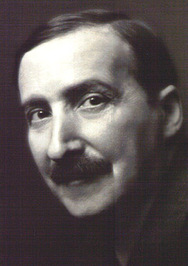
Stefan Zweig was one of the world’s most famous writers during the 1920s and 1930s, especially in the U.S., South America and Europe. He produced novels, plays, biographies and journalist pieces. Among his most famous works are Beware of Pity, Letter from and Unknown Woman and Mary, Queen of Scotland and the Isles. He and his second wife committed suicide in 1942.

Zweig studied in Austria, France, and Germany before settling in Salzburg in 1913. In 1934, driven into exile by the Nazis, he emigrated to England and then, in 1940, to Brazil by way of New York. Finding only growing loneliness and disillusionment in their new surroundings, he and his second wife committed suicide.

Zweig’s interest in psychology and the teachings of Sigmund Freud led to his most characteristic work, the subtle portrayal of character. Zweig’s essays include studies of Honoré de Balzac, Charles Dickens, and Fyodor Dostoyevsky (Drei Meister, 1920; Three Masters) and of Friedrich Hlderlin, Heinrich von Kleist, and Friedrich Nietzsche (Der Kampf mit dem Dmon, 1925; Master Builders). He achieved popularity with Sternstunden der Menschheit (1928; The Tide of Fortune), five historical portraits in miniature. He wrote full-scale, intuitive rather than objective, biographies of the French statesman Joseph Fouché (1929), Mary Stuart (1935), and others. His stories include those in Verwirrung der Gefhle (1925; Conflicts). He also wrote a psychological novel, Ungeduld des Herzens (1938; Beware of Pity), and translated works of Charles Baudelaire, Paul Verlaine, and mile Verhaeren.

Most recently, his works provided inspiration for the 2014 film ‘The Grand Budapest Hotel’

13 Comments

Filed under Classics, German Literature, Novella, Pushkin Press

Review: Country Life by Ken Edwards

My Review:
countrylifeOne of my favorite things about reading books from small presses are the literary gems that I discover from their quiet and brave authors.  Country Life, the latest novel from Ken Edwards, is one such piece of fiction released by Unthank Books.  It is not surprising that Edwards is also a poet,  has published several volumes of poetry and is also a musician.  The text of Country Life oftentimes reads more like a poem or a song than the prose of fiction.  This is very fitting for Edwards’s main characters who are musicians that like to do interesting experiments with their craft.

The main protagonist of Country Life is twenty-one-year old Dennis Chaikowsky, an unemployed musician who is house-sitting for his vacationing parents.  Dennis lives out in the country, on the coast of a peninsula, in a quiet neighborhood that is overshadowed by a nuclear power station.  The peaceful sounds of the sea and wildlife are disturbed by the lights and noises of the power station.  Dennis is recording all of the sounds of the peninsula and mixing them with his computer to compose what he calls “World Music” in 25 parts.  The landscape and the sounds emanating from it become an integral part of Edward’s deeply poetic text:

The town lay silent and all the little birds.  And from it, we may follow the railway line, venturing over rust and rubble.  And the light from the coast.  Information sent along the pathway to the superior colliculus, responsible for controlling and initiating eye movements, producing visual awareness.  Travail and trouble.  The lorries on the road.  We may suppose you call it territorial behavior.  With auditions, something seemingly miraculous occurs.  The sense of mystery, of a real danger to be faced, of an overwhelming spiritual gain to be won, were of the essential nature of the tale.

Dennis’s closest friend is a neo-Marxist named Tarquin who lives in the city and is a freelance writer for a business magazine.  Even though they appear to be close friends, their arguments about philosophy cause them to be constantly annoyed with one another. One Sunday night when Dennis and Tarquin are roaming around the peninsula and arguing about philosophy, they encounter an old woman who is lost and confused.  The men are very kind to her, especially Tarquin, and they figure out that she has dementia and they take her back to her home in a nearby housing complex.  There is a chilling argument between Dennis and Tarquin about helpless and lonely people like this old woman and what value they have to society.  Dennis has very dark thoughts about harming the woman and says that someone like her, who is making no contributions to society and is a drain on society, is expendable.  But Tarquin believes, in the Marxist tradition, that we are all collectively responsible for one another regardless of what we contribute to society.

While they are taking the old woman home they encounter a musician named Severin and his wife Alison.  There is a sinister aura that surrounds the couple and there are hints that Severin is addicted to drugs and abusive to his wife.  Severin travels for long periods of time with his band, so this allows Dennis and Alison to spend quite a bit of time together and to have a sexual encounter.  Alison seems lonely and for her the sex is an isolated incident, never to be repeated.  But Dennis becomes deeply attached to Alison and wants a long-term relationship with Alison. The best way to describe the plot of this book is a tragicomedy.  Because Dennis is naïve, young, and inexperienced he gets himself into ridiculous situations that have an underlying tone of humor.  But we know from the beginning, from his encounter with Alison, that things are not going to work out for them very happily in the end.  Edwards foreshadows with his poetic prose, “Here the hero sets out on a journey with no clear idea of the task before him.”

I received a review copy of this interesting book from Ben Winston who has started the website called Vibrant Margins.  The site is dedicated to bringing readers the best and most interesting books from small presses.   Readers can order subscriptions of books in various amounts.  I highlighted Ben’s site when I did my post about small presses and how to support them with subscription plans.  I am going to review one more book in the inaugural lineup of Vibrant Margins, so stay tuned for another post which also features a generous book giveaway from Ben.

About the Author:
Ken Edwards was born in Gibraltar in 1950, went to King’s College London in 1968, where he studied under the late Eric Mottram, and lived in London until 2004, when he moved with his wife Elaine to Hastings.

Since 1993, he has run Reality Street, which was formed through the amalgamation of his own Reality Studios imprint with Wendy Mulford’s Street Editions.

Ken has also been involved in composing and performing music since the early 1990s. Currently he plays bass guitar and sings with The Moors and Afrit Nebula, bands he co-founded with Elaine Edwards.

His publications include eight + six (Reality Street), Good Science (Roof Books, New York) Bird Migration in the 21st Century (Spectacular Diseases, Peterborough), and a first novel Futures (Reality Street). Other recent publications are: Nostalgia for Unknown Cities (Reality Street, 2007) and Bardo (Knives Forks & Spoons Press, 2011). A collection of short fictions, Down With Beauty, appeared in 2013, and, as of 2016, he was working on a new novel, The Grey Area.

5 Comments

Filed under British Literature, Literary Fiction

Review: Odessa Stories by Isaac Babel

I received a review copy of this title from Pushkin Press via Edelweiss.  The collection was published in the original Russian in 1931 and this English version has been translated by Boris Dralyuk.  Boris graciously agreed to an interview which is included after the review.  His answers are inspiring and enlightening.

My Review:
odessa-storiesBabel’s band of Jewish gangsters, thieves and smugglers make up the first part of this collection of highly entertaining and lively stories.  The setting is the author’s hometown of Odessa, the Russian city on the Black Sea which saw a population boom in the nineteenth century and became a place for Jews to settle and seek out their fortunes.  Babel begins his stories by introducing the Godfather of all Jewish gangsters, Benya Krik, also known as “The King” in Odessa.  The occasion is the wedding of Benya’s ugly forty-year-old sister and he is delivered some news by an informant that the cops are going to stage a raid on the King’s headquarters.  The clipped, rapid fire sentences are reminiscent of a scene from Pulp Fiction or Scarface.

Benya ends up with his own wife by doing a typical mob style “shakedown” of a local farmer.  When the farmer, Sender Eichbaum,  ignores The King’s increasingly hostile messages, Benya shows up and starts slaughtering the farmer’s herd.  The innocent bovines get knifed right through the heart.  Finally, negotiations commence:

And then, when the sixth cow fell at the King’s feet with a dying moo, Eichbaum himself ran into the yard in nothing but his long johns and asked, “Benya, what’s this?”  “Monsieur Eichbaum, I don’t get my money, you don’t keep your cows.  Simple as that.”  “Step inside, Benya.”  Inside they came to terms.

After the gangster and the farmer come to an agreement, the farmer’s daughter, Celia comes outside in her nightshirt and the King is immediately smitten.  The next day he goes back to Eichbaum’s farm, returns the money, presents gifts to Celia and asks for her hand in marriage.  Even a tough gangster is not immune to the temptation of a pretty face.  Babel’s depiction of these Jewish gangsters is humorous, hard-hitting and full of ridiculous plot twists.  The local police station catches on fire, Benya contemplates knocking off his own father, and a local innkeeper ignores her infant in order to conduct her business.  We are introduced to characters like Froim the Rook, a one-eyed redhead, Tartakovsky who is also known as “Yid-and-a-half” or “Nine Shakedowns,” and Lyubka the Cossak.

A word must be said of Boris Dralyuk’s translation which is nothing short of brilliant.  He captures the essence and spirt of the Jewish culture in the booming city of Odessa where law and order are matters decided by criminals instead of cops.  Boris’s introduction to the translation is a must-read as he describes what techniques he uses to bring Babel’s characters to life for an English speaking audience:

In general, I’ve tended toward concision, feeling it more important to communicate the tone—the sinewy, snappy punch—of the gangsters’ verbal exchanges than to reproduce them word for word.  A longer phrase that rolls of Benya’s tongue in Russian may gum up the works in English.  For instance, in the original Russian, Benya refuses to smear kasha “on the clean table.”  In English, “on the clean table” felt superfluous.  Both the tone and the image were sharper without it.  To my ear, the pithy “let’s stop smearing kasha” has the force and appeal of an idiom encountered for the first time.

The final stories in the collection are Babel’s recollections from his own childhood as his family moves from Nikaloyev to Odessa.  “The Story of My Dovecote” is both funny and heartbreaking when Babel remembers wanting more than anything else a dovecote as a ten-year-old boy.  He makes an agreement with his father that if he gets high marks and is accepted into the preparatory class at the Nikolayev Secondary School then he can have his own dovecote.   When, on his second try at the exams, Babel is given a spot at the school his family is overjoyed to the point of throwing a ball for their son’s success.   The depiction of his mother and her skepticism that any Babel would achieve greatness is humorous but also foreshadows a dark time that will follow: “Mother was pale; she was interrogating fate in my eyes, gazing at me with bitter pity, as if I were a cripple, because she alone knew just how unlucky our family was.”

Young Isaac finally does get his doves and he is on the way home from picking them out in the market when a terrible and sad tragedy befall him.  The boy gets caught up in the confusion of the Russian pogram and his doves are smashed on his own head.  The dazed boy returns home bloody with the remains of feathers on him and finds that his family are in a state of utter turmoil because of their persecution.  The young Babel suffers an awful case of hiccups and the doctor diagnoses him with a nervous disorder caused by the trauma of the pogram that he and his family were victims of.

Much to my own dismay and sadness, my country yesterday elected a man who has promoted xenophobia, racism, and violence against groups of people based on their religion, ethnicity, gender, sexuality, etc.  We have to remember that Babel’s persecution in Russia could easily happen again if we let hatred and ignorance rule the day.  We must do whatever we can to insure that we stand up to bullies, and not allow such bigotry and violence to become acceptable in any way, shape or form.  Babel’s lesson on the horrible consequences of bigotry is just as relevant today as it was nearly one-hundred years ago in Russia.

About the Author:
Isaac BabelIsaak Emmanuilovich Babel (Russian: Исаак Эммануилович Бабель; 1901 – 1940) was a Russian language journalist, playwright, literary translator, and short story writer. He is best known as the author of Red Cavalry, Story of My Dovecote, and Tales of Odessa, all of which are considered masterpieces of Russian literature. Babel has also been acclaimed as “the greatest prose writer of Russian Jewry.” Loyal to, but not uncritical of, the Communist Party of the Soviet Union, Isaak Babel fell victim to Joseph Stalin’s Great Purge due to his longterm affair with the wife of NKVD chief Nikolai Yezhov. Babel was arrested by the NKVD at Peredelkino on the night of May 15, 1939. After “confessing”, under torture, to being a Trotskyist terrorist and foreign spy, Babel was shot on January 27, 1940. The arrest and execution of Isaak Babel has been labeled a catastrophe for world literature.

About the Translator:
boris-dralyuk-edit-1024x683Boris Dralyuk is an award-winning translator and the Executive Editor of the Los Angeles Review of Books. He holds a PhD in Slavic Languages and Literatures from UCLA, where he taught Russian literature for a number of years. He is a co-editor of the Penguin Book of Russian Poetry, and has translated Isaac Babel’s Red Cavalry and Odessa Stories, both of which are published by Pushkin Press.

An Interview with Boris Dralyuk:

  1. How did you become interested in a career as a translator?  Can you trace the progression of your career from the beginning to this impressive achievement of translating two works of Babel for Pushkin Press?

My family immigrated to Los Angeles in 1991, when I was eight years old, turning nine. I had two words of English at my disposal – “hello,” a good start, and “poppy,” California’s state flower. Those weren’t going to get me very far. So I plunged into the language, soaking up as much as I could, at first by way of I Love Lucy, which I would watch with my grandmother, and then through the local public library. Then, at 13, I realized I had been neglecting my Russian. I could still speak and read, but… If I didn’t apply myself, I’d soon be back to “hello” and “poppy,” as it were. So I began reading poetry. At 14 I came across a poem by Boris Pasternak, dedicated to Anna Akhmatova. It lifted me off the ground. And I had the urge to share it — to share that experience with a friend who didn’t speak Russian. The first line popped into my head in English, all on its own: “I feel I’ll pick words comparable…” I did about as well as you’d expect, for a 14-year-old. And I still remember the last two lines of that first stanza: “I’ll make mistakes, but I don’t give a damn — / No matter what, I’ll never part with error.” I try to live by those words.

So it was something of a calling. I applied to UCLA to work with Michael Henry Heim, a legend in the field. He was a true mentor, as he was to so many. When he passed away in 2012, I wrote about our first meeting, about his generosity — which was a uniquely pure and powerful example of a quality common to translators. And in 2010 I met Robert Chandler and Irina Mashinski, from whom I continue to learn every day. They invited me to join them in editing The Penguin Book of Russian Poetry (2015). So that’s how I got here: my luck and the generosity of others.

  1. Translation is obviously not an exact, one-to-one science.  What do you think are the pieces of Babel that get lost in the English translation, that don’t quite carry over to the English version?

You put it perfectly: “not an exact, one-to-one science.” In fact, I’d even go so far as to say that it’s no kind of science. Translation draws on specialized knowledge — of languages, of cultures, of literary traditions, etc. — but so does any art. And that’s exactly what translation is: an art. Korney Chukovsky, one of the great Soviet-era translators (and, incidentally, Mike Heim’s hero), titled his wonderful book on the subject A High Art. It was a bold gesture, a plea for the redheaded stepchild of literary creation to get a seat at the table. Regarding translation as a purely technical endeavor leads to bad translations — and to bad criticism. We should judge literary translations as literature first, not as exam papers. Does it touch you? Does it make you laugh? Does it make you feel as if the top of your head were taken off?

And yes, of course, accuracy matters, but words don’t just denote — they connote, they link up, they build to a cumulative effect. A good translation remains faithful to those cumulative effects, not to any individual word. I don’t like to think in terms of losses; for me, translation is a net gain. The trick with Babel — my Babel, at least — was to find native idioms that would allow me to communicate the effects of his stories. With the Odessa Stories, I didn’t have to look far… Jewish-American fiction, hardboiled detective stories — it was all there, on my nightstand, ripe for the picking.

  1. Babel’s cast of gangster characters are very entertaining.  Do you have a favorite character from Odessa Stories?

What a great question! That would be the Odessan broker Tsudechkis, a little shyster with ten tons worth of personality. He’s the narrator of one of the earliest Odessa stories, which I translated as “Justice in Quotes.” Babel gives Tsudechkis the run of the place, linguistically and otherwise. He never included the story in any of his book-length collections — it didn’t quite fit — but I love it precisely for its looseness, its square-peg-in-a-round-hole incongruities, which mirror the narrator’s spirit. Babel brought the broker back in “Lyubka the Cossack.” He couldn’t keep the little fellow out!

  1. What did you learn about Babel and his writing that surprised you the most as you were working on this translation?

I knew these stories so well… I first read them cover-to-cover at 13 or 14, but I had heard them all throughout my childhood. My family quoted them in conversation — and they sounded as if they were quoting them even when they weren’t. My ears were full of Babelian cadences and turns of phrase, both in Odessa and in the Russian-Jewish community in Los Angeles. I listened for — hungered for — those same cadences in English, and I found in the likes of Bernard Malamud. I suppose what I learned while working on Babel’s stories is the degree to which they are a part of me.

  1. You also have a volume of translated poems and prose from the Russian Revolution forthcoming from Pushkin Press.  What other projects and translations are you working on at the moment?

I’m very proud of 1917, and I hope it touches all readers, no matter how they feel about the Russian revolution. It was a time of great promise and of great tragedy. I worked hard to reflect the period’s contradictions, and was aided by a team of brilliant translators — Josh Billings, Maria Bloshteyn, Michael Casper, Robert Chandler, Peter France, Rose France, Lisa Hayden, Bryan Karetnyk, Martha Kelly, Donald Rayfield, Margo Shohl Rosen, and James Womack. My next project is a collection by the great Soviet satirist Mikhail Zoshchenko, called Sentimental Tales, for Columbia University Press. Their new Russian Library is doing wonderful things. Robert Chandler, Maria Bloshteyn, Irina Mashinski, and I have also translated a volume of poems by the Soviet-era poet Lev Ozerov, called Portraits Without Frames — a nuanced and deeply moving sequence of verse portraits, a kind of mini-encyclopedia of Soviet culture. NYRB Classics will bring that out in 2018

Thanks again to Boris for answering my questions so thoroughly and thoughtfully.  You can also read an interview that Boris did for Pushkin Press here: http://pushkinpress.com/behind-the-book-boris-dralyuk/  and a review of Odessa Stories from The Guardian here: https://www.theguardian.com/books/2016/nov/01/odessa-stories-by-isaac-babel-review.  Boris also has an impressive resume of translations and writings, the full list of which can be viewed on his website: https://bdralyuk.wordpress.com/


15 Comments

Filed under Author Interviews, Pushkin Press, Russian Literature

Soul as the Prison of the Body: The 2016-2017 Seagull Books Catalog

seagull-catalog-2016

Seagull Catalog 2016-2017

The diverse offerings of thought-provoking and interesting literature in translation from around the world has made Seagull Books one of my favorite publishers.  Naveen Kishore, Sunandini Banerjee and their staff at Seagull publish a catalog each year that not only tempts us with descriptions and photos of their books, but they also include pieces of writing from authors and translators around the world.  This edition is very special to me because Naveen invited me and a few of my favorite bloggers to be contributors.

Naveen begins by sending out a provocation and asks each person to write a response or a reaction to his provocation.  As you can see from this year’s provocation Naveen is a master of creating poetic prose that is beautiful and thought-provoking:

Soul he said. Soul as the prison of the body. Soul I asked? What about the ones who don’t believe? In soul. Or God. Or religion. The ones that understand the body for what it is. Accept its one-way journey towards the inevitable. The body as decay. Gradual ruin. Eventual crumbling. We all know this. Or those that think the ‘inner core’, or what I presume is a ‘substitute’ for the notion of ‘soul’, is actually just an ever changing, evolving, fermenting mass of literature that grows. And grows. And knows freedom. And fear. And emotion. And love. And death. And every kind of existential angst that any soul worth its weight in gold would know! What about me? I asked. Or you for that matter. We who write and read and write and continue to both read and write while our bodies grow old and tired. But the mind. The mind remains in a state of excitement. Constantly radiant. Its brilliance grows with every new thought. What if we substitute ‘literature’ for ‘soul’ in your proud statement so that it now reads ‘Literature as the prison of the body’. Thing is that this doesn’t hold. Literature cannot be a space that restricts movement. Or freedom. At least it shouldn’t be. It is meant to be a liberating presence. Like its close companion. The dark. For me the dark is important. The dark as a substitute for soul? Maybe. Darkness is essential for literature of meaning to grow and take root.

For my own response, I wrote what I know and what I experience every day—Ovid, teaching and my daughter:
 x

Ovid, in Book XV of his epic poem the Metamorphoses, lays out the stoic vision of the transmigration of the soul. Ovid challenges the human race not to fear death because the underworld is merely a transition, a brief holding place until the spirit takes on another form. Animae semperque priore/relicta sede novis domibus vivunt habitantque receptae: And our spirits, with an old place always being left behind, and having been received by new homes, live and dwell in them.

In my Latin 2 course when I teach the passive voice I give my students this passage from Ovid’s Metamorphoses with which to practice their translations. This is always one of the most animated and lively classes of the year for my students as they decipher the Latin as well as the Stoic argument that the soul is never destroyed but that it is the part of us that always lives on. As a contrast, I also give the class an explanation of the Epicurean view of the soul, which is quite the opposite; the Epicureans believed that this life is all there is for us and once we are gone there is nothing left, neither a physical body nor a spirit.

Every year, without fail, my students unanimously reject the Epicurean idea of the afterlife and embrace the Stoic notion that our souls, the very essence of who we are, survive in some form. Out of the dozens of lines of Latin prose and poetry I translate with my students over the course of their five years of study in my program, this is the one passage that they always remember; this is the passage that they quote back to me long after they have graduated and this is the passage that a few of them have even had tattooed onto their bodies. Morte carent animae: Our spirits lack death. Omnia mutantur, nihil interit: All things are in flux, nothing is lost. Ipsa quoque adsiduo labuntur tempora motu, non secus ac flumen: Time itself glides in continual motion, not differently than a river.

the-empty-space

We were recently translating another passage of the Metamorphoses in an upper level Latin course, the suicide death of Pyramus. The students were horrified by Pyrmaus’ impulsive decision to take his own life because his soul will be stuck in limbo for eternity. The Romans believed strongly that the punishment for taking one’s own life hastily because of what Vergil calls a durus Amor (a harsh love) or unrequited love was that the soul would forever wander in the Underworld. Even though Ovid tries to take away the fear of an afterlife, it is the fear of the unknown that still lingers. Will we come back into a body as something better than before, will we come back as human or beast, or will we come back as anything at all?

Ovid’s writings about the soul are the very things that keep his work relevant and immortal even in the twenty-first century. It is his discussion of the human soul that saves the literary soul of the Metamorphoses for generations to come. Ovid’s own words can be applied to each new class, each new year, each new generation of students’ interaction with his writings. Nova sunt semper. There are always new things. Momenta cuncta novant: All moments are renewed.

The optimism of believing in an undying soul reaches even farther back into the spirits of children. When my daughter was three or four years old she started asking questions about death and dying. We are not raising her under any particular religious doctrine, so my husband explained to her what various religions believe about the soul and what might happen to us when we pass from this world. Her favorite explanation was the idea that we are reincarnated and that the soul lives on and takes on new forms. Even today, as a fourth grader, she is still a Stoic in her belief that some part of our spirit remains even when we pass from this life. It is my hope that she will learn Latin so I can translate Ovid with her and witness her reaction to Ovid’s writings about the soul.

My interactions with my students and my daughter have led me to believe that there is a youthful optimism and hope that the soul, the spirit, the very core of who we are, lives on and on. Do we retain this same optimism as we grow older? Is this an extension of the idea that young people think they will live forever? Or is this even a faint hint of a memory from some life in the past?

chemmeen

Anthony, one of my favorite bloggers, whose site is aptly entitled Times Flow Stemmed, takes a deeply philosophical approach and reaches all the way back to Aristotle for his inspiration. He responds:

My sense of soul is rooted in Aristotle who also used the term psyche in a time before we rooted psychology in the brain, rather as a form or a forming of the whole body. Was and imprint, like Ovid’s Pygmalion, are one, but this begs the question of how we become one. Identity is a precondition for unity of self, awareness of our selves. The eye is for sight, the ear for hearing but there is no organ of memory, no place in the body where identity can be seen to reside.

Joe, who blogs at his site Rough Ghosts , provides a response that is, like his book reviews and essays,  poetic and contemplative:

Literature as liberator, you suggest.

     I am, I want to reply, inclined to agree.

     But I would caution you that words can confine us, as readily as they set us free.  We can become entangled in meanings, lose ourselves in definitions, search in  circles for explanations when all we know is that the words we hear don’t seem to touch the heart of what or whom we seem to be.

And Tony Malone, who blogs at Tony’s Reading List concludes the collection with a meditation on existential angst:

So, what to do with all this, the soul of literature, the literature of the soul, existential angst and the compost of the day?

I think I’ll just delete it and go to bed.  Sleep’s supposed to be very good for your soul.

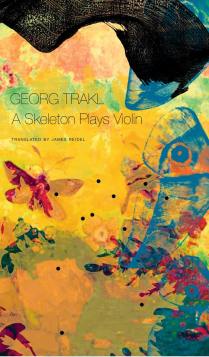
Finally, a word must be said about the beautiful and stunning art work in the catalog that is done by Sunandini Banerjee.  She is the graphic artist for Seagull Books and does the art work for their catalog and their book covers.  I did a post about her art and the piece that has been featured on my blog.  The poetry, essays, photography and book descriptions are always amazing, but it is Sunandini’s art that puts that truly unique finishing touch on this spectacular literary catalog.

a-skeleton-plays-violin

11 Comments

Filed under Literature in Translation, Seagull Books

Review: Panorama by Dušan Šarotar

I received a review copy of this title from Istros Books .  It was published in the original Slovenian in 2014 and this English version has been translated by Rawley Grau.

My Review:
panoramaFiction, poetry, travelogue, history, short story, memoir, photo essay. Šarotar’s latest work, translated into English from Slovenian for Istros Books as part of their World Series venture with Peter Owens Publishers, defines categorization into a single,  specific genre.  The unnamed narrator, whose own biography resembles that of  Šarotar himself, opens this piece with a poetic description of his journey through the landscapes he encounters while in Ireland.  The moods and textures of the Irish landscape, with a focus on the sea, dominate his literary illustrations.  The narrator also describes a trip to Belgium where he encounters some follow writers and translators who are expats from his part of the world.  Everywhere he travels, this unnamed narrator captures the plight of the immigrant in his writing as he encounters men and women who are displaced from their homes either by force or by choice.

The narrator is a writer who has journeyed from his home in Slovenia to Galway in order to find time and inspiration to finish writing a manuscript.  He gives us snapshots of his surroundings through his disjointed stories and through his camera lens.  In the first scene our writer is sitting in his damp and cold third floor room in Galway listening to a storm raging outside and in the next scene he is walking along the Galway Bay and looking at a plaque with the names of all the families who had escaped the famine via the ocean between 1847 and 1853.  In another moment he is passing by the Aquarium, a glass semicircular building,  when he encounters a an old pier with diving platforms.  The sea is the dominant force in this landscape and he captures its focal point in a variety of unique vignettes.  For visual interest the narrator also includes photos that serve to enhance the written descriptions throughout the text:

People are really swimming, I thought and was delighted by the chance of seeing somebody dive into the cold, rolling Atlantic Ocean, although at the thought of swimming I felt a chill, in spite of the sun, which was glowing like a white spot on a blue eye.  I sat down on the wet, black rocks beneath the pier and watched a sparse procession of bathers, both male and female, all older townspeople who had probably been bathing here since childhood; they walked in silence, backs straight, with the practiced poise of swimmers, the men in simple blue linen knee-length trunks, the women in black one-piece swimsuits, everyone with close fitting rubber caps on their heads;

panorama-diving-tower

Embedded with the narrator’s story of his journey, is the story of his tour guide and driver through the Connemara region, an Albanian immigrant named Gjini.  Throughout the course of Panorama, the narrator picks up the thread of different pieces of Gjini’s story who leaves his wife and children behind in Albania in an attempt to make a better living in Ireland.  When he arrives on the island, he doesn’t know a word of English so he begins by working at the bus station selling sandwiches during the day and cleaning offices at night.  He gradually learns enough English to pass the language test and enroll as a student in Irish cultural heritage studies.  Gjini’s reflections on being a foreigner, as he is viewing the empty landscape of the peat bogs with the narrator, are profound, enlightening and timely:

Although I was a foreigner, an immigrant, and still learning the jargon of high academia, and was moreover the oldest student in the group, a person who with some effort and for his own survival was merely skillfully concealing his homesickness, swallowing his anger, the disappointment and despair of the refugee, which were still mixed with will, with determination for a new beginning, and with inconsolable nostalgia, which, in fact, appeared and found its true name only later, when I had somehow got on my feet, as soon as I sensed that we would somehow make it, would be able to transplant ourselves, put down at least shallow roots in new soil, and even later, when I would come back again and stop here, mostly on my own but occasionally with my family, and take long walks, when my second education, if you will, was successfully behind me….—that’s when I realized we were in some ways alike, we can’t hide or suppress our background, no matter where we are from or where we are born, we’re made out of a substance, like soil or an island, and on top of it, nostalgia, Gjini said, and the Irish understand this.

panorama-irish-shore
The history of Kylemore Abbey is also woven into the narrator’s text and serves as a bridge between his journeys to Ireland and Belgium.  The Benedictine Order arrived at the Abbey in 1920 after their own abbey in Ypres, Belgium was burned to the ground during World War I.  The nuns flight on foot to Paris is mentioned in the narrative and Gjini tells the story of how they settled at Kylemore and restored the castle and the garden.  The narrator himself makes this trek in reverse as he travels to Belgium after his trip to Ireland.  He is giving a talk in Ghent and while on his trip he meets up with a woman named Spomenka who tells him the story of her escape from the dangerous wars in Sarajevo.  There is a deep, underlying sadness in her story because she feels as if she is forced to leave her home with her young daughter in order to escape the violence and bloodshed that broke out all around her.  A kind neighbor helps Spomenka to escape and she never goes back.

Finally, a comment must be made about the style of writing that Šarotar employs for his narrative.  The meandering nature of his story reflects his own restlessness as he journeys throughout Europe and encounters others who have been displaced from their native homes.   Different threads and characters are brought up and dropped; some of the threads are brought up again and others are left without a conclusion.  Šarotar is a master at using vignettes to capture the struggle of immigrants and refugees who are attempting to find a place in the world that feels safe and like home.

About the Author:

Dušan Šarotar is a Slovenian writer, poet, screenwriter and photographer. He has published five novels (Potapljanje na dah/ Island of the Dead, 1999, Nočitev z zajtrkom/Bed and Breakfast, 2003, Biljard v Dobrayu/Billiards at the Hotel Dobray, 2007, Ostani z mano, duša moja/ Stay with me, my dear, 2011 and Panorama, 2015), two collections of short stories (Mrtvi kot/ Blind Spot, 2002, and Nostalgia, 2010), three poetry collections (Občutek za veter/Feel for the Wind, 2004, Krajina v molu/ Landscape in Minor, 2006 and Hiša mojega sina/ The House of My Son, 2009) and book of essays (Ne morje ne zemlja/Not Sea Not Earth, 2012). Šarotar is also author of fifteen screenplays for documentary and feature films. His short film, Mario was watching the sea with love, based on authors short stories from the collection “Blind Spot” and on his screenplay, won in 2016 Global short film award in New York and the first prize in Ningbo, China, for the “best short film” in selection of Central and East European film selection. Šarotar has also a several photographic exhibition in national galleries and abroad. Photographies from his series “Souls” was included in permanent collection in Art gallerie of Prekmurje.

6 Comments

Filed under Istros Books, Literary Fiction, Literature in Translation