Author Archives: Melissa Beck

Melissa Beck's avatar

About Melissa Beck

My reading choices are rather eclectic. I enjoy reading a wide range of books especially classics, literature in translation, history, philosophy, travel writing and poetry. I especially like to support small, literary presses.

Review and Giveaway: A Memory of Violets by Hazel Gaynor

My Review:
A Memory of VioletsThis book alternates between two narratives, the first of which describes a pair of poor Irish immigrant orphans living on the streets of London in 1876 and who try to sell flowers in order to survive.  Flora, who is 8, is crippled, and Rosie, who is 5, is blind and although they have wretched lives the one thing that they do have is each other.  This part of the narrative is so pathetic and heart-wrenching that I almost gave up on the book because I could not take the sadness any longer.

The other part of the narrative takes place in 1912, when a young woman named Tilly moves to London to become a house mother at a Training Home for Watercress and Flower Girls.  All of the girls who work at the home are handicapped in some way and if it were not for this training home they would be living on the streets in abject poverty.  At the home the girls learn to make flowers out of fabric and the flowers are sold to vendors around London.

Tilly’s story is rather sad as well and we learn that she has had her own family troubles.  But coming to London and taking care of the girls at the home is a happy endeavor for which she is most grateful.  While Tilly is at the training home, she discovers a diary in the back of her closet written by the orphan girl Flora.  One day while they are selling their flowers, Flora and Rosie get separated on the streets of London and Flora ends up living at the home.  Tilly reads Flora’s diary and tries to discover what became of the two sisters and if they ever had the chance to reunite.

A MEMORY OF VIOLETS is a glimpse at the harsh reality of orphaned children living in the streets of London in the 19th century.  The characters will definitely leave an impression on the reader.  Although the narrative is sad and tragic at the beginning, my advise is to keep on turning the pages because the story does have a good ending.

About The Author:
Hazel-GaynorHazel Gaynor is an author and freelance writer in Ireland and the U.K. and was the recipient of the Cecil Day Lewis Award for Emerging Writers in 2012. Originally from North Yorkshire, England, she now lives in Ireland with her husband, two young children, and an accident-prone cat.

Giveaway:
I have a paperback copy of the book to giveaway, open to US residents only.  Just leave a comment below and let me know you want to win!  The winner will be notified via e-mail and will have 48 hours to respond.  Giveaway ends 2/18.

Click on the TLC tour button below to see all of the blogs participating in A Memory of Violets book tour.

tlc-logo-resized


15 Comments

Filed under Giveaways, Historical Fiction

Review: The Scapegoat by Sophia Nikolaidou

I received an advanced review copy of this book from Melville House through Edelweiss.  This book was originally published in Greek in 2012 and it has been translated into English by Karen Emmerich.

My Review:

The ScapegoatI thought that from the description of this book the major focus of the plot would be a murder mystery.  And while the murder of an American journalist is the main event that affects many of the characters in this book, the novel is about so much more than this case.

In 1948, the lifeless and bullet riddled body of an American radio journalist is found floating in the bay of Thessolaniki.  At the time, Greece is entangled in political and economic turmoil and depends a great deal on American aid and money.  When the Americans demand that journalist’s murderer be found and punished immediately, the leaders in Greece look for an easy scapegoat; they beat a confession out of a poor, innocent, and hardworking immigrant named Gris.

The most tragic parts of the book deal with Gris and the affects that his arrest and torture have on his family, especially his mother and sisters. Gris has no one to protect him and even the lawyer that is assigned to defend him realizes that there is a political game to be played and Gris is just a sacrificial lamb.  It is a given from the beginning that Gris is innocent, but the amount of people involved in his arrest, torture, and imprisonment is astonishing and tragic.

The narrative shifts to the current time period in Greece which is also suffering from economic upheaval. My favorite character in the book is 18 year old Minas Georgiou who has been a good student throughout school until his senior year.  All students are expected to take a difficult test called the Panhellenic exams which determine their ability to enter university.  Minas is tired of memorizing facts, studying for tests, and conforming to what the adults in his life want from him.  I admired Minas for not following the crowd, not caring what other people think about him and digging his heels in and deciding that he will not be stressed out anymore by a standardized test.

Minas’ eccentric yet tough history teacher decides to motivate him with an unusual assignment: research and present his findings about the Gris trial.  Minas takes on the challenge and not only does he learn a lesson about the gray area of justice, but he also learns that the political and economic issues facing Greece are cyclical.

THE SCAPEGOAT is a well-narrated and tragic story that teaches us that history is never as straightforward or black an white as the history books oftentimes make it seem.  I hope that more of Nikolaidou’s works will be translated into English.

1 Comment

Filed under Literary Fiction, Literature in Translation

Edmund Persuader is FREE today on Kindle

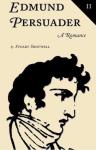
Edmund PersuaderI do not put buying links or ads on my blog for the books that I review.  Everyone has his or her own preferred book vendors, whether it is an independent book store, Amazon, Barnes and Noble, etc.  However, I am breaking my rule today for what I believe is the best book I have ever read, Edmund Persuader by Stuart Shotwell.  The author has an amazing gift for writing and I would be remiss if I did not let my readers know that he is generously giving away the book for free today (Saturday, February 7th) on Kindle.  Click HERE for your free copy.


The sequel which is entitled Tomazina’s Folly, is equally as stunning.  Click on the image of each book to read my reviews.Tomazina's Folly


1 Comment

Filed under Favorites, Historical Fiction, Literary Fiction

Review: While The Gods Were Sleeping by Erwin Mortier

I have been reading and enjoying a raft of literature in translation lately.  I was thrilled to receive an ARC of this book that was originally written and published in Dutch in 2008.  This version has been translated into English by Paul Vincent.

My Review:
Gods Were SleepingHelena is a very old woman who has outlived all of her friends, acquaintances and relatives.  She is homebound and needs round-the-clock care which is provided by a kind young woman named Rachida.  We get the feeling that Helena is waiting for death which she feels is imminent and while she waits she writes down the memories of her life, especially those that revolve around the period of World War I.

Helena’s father is Belgian and her mother is French, so she grows up living between these two countries.  She spends the summers in her mother’s family home in France, and when World War I breaks out Helena is forced to wait out the war with her mother, brother, uncle and aunts in their French countryside home.  Helena’s father is left back in Belgium and the family suffers this long separation.

The main characters in Helena’s memoir are her mother, brother and husband.  She has an uneasy relationship with all three.  Throughout her life Helena feels that, as a young woman growing up in a European bourgeois family, she is deprived of many freedoms.  Her mother, who still wears the stiff corsets of the 19th century and is always acutely aware of the gossip from the neighbors, will not let Helena wander out of their home unaccompanied.  Helena resents her mother for keeping her prisoner under these strict, and what she views as, old-fashioned mores.

Helena loves her brother Edgar and is very close to him yet she is jealous of the freedom he is allowed.  As a stark contrast to Helena, he can walk through the city streets at his leisure, have countless affairs, and travel off to war.  When Edgar is wounded during the Great War, he is finally sent home and Helena listens in horror to his vivid details of trench warfare.  One of the aspects of this book that is most impressive is the writer’s ability to graphically describe the tragedies of the war suffered by everyone who witnessed it; sounds, colors, textures, smells, and ruined landscapes are all described in order to capture the scale and destruction of The Great War.

When Helene marries a British soldier named Matthew who has a penchant for wandering and being on the open road, she admires his sense of adventure and his freedom.  But it is his wanderlust that keeps her separated from him for long periods of time.  When they have a child together, a daughter, I was surprised that Helena’s relationship with her was just a contentious as Helena’s relationship with her own mother.

The language and prose of the book feels disintegrated, as Helena jumps from one period of time to the next.  It is almost as if we are looking through an album of old photographs with Helena and she tells us stories of her life as they pop up in her mind.  She oftentimes goes on tangents as one story will remind her of another which she will launch into.  I think some readers will find this writing style confusing and disruptive, but it is appropriate for the setting of the book.  Helena is a very old woman, reflecting back on a long life and as images and narratives randomly appear in her memory she writes them down for us to read.

I have read quite a few historical fiction novels set during World War I this past year and WHILE THE GODS WERE SLEEPING is among the best for capturing the emotions, heartache, lasting effects of this war.

About The Author:
Erwin Mortier is a Dutch-language Belgian author. Spending his youth in Hansbeke, he later moved to nearby Ghent, where he became city poet (2005-2006).He wrote as a columnist for newspapers like De Morgen and has published several novels including Marcel, My Fellow Skin, Shutter Speed, and While the Gods Were Sleeping.


1 Comment

Filed under Historical Fiction, Literature in Translation, World War I

Review: The Door by Magda Szabo

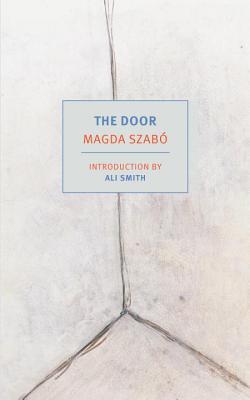
The Door was originally published in 1987 in the original Hungarian. The New York Review of Books has released this edition which has been translated by Len Rix.

My Review:
The DoorEmerence was the sole inhabitant of her empire-of-one, more absolute than the Pope in Rome.”

The Door is about the unlikely relationship forged between two very different women.  Magda is a writer and an intellect and the pressures of her schedule force her to seek out a cleaning lady who will keep her home in order while she pursues her career.  Emerence, an old woman who lives in their neighborhood in Budapest, is well-known for her intense work ethic as well as her singular personality.

As the book progresses, one wonders why Magda puts up with some of Emerence’s eccentricities.  Magda at several points suffers from extremely harsh words and criticism when she argues with Emerence.  The housekeeper actually mocks Magda’s faith and religion to the point where Magda sneaks off to Church on Sunday so she will not have to endure Emerence’s verbal attacks.  As time goes on it is evident that, although they fight and argue, Magda and Emerence cannot live without each other; their lives are entangled together to the point that they cannot stand to be apart.

Emerence has a plethora of eccentricities, all of which are gradually explained throughout the book.  She has an intense fear of thunderstorms, she will only sleep in a loveseat, and she completely objects to religion or faith of any kind.  Emerence has also made a lot of money which she is saving up to buy an elaborate crypt in which to be buried.  But the most mysterious quirk of hers is the fact that she will not allow anyone, under any circumstances to enter her home.  Her door is permanently barred to her family, her close friends and her employer of 20 years.

Throughout the novel, Magda comes to truly care for the old woman and she tries to figure out what is behind the door to Emerence’s apartment.  Magda also attempts to get behind the figurative doors that Emerence has put up in order to emotionally protect herself from other people.  Can Magda ever truly break down these barriers and obtain the close and tender relationship with Emerence that she so desires?  Or will Magda’s attempts to break down these literal and figurative doors end up destroying this woman whom she has come to love as family?

THE DOOR is a unique and intense novel about relationships, loyalty, and love which I highly recommend.  Thanks to the New York Review of Books for bringing this brilliant Hungarian author to our attention.

About The Author:
Magda Szabó was a Hungarian writer, arguably Hungary’s foremost woman novelist. She also wrote dramas, essays, studies, memories and poetry.

Born in Debrecen, Szabó graduated at the University of Debrecen as a teacher of Latin and of Hungarian. She started working as a teacher in a Calvinist all-girl school in Debrecen and Hódmezővásárhely. Between 1945 and 1949 she was working in the Ministry of Religion and Education. She married the writer and translator Tibor Szobotka in 1947.

She began her writing career as a poet, publishing her first book Bárány (“Lamb”) in 1947, which was followed by Vissza az emberig (“Back to the Human”) in 1949. In 1949 she was awarded the Baumgarten Prize, which was – for political reasons – withdrawn from her on the very day it was given. She was dismissed from the Ministry in the same year.

During the establishment of Stalinist rule from 1949 to 1956, the government did not allow her works to be published. Since her unemployed husband was also stigmatized by the communist regime, she was forced to teach in an elementary school within this period.

Her first novel, Freskó (“Fresco”), written in these years was published in 1958 and achieved overwhelming success among readers. Her most widely read novel Abigél (“Abigail”, 1970) is an adventure story about a schoolgirl boarding in eastern Hungary during the war.

She received several prizes in Hungary and her works have been published in 42 countries. In 2003 she was the winner of the French literary prize Prix Femina Étranger for the best foreign novel.


5 Comments

Filed under Classics, Literature in Translation, New York Review of Books