
I received an advanced review copy of this title from Europa Editions. The original book was published in French and this English translation is done by Alison Anderson.
My Review:
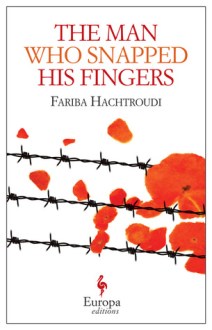 This intense story is told in alternating views of two people who survived the brutality of a fictional totalitarian regime called the Theological Republic. Although the homeland of these two characters is fictional, it is evident from clues in the text that this country is in the middle east and that both characters are refugees somewhere in Russia. The female character, Vima, was know in the republic as their most stubborn political prisoner and given the name Bait 455. Vima is arrested and repeatedly raped and tortured by her captors who are trying to get information about her husband’s political subterfuge. Vima’s love and devotion for her husband runs so deep that the only words she ever speaks during these torture sessions is a defiant, “No.” One day, without any warning, a high ranking official interrupts one of these torture sessions by snapping his fingers and Vima is rescued.
The other character in the book is a high ranking Colonel who was in the inner circle of the republic’s Supreme Commander. The Colonel started out as a foot soldier in the Colonel’s army but because of his bravery and knowledge of arms and technology he quickly rises up in rank until he is one of the most trusted members of the Supreme Commander’s inner circle. The Colonel’s job is to spy on the staff of the prisons where it is suspected that there are groups of traitors who are letting prisoners escape. The Colonel’s position brings him into direct contact with Bait 455 and through an interesting twist of circumstances in the book he is the man who snapped his fingers to save Vima.
Vima and the Colonel are both refugees in a new country for five years when their paths cross. The Colonel has applied for refugee status and the political leaders in his country of asylum keep interrogating him. Vima is called on to be a translator for the Colonel during these interrogations. At this point their roles as captor and captive are completely reversed and the Colonel knows that his fate is doomed. The country of asylum really has no interest in harboring this criminal and the Colonel feels that it is only a matter of time before he is eliminated. So he asks Vima to write a book which tells his story; the most important part of the story for him is the unconditional love he has for his wife whom he had to leave behind in the republic.
Vima and the Colonel both have emotional personalities that allow them to love deeply and unequivocally. Vima’s tormentors, no matter how much they tried to break her body and her spirit, would not betray her beloved. The Colonel gives up his position in the republic and risks his life to escape because his wife demands that he do so. But in the end Vima and the Colonel are both disappointed because their intense love is not matched by their respective partners.
There is one final interesting literary allusion in the text that, as a classicist, I would be remiss not to mention. The Colonel enjoys reading literary classics with his lawyer, an eccentric man named Yuri. Yuri introduces him to The Iliad and The Odyssey and the Colonel becomes fascinated with the Greek hero Achilles. Achilles, not unlike the Colonel, is a controversial hero who wreaks havoc and destruction despite his heroic status. Achilles is eventually brought down because of his one week spot, his heel, and the Colonel, too, has a vulnerability which comes in the form of his love for his wife.
This is one of those books that will stay with me and that I will think about for a long time to come. I made the mistake of reading this before bed and it kept me up thinking for quite a while. The true hero in the book is Vima who, despite suffering the worst evil that humanity has to offer, is resilient and never stops fighting back. Vima fights her tormentors with a simple “no,” she fights abandonment from her beloved, and she fights when her past comes crashing back into her life and threatens her sanity. I think that this will make my list of favorite books of the year.
About the Author:
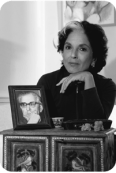 Fariba Hachtroudi was born in 1951 in Tehran. She comes from a family of scholars and professors. Her paternal grand-father was a religious leader who supported the constitutionalists in 1906, against other religious leaders who advocated for governance by Sharia law and the absolute rule of God as a monarchic authority.
Fariba’s father Mohsen Hachtroudi was a learned scholar, often called the “Ommar Khayyam” of contemporary Iran. As a well known French-educated mathematician, philosopher and poet, Mr Hachtroudi was unquestionably considered to be a moral authority for generations of Iranians. Hachtroudi fought his entire life for the promotion of democracy, social justice (most notably women rights) and secularism. Fariba’s mother, Robab Hachtroudi was a professor of humanities and Persian literature.
Fariba Hachtroudi received her doctorate (PHD) in art and archeology in Paris in 1978.
She lived in Sri Lanka from 1981 to 1983, where for two years she taught at the University of Colombo while performing research on the Teravada Boudhism.
When Fariba returned to France in 1983, she started, as a journalist, to denounce Khomeynism.
In 1985 / 1986, to understand the daily life of her compatriots, Fariba travelled clandestinely to Iran by way of the desert of Baluchistan. L’exilée, Hachtroudi’s first book describes her haunting journey.
10 years later, in 1995, Fariba who was much more pessimistic than others, already predicting change and revival “slowly and from within Iran”, decided again to approach the issue by creating a humanitarian association free of political affiliations. MoHa, the association for the foundation of Mohsen Hachtroudi, focuses it work on education and secularism – conditions essential for the respects of women’s rights and the promotion of democracy. MoHa helped Iranians refugees wherever they were. After her last trip to Iran (2006) Fariba Hachtroudi hopes to be able to register her Foundation in Iran in order to help the youth inside the country as it was the goal of her father.
For more information visit her website: http://www.faribahachtroudi.fr/bio/uk.html
 This is a difficult title to review because it is impossible to describe the beautiful and philosophical language which permeates the book. When the narrative begins Felipe Díaz Carrión is returning to his home in a small village in Spain, but returning from where we do not yet know. When he reaches his native village he takes great comfort in the familiar surroundings in which he grew up; the trees, the road, the nest of Egyptian vultures, the bronze doorknocker on his house and a cross which is the grave marker for his own father are all soothing to him. As a person who likes her routine and is comforted by old, familiar things, I was mezmorised by the first few pages of this story as Felipe slips back into his peaceful and calm surroundings.
 I don’t normally read Dystopian, Orwellian type novels with talking Gorillas. But since this book is published by Peirene Press I decided to give it a try anyway and I am glad I did. The narrator tells us that he was living a happy life in the wild until one day members of his family start disappearing from their idyllic home. He then finds himself drugged and dragged out of his natural habitat against his will. He, along with his family, are chained together and forced on an arduous journey during which they are given just enough food and water to survive. Some of them die along the way and the living are forced to march on and leave their loved ones behind.. I found this to be the most heart wrenching and sad part of the book. Their fear was palpable and it was difficult to read about these innocent animals as they are taken out of their natural surroundings, and forced on a journey towards the unknown.
 Peter Verhelst, born in 1962, is a Belgian Flemish novelist, poet and playwright. He has written more than 20 books. His work has been praised for its powerful images, the sensuality and richness of its language and the author’s unbridled imagination. His breakthrough came in 1999 with the novel Tonguecat, which won the Golden Owl Literature Prize and the Flemish State Prize for Literature. The Man I Became is his eleventh novel.
 Haller resides in a nursing home in Switzerland where he still participates in a very full and active life. He visits the local pub, he continues doing some work as a stone mason and he entertains his roommates with his quick, sarcastic wit. This book is the story of the last year of his life as told by his only child, his son.
 I was not surprised to find out the author composed this novel in a tent on the front lines of World War I. The novel is a gruesome, starkly honest portrayal of the horrors of war. The author, however, draws the readers in at first with a light and satirical description of its gentle, naïve and optimistic main characters, William and Griselda.



 The Book Binder's Daughter