
I received an review copy of this title from Deep Vellum Publishing through Edelweiss. This English version of Seeing Red has been translated by Megan McDowell.
My Review:
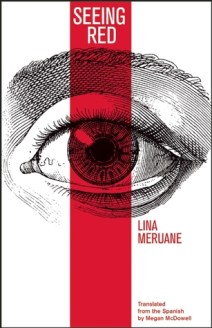 Our senses are our most precious natural gifts because it is through them that we are able to experience the world. At one point we have all probably wondered what it would be like to lose our hearing or our sight or our sense of smell. In Seeing Red, we are given a vivid understanding, through the character of Lina, of what it is like to lose one’s sight. Lina, a young woman attending graduate school in Manhattan and living with her boyfriend Ignacio, suddenly loses her vision. She has been a diabetic all of her life and from what we are told about her medical history in the book, the blood vessels in her eyes have burst and have caused her blindness. She knows that this is coming and the opening of the book is the moment at which her nightmare comes true.
The title is both literally and figuratively appropriate for the story. Lina actually sees red as her blood vessels burst and block her vision; her anger at the loss of her most precious sense makes her severely angry, thus causing her to figuratively “see red.” The tone and setting of the first scene in the book during which Lina and Ignacio are at a party are unexpected. It is at this party when her site begins to fade and when she realizes what is happening she calmly asks Ignacio to take her home. They stay at the party for a while longer and when they finally take a taxi home their ride is also rather serene. But this is the last moment of peace because it is from this point onwards that her anger and her anxiety build.
I was not surprised to find out that the author herself suffered from an episode of blindness because of a stroke. Her personal experience with the loss of her sight made the story all the more convincing. There are so many aspects of her life to which she must readjust; Lina has to learn how to navigate the streets of Manhattan, to walk around her apartment without injuring herself, and eat at a table without knocking over drinks. The author’s own experience with blindness gives her writing a unique authenticity that provides us with a comprehensive understanding of what it means to lose this sense.
It is very uncomfortable and upsetting to walk through Lina’s life with her as she is trying to adjust to her blindness. One of the hardest aspects of this situation for her to deal with is the ways in which other people act towards her. Ignacio, her boyfriend, is a faithful and loving companion. He washes her eyes and changes her bandages when she has surgery, he goes to her doctor’s appointments with her and he even spends a month with Lina and her family in Chile. But there are times when even Ignacio loses his patience because of Lina’s clumsiness.
The episode that was the most memorable in the book is one that takes place while they are visiting Chile. Lina carefully and meticulously packs her own suitcase by feeling each article of clothing and putting the heavier clothes on the bottom of her suitcase and the lighter items on top. Lina’s mother, in an attempt to be helpful, unpacks and repacks Lina’s entire suitcase. This causes Lina to be emotionally distraught because, as she explains between bouts of yelling and crying, she wants to do simple tasks her own way and not have to be constantly dependent on others. It is difficult for her loved ones to attempt to help Lina but without making her feel helpless.
Seeing Red is disturbing and uncomfortable but so worth the read. I hope that Meurane’s books will continue to be translated into English so I can read additional works of hers in the future. Thanks to Deep Vellum one of my favorite small presses, for bringing us a wonderful selection of literature from around the world. Please visit their website for more fantastic translated literature: http://deepvellum.org/
About the Author:
 Lina Meruane is one of the most prominent and influential female voices in Chilean contemporary literature. A novelist, essayist, and cultural journalist, she is the author of a host of short stories that have appeared in various anthologies and magazines in Spanish, English, German and French. She has also published a collection of short stories, Las Infantas (Chile 1998, Argentina 2010), as well as three novels: Póstuma (2000), Cercada (2000), and Fruta Podrida (2007). The latter won the Best Unpublished Novel Prize awarded by Chile’s National Council of the Culture and the Arts in 2006. She won the Anna Seghers Prize, awarded to her by the Akademie der Künste, in Berlin, Germany in 2011 for her entire body of written work. Meruane received the prestigious Mexican Sor Juana Inés de la Cruz Prize in 2012 for Seeing Red. Meruane has received writing grants from the Arts Development Fund of Chile (1997), the Guggenheim Foundation (2004), and National Endowment for the Arts (2010). She received her PhD in Latin American Literature from New York University, where she currently serves as professor of World and Latin American Literature and Creative Writing. She also serves as editor of Brutas Editoras, an independent publishing house located in New York City, where she lives between trips back to Chile.
 As a seventeen-year old adolescent living in the capitol of Romania in the twentieth century, Eliade faces the typical struggles of every teenage boy. Eliade records his thoughts in his diaries with the hopes that he will eventually turn his writings into a novel. When the entries in this diary begin, he is spending most of his time attending school at the lycee, hanging around with his friends and reading voraciously in his bedroom attic. He is trying to figure out what the plot of his novel will be and decides he wants to have a hero as the center character of his novel. He introduces us to his friends, especially Robert and Dinu, whom he contemplates basing the novel of his hero on.
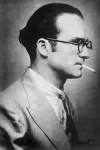 Mircea Eliade was born in 1907 in Bucharest, the son of an army officer. He lived in India from 1928-1932, after which he obtained a doctorate in philosophy with a thesis on yoga, and taught at the University of Bucharest for seven years. During the war he was a cultural attaché in London and Lisbon, and from 1945 taught at the École des haut études in Paris and several other European universities.
 Four families live quiet and simple lives at the foot of a hill in Provence in the early twentieth century. Their small community consists of four white houses and a small shack for an old bachelor that also lives among these peasants. Their days consist of working the land, drinking wine and telling stories. But their bucolic life is threatened when day when a black cat crosses their paths.
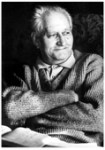 Jean Giono, the only son of a cobbler and a laundress, was one of France’s greatest writers. His prodigious literary output included stories, essays, poetry,plays, filmscripts, translations and over thirty novels, many of which have been translated into English.
 Even though this book is a fictional account of the process of a heart transplant I learned quite a bit of information about the entire, complex procedure. The storyline in the book takes place over a twenty-four hour period that begins with a surfing adventure. Simon and his two best friends have woken up at the crack of dawn to pursue their favorite pastime, chasing waves. I enjoyed the description of their love for this sport and how they go about finding the best waves. They are young, fearless, and don’t have a care in the world which makes the tragedy that happens to Simon all the more shocking and upsetting.
 Maylis de Kerangal is a French author. Raised in Le Havre, Maylis de Kerangal went on to study history and philosophy in Rouen and Paris. She worked at Paris-based Éditions Gallimard, then travelled in the United States, and went back to studies at the School for Advanced Studies in the Social Sciences.
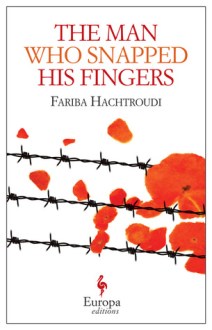 This intense story is told in alternating views of two people who survived the brutality of a fictional totalitarian regime called the Theological Republic. Although the homeland of these two characters is fictional, it is evident from clues in the text that this country is in the middle east and that both characters are refugees somewhere in Russia. The female character, Vima, was know in the republic as their most stubborn political prisoner and given the name Bait 455. Vima is arrested and repeatedly raped and tortured by her captors who are trying to get information about her husband’s political subterfuge. Vima’s love and devotion for her husband runs so deep that the only words she ever speaks during these torture sessions is a defiant, “No.” One day, without any warning, a high ranking official interrupts one of these torture sessions by snapping his fingers and Vima is rescued.
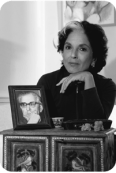 Fariba Hachtroudi was born in 1951 in Tehran. She comes from a family of scholars and professors. Her paternal grand-father was a religious leader who supported the constitutionalists in 1906, against other religious leaders who advocated for governance by Sharia law and the absolute rule of God as a monarchic authority.


 The Book Binder's Daughter