

I received several lovely books as gifts for Christmas and tucked inside one of them was a handwritten notecard with this quote by William Styron: “A great book should leave you with many experiences, and slightly exhausted at the end. You live several lives while reading.” I thought this sentiment was perfect for writing about my list of books this year that have provided me with rich and deep cerebral experiences; these are the books I have thought about on sleepless nights, these are the books that have left me figuratively and literally exhausted.
Many of the books on this list are classics, written in the 19th or 20th century. Only a couple of titles that were published this year have made the list. There is also a predominance of classic British and German literature.
Mrs. Dalloway, To the Lighthouse and The Waves, Virginia Woolf. This was the year that I finally discovered the wonder that is Virginia Woolf. Of the three titles I read I couldn’t possibility pick a favorite, they all resonated with me for different reasons. I’ve also enjoyed reading her essays along side the novels.
Pilgrimage, Vols. 1 and 2, Dorothy Richardson. I started reading Richardson towards the end of the summer and was instantly captivated by her language and her strong, daring female character. I made it about half way through Pilgrimage before taking a break. But I will finish the last two volumes in the new year.
Map Drawn by a Spy, Guillermo Cabrera Infante. This is another great title from Archipelago books and a chilling account of the author’s escape from his homeland of Cuba. A unique, eye-opening read on the mindset of those living under an oppressive, totalitarian regime.
And Our Faces, My Heart, Brief as Photos and Bento’s Sketchbook, John Berger. I initially picked up And Our Faces when Scott Esposito pointed it out on Twitter several months back. I just happened to be walking by one of my bookshelves one day and it caught my eye. I haven’t stopped reading Berger since. I also remembered that I had a copy of Bento’s Sketchbook which came recommended by someone with impeccable literary taste who said it is one of those “must read” books. He was not wrong.
The Quest for Christa T., Christa Wolf. I first discovered Wolf last year when I read her Medea and Cassandra. Surprisingly, I think of all the Wolf titles I’ve read so far, The Quest for Christa T. has been my favorite. I have also gotten about half way through her memoir One Day a Year which I am hoping to finish in the new year.
Effi Briest, Theodor FontaIne. I saw a list of Samuel Beckett’s favorite books and Effi was on the list. I immediately picked up a copy and read it. This is a title that is worthy of multiple reads, one that indeed left me exhausted yet eager to start all over from the beginning.
Other Men’s Daughters, Richard Stern. It is no surprise that my list includes at least one title from NYRB Classics. I had never heard of Stern and this book made me want to explore more of his writings. This is a tale of a marriage and divorce, but Stern’s writing is not typical of this genre in any way whatsoever.
Penthesilea, Heinrich von Kleist. Kleist’s story of Penthesilea and her brief yet powerful relationship with the hero Achilles was captivating. I oftentimes avoid retellings of Ancient myths because they veer too far from the original stories, but Kleist’s rendition of these events from the Trojan War deftly incorporate his own backstory with these ancient characters.
Poetic Fragments, Karoline von Gunderrode. This was another title that I came across on literary Twitter. For all of the negative things that can be said about social media, it has definitely served a great purpose for me through interacting with a community of liked minded readers. Thanks to flowerville, in particular, who has steered me toward many a great German classic that I would otherwise not have been made aware of.
Blameless, Claudio Magris. As with other Magris novels I have read, I was impressed with the high level of the author’s erudition mixed with poetic language and intriguing plot. Much like Compass which is also on this list, it is not an easy read, but for those who enjoy a literary challenge then I highly recommend Blameless
A Terrace in Rome, Pascal Quignard. I have been slowly making my way through all of the Quignard that is in translation. A Terrace in Rome had all of the elements that I love about a Quignard title; it was poetic, passionate, philosophical, enigmatic, and beautiful. I am especially eager to get a copy of Villa Amalia which Seagull Books will soon be publishing.
Compass, Mathias Enard. This is one of the few books actually published this year on my list. This is a book for those who really enjoy books. My TBR pile grew by leaps and bounds collecting just a fragment of the titles mentioned by Enard in his fascinating story of a musicologist who suffers from a sleepless night.
Now I’m exhausted just thinking about these books all over again…
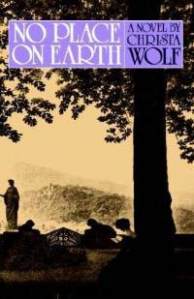 Christa Wolf stuns us with her literary prowess and creative genius in this novella by imagining two talented, tragic, nineteenth century authors meeting at an afternoon tea. Heinrich von Kleist, who had a military career before embarking on a series of trips throughout Europe, is best known for his dramatic works and novellas. Karoline von Günderrode, who lived in a convent for unmarried, impoverished, aristocratic women, is best known for her poetry and her dramatic works. Both Kleist and Günderrode were unlucky in love, prone to depression and anxiety, and committed suicide at a young age. Through the meeting of these two tragic figures Wolf explores the complications that each gender encounters in relation to social pressures and self-identity.
 Karoline von Günderrode was born in 1780 to am impoverished, aristocratic, German family. At the age of nineteen she went to live in a convent of sorts, the Cronstetten-Hynspergische Evangelical Sisterhood in Frankfur am Main, which housed poor young woman and widows from upper class families who were waiting for the right man to marry. While at the convent she was determined to educate herself and began writing poetry, drama and letters. She spent time with many of the important intellectuals of her day including Clemens Brentano, Goethe, Karl von Savigny, Bettina von Arnim and Friedrich Creuzer who read her works and gave her feedback. Christoph von Nees published two volumes of her writings under the pseudonym “Tian” in 1804 and 1805. In a letter included in the anthology Bitter Healing: German Women Writers 1700-1830, Günderrode responds to Clemens Brentano who has accused her of sounding rather masculine and “too learned” in her poetry:
 As I read the poems and two dramas included in this translation of Poetic Fragments, I couldn’t help but think of a letter that Karoline von Günderrode wrote to her lover Friedrich Creuzer, a German philologist and archaeologist: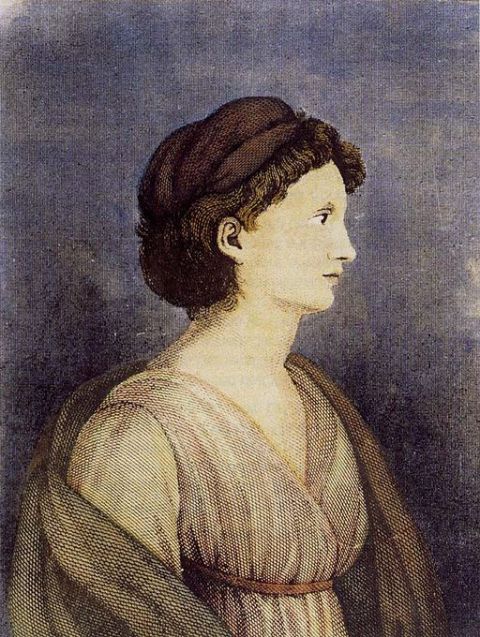



 The Book Binder's Daughter