Tag Archives: Classics

Review: Ending Up by Kingsley Amis

I received an advanced review copy from The New York Review of books. Please visit their website for the full collection of their classics series: http://www.nybooks.com/books/imprints/classics/.

My Review:

Ending UpIn this comedy about old age, Amis provides us with a geriatric cast of characters living under the same roof who are basically trying to stay as comfortable and happy as possible before they die.  There are five septuagenarians in total, three men and two women.  Although they want nothing put peace in their final years, they manage to annoy each other and bicker to the point where peace is the last thing that any one of them is going find.

Adela is the one who holds the whole operation together by paying the bills, doing all of the cooking and shopping and generally trying to make peace among her roommates.  She is not the most attractive woman and she has never been married but she is the caretaker to everyone in the house to the point that she ignores her own health issues.

Adela’s brother Bernand, the most cantankerous one of the bunch, is also the most amusing.  He has a bad leg which seems to be better or worse, depending on whether or not he is asked to do physical labor.  He provokes the others into arguments during conversation for his own amusement and he is very fond of attempting practical jokes.  His favorite weapons are stink bombs, feces, a squirt gun and urine.

A happy drunk named Shorty is also one of the residents of the cottage.  Shorty loves alcohol and he thinks he is fooling everyone about his habit by hiding bottles all over the house.  He is also the servant of the group and is always cleaning up and serving tea.  Shorty and Bernard are actually ex-lovers, which fact produces a few bawdy jokes throughout the book.

The other woman in the group is a flighty woman named Marigold.  Marigold loves to write letters, spend time with her grandchildren and do everything she can to avoid Bernard.  When Marigold starts losing her memory, she is desperate to keep this secret from Bernard whom she is sure will use this information against her.

The last member of the household is George, a former brother-in-law of Bernard.  George is a kindly old professor who has had a stroke and cannot get around on his own.  The group has taken him in because he has no where else to go and Bernard is not happy about this situation.

ENDING UP is a funny novel about the inevitability of growing old and dealing with the vast array of issues that come along with this mortal condition.  It is ironic and funny that each of these septuagenarians are responsible for his or her own demise at the end of the book.  Thanks again to the New York Review of Books for reviving another great classics.

About The Author:

AmisSir Kingsley William Amis, CBE was an English novelist, poet, critic, and teacher. He wrote more than twenty novels, three collections of poetry, short stories, radio and television scripts, and books of social and literary criticism. He fathered the English novelist Martin Amis.

Kingsley Amis was born in Clapham, Wandsworth, Couty of London (now South London), England, the son of William Robert Amis, a mustard manufacturer’s clerk. He began his education at the City of London School, and went up to St. John’s College, Oxford April 1941 to read English; it was there that he met Philip Larkin, with whom he formed the most important friendship of his life. After only a year, he was called up for Army service in July 1942. After serving in the Royal Corps of Signals in the Second World War, Amis returned to Oxford in October 1945 to complete his degree. Although he worked hard and got a first in English in 1947, he had by then decided to give much of his time to writing.

7 Comments

Filed under Classics, Humor, Literary Fiction, New York Review of Books

Review: Alien Hearts by Guy de Maupassant

The New York Review of books had a fantastic winter sale and I bought several books, including this one, at a fantastic discount.  This book was originally written and published in French in 1890.  This English version has been translated by Richard Howard.

My Review:
Alien HeartsAndré Mariolle is wealthy enough to pursue various arts without having to make a living from them.  He dabbles in a little bit of everything from playing music to writing.  He is content with mediocrity in his life and he is happy to surround himself with other artists and move in the creative and intellectual circles in Paris.  One day he is invited to the salon of Madame du Burne and his quiet, unassuming life is changed forever.

Madame du Burne survived an abusive, although brief, marriage and when her husband dies and leaves her a widow at the age of 30, she puts all of her wealth and energy into entertaining the most creative minds in 19th Century Paris.  Novelists, sculptors, musicians and singers all attend her salon and an invitation from her is the most coveted one in town.  But we learn that Madame du Burne has some deep-seated psychological issues as far as relationships with men are concerned.  She is an unrelenting coquette who makes men fall in love with her and she collects men like she collects art.  She toys with their emotions, but once they fall in love with her she never returns their feelings.

When Madame du Burne meets Mariolle he seems to have a different affect on her; she favors him more than the other men in her “collection,” but is she really capable of truly loving someone in return?  Mariolle falls hopelessly in love with her and writes her beautiful love letters and tries to be around her as much as possible.  Despite her sad experience with marriage, it is hard to feel sorry for Madame du Burne.  She appears to appreciate artists and intellectuals but it becomes obvious throughout the novel that she is just using them for her own selfish and vain ends.

Maupassant’s language, especially when he is describing the process of falling in love, is poetic and melodic.  His metaphors aptly capture the burning ardor of Mariolle’s feelings as well as the torment he feels when his love is not returned.  I was reminded several times throughout the novel of similar sentiments expressed by the Latin poets Catullus and Ovid who are also pulled in various emotional directions by romantic love.

The ending of this book is abrupt, unexpected and puzzling.  ALIEN HEARTS is a short read full of passion, love and frustration and I highly recommend this emotionally charged novel.


About The Author:
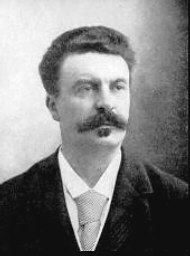
Guy de m.Henri René Albert Guy de Maupassant was a popular 19th-century French writer. He is one of the fathers of the modern short story. A protege of Flaubert, Maupassant’s short stories are characterized by their economy of style and their efficient effortless dénouement. He also wrote six short novels. A number of his stories often denote the futility of war and the innocent civilians who get crushed in it – many are set during the Franco-Prussian War of the 1870s.

Leave a comment

Filed under Classics, France, Literature in Translation, New York Review of Books

Review: A Legacy by Sybille Bedford

I received an advanced review copy of this novel from the publisher through Edelweiss.

My Review:
A LegacyThis is the satirical yet poignant story of two wealthy European families living in Pre-World War I Germany.  The first cast of characters that are described are from the Merz family, who are of Jewish descent and live together in an opulent home in Berlin.  In addition to the matriarch and patriarch of the family, sons, daughters, uncles and in-laws all live under the same roof.  Their youngest daughter, Melanie, marries an older man named Julius who is originally from the countryside and whose family is Catholic.  As one can image, many comical discussions about religion and family matters involving religion, take place as a result of this Jewish-Catholic marriage.

Julius’ family, the Feldens, are the other family described at length in A LEGACY.  The Feldens are landed gentry living in the South and their Catholic roots go back for generations; there are a total of four sons in the family including Julius.  A lot of the story about the Feldens involves a description of Johannes, the youngest brother, who, at the age of 15, is sent off to a brutally abusive German military camp for young boys.  Johannes escapes and a political battle ensues between the Felden family and the German government.  When Johannes is threated with being returned to the military camp he loses his mind and is never right for the rest of this life.

There are many themes and plots in the book that Bedford describes which readers from any time or place can appreciate.  Even though these families believe that they are vastly different because of their religions, they are actually very similar in how they view family, wealth and society.  Although both families claim they are staunch believers in their respective religions, none of them actually ever sets foot in a church or a synagogue.  The sons, especially the eldest in each family, expect to have vast amounts of income with which to gamble and engage in their eccentric hobbies; but each man has no intention, whatsoever, of working for a living.

The language of the book is very different and might not be what many readers are used to as far as dialogue is concerned.  Oftentimes characters launch into a dialogue and neither speaker is specifically identified until well into the conversation.  It is as if we are sitting at the dinner table with the Merzes, or any large family, and conversations are happening all at the same time around us.  It might take us a while to catch up with the various dialogues going on simultaneously in the room, but we try to catch bits and pieces of discussions as best we can.

When there is a death, a marriage or a birth, all of which inevitably entail a consideration of religious practices, some type of an argument arises among the Felden and Merz families.  A sister-in-law, who is on the fringe of this family dynamic describes the situations she witnesses among these families best when she says that there is a “Theological dead-lock between non-practicing members of two religions.”

A LEGACY is an entertaining novel, especially for those readers who understand the intricate workings and dynamics of an extended family.  It also made me a little sad to think that this time period that is described is the last of its kind for such families as these in Germany before that country is ravaged by two world wars.  In the end, Bedford makes us ask ourselves if any of the petty differences that exists among families really matter?  What kind of a legacy will we leave for posterity?  What does fighting over religion or money or property really leave us in the end?

Thanks so much to the New York Review of Books Classics series for bringing another great novel to our attention.

About The Author:
Sybille Bedford, (16 March 1911 – 17 February 2006) was a German-born English writer. Many of her works are partly autobiographical. Julia Neuberger proclaimed her “the finest woman writer of the 20th century” while Bruce Chatwin saw her as “one of the most dazzling practitioners of modern English prose.


1 Comment

Filed under Classics, Historical Fiction, Literary Fiction, New York Review of Books

Review: Adam Bede by George Eliot

We are expecting a blizzard here in the Northeast, so I have the perfect, classic book for you to get snowed in with for the long duration!

My Review:

Adam BedeThe strength of this book lies in the sympathetic, well-rounded and moving characters which Eliot portrays in a 19th Century bucolic setting.  The centerpiece of the book, of course, is Adam Bede himself, a simple but hard-working carpenter who strives to be good at his craft and a dutiful son and brother.  His loyalty and strength of character are admired by all those around him, rich and poor and young and old alike.

In contrast to Adam is Arthur Donnithorne who is the heir to his grandfather’s estates.  As a member of the landed gentry he is held in high esteem simply by virtue of his position in society.  He is younger than Adam and more brash; as a consequence of his youth and perhaps his privileged upbringing he does not take into consideration the consequences of his actions.  And where Adam is always honest and forthright, Arthur will quickly make up lies to cover his indiscretions.

The dramatic juxtaposition of the female characters in the novel is equally fascinating.  Hetty Sorrel, a simple farm girl who spends her days working in her Aunt Poyser’s dairy, wants so desparately to escape her life of hard work and monotony.  Hetty’s life is consumed with thoughts of possessing pretty things, making the most of her outward appearance, and attracting a man who will adorn her with finery.

Dinah, Hetty’s cousin by marriage, is a woman who has adopted Methodist beliefs and actually seeks out others who are suffering; she gives comfort to the poor, sick and dying and cares nothing for earthly possessions.  Dinah also has no interest in marriage or children for fear that these things will be a distraction to her religious and spiritual calling.

Eliot’s minor characters are rich in detail and offer some comic relief. Mrs. Poyser, a wife of one of the tenant farmers, does not hold back from speaking her mind, even to old Mr. Donnithorne whose upkeep of their rented farm does not impress her.  Mrs. Poyser’s cherubic daughter Totty loves her family and is the happiest of little girls as she grows up amidst the animals, gardens and dairy on the Hall Farm.

This multi varied cast of characters are entangled in interesting plot twists that surprised me more than a few times.  Love triangles, lies, romance and even a shocking crime will keep you turning the pages of this book until the very end.  ADAM BEDE is a remarkable piece of 19th Century British literature and a great place to start of you are interested in reading George Eliot.

Many classic books such as Adam Bede are free to download on your Kindle.  Click here to go to Amazon and get this book free.

7 Comments

Filed under Classics

Review- Lorna Doone: A Romance of Exmoor by R.D. Blackmore

This book has been on my “to read” list for a long time.  When someone, whose opinion I highly value, recommended that I read the book, I immediately picked it up.  My only regret is that I waited so long to finally read Lorna Doone.  Originally published in 1869, R.D. Blackmore sets his book on the wild frontier of Exmoor, England where the Crown does not have complete control over the land.

My Review:

Lorna DooneThe plethora of interesting aspects to this book makes it difficult to decide about which ones to write.  John Ridd is a young boy living in the wilds of western England in the 17th century, when his father is murdered by a band of outlaws who torment, bully and rob the farmers and good people of Exmoor.  The Doones occupy their own outlaw village and not only survive by robbing those around them but also prey on the their neighbors for sport.  When John Ridd’s father stands up to these bullies, he is murdered and leaves behind his widow, Sarah Ridd, his prosperous farm, and his three children.

Although John grows up without the guidance of his father, he develops into an upstanding, strong and honest man.  Never for a minute does John harbor resentment or a grudge against the Doones.  If he had let hate and vengeance consume him, his heart would never have been open to receive the love of Lorna Doone and he would have missed out on the greatest love of his life.  What impressed me most about these star-crossed lovers is that they refuse to let the sins of their families ruin their happiness.  R.D. Blackmore has created a character in John Ridd that is an enduring moral example for all ages.

Despite unfortunate circumstances and countless obstacles, the zeal of John and Lorna’s love never wanes.  John’s thoughts and actions are always carried out with his love in mind, no matter how long it has been since he has beheld her face.  This romance is an interesting lesson for those of us in the 21st century who are accustomed to social media, Skype, text messaging, and any number of gadgets that keep us constantly in connection with one another.  We do not have to wait days and weeks for a letter from a loved one or travel on an extended and tedious journey to reach our beloved.  In this age of “out of site, out of mind,” would a man and woman be so patient, faithful and enduring in their love as John and Lorna?

oare_church

Oare Church in Exmoor

The plot is also one of the factors that made me devour this book.  The reader is kept in constant suspense wondering whether or not the evil villians, in the form of the Doones, and especially their leader Carver Doone, will get their just deserts.  Will anyone come to the aid of the innocent people of Exmoor to stomp out these bullies, or will John Ridd and his neighbors take matters into their own hands?  John’s cousin, Tom Faggus, who is also a highway robber, has many interesting parts in the storyline.  Although, as a counterexample to the Doones, he robs the rich and gives the spoils to the poor.  R.D. Blackmore kept me guessing the various fates and outcomes of his characters until the very end.

R.D. Blackmore’s tale has the perfect formula for a great novel: romance, adventure, a bucolic setting, and indelible characters.  The tale of John Ridd has truly captured my heart and like all my favorite classic books, it will be one of those that I will reread again and again.

2 Comments

Filed under Classics, Historical Fiction, Literary Fiction
