Tag Archives: Classics

Review: Precious Bane by Mary Webb

This excellent, classic title was also recommended to me by a like-minded reader.  I downloaded it onto my Kindle but I will definitely buy a hard copy because it is one of those classic novels that I will reach for again and again.

My Review:
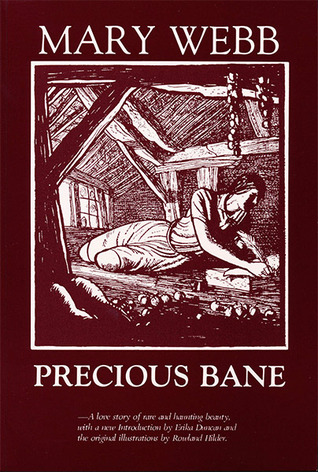
Precious BaneA the core of this story is a lesson about being kind and accepting of others who are physically different than what is considered to be society’s norm.  Prue Sarn is born with a hare lip and for the first third of the book the reader is not even made aware of her difference except for a few hints from her mother.  We are made painfully aware of Prue’s physical difference when she encounters other people from the village and they make cruel and mean comments about her lip.

In the 19th century, not only was a person with a physical deformity treated cruelly but they were viewed as cursed.  Prue is accused of witchcraft and having something wicked in her soul that caused her lip to be “hare-shodden.”  But Prue is the kindest, wisest and most patient soul in the novel.  Even when her friends and family members make offhand and hurtful comments about her lip she immediately forgives them.

The most maddening figure in the book is Gideon, Prue’s brother.  When Gideon and Prue’s father dies, Gideon inherits the family farm and he has visions of working the land night and day and making enough money for them to buy a fancy house and live in the lap of luxury.  He makes his sister Prue swear that she will work herself to the point of exhaustion in order to help him achieve his goal.  Prue doesn’t care for money or wealth or status but she agrees to help Gideon because she wants to do what will make him happy.

Gideon’s focus on producing extra crops and becoming a wealthy man is so strong that it becomes a detriment to others around him.  He will not marry Jancis, his long-time sweetheart and she is pawned off by her father as a dairy maid instead.  He even harms his ailing mother because he sees her as a drain on his income when she needs the doctor more and more.  Prue aptly begins to call Gideon’s goal and his crop his “precious bane” which foreshadows his eventual downfall.

In the end we are left wondering whether or not any man has enough honor in his spirit to look beyond Prue’s face and into the depths of her soul and see her for the good and kind person she truly is.  You will have to read PRECIOUS BANE for yourself to find out if it has a fairy tale ending.


About The Author:
Mary WebbMary Webb (1881-1927) was an English romantic novelist of the early 20th century, whose novels were set chiefly in the Shropshire countryside and among Shropshire characters and people which she knew and loved well. Although she was acclaimed by John Buchan and by Rebecca West, who hailed her as a genius, and won the Prix Femina of La Vie Heureuse for Precious Bane (1924), she won little respect from the general public. It was only after her death that the Prime Minister, Stanley Baldwin, earned her posthumous success through his approbation, referring to her as a neglected genius at a Literary Fund dinner in 1928. Her writing is notable for its descriptions of nature, and of the human heart. She had a deep sympathy for all her characters and was able to see good and truth in all of them. Among her most famous works are: The Golden Arrow (1916), Gone to Earth (1917), and Seven for a Secret (1922).
 

5 Comments

Filed under British Literature, Classics, Literary Fiction

Review: Red Cavalry by Isaac Babel

I received an advanced review copy of this title from Pushkin Press through NetGalley.

My Review:
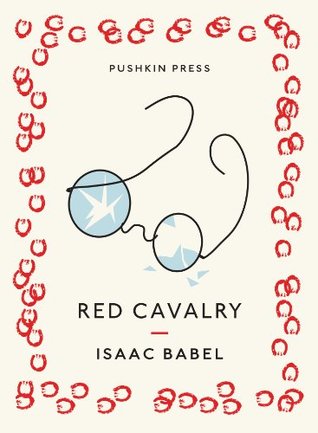
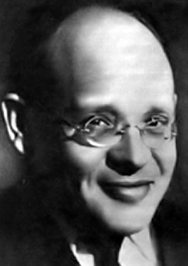
Red CavalryIsaac Babel, who was a journalist and propagandist for the Red Army in the 1920’s during the Russian war against Poland, used his diary as a source for the stories in this collection.  Babel’s narrator, like himself, is a Jewish intellectual who doesn’t quite fit in with the rest of the Cossack soldiers in the regiment to which he is assigned.  Also, his attempts at propaganda don’t quite benefit the Bolshevik cause, although they don’t really harm it either; it is surprising and sad that the Soviets had Babel killed after all.

Babel provides us with a vivid account of the scenes, horrors, sights, sounds and even the humor that comes from war.  One of my favorite stories is entitled “Pan Apolek.”  Apolek is a local artist who has been commissioned to paint the holy scenes in one of the churches that the narrator visits.  When Apolek decides to put the faces of local citizens on the most holy figures in the Bible, there is a religious uproar.  But the citizens themselves seem uplifted that their faces are captured in art in this most holy place.

The strongest parts of all of these stories are the many and varied scenes which Babel sets for us.  He describes not only churches, but towns and the everyday happenings of its citizens.  For example, as the narrator walks around a village waiting for the Sabbath he describes the various shops and shopkeepers he encounters.  Their stores seem to be closed but we are not sure if they are closed permanently because of the war.  He also describes the army on the march and the dead bodies they encounter as they make their way from one town to another.

The narrator describes cavalry leaders and infantrymen as well as some of the more unimportant or auxiliary positions.  He gives us the story of his wagon driver, for instance, and the story of a shepherd who contracted syphilis while sleeping with a prostitute bought by his own father.  There are so many different characters which the narrator encounters that it is impossible to sum them up neatly in one review.

This is not a typical story with a clearly delineated plot and developed characters.  It is a collection of meandering, stream of consciousness stories about one man’s reaction to the landscapes, sights, sounds and people he encounters during a war.   The story mimics the chaos of warfare and many of the narratives end abruptly, like the lives of the soldiers in the Red Cavalry.  Babel’s stories are an important piece of Russian history and literature which I am glad that Pushkin Press has decided to bring to our attention.

About The Author:
Isaac BabelIsaak Emmanuilovich Babel (Russian: Исаак Эммануилович Бабель; 1901 – 1940) was a Russian language journalist, playwright, literary translator, and short story writer. He is best known as the author of Red Cavalry, Story of My Dovecote, and Tales of Odessa, all of which are considered masterpieces of Russian literature. Babel has also been acclaimed as “the greatest prose writer of Russian Jewry.” Loyal to, but not uncritical of, the Communist Party of the Soviet Union, Isaak Babel fell victim to Joseph Stalin’s Great Purge due to his longterm affair with the wife of NKVD chief Nikolai Yezhov. Babel was arrested by the NKVD at Peredelkino on the night of May 15, 1939. After “confessing”, under torture, to being a Trotskyist terrorist and foreign spy, Babel was shot on January 27, 1940. The arrest and execution of Isaak Babel has been labeled a catastrophe for world literature.

4 Comments

Filed under Classics, Historical Fiction, Literature in Translation, Russian Literature

Review: Still Life with Insects by Brian Kiteley

I received an advanced review copy of this novella from Pharos editions.  The description of this press from their website states: “Pharos Editions is dedicated to bringing to light out-of-print, lost or rare books of distinction. A carefully curated list of beautifully produced books, Pharos titles are hand-picked and introduced by some of today’s most exciting authors, creators, and artists. Pharos Editions is an imprint of Counterpoint Press.”

My Review:
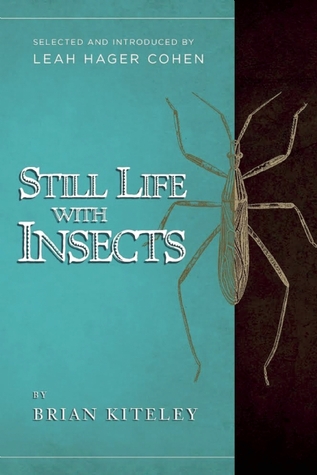
Still Life With InsectsElwyn Farmer’s life hasn’t exactly turned out as he had planned.  He was in graduate school to become an entomologist but circumstances out of his control forced him to abandon his work before he finished his degree.  He does, however, maintain a passionate interest in bugs throughout his life and collects and catalogues them with meticulous precision.

The book is unique in that each memory Elwyn has about his life is punctuated by the bugs he has collected along his journey.  For instance, he is on a camping trip with his wife and he captures two mating beatles in an outhouse.

Even though this is a very short read, I fell in love with the character of Elwyn.  We are told through the course of his narrative that had a nervous breakdown at one point in his life when his job became too much.  He is a kind, dependable, humble man whose family, friends and colleagues all display a great amount of respect for him.  His evolving relationship with his sons and grandsons, in particular, is deeply touching.

In the end, maybe it is because it is a hobby and not his job that helps Elwyn maintain his passion for entomology.  If he were forced to deal with bugs he might not have had such a zeal for collecting.  Elwyn teaches us that sometimes life has other plans for us and in the end all things work out for the best.

About The Author:
Brian Kiteley is Professor of English and Creative Writing at the University of Denver, and the author of the novels Still Life With Insects, I Know Many Songs, But I Cannot Sing and The River Gods and two fiction writing guides, The 3 A.M. Epiphany, and The 4 A.M. Breakthrough. The recipient of Guggenheim, Whiting, and NEA fellowships, Brian has also had residencies at the MacDowell Colony, Millay, Yaddo, and the Fine Arts Work Center in Provincetown. His fiction has been anthologized in The Best American Short Stories and The Four-Way Reader.

2 Comments

Filed under Classics, Literary Fiction

Review: Novel Journals and Word Cloud Classics from Thunder Bay Press

I received a box of beautiful and unique books and journals from Thunder Bay Press.  Their selection of journals and classic books make great gifts for those who love literature, writing and journaling.

Novel Journals:

Novel JournalAs a blogger I am always looking for journals in which to scribble my thoughts about books.  I have a scattered collection of notebooks and I was thrilled to receive the journals from Thunder Bay Press so I could better organize my reviews.  The sturdy, heat burnished covers ensure that the pages are not easily ripped and if I spill a beverage on the journal then the paper is still protected.

The durable nature of these journals, however, is not their most notable feature.  Each journal contains the lines of a famous novel in tiny print.  The lines of print serve as the lines one which to write in the journal.  This would make a fabulous gift for anyone who likes to write and appreciates classic literature.  Thunder Bay Press has a large collection of novel journals which include Pride and Prejudice, Jane Eyre, Great Expectations and TheJournal Text Adventures Huckleberry Finn.  To see a complete list of journals that are available please visit this link:  http://blog.thunderbaybooks.com/2015/03/novel-journals/

Word Cloud Classics:

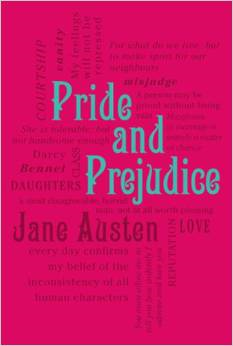
Word Cloud ClassicsFor those of you familiar with my blog and my reading habits, 19th century British authors including Jane Austen and Charlotte Bronte are among my all-time favorites.  I fell in love with these authors when they were introduced to me in high school and I have read their books countless times over the years.  My own paperback copies of these books are tattered and well-worn.  But Thunder Bay Press has sent me new copies of Pride and Prejudice and Jane Eyre from their classics collection.  The unique feature of these books is their durability; each book contains a heat burnished and foil stamped cover with a word cloud taken from the pages of the book.  The copies of these books will last much longer than my old paperbacks and I delighted that they will last long enough for me to pass them along to my daughter.

To see a complete list of the Word Cloud Classics that are available please visit this link: Word Cloud Classics P and Phttp://blog.thunderbaybooks.com/2012/09/word-cloud-classics/

So, what are your favorite literary gifts to give the reader(s) in your life?  I would love to have more suggestions from other readers!

1 Comment

Filed under Classics

Review: A Game of Hide and Seek by Elizabeth Taylor

I bought this title a few months back when the New York Review of Books had a fantastic winter sale.  Please visit their website for a full list of their amazing titles: http://www.nybooks.com/books/imprints/classics/

My Review:
A Game of Hide and SeekHarriet and Vessey have known each other for their entire lives.  When they turn eighteen there is a physical and emotional attraction between them which neither one feels comfortable or mature enough to acknowledge.  When they babysit Vessey’s younger cousins, they play hide and seek with the children so they can be together; they are so shy and naive that they don’t take advantage of this time alone while they are hiding to reveal their true feelings.

When Vessey moves away and goes to college and eventually begins his second rate acting career, Harriet settles down with a comfortable and safe man named Charles.  But for the duration of her married life she holds Charles up to her ideal image of Vessey against which fantasy Charles could never compete.  Harriet tries to make the most of her marriage by keeping a tidy home and taking care of their daughter Betsey.  But there is a feeling of loneliness and isolation that pervades Harriet’s life.

Taylor also shows us her comedic side in this otherwise serious novel through the introduction of a group of spinster ladies with whom Harriet works at a local dress shop.  They spend their days avoiding work, gossiping, primping themselves and discussing their latest male conquests.  They give Harriet who at this point is still unmarried, the worst relationship advice.

An aspect of Taylor’s writing style in this book that is worth mentioning is her transitions both within chapters and between chapters; time shifts very abruptly in the novel which is fitting for the topics of love, marriage and how our opinions of these things change, sometimes rather drastically, as we grow older.  When Vessey reappears in Harriet’s life she is middle-aged and well-settled in her marriage.  Will she choose a life with Vessey that she has idealized for so many years or will she stay with her husband and daughter and keep her family together.

A GAME OF HIDE AND SEEK is a wonderful novel to begin with if you want to sample Elizabeth Taylor’s work.  In June I will be reading and reviewing her novel A View of the Harbour, which is another reissue from The New York Review of Books.

About The Author:
Elizabeth TaylorElizabeth Taylor (née Coles) was a popular English novelist and short story writer. Elizabeth Coles was born in Reading, Berkshire in 1912. She was educated at The Abbey School, Reading, and worked as a governess, as a tutor and as a librarian.

In 1936, she married John Micael, a businessman. She lived in Penn, Buckinghamshire, for almost all her married life.

Her first novel, At Mrs. Lippincote’s, was published in 1945 and was followed by eleven more. Her short stories were published in various magazines and collected in four volumes. She also wrote a children’s book.

Taylor’s work is mainly concerned with the nuances of “everyday” life and situations, which she writes about with dexterity. Her shrewd but affectionate portrayals of middle class and upper middle class English life won her an audience of discriminating readers, as well as loyal friends in the world of letters.

She was a friend of the novelist Ivy Compton-Burnett and of the novelist and critic Robert Liddell.

Elizabeth Taylor died at age 63 of cancer.


7 Comments

Filed under Classics, Literary Fiction, New York Review of Books