Tag Archives: Classics

Giveaway: Austen in August-Pride and Prejudice Novel Journal

I received a box of beautiful and unique books and journals from Thunder Bay Press. Their selection of journals and classic books make great gifts for those who love literature, writing and journaling. For the Austen in August event hosted by Adam at  Roof Beam Reader I am giving away one Pride and Prejudice novel journal (US only).

Novel Journals:

Novel JournalAs a blogger I am always looking for journals in which to scribble my thoughts about books. I have a scattered collection of notebooks and I was thrilled to receive the journals from Thunder Bay Press so I could better organize my reviews. The sturdy, heat burnished covers ensure that the pages are not easily ripped and if I spill a beverage on the journal then the paper is still protected.

The durable nature of these journals, however, is not their most notable feature. Each journal contains the lines of a famous novel in tiny print. The lines of print serve as the lines one which to write in the journal. This would make a fabulous gift for anyone who likes to write and appreciates classic literature. Thunder Bay Press has a large collection of novel journals which include Pride and Prejudice, Jane Eyre, Great Expectations and TheJournal Text Adventures Huckleberry Finn. To see a complete list of journals that are available please visit this link: http://blog.thunderbaybooks.com/2015/03/novel-journals/


Giveaway:

I am giving away one Pride and Prejudice novel journal, just like the one pictured above. It contains the lines of Austen’s famous novel in small print.  To enter:

  •  Leave a comment below and tell me what your favorite Austen novel is.
  • You must also be signed up for the Austen in August event on Roof Beam Reader.
  • The giveaway runs from August 5th through August 12th.
  • I will choose one random winner who will be notified via e-mail.
  • The winner will have 48 hours to respond with a valid U.S. mailing address.
  • Open to U.S. residents only

24 Comments

Filed under British Literature, Classics, Favorites, Giveaways

Review: Two Novellas from Flaubert and Dostoevsky

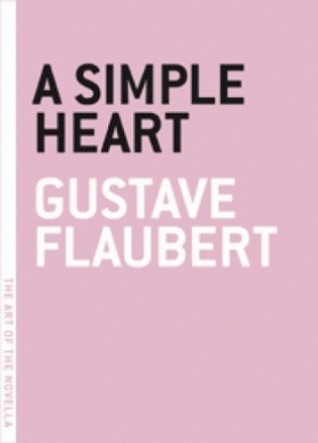
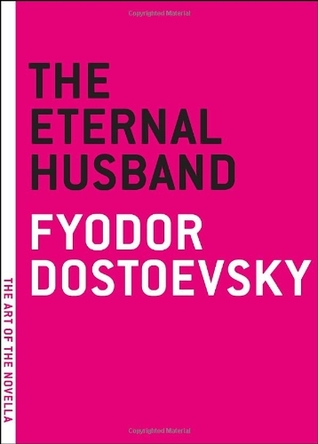
I recently stumbled across a sale that Melville House Publishers was having on their novella series.  They have released 56 novellas from famous authors across the world.  I chose two titles, A Simple Heart by Gustave Flaubert and The Eternal Husband by Fodor Dostoevsky to review here.  Please check out all of the great titles in their selection.  You can even buy a subscription to the novella series and have novellas show up on your doorstep every month: http://www.mhpbooks.com/series/the-art-of-the-novella/

A Simple Heart by Gustave Flaubert:
A simple heartThis novella introduces us to a simple servant woman who is cast out of her own home as an orphan at an early age and searches for intimacy and love for the rest of her life.  Felicite falls in love with a young man who ends up rejecting her so that he can marry a rich, old widow and avoid conscription.  After this disappointing heartache, Felicite never finds another man that she can trust her heart to.  When she comes into the service of Madame Aubain, a young widow with two small children, she is the most faithful and loyal servant anyone could ask for.  Felicite bestows love on the two children who eventually leave home for school and meet a sorrowful end due to illness.  Felicite is also given a parrot which she lavishes with love and attention.  But, like everyone else in her life that she has loved, he dies and leaves her.  This is not a tale with a happy ending but gives us a realistic view of life, love and loss.


The Eternal Husband by Fodor Dostoevsky:
The eternal husbandThe story opens with Velchaninov living in St. Petersburg in an apartment flat by himself trying to iron out the details of a lawsuit.  He has become increasingly depressed and melancholy and has eventually cut himself off from all of his friends and acquaintances.  One day an old friend, whom he has not seen for nine years, shows up on Velchaninov’s doorstep.  He is stunned to see his friend after so many years and further shocked when Trusotsky announces that his wife has died of consumption.  Velchaninov had an affair with Trusotsky’s wife and that is the main reason he hadn’t visited the couple for nine years.  When Trusotsky’s wife broke the affair off, Velchaninov vowed never to see either of the again.

Velchaninov describes Trusotsky as “an eternal husband,” which to him means a man that is subservient to a domineering wife.  Nowadays we might call Trusotsky “henpecked” or “whipped.”  Trusotsky descends into a depression that is fueled by excessive drinking; he turns out to be a man who cannot live without a wife, who cannot operate in the world without the confines of a marriage.  In typical Dostoevsky fashion, we get a glimpse into the male psyche and an interesting and ironic storyline.  I thoroughly enjoyed this story as much as his longer works.

According to the Melville House website, novellas are oftentimes ignored by academics and publishers.  I would love to hear about other readers’ favorite choices as far as this overlooked style of writing.  Do you like novellas and, if so, what are some of your favorites?


18 Comments

Filed under Classics, France, Literature in Translation, Novella, Russian Literature

Review: Patience by John Coates

I am afraid that now that I have discovered the books published by Persephone Books that I am completely addicted.  Here is another great classic from their catalogue.

My Review:

Patience-cover-387x600When we meet Patience, the eponymous character of the novel, she is having a very serious discussion with her brother who is a devout Catholic.  The discussion between brother and sister that opens the book is amusing and sets the stage for what is a delightful exploration of love, faith and relationships.  Patience is not upset when her brother reveals to her that her husband Edward is cheating on her; she does not yell or get upset or even shed a tear.  She is, however, surprised that anyone would go to bed with Edward willingly.  This statement is very telling of Patience and Edwards’ marital relations and her lack of satisfaction.

Patience is first and foremost a mother and she adores her three blond haired daughters; she endearingly calls them her “babies.”  After doing some research in order to find out about Edward’s mistress, Patience also discovers that Edward’s first wife is not deceased.  A few hilarious discussions ensue as to the legitimacy of her three children.  Since Edward is technically still married to his first wife, and never legally married Patience, then aren’t her three children, she concludes, all bastards?

This story is really one of an awakening: spiritual, sexual and emotional.  It is not so much Edwards’ cheating that prompts Patience to reexamine her life, as her unexpected relationship with a man named Philip.   Patience meets Philip one night when she goes out dancing with her sister.  Philip is immediately attracted to Patience and he tells her so.  Patience is flattered and overwhelmed that a man could be so loving and attentive.  It is surprising that Patience sleeps with Philip immediately, but by doing so she realizes what a farce her marriage to Edward has been.

When Patience decides that she must leave Edward and live a happy life of peace and fulfillment Edward, in turn, decides that he will not let her go very easily.  Patience uses all of her guile and newly found sensuality to force Edward to let her and the children go.  Patience’s transformation into a confident, loving and sexual woman is funny, poignant and makes for a fantastic story.  Once again, Persephone Press has reissued another great classic which I highly recommend.

About The Author:
John Coates was born in 1912 into a Yorkshire engineering family. He went to Haileybury and then read English at Cambridge, where he spent most of his time acting and writing plays and became President of Footlights.


7 Comments

Filed under British Literature, Classics, Persephone Books

Review: Talk by Linda Rosenkrantz

I received an advanced review copy of this title from The New York Review of Books through Edelweiss.

My Review:
TalkThis is one of those books that is difficult to classify in a specific genre.  It is biographical, but it is does not take the form of a traditional narrative like most biographies.  The author taped the conversations of three people, Marsha, Vincent and Emily, during the summer of 1965 while they vacationed on the beaches of East Hampton and transcribed their dialogue into this book form.  The result is a straightforward, raw and, at times, shocking series of conversations on which we are “eavesdropping.”

There are several topics and themes that keep cropping up in the conversations of these three friends.  First and foremost is their many failed relationships.  None of them can sustain a long-term love interest and they all seem to have different reasons for being unlucky in love.  Emily is still hung up on an old boyfriend with whom she lived in France, Vincent is gay and can’t quite seem to find someone to confide in like he does with Marsha, and Marsha seems to be in love with her gay best friend Vincent.  All three of them are in psychotherapy trying to iron out their problems and they like to sit around an analyze their therapy sessions.

Another topic that keeps bubbling to the surface is their childhoods.  Marsha and Emily, in particular, like to share stories about their younger years and their parents.  Emily tells a particularly horrifying yet funny story about a neighbor’s doll which she covets and then ends up destroying so she doesn’t have to give it back.  There seems to be a contest among them as to whom has had the most twisted and ridiculous stories from their younger years.

The most common, and shocking topic among the three is sex.  They talk about anything and everything.  They talk about who they are attracted to, who they will and won’t sleep with; no aspect of sex is off the table–ménage, S&M, orgies, abortion, masturbation are all covered.  Marsha goes into great detail describing a boyfriend who like to tie her up, hang her on a wall, and whip her.  TALK can be considered the original 50 Shades of Grey, only Marsha is smart enough to realize that this is not a healthy relationship and she quickly moves on.  I had to keep reminding myself that this book was written fifty years ago because their conversations could have just as easily have taken place today.  All three friends are 30 years old and have come to a crossroads in their lives; will they ever find the right one and get married and settle down?  Is marriage really something that they could or should even consider?  Rosenkrantz was progressive and brave not to filter any of the talk among these friends.

The New York Review of Books Classics imprints are my favorites to read.  They have provided us with another fascinating, relevant and interesting book.  You will definitely want to grab this one for the beach.

About The Author:
Linda Rosenkrantz is the author of several books of fiction and nonfiction, including Telegram, a history of the telegraphic communication, and her memoir, My Life as a List: 207 Things About My (Bronx) Childhood, and the co-author of Gone Hollywood: The Movie Colony in the Golden Age. She was also the founding editor of Auction magazine, a long-time syndicated columnist, and a founder of the popular baby-naming site Nameberry.com. She currently resides in Los Angeles.

4 Comments

Filed under Classics, Literary Fiction, New York Review of Books

Review: A Room with a View by E.M. Forster

After I read and enjoyed Forster’s collection of short stories I decided to try one of his longer works.  I enjoyed this book so much that it will definitely be among my favorites.

My  Review:
A Room With A ViewLucy is a naïve young English woman visiting Italy for the first time with her cousin Charlotte.  Lucy quickly learns that not all people, and in fact  not even all English people, are as reserved and mannered as she is.  On their first night in Florence, Lucy and Charlotte are complaining that they paid for a room with a view, but the rooms that they were given did not, in fact, have a view.  An elderly British gentlemen, Mr. Emerson, overhears the conversation and offers the women his room and his son George’s room.  Mr. Emerson claims that men do not appreciate a view as much as women and he and his son are happy to change rooms to accommodate the women.  Lucy, and especially her cousin Charlotte, are aghast at Mr. Emerson’s offer and they question the manners of a man who would be so forward and direct with them.

One of the most pleasurable aspects of the story is Lucy’s growing and maturing as she learns to break free from her old-maid, stodgy cousin and her mother.  Lucy eventually forms her own opinions about people and this includes Mr. Emerson and his son George.  While others at the English pension ostracize the Emersons because of their outspoken manner, Lucy looks beyond the façade to see that they are kind, generous men who have been misjudged by their peers.  Fate throws Lucy in the way of young George twice while they are in Florence; it is so disappointing when Charlotte hurries Lucy off to Rome in order to avoid any romantic entanglement between Lucy and George.

Forster is adept at skipping between different settings and timeframes.  The story begins and ends in Florence with a stop in the English countryside in between.  Part Two opens with Lucy back in England with her mother and her brother Freddy and she has accepted a third proposal from a Mr. Cecil Vyse.  We learn that Cecil and Lucy met while in Rome and Cecil views Lucy as a lovely painting, much like a Leonardo he says, that he can view and admire.  Cecil likes to read books and talk about art and he has every intention of molding Lucy into just the type of wife he needs for his aristocratic lifestyle.  When George and his father move into the neighborhood, things become muddled for Lucy.  Will she eventually see Cecil’s faults and choose the man who is so much more obviously suited to her?

There are a few things that not only drew me to this book but also caused me to put in on my “favorites” shelf.  First, the descriptions of Florence, and the little town of Fiesole, are beautiful and accurate.  Florence is my favorite place to visit in Italy and Fiesole is a gem of a spot from which to view the stunning landscapes of the countryside.  Forster also inserts his sense of humor into the narrative, especially when he is poking fun at strict British rules of manners.  The contrast between the stiff British and the carefree Italians is perfect.  Finally, Forster provides us with just the right amount of tense in the plot to make this book a page turner.

If you want to read more classics but don’t want to commit to Dickens or Bronte or something quite so long, then give A ROOM WITH A VIEW a try first.  The writing, the humor, the characters will all leave you wanting more Forster and more British classics.

About The Author:
ForsterEdward Morgan Forster, generally published as E.M. Forster, was an novelist, essayist, and short story writer. He is known best for his ironic and well-plotted novels examining class difference and hypocrisy in early 20th-century British society. His humanistic impulse toward understanding and sympathy may be aptly summed up in the epigraph to his 1910 novel Howards End: “Only connect”.

He had five novels published in his lifetime, achieving his greatest success with A Passage to India (1924) which takes as its subject the relationship between East and West, seen through the lens of India in the later days of the British Raj.

Forster’s views as a secular humanist are at the heart of his work, which often depicts the pursuit of personal connections in spite of the restrictions of contemporary society. He is noted for his use of symbolism as a technique in his novels, and he has been criticised for his attachment to mysticism. His other works include Where Angels Fear to Tread (1905), The Longest Journey (1907), A Room with a View (1908) and Maurice (1971), his posthumously published novel which tells of the coming of age of an explicitly gay male character.


15 Comments

Filed under British Literature, Classics, Favorites