On the Necessity of Doors: Bergeners by Tomas Espedal (trans. James Anderson)

In Bergeners, Tomas Espedal describes his various travels which include sojourns at places like New York and Berlin.  At the center of the book is an extended description of his hometown, Bergen, Norway, which city, as a fifty-year-old man, he is drawn back to settle in.  I read the book in two evenings over the weekend and part of what draws me into Espedal’s writing is the way in which he varies his style; reading his books are like unpacking a treasure chest, one never knows what beautiful short story, poem, or anecdote one will find on the next page.

I’ve underlined, copied and marked up so many passages it would be impossible to share them all here.  But one feeling which stood out to me in his writing is his deep sense of loneliness, so my focus of this post will be on this idea.  When the book opens, Espedal is in New York with his girlfriend, Janne, who announces to him that she is leaving him.  Even though he was married before this relationship, this break-up seems to have disturbed his equanimity.  His interpretation of Ovid’s Apollo and Daphne myth alludes to his state of mind and the loneliness he feels with the loss of this relationship:

Daphne runs and Apollo runs after her.  They run. We run.  You run and I run after you.  Apollo runs after Daphne.  They run through the forest, along the river, we run through the city, I run after you.  Almost grab your hair, that long hair which you lose.  You run without hair and increase speed, how fast you run, don’t you know who I am/  I’m Apollo, I’m running after you.  You’re running so fast, I increase speed.  Almost grab your arm, your hand which you lose.  You’re running and weeping.  I run, we run through the city, out of the city, over the bridge, over the river, I can hear your breathing becoming labored, it will run out, you’ll lose your breath.  You lose your hair, lose your arm.  You’re breathing so heavily, so deeply, you’re nothing but breath.

Espedal writes what appears to be a short story entitled “The Guest,” about a man who celebrates his birthday alone; but as is common in his writing, the lines between fiction and autobiography are blurred.  Is this how he imagines his life now that Janne is gone and his daughter has moved away?:

Today is his birthday. His fiftieth. He’s put on his best suit and is celebrating the occasion alone.

The black velvet suit is tailor-made. A white, newly ironed shirt. Silver cufflinks. He smokes a cigarette.

He has a good dinner. Drinks and expensive wine. The living room is adorned with flowers, white lilies, a present to himself.

The lines in the lilies’ leaves are like the veins beneath the skin of the hands holding the cutlery. He cuts his meat.

He takes a mouthful of wine. He looks at his hands, long and carefully, as if they are guests at the birthday celebration.

There is a very brief mention of his wife in the section entitled “On the Necessity of a Door.”  They move to Nicaraqua when she gets a job there and he is thrown off by the open floor plan of their new house that doesn’t have any doors: “An architectural idea: rooms flowing into one another, a short flight of steps up to the kitchen which was open to the living room, a hole in the wall leading to the bedroom, another hole to the guestroom and a longer staircase to a workroom on the first floor.”   He sets up this workroom as an office in which to write and one day when his wife is out of the house he hires a contractor to install a door.  The door is, he feels, a necessary for him but it is not well-received by his wife: “…I was sitting locked in my room working, I was writing.  I heard my wife enter the house, she walked around downstairs for a while, then came up to the first floor, and I heard her halt and give a sigh.  A deep sigh.  Had she foreseen and expected this door?  She took a step forward, put her hand on the door handle, turned it suddenly and tugged as hard as she could at the door.”  They divorced soon after.  Could the various doors he erects in his life be the cause, even now, of his loneliness?

The passage that affected me the most as far as his loneliness is concerned was that which concerned his daughter:

My daughter’s move was one of the hardest things I’ve had to bear.  I don’t know whether all parents feel the same way, maybe some are relieved that their child, the young adult, is on the move at last, has left the house, but for me it was a shock and I haven’t got over it yet.  Why a shock?  Wasn’t it expected?  Yes, it was expected, it’s natural that children leave home, it’s necessary, but when it happens, it feels so brutal.

This experience, combined with his girlfriend moving out at about the same time, is too much for him to bear.  He doesn’t find comfort in his quotidian activities and his routines make him feel even lonelier.  He asks, “How can you, at the age of almost fifty, adapt to an empty house?  How can you deal with your own loneliness, what can you fill it with?  How can you live?”  And the only answer he comes up with is simply, “I don’t know, I don’t know.”


5 Comments

Filed under Literature in Translation, Scandanavian Literature, Seagull Books

Poised Above Pleasure or Pain: Some final thoughts on The Mill on the Floss

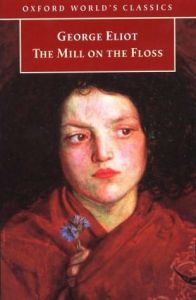
George Eliot’s novels usually affect me very deeply and The Mill on the Floss has been no exception. When I am in the midst of one of her books, I find myself steeling every free moment I can to read it and continually thinking about the characters and plots she so masterfully creates. The plight of Maggie Tulliver, as I mentioned in a previous post, has particularly captured my attention. Maggie is not like the other English women in St. Ogg’s; she is darker skinned, with dark eyes and dark, wild hair to match. Her personality is also quite different than other women as she experiences life with more passion and intensity than is appropriate for a proper, English young lady. She craves love, kindness and affection from her taciturn and stubborn family, especially her brother and her father.

When Maggie does finally experience an intense love that matches her own passion, it is for a self-confidant man from St. Ogg’s named Stephen Guest. But when they meet both she and the object of her love are tied to other people; Stephen is engaged to Maggie’s dear cousin, Lucy, and Maggie is bound to an old, childhood romance with Philip Wakem. The sexual tension and passion that Eliot builds into Maggie and Stephen’s encounters are the stuff of literary brilliance. The two are frequently thrown into social situations in which they take pleasure in one another’s company but try to resist the temptation of this passion. In the scene before their mutual feelings are revealed, Eliot writes about Maggie: “Even the coming pain could not seem bitter—she was ready to welcome it as a part of life, for life at this moment seemed a keen vibrating consciousness poised above pleasure or pain.”

In the culminating emotional scene between them, Stephen is trying to convince himself and Maggie that they should be together even though neither of them wants to cause what will be an inevitable pain to others in their lives. Stephen’s strongest argument, I think, is when he reminds Maggie that they will end up marrying their respective fiances under false pretenses and insincere feelings: “It is unnatural: we can only pretend to give ourselves to any one else. This is wrong in that too—there may be misery in it for them as well as for us. Maggie, you must see that—you do see that.” Maggie’s response will stand out in my mind as one of those great passages found in timeless literature:

O it is difficult—life is very difficult! It seems right to me sometimes that we should follow our strongest feeling;—but then, such feelings continually come across the ties that all our former life has made for us—the ties that have made others dependent on us—and could cut them in two. If love were quite easy and simple, as it might have been in paradise, and we could always see that one being first towards whom…I mean, if life did not make duties for us before love comes, love would be a sign that two people ought to belong to each other. But I see—I feel it is not so now: there are things we must renounce in life; some of us must resign love.”

It is so utterly tragic that when she finally feels the love she craves that Maggie must give it up. I keep thinking about that now clichéd Tennyson quote as I reread this paragraph: “Tis better to have loved and lost than never to have loved at all.” Would Maggie really agree with this? Or would she rather have spared herself the pain that comes along with such a love?

5 Comments

Filed under British Literature, Classics

May you Strain your Wine: Horace Ode 1.11

Nicolo dell’Abate. The Death of Eurydice. about 1552-71. Oil on Canvas.

I haven’t translated or given Horace’s Odes very much attention since I was an undergrad.  But this week I’ve been drawn back to his poetry.  I offer my translation of Ode 1.11, one of his famous Carpe Diem poems which embrace Epicurean philosophy.

May you not seek to know, for to know is not right,
what end the gods might give to you or to me,
Leuconoe*, and may you not probe the Babylonian
astrologers either. How much better to endure
whatever will be, regardless of whether or not Jupiter
has alloted for us many winters or one last winter, a season
which weakens the Tyrrhenian sea with its opposing rocks:
May you be wise, may you strain your wine*, and because
of a brief life, may you cut back a long hope. While
we speak, envious time flees: embrace the day,
believing in the future as little as possible.

*Leucone is from the Ancient Greek adjective λευκός (leukos) meaning light, bright, clear. In relation to days it means bright, special, happy.

*vina liques, “May you strain your wine.” Before drinking it, wine was strained through a cloth or strainer to remove the sediment.

For the extra curious, here is Horace’s Latin text:

Tu ne quesieris, scire nefas, quem mihi, quem tibi
finem di dederint, Leuconoe, nec Babylonios
temptaris numeros. Ut melius, quidquid erit, pati,
seu pluris hiems eu tribuit Iuppiter ultimam,
quae nunc oppositis debilitate pumicibus mare
Tyrrhenum: spias, vina liques, et spatio brevi
spem longam reseces. Dum loquimur, fugerit invida
aetas: carpe diem, quam minimum credula postero.


7 Comments

Filed under Classics

τι μέγεθος: Some Kind of Magnitude in Eliot’s The Mill on the Floss

In the early chapters of The Mill on the Floss, George Eliot describes Maggie, her young, feisty and vivacious heroine: “There were passions at war in Maggie at that moment to have made a tragedy, if tragedies were made by passions only; but the essential τι μέγεθος (some kind of magnitude) which was present in the passion was wanted to the action.”


τι μέγεθος is a phrase from Aristotle’s Poetics* which he uses to describe an action of “some kind of magnitude” that is an essential part of any tragedy.  Maggie has a passion for life that makes her charge forward into deeds and actions that other “nice” little girls would never dare.  The descriptions of her mop of wild, thick hair and her darker skin also make her stand out amongst other girls her age.  One of my favorite scenes that demonstrates Maggie’s unbridled spirit and her refusal to conform to expectations is when she listens to the music from her Uncle Pullet’s snuff-box.  She can’t sit quietly and listen like the other children, but immediately jumps up and expresses the emotions stirred up through the music by grasping her older brother, Tom: “But when the magic music ceased, she jumped up, and, running towards Tom, put her arm around his neck and said,  ‘O, Tom, isn’t it pretty.'”  Unfortunately for Maggie, Tom had a glass of cowslip wine in his hand which was spilled during Maggie’s enthusiastic embrace.  As a result, Maggie is, once again, subject to a litany of scolding from the adults:

‘Why don’t you sit still, Maggie?’ her mother said, peevishly.

‘Little gells mustn’t come to see me if they behave in that way,’ said aunt Pullet.

‘Why, you’re too rough, little miss,’ said uncle Pullet.

But these numerous reprimands never deter Maggie or dampen her spirit and I find myself admiring the girl because of her bravery.  Eliot is obviously foreshadowing an event that will be much more tragic, of some kind of greater magnitude for her heroine.  I am glad to have this book to keep me company on what is supposed to be a lovely spring weekend here in New England.  I would enjoy hearing about what others are reading this weekend.  Let me know in the comments.


*Aristotle Poetics 1450b: κεῖται δὴ ἡμῖν τὴν τραγῳδίαν τελείας καὶ ὅλης πράξεως εἶναι μίμησιν ἐχούσης τι μέγεθος. (It occurs to us that tragedy is the mimesis (imitation) of a complete and whole action and some kind of magnitude.)

18 Comments

Filed under Uncategorized

in the kitchen it is cold: Requiem for Ernst Jandl by Friederike Mayröcker

Friederike Mayröcker and Ernst Jandl lived together from 1954 until Jandl’s death in 2000. They were lovers, companions, friends and creative partners; as we read Mayröcker’s elegy to Jundl the feeling of being lost and bewildered without him pervades her text. In a partnership that spans more than forty years, it’s fascinating to see what images and thoughts she brings to her poetic reflection on their time together. After spending so much of her life and her passions with him, how could she possibly choose what to write about in order to honor properly their memories?

One of my favorite pieces in the book is a reflection on a poem fragment that Jandl writes that is stuffed, with many other literary fragments, into his desk. In the winter of ’88 the two are painstakingly excavating the contents of his desk and Mayröcker recollects:

Afternoon after afternoon, actually the entire
winter of ’88, we are absorbed in
viewing, approving, conserving what
has been written down. And then, suddenly,
one day I come across four lines
dashed off in pencil:

in the kitchen it is cold
winter has an awful hold
mother’s left her stove of course
and i shiver like a horse.

She goes on to connect the poem to her current state of grief over Jandl’s passing:

The last line, which informs of the most
profound abandonment, aloneness, exclusion
seeking solace in an attempt
to identify with that mute creature—a carriage
horse in winter’s cold depths, standing
in one place for hours, head hanging, in no
one’s care, waiting for a human to get it
going—is so poignant.

And it is the very last line of the poem that haunts Mayröcker:

This line: mother is not at her stove:
conveys the damnable utterly graceless
transience and finiteness of this life, mother
is not at her stove—where did she go.

I’ve read two other books on grief recently: Will Daddario’s To Grieve and Max Porter’s Grief is a Thing with Feathers. Of all these, Mayrocker’s text elicited the most emotional response from me. Her multifaceted response to grief in all its forms—emotional, philosophical, social—struck a nerve.

8 Comments

Filed under German Literature, Poetry, Seagull Books