Category Archives: Uncategorized

Review: The Man Who Snapped His Fingers by Fariba Hachtroudi

I received an advanced review copy of this title from Europa Editions.  The original book was published in French and this English translation is done by Alison Anderson.

My Review:
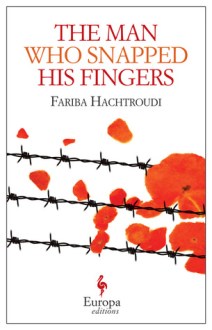
Layout 1This intense story is told in alternating views of two people who survived the brutality of a fictional totalitarian regime called the Theological Republic.  Although the homeland of these two characters is fictional, it is evident from clues in the text that this country is in the middle east and that both characters are refugees somewhere in Russia.  The female character, Vima, was know in the republic as their most stubborn political prisoner and given the name Bait 455.  Vima is arrested and repeatedly raped and tortured by her captors who are trying to get information about her husband’s political subterfuge.  Vima’s love and devotion for her husband runs so deep that the only words she ever speaks during these torture sessions is a defiant, “No.”  One day, without any warning, a high ranking official interrupts one of these torture sessions by snapping his fingers and Vima is rescued.

The other character in the book is a high ranking Colonel who was in the inner circle of the republic’s Supreme Commander.  The Colonel started out as a foot soldier in the Colonel’s army but because of his bravery and knowledge of arms and technology he quickly rises up in rank until he is one of the most trusted members of the Supreme Commander’s inner circle.  The Colonel’s job is to spy on the staff of the prisons where it is suspected that there are groups of traitors who are letting prisoners escape.  The Colonel’s position brings him into direct contact with Bait 455 and through an interesting twist of circumstances in the book he is the man who snapped his fingers to save Vima.

Vima and the Colonel are both refugees in a new country for five years when their paths cross.  The Colonel has applied for refugee status and the political leaders in his country of asylum keep interrogating him.  Vima is called on to be a translator for the Colonel during these interrogations.  At this point their roles as captor and captive are completely reversed and the Colonel knows that his fate is doomed.  The country of asylum really has no interest in harboring this criminal and the Colonel feels that it is only a matter of time before he is eliminated.  So he asks Vima to write a book which tells his story; the most important part of the story for him is the unconditional love he has for his wife whom he had to leave behind in the republic.

Vima and the Colonel both have emotional personalities that allow them to love deeply and unequivocally.  Vima’s tormentors, no matter how much they tried to break her body and her spirit, would not betray her beloved.  The Colonel gives up his position in the republic and risks his life to escape because his wife demands that he do so.  But in the end Vima and the Colonel are both disappointed because their intense love is not matched by their respective partners.

There is one final interesting literary allusion in the text that, as a classicist, I would be remiss not to mention.  The Colonel enjoys reading literary classics with his lawyer, an eccentric man named Yuri.  Yuri introduces him to The Iliad and The Odyssey and the Colonel becomes fascinated with the Greek hero Achilles.  Achilles, not unlike the Colonel, is a controversial hero who wreaks havoc and destruction despite his heroic status.  Achilles is eventually brought down because of his one week spot, his heel, and the Colonel, too, has a vulnerability which comes in the form of his love for his wife.

This is one of those books that will stay with me and that I will think about for a long time to come.  I made the mistake of reading this before bed and it kept me up thinking for quite a while.  The true hero in the book is Vima who, despite suffering the worst evil that humanity has to offer, is resilient and never stops fighting back.  Vima fights her tormentors with a simple “no,” she fights abandonment from her beloved, and she fights when her past comes crashing back into her life and threatens her sanity.  I think that this will make my list of favorite books of the year.

About the Author:

F HachtroudiFariba Hachtroudi was born in 1951 in Tehran. She comes from a family of scholars and professors. Her paternal grand-father was a religious leader who supported the constitutionalists in 1906, against other religious leaders who advocated for governance by Sharia law and the absolute rule of God as a monarchic authority.

Fariba’s father Mohsen Hachtroudi was a learned scholar, often called the “Ommar Khayyam” of contemporary Iran. As a well known French-educated mathematician, philosopher and poet, Mr Hachtroudi was unquestionably considered to be a moral authority for generations of Iranians. Hachtroudi fought his entire life for the promotion of democracy, social justice (most notably women rights) and secularism. Fariba’s mother, Robab Hachtroudi was a professor of humanities and Persian literature.

Fariba Hachtroudi received her doctorate (PHD) in art and archeology in Paris in 1978.

She lived in Sri Lanka from 1981 to 1983, where for two years she taught at the University of Colombo while performing research on the Teravada Boudhism.

When Fariba returned to France in 1983, she started, as a journalist, to denounce Khomeynism.

In 1985 / 1986, to understand the daily life of her compatriots, Fariba travelled clandestinely to Iran by way of the desert of Baluchistan. L’exilée, Hachtroudi’s first book describes her haunting journey.

10 years later, in 1995, Fariba who was much more pessimistic than others, already predicting change and revival “slowly and from within Iran”, decided again to approach the issue by creating a humanitarian association free of political affiliations. MoHa, the association for the foundation of Mohsen Hachtroudi, focuses it work on education and secularism – conditions essential for the respects of women’s rights and the promotion of democracy. MoHa helped Iranians refugees wherever they were. After her last trip to Iran (2006) Fariba Hachtroudi hopes to be able to register her Foundation in Iran in order to help the youth inside the country as it was the goal of her father.

For more information visit her website: http://www.faribahachtroudi.fr/bio/uk.html


9 Comments

Filed under France, Literary Fiction, Literature in Translation, Uncategorized

Review: Georg Trakl Poems

My Review:
G Trakl PoemsI loved the first novel I read from Seagull Books so I decided to give some of their poetry a try.  I was not disappointed; and, in fact, this small but powerful little book captivated my attention.  I had intended to read a few poems a day over the course of several weeks.  But I finished the collection in a couple of sittings because once I started reading the poems I could not put the book down.

After reading this collection of Trakl poems I was not surprised to discover that he had a very brief and tragic life.  His poems are filled with the language of decay, dying, sunset, twilight, birds of carrion and shadows.  But I got the feeling that despite his internal struggles, Trakl desperately wanted to fight his way out of the abyss and find some meaning, some bright spot, some redemption in what was otherwise a depressing existence.

A common theme in this collection of poems is nature and the natural decay that every living thing experiences.  But mixed within this decay there is also a natural, cyclical process of death and rebirth.  In the opening poem a flock of ravens sense that a meal is near.  They fight over their meal and once sated they fly away, almost gracefully “like a funeral cortege/Into winds tingling with ecstasy.”  Dinner for ravens means rot and decay is present but it is also nourishment and continues their lifespan; it is the fuel that allows them to make that flight at the end of the poem.

One of my favorite poems in the collection “In Autumn” perfectly describes Trakl’s struggle against death and decay.  Although fall is the season where everything starts to wither and die, the poet captures the beauty of this time of the year.  He describes sunflowers that “blaze along the fence” and women who labour “singing in the fields.”  And although he mentions death, the poem ends on a high note:

The dead houses have been opened wide
And painted beautiful with sunshine.

Scenes that capture the essence of autumn and winter abound in this collection.  These are my favorite seasons in New England and may be why these poems resonated so much with me.

Trakl also captures the calm of twilight and evening, the declining of the day,  in several of these poems.  In the poem “Decay,” he manages to bring together decay, autumn and the evening into one short and descriptive poem.  He asks us to imagine him following the birds “in their glorious flight” as they are “disappearing into autumn’s clear breadths.”  And as he wanders “through the twilight-filled garden” Trakl imagines the birds taking flight and he has dreams that follow them along their paths into the sky and onto “brighter destinies.”  Once again, we feel him fighting against his melancholy and wanting to take flight from it like those birds he so admires.

Finally, I have to mention the artwork that Seagull books chose to adorn the cover of this beautiful collection.  The bright red is striking against the backdrop of a scene of nature which is outlined in black.  The choice of a crow on the cover perfectly captures the themes of nature and decay contained within the volume.  Seagull has another volume of Trakl poems forthcoming which I am very eager to get my hands on.

About the Author and Translator:
G TraklGeorg Trakl was born in Salzburg, Austria. As a teenager he gravitated towards poetry, incest and drug addiction and published his first work by 1908, the year he went to Vienna to attend pharmacy school and became part of that city’s fin-de-siècle cultural life. He enjoyed early success and published his first book in 1913. A year later, however, he died of a cocaine overdose due to battle fatigue and depression from the wartime delay of his second book.
James Reidel is poet, translator, editor and biographer. In addition to the works of Georg Trakl, he has translated novels by Franz Werfel and poetry by Thomas Bernhard, among others. He is the biographer of poet Weldon Kees and author of two volumes of poetry.

14 Comments

Filed under Classics, German Literature, Poetry, Uncategorized, World War I

Review: Give Me Your Answer True by Suanne Laqueur

I received a review copy of this title from the author.

My Review:
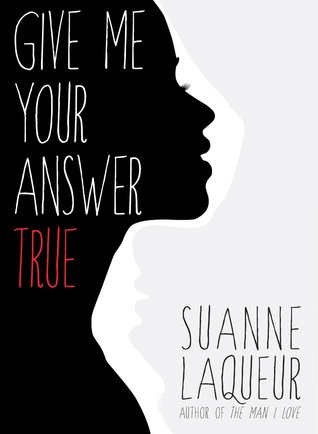
GMYATGive My Your Answer True is the sophomore title by indie author Suanne Laqueur.  She takes on a brave feat by deciding to retell her first novel, The Man I Love, from a different character’s perspective.  Many readers might reject this story for fear of being bored when presented with the same plotline.  But Laqueur’s writing and subject matter put a refreshing spin on her original story.

Erik and Daisy are college sweethearts and we read about how they fall hopelessly in love with one another.  Their love is immediate and passionate and what we might expect of a couple in their early twenties with not very many cares in the world.  Their best friends, Will and Lucky, are also paired up and the foursome are happy, in love, and in many ways, very innocent and naïve.  Their bubble of innocence is burst, however, when a gunman shoots Will and Daisy in the theatre where they are practicing for their latest ballet production.

How many times have we turned on the news lately and seen the tragic story of yet another shooting?  Laqueur brings to life the lasting effects that such a traumatic event has on the lives of its victims for months, years and even decades after.  The foursome do not seek out counseling, but instead engage in self-medication through drug use; they are all reeling from the shooting and once the drug use starts the easy and comfortable relationships that existed among the foursome disintegrates.

What I found the most interesting about the book are the different ways in which each character deals with the shooting.  Erik completely rejects his friends and closes himself off; Will, on the other hand, becomes more clingy and must know where his friends are at all times.  The most detailed storyline is that of Daisy’s and it is she who has the most self-destructive behaviors.  Daisy spirals into such a deep depression that she starts cutting herself.  It is evident that the author did painstaking research into the after effects of a tragedy, the behaviors of someone who engages in cutting, and the types of therapy that victims might seek out.  This story reminded me that once the camera crews disappear and these shootings are no longer the top news stories, the victims are never truly free of their demons.

The other relevant topic that Laqueur brings up in her writing is that of  sexuality and the fact that sexual preference is not always clear cut or black and white.  Many might assume Will is gay because he is a dancer;  but he actually prefers to have long-term physical and emotional relationships with women even though he also experiments with men.  Will”s sexual choices are accepted without question among the foursome–even his girlfriend Lucky is fine with it.  Will is confident and unapologetic about exploring his sexuality and because he is so open about it, then so are his friends.

GIVE ME YOUR ANSWER TRUE is not only a great story, but it also raises important and tough social topics that are relevant and timely.  She promises to continue Erik and Daisy’s story in her third book which I also look forward to reading.

About The Author:
SuanneSuanne Laqueur’s first novel, The Man I Love won the 2015 Beverly Hills Book Award for romance, and a gold medal at the 2015 eLit Book Awards. It was a finalist at the 2015 International Book Awards and took an Honorable Mention at the Los Angeles Book Festival.

Suanne graduated from Alfred University with a double major in dance and theater. She taught at the Carol Bierman School of Ballet Arts in Croton-on-Hudson for ten years. She lives in Westchester County, New York with her husband and two children. An avid reader, cook and gardener, she started her blog EatsReadsThinks in 2010 and now blogs at www.suannelaqueur.com

1 Comment

Filed under Uncategorized

Cover Reveal: Give Me Your Answer True by Suanne Laqueur

I don’t usually do cover reveals on my blog, but Suanne Laqueur sent me a video that unveils the new cover for the follow-up to her award winning novel The Man I Love,  Her new novel Give My Your Answer True will be available this June and you can preorder it on Amazon

Book Description/Synopsis:
Following her award-winning debut novel The Man I Love, author Suanne Laqueur now gives Daisy Bianco a chance to tell her story.

It’s been three years since an egregious error of judgment cost Daisy the love of her life. Erik was a conduit to her soul but now he’s chosen a path of total disconnection, refusing to speak to her. Alone and shattered, she attempts to take responsibility for her actions while building her career as a professional dancer in New York City. But Erik’s unforgiving estrangement proves too much for her strength. Plagued by flashbacks to the shootings at Lancaster, she falls into a dangerous spiral of self-harm, cutting into her own skin as a means to atone. Only the timely appearance of an old friend, John “Opie” Quillis, saves her from self-destruction and gives her a chance to love again.

Laqueur skillfully weaves flashbacks to the years at Lancaster with Daisy’s present life. Supported by John’s patient affection, she works to separate her evolution as an adult from the unresolved guilt and grief of her youth. As her professional accomplishments lift her out of depression, Daisy learns to hold onto her accountability without letting it become her identity. Years pass and she builds a beautiful life filled with dance and friends. Lovers come and eventually go, leaving her on her own with the old thought: Come back to me.

In this parallel narrative, Laqueur peels open the beloved characters from The Man I Love to reveal new and complex layers of vulnerability. The scars from the shooting are deep and pervasive within this circle of friends. Like Daisy, they evolved without being resolved. Because when questions from the past go unheeded, you alone must find and give your answers true.

Watch the cover reveal and teaser video here:

1 Comment

Filed under Uncategorized

Review and Giveaway: The Witch of Painted Sorrows by M.J. Rose

Today I welcome France Book Tours back to the blog with a unique historical fiction novel.  I invite you to read my reviews and enter to win a $20 gift card (open internationally).

My Review:
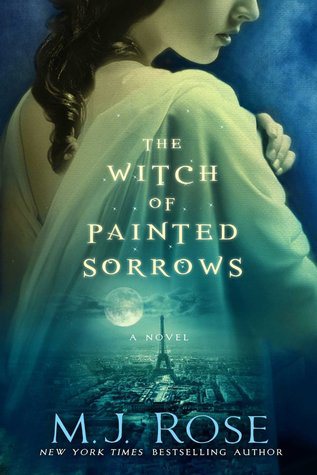
the-witch-of-painted-sorrows-coverThis novel appeals to a wide variety of interests because of the different genres it touches upon.  First, and foremost, The Witch of Painted Sorrows is an historical novel, as it is set in the late 19th Century in Belle Epoque Paris.  The sites and sounds of Paris are captured in great detail as Sandrine, the main character, describes her days spent in her grandmother’s luxurious apartments, in her family’s mysterious mansion, and in the famous museums of Paris.  Sandrine’s grandmother is also a famous courtesan and the author makes it a point to describe what, exactly, this job entails.

The Witch of Painted Sorrows is also a mystery and delves into the realm of fantasy.  Sandrine has always thought her grandmother and her grandmother’s home were very unusual.  In fact, her father’s mother is so strange, that Sadrine never tells her husband or anyone else of her grandmother’s existence.  Her grandmother seems to know about certain events before they even happen and she has a very strange fear of falling in love.  When Sadrine finds a mysterious room at the top of her grandmother’s mansion, she becomes more intent on finding out about her family’s history.

Finally, The Witch of Painted Sorrows has a touch of romance as Sandrine is escaping New York and fleeing to Paris in order to avoid an abusive husband.  When Sandrine settles down in Paris she meets a handsome young architect who shares her love of art.  But Sandrine has never really found love as an adult.  Will her grandmother’s warnings be enough to keep her away from this strong attraction, or will she give into her passion?

I don’t usually read books in the fantasy genre, but THE WITCH OF PAINTED SORROWS has just enough mystery mixed with historical fiction to make a interesting novel.
About The Author:
mj-roseNew York Times Bestseller, M.J. Rose grew up in New York City mostly in the labyrinthine galleries of the Metropolitan Museum, the dark tunnels and lush gardens of Central Park and reading her mother’s favorite books before she was allowed. She believes mystery and magic are all around us but we are too often too busy to notice…books that exaggerate mystery and magic draw attention to it and remind us to look for it and revel in it.
Please visit her website, her blog: Museum of Mysteries
 

Giveaway:
The publisher is picking 5 winners to receive a $20 Gift Card. Click on the link below for full details and to enter:

CLICK ON THE BANNER TO SEE ALL OF THE STOPS ON THE TOUR:

The Witch of Painted Sorrows banner


11 Comments

Filed under Uncategorized