Category Archives: Poetry

Review: The Voronezh Notebooks by Osip Mandelstam

My Review:
MandelstamThis edition of Mandelstam’s Voronezh Notebooks, recently published by the New York Review of Books, is a collection eighty nine verses the Russian poet wrote while he was exiled to the city of Voronezh.  During the early 1930’s Mandelstam wrote and published poetry that mocked and criticized Stalin and so it is no surprise that he was arrested and sent into exile.  During part of his exile he was allowed to live in Voronezh which was a bit more civilized as far as Russian exiles were concerned.  He was lucky that his wife Nadezhda was allowed to go with him and if it were not for her then much of his poetry would have been lost to us.

The first notebook contains poetry written between April and July of 1935.  All of the poems are numbered as well as dated.  In this first series of poems we understand that Mandelstam is relieved to be in Voronezh although he by no means feels at home in this city.  He lives is a crowded boarding house that he describes as a “coffin” in the first poem.  He and his wife have no privacy and they hear every movement and sound of their neighbors.  In the third poem he begs Voronezh to have mercy on him and “restore” him but throughout these poems we get the sense that he feels hemmed in, claustrophobic and hopeless.

The second Notebook beings in December of 1936 and goes through February of 1937.  The imagery of winter that one encounters in these poems are particularly striking.  He describes this season as a “postponed present” because the length of its extent is always uncertain.  Poem #37 is one of my favorites from this collection; he admires the goldfinch who “curses the sticks and perches of his prison.”  He admires this  bird who makes so much noise and is “disobedient.”

The final notebook is written between March and May of 1937.  As I have already hinted at through his writing of winter and the goldfinch, Mandelstam’s lines abound with images of nature and the forest.  In the introduction to this volume, Andrew Davis, the translator, tells us that Mandelstam composed these verses in his head while he was walking.  He seems to have done a great deal of exploring his natural surroundings and appreciated, even for a few hours, the illusion of freedom which they provided.  But Mandelstam realizes that his stay in Voronezh is not his own choice and he is still a captive of a fascist regime.  In Poem #72, for example, he writes of the night sky and the stars which he is fighting against as they hem him in and suffocate him; although the sky appears limitless, he is stuck under the sky that only encompasses this city.    In Poems #76 he declares, “I am ready to roam where the sky is greater.”

Finally, in his introduction to the collection Davis points out that the Notebooks were saved through the extraordinary efforts of his wife who, even after his death, saved pieces of them in teapots and other small places hidden around her apartment.  Each day she would practice memorizing them and Davis explains that “she made it her life’s work to preserve her husband’s poetry.”  Because of her act of devotion and bravery this seemed to me like a fitting collection to review as we celebrate and acknowledge those we love on this upcoming Valentine’s Day.


About the Author:
OsipOsip Mandelstam was a Russian poet and essayist who lived in Russia during and after its revolution and the rise of the Soviet Union. He was one of the foremost members of the Acmeist school of poets. He was arrested by Joseph Stalin’s government during the repression of the 1930s and sent into internal exile with his wife Nadezhda. Given a reprieve of sorts, they moved to Voronezh in southwestern Russia. In 1938 Mandelstam was arrested again and sentenced to a camp in Siberia. He died that year at a transit camp.

The translator has written a wonderful article about the difficulties of translating Mandelstam’s poems from Russian to English that I encourage everyone to read: https://psa.fcny.org/psa/poetry/crossroads/own_words/Osip_Mandelstam/


14 Comments

Filed under Literature in Translation, New York Review of Books, Osip Mandelstam, Poetry, Russian Literature

Review: Georg Trakl Poems

My Review:
G Trakl PoemsI loved the first novel I read from Seagull Books so I decided to give some of their poetry a try.  I was not disappointed; and, in fact, this small but powerful little book captivated my attention.  I had intended to read a few poems a day over the course of several weeks.  But I finished the collection in a couple of sittings because once I started reading the poems I could not put the book down.

After reading this collection of Trakl poems I was not surprised to discover that he had a very brief and tragic life.  His poems are filled with the language of decay, dying, sunset, twilight, birds of carrion and shadows.  But I got the feeling that despite his internal struggles, Trakl desperately wanted to fight his way out of the abyss and find some meaning, some bright spot, some redemption in what was otherwise a depressing existence.

A common theme in this collection of poems is nature and the natural decay that every living thing experiences.  But mixed within this decay there is also a natural, cyclical process of death and rebirth.  In the opening poem a flock of ravens sense that a meal is near.  They fight over their meal and once sated they fly away, almost gracefully “like a funeral cortege/Into winds tingling with ecstasy.”  Dinner for ravens means rot and decay is present but it is also nourishment and continues their lifespan; it is the fuel that allows them to make that flight at the end of the poem.

One of my favorite poems in the collection “In Autumn” perfectly describes Trakl’s struggle against death and decay.  Although fall is the season where everything starts to wither and die, the poet captures the beauty of this time of the year.  He describes sunflowers that “blaze along the fence” and women who labour “singing in the fields.”  And although he mentions death, the poem ends on a high note:

The dead houses have been opened wide
And painted beautiful with sunshine.

Scenes that capture the essence of autumn and winter abound in this collection.  These are my favorite seasons in New England and may be why these poems resonated so much with me.

Trakl also captures the calm of twilight and evening, the declining of the day,  in several of these poems.  In the poem “Decay,” he manages to bring together decay, autumn and the evening into one short and descriptive poem.  He asks us to imagine him following the birds “in their glorious flight” as they are “disappearing into autumn’s clear breadths.”  And as he wanders “through the twilight-filled garden” Trakl imagines the birds taking flight and he has dreams that follow them along their paths into the sky and onto “brighter destinies.”  Once again, we feel him fighting against his melancholy and wanting to take flight from it like those birds he so admires.

Finally, I have to mention the artwork that Seagull books chose to adorn the cover of this beautiful collection.  The bright red is striking against the backdrop of a scene of nature which is outlined in black.  The choice of a crow on the cover perfectly captures the themes of nature and decay contained within the volume.  Seagull has another volume of Trakl poems forthcoming which I am very eager to get my hands on.

About the Author and Translator:
G TraklGeorg Trakl was born in Salzburg, Austria. As a teenager he gravitated towards poetry, incest and drug addiction and published his first work by 1908, the year he went to Vienna to attend pharmacy school and became part of that city’s fin-de-siècle cultural life. He enjoyed early success and published his first book in 1913. A year later, however, he died of a cocaine overdose due to battle fatigue and depression from the wartime delay of his second book.
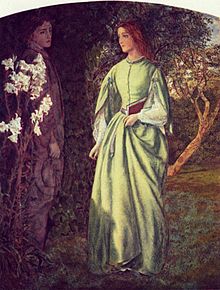
James Reidel is poet, translator, editor and biographer. In addition to the works of Georg Trakl, he has translated novels by Franz Werfel and poetry by Thomas Bernhard, among others. He is the biographer of poet Weldon Kees and author of two volumes of poetry.

14 Comments

Filed under Classics, German Literature, Poetry, Uncategorized, World War I

Review: Aurora Leigh by Elizabeth Barrett Browning

My Review:
Aurora LeighAurora Leigh is a beautiful, sublime poem written in blank verse.  The language, however, is not the only strong point of the poem.  The character of Aurora is fierce and compassionate, as she adapts to her new life in Britain despite her stern aunt.  Aurora is born to an English father and an Italian mother and happily spends her childhood among the mountains in Italy.  Aurora’s mother dies when she is only four, but her father continues to raise her in Italy among her mother’s people.  Aurora’s father also tragically dies when she is at the young and pivotal age of thirteen, and Aurora is shipped off to live in England with her father’s sister.  Her aunt is a stern spinster who makes Aurora learn what she believes are appropriate skills for a proper English girl.

But Aurora is resilient and even though her life is more restrained and cumbersome in England, she still finds pleasure in books and poetry.  The beautiful estate on which her aunt lives becomes the inspiration for Aurora to begin writing her own poetry.  She takes quiet walks in the early morning before the rest of the house is awake and develops her skill as a writer.  Furthermore, Aurora doesn’t take what would be the easy way out by marrying her cousin Romney Leigh when he proposes to her.  Marriage and financial security would have been a much easier fate for Aurora; but even when her aunt dies and Aurora is disinherited, she moves to London where she works and supports herself as an author.

Browning weaves the theme of class struggles throughout the poem and she especially highlights this social problem through the character of Romney.  The  poor are depicted as wreteched and even ugly; Romney makes it his life’s work to help out the poor and destitute.  After his marriage proposal is Aurora's Dismissal of Romneyrejected by Aurora, he saves a woman named Marian Erle from her miserable life and proposes to her next.  Marian is the daughter of tramps that roam around the countryside finding any work they can.  Marian’s father is abusive and when her mother tries to sell her off to a local squire,  Marian finally runs away from her parents in horror.  Romney decides that, even though Marian is well-below his social class, she will make a perfect wife to help him in his charitable missions. But we are left wondering if these two are really suited as husband and wife.  Does Marian truly love Romney or does she simply worship him as her savior.  Does Romney really have feelings of love for Marian or is he still in love with his cousin Aurora?

The upper class don’t fair any better in Browning’s verse.  They are depicted as vain, judgmental, and petty.  The character of Lady Valdemar is the epitome of a greedy upper class English woman who will do everything in her power to fulfill her selfish desires.  Lady Valdemar is in love with Romney and once she finds out that he is going to marry a lower class woman like Marian, she sets in motion a series of events that have devastating consequences for all involved in this love triangle.  Lady Valdemar’s singular focus of getting Romney to the altar makes her a despicable and opportunistic character.

At the end of the poem Browning brings the characters back to the place where everything was simpler and happier: Aurora’s native land of Italy.  There Aurora finds peace once again as she is finally away from the petty gossip and prying eyes of the upper classes in England.  Aurora does, however, admit that despite her new surroundings,  there is still something missing in her life.  She is a successful author who has become famous for her poems and novels about love.  But will she ever experience this elusive feeling for herself?  You will have to read Browning’s beautiful poem to find out.

About The Author:
Elizabeth Barrett BrowningElizabeth Barrett Browning was one of the most respected poets of the Victorian era.
Born in County Durham, the eldest of 12 children, Browning was educated at home. She wrote poetry from around the age of six and this was compiled by her mother, comprising what is now one of the largest collections extant of juvenilia by any English writer. At 15 Browning became ill, suffering from intense head and spinal pain for the rest of her life, rendering her frail. She took laudanum for the pain, which may have led to a lifelong addiction and contributed to her weak health.

In the 1830s Barrett’s cousin John Kenyon introduced her to prominent literary figures of the day such as William Wordsworth, Mary Russell Mitford, Samuel Taylor Coleridge; Alfred, Lord Tennyson, and Thomas Carlyle. Browning’s first adult collection The Seraphim and Other Poems was published in 1838. During this time she contracted a disease, possibly tuberculosis, which weakened her further. Living at Wimpole Street, in London, Browning wrote prolifically between 1841 and 1844, producing poetry, translation and prose. She campaigned for the abolition of slavery and her work helped influence reform in child labour legislation. Her prolific output made her a rival to Tennyson as a candidate for poet laureate on the death of Wordsworth.

Browning’s volume Poems (1844) brought her great success. During this time she met and corresponded with the writer Robert Browning, who admired her work. The courtship and marriage between the two were carried out in secret, for fear of her father’s disapproval. Following the wedding she was disinherited by her father and rejected by her brothers. The couple moved to Italy in 1846, where she would live for the rest of her life. They had one son, Robert Barrett Browning, whom they called Pen. Towards the end of her life, her lung function worsened, and she died in Florence in 1861. A collection of her last poems was published by her husband shortly after her death.


4 Comments

Filed under British Literature, Classics, Literary Fiction, Poetry

Review: The Edith Wharton Dover Reader

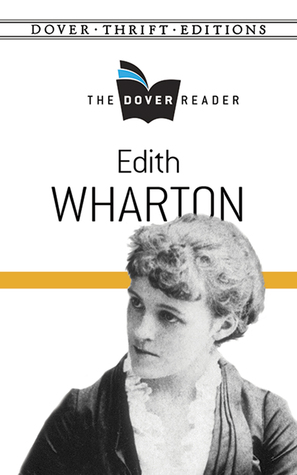
Dover publications has a fantastic list of books that are anthologies of famous authors.  I love this series because it allows us to get the various works of an author all in one, cost-friendly volume.  This particular book of Edith Wharton’s writings contains short stories, poems, two novels and a work of non-fiction.  Since it is poetry month I have decided to review and comment on the poems that are contained in the collection.

My Review:
Edith WhartonThe first aspect of Edith Wharton’s poetry that I noticed are the vivid descriptions of natural phenomenon.  Nine of her poems are included in this anthology.  One of her most famous and recognizable, “An Autumn Sunset” is a commentary on the yearly cycle of nature but she also extends the metaphor and applies it to all life.  As the sun sets on the outposts of the earth, she questions whether or not she, too, will be carried to some distance shore where all things, good and bad, in life are forgotten.

The second poem in the collection, entitled “Life” picks up on this idea of the soul being carried to another world that is reminiscent of the Underworld in Greek and Roman mythology.  She seems to be standing on the banks of the river Lethe, the river of “forgetfulness, from which souls drink before they come back to life.  Life if breathed back into her in the form of music and she is transported across a vibrant world of birds, insects, meadows and storms.

One of the poems that surprised me the most is the poem about marriage.  Edith Wharton was trapped in what seemed like a loveless marriage with her husband Teddy Wharton.  When she finally dissolved the marriage it was due to his philandering and extramarital activities.  Yet, Edith Wharton did have high hopes and high praise for the institution of marriage in the poem included in this collection.  “The Last Giustiniani” was written in 1889, three years after her marriage to Teddy, so perhaps she still was still happy in her own domestic situation.  In the poem, a soon-to-be-ordained monk is summoned by the abbot to tell him that he is the last of the House of Giustiniani so he cannot take a vow of chastity, but instead must be married so that he can extend his family lineage.  The former monk’s sense of freedom at this news is unbridled euphoria.  He takes his new vows of marriage very seriously and is proud and blissful as he is standing at the altar with his bride.  The poems ends on a lovely and hopeful note:

Without a prayer to keep our
Lips apart
I turned about and kissed
You where you stood,
And gathering all the
gladness of my life
Into a new-found word, I
Called you “wife!”

The Edith Wharton Dover reader is wonderful collection of her best works.  I hope you enjoyed learning about some of her poetry.  If you pick up this book you will also be treated to her well-known novels Ethan Frome and The Age of Innocence.  There is a work of non-fiction she wrote about how to decorate a home which I found fascinating.  Thanks to Dover Publications for bringing us another great collection of classics at a very affordable price.

About The Author:

Edith Newbold Jones was born into such wealth and privilege that her family inspired the phrase “keeping up with the Joneses.” The youngest of three children, Edith spent her early years touring Europe with her parents and, upon the family’s return to the United States, enjoyed a privileged childhood in New York and Newport, Rhode Island. Edith’s creativity and talent soon became obvious: By the age of eighteen she had written a novella, (as well as witty reviews of it) and published poetry in the Atlantic Monthly.

After a failed engagement, Edith married a wealthy sportsman, Edward Wharton. Despite similar backgrounds and a shared taste for travel, the marriage was not a success. Many of Wharton’s novels chronicle unhappy marriages, in which the demands of love and vocation often conflict with the expectations of society. Wharton’s first major novel, The House of Mirth, published in 1905, enjoyed considerable literary success. Ethan Frome appeared six years later, solidifying Wharton’s reputation as an important novelist. Often in the company of her close friend, Henry James, Wharton mingled with some of the most famous writers and artists of the day, including F. Scott Fitzgerald, André Gide, Sinclair Lewis, Jean Cocteau, and Jack London.

In 1913 Edith divorced Edward. She lived mostly in France for the remainder of her life. When World War I broke out, she organized hostels for refugees, worked as a fund-raiser, and wrote for American publications from battlefield frontlines. She was awarded the French Legion of Honor for her courage and distinguished work.

The Age of Innocence, a novel about New York in the 1870s, earned Wharton the Pulitzer Prize for fiction in 1921 — the first time the award had been bestowed upon a woman. Wharton traveled throughout Europe to encourage young authors. She also continued to write, lying in her bed every morning, as she had always done, dropping each newly penned page on the floor to be collected and arranged when she was finished. Wharton suffered a stroke and died on August 11, 1937. She is buried in the American Cemetery in Versailles, France.
– Barnesandnoble.com

3 Comments

Filed under Classics, Literature/Fiction, Poetry, Short Stories

Review: The Collected Poems of Proust

For my next installment of reviews for poetry month I decided to tackle this dual-language edition of the collection poems of Proust.  It was published in 2013 by Penguin and I bought a copy of it myself.

My Review:
Proust PoemsThese poems are a glimpse into Proust as a human being and not Proust the serious novelist.  The poems were collected from a wide variety of places, including letters to his friends, journals and notes, and some were even scrawled on scraps of paper or envelopes.  We often envision Proust as the asthmatic, shut away from society as he labored over his major work.  But these poems reveal to us a funny, playful, intelligent man who fully engaged in life and embraced all of its wonders.

It is rumored even when Proust was alive that he was homosexual.  The poems reveal a man who was definitely struggling with his sexuality in a time period in which homosexuality was completely unacceptable.  In the poem that opens the collection he writes to Daniel Halvey:

For what is manly mockery to me?
Let Sodom’s apples burn, acre by acre,
I’d savor still the sweat of those sweet limbs!
Behold a solar gold, a lunar nacre,
I’d…languish (an ars moriendi of my own),
deaf to the knell of dreary Decency!

There are also amorous poems in the collection written to women, such as “Lines to Laure Hayman” in which he recollects her beautiful form.  Another poem is written to an actress whom he saw play the role of Cleopatra.  These lines imply an admiration of the woman that goes beyond friendly recognition of her performance:

You have surely dethroned the Egyptian Queen
You are at once artist and work of art
Your spirit is deep as is your regard,
‘Though no beauty like hers was never seen.

The sentiments in the poems jump from love and friendship, “Love draws from the heart a scent of roses,” to loss and agony, “So tired of having suffered, more tired of having loved.” These lines represent the waves of emotions Proust rides and jots down as he is living his everyday life.

Proust is also petty, bawdy and even vulgar. In one poem he writes:

They say a Russian, may God preserve his soul,
Managed to rouse a flutter of sensation
In Ferdinand’s leathery, tanned, and well-worked hole
By slipping in up to the hilt his brave baton.

In a few of the poems written to his friends his instructs them to burn the poems after they have been read because the poems contains some unflattering verses about aristocrats within their social circle.

There are 104 poems in the collection in total.  None of them are very long which is appropriate as they are meant as little messages to friends in letters and oftentimes casually written on scraps of paper.  The notes in the back of the book are very helpful in understanding to whom the poems are written and what their relationships were to Proust.  For a amusing glimpse into the candid world of this famous poet I highly recommend perusing this dual-language edition.

About The Author:
ProustMarcel Proust is a French novelist best known for his 3000 page masterpiece À la recherche du temps perdu (Remembrance of Things Past or In Search of Lost Time), a pseudo-autobiographical novel told mostly in a stream-of-consciousness style. Born in the first year of the Third Republic, the young Marcel, like his narrator, was a delicate child from a bourgeois family. He was active in Parisian high society during the 80s and 90s, welcomed in the most fashionable and exclusive salons of his day. However, his position there was also one of an outsider, due to his Jewishness and homosexuality. Towards the end of 1890s Proust began to withdraw more and more from society, and although he was never entirely reclusive, as is sometimes made out, he lapsed more completely into his lifelong tendency to sleep during the day and work at night. He was also plagued with severe asthma, which had troubled him intermittently since childhood, and a terror of his own death, especially in case it should come before his novel had been completed. The first volume, after some difficulty finding a publisher, came out in 1913, and Proust continued to work with an almost inhuman dedication on his masterpiece right up until his death in 1922, at the age of 51. Today he is widely recognised as one of the greatest authors of the 20th Century, and À la recherche du temps perdu as one of the most dazzling and significant works of literature to be written in modern times.

7 Comments

Filed under Literature in Translation, Poetry