I have been very quiet on the blog for the last couple of weeks because decking the halls and wrapping the gifts have taken up much of my time. But like my fellow bloggers on the web, I have been thinking about my list of favorite books for 2015. As I was looking through my reviews and thinking about all of the fantastic books I have read throughout the year, I immediately noticed a similarity among the books: most of them are published by independent presses. I have gravitated more and more to independent press releases and have come to the point at which I seek out books from these brave, hardworking and smart publishers. So here is my list for 2015.
Indie Press Favorites for 2015:
I have to start out with one of the very first small press books I read in 2015 and absolutely adored and that is Guys Like Me from New Vessel Press. When I read this book I was so moved by its simple, character driven plot that I wanted to read anything else I could get my hands on by this publisher. And I was not 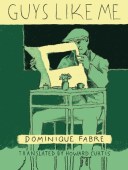 disappointed. I have read many of the books in their catalogue and I would add two more of their titles to my 2015 favorites list as well: I Called Him Necktie and Alexandrian Summer. If you want books with interesting characters and thought-provoking, emotional themes then I highly recommend giving these titles a try.
Next up, I have on my list two titles from Gallic Books: George’s Grand Tour and Nagasaki. Gallic Books was founded in 2007 and it’s mission is to find the best books written in French and make them available to the English-speaking world. Both of these titles will warm your heart and restore your faith in humanity. They are actually great books to read around the holidays.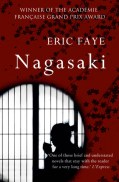
The Physics of Sorrow appealed to me because of the parallels drawn between the main character in the book and the Greek mythological figure of the Minotaur. However, I learned so much more in this book than I ever expected. The lasting effects of communism on a country like Bulgaria are astounding. This book made me reflect on the fact that as Americans we oftentimes take our freedom for granted and we forget what citizens of countries like Bulgaria suffered under decades of oppressive regimes. This title is published by Open Letter and since reading this I have been very excited to explore their wide range of translated titles.
Speaking of communism and its aftermath, another favorite title of mine this year was Calligraphy Lesson, which is actually a collection of short stories. In this 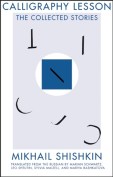 collection, Shishkin, one of Russia’s most famous contemporary authors, offers stories about himself and various members of his family and the devastating impact of Soviet rule had on their lives for generations.This title is brought to us by Deep Vellum , which has a catalogue rich with titles in translation from all over the world.
A list of small presses with fantastic titles published in 2015 would not be complete without a mention of a Melville House title. You might have heard of them because of their famous Twitter war with Penguin Random House. If you haven’t read this little exchange, it is definitely worth a quick look for the hilarious jokes and barbs. My first introduction to their books was through the novel The Scapegoat. This novel is translated from the Greek and not only contains an interesting murder mystery, but it also teaches us an important lesson about what we can learn from history. In addition, Melville House has also published a fantastic collection of classic novellas which are definitely worth a look. I have bought and reviewed several titles from their novella collection this year as well.
I must give a nod to Peirene Press, which I discovered by reading White Hunger. This small British press specializes in publishing novellas translated into 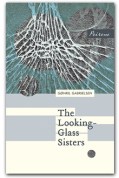 English. Their books may be small, but they pack a powerful, emotional punch. One of the best books of the year, in my humble opinion, is their novella The Looking Glass Sisters. This book did not get as much attention as I think it should have; it is one of those reads where you think about its plot and characters long after you close the last page.
And the final independent press that I discovered late in the year thanks to Joe over at Roughghosts, is Istros Books. I would say that their novel Dry Season is one of my favorites of the entire year. Since finishing this book I have acquired several more of their titles which I am very excited to read and review in 2016. Istros specializes in translating fiction from Eastern Europe.
There are two very special small publishers that I must mention from whose catalogues I own many, many books. These two publishers deserve their own special categories as they have entire shelves on my bookcases dedicated to their titles.
Persephone Books:
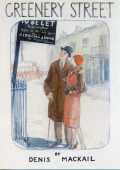 A friend of mine, who is always spot on with his recommendation for me, turned me on to Persephone Books. Persephone is an Independent British publisher that specializes in reissuing lost classics which are mostly written by female authors. I fell in love with the first book I read from them, Greenery Street, and even since I have read one or two of their books per month. I just can’t get enough of them. It was very difficult to come up with only a couple of my favorites from 2015 but I have to go with Greenery Street and Patience. Both books are funny, sweet and so well-written. Persephone has quite an extensive catalogue and I would eventually like to work my way through all of their books. There will most definitely be many more Persephone reviews to come in 2016.
New York Review of Books Classics:
 The first book I read from the NYRB classics collection was Stoner and ever since then I cannot get enough of their books. This year I once again read several titles from their catalogue. The Door, a book translated from the Hungarian which has been on many top ten book lists of the year, was also one of my favorites. I would also add two additional books to my favorites list which they published in 2015. Akenfield: Portrait of an English Village by Blythe was on of my favorite non-fiction books of 2015. This book gives us a glimpse into all the of aspects of an English village in the 20th Century. This is a must read for anyone who is a fan of British Literature. The final book on my list for 2015 from NYRB classics is Ending Up by Kingsley Amis. This book is absolutely hilarious as it chronicles the final days of a group of septuagenarian roommates. I have big plans to review several more of the NYRB books in 2016!
That pretty much wraps it up for me as far as 2015 is concerned. In the new year I have titles on my TBR piles that include books from all of these Indie Presses. Merry Christmas, Happy Holidays, Io Saturnalia and Happy New Year!
-Melissa, The Book Binder’s Daughter

 As I have noted above I don’t usually read or review books in the fantasy genre. It’s just not something that usually catches my attention, but when Mr. Webber sent me an e-mail to request a review how could I possibly say no? He is one of the best students of Latin I have and, in fact, he is one of the most talented students I have ever had in my classes, so I was intrigued to see his writings.
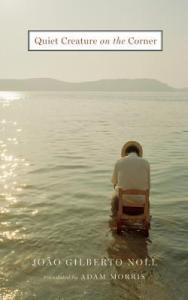 The first reaction that I had to the writing style and narrative of this book is that it feels like a series of flash fiction stories. When we first meet the narrator he lives in Porto Alegre with his mother is a decrepit, abandoned apartment. Other miscreant vagabonds also spend their days idling around the lobby of this building and doing drugs. The narrator’s actions and thoughts in the book reflect his aimless and disjointed life; he talks to his mother, he tries to write poetry, he sleeps, he wanders around the city.
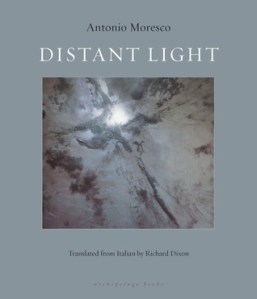 This is a short yet powerful book that raises many more questions about the mental state of the main character than it answers. We are led to understand from the beginning that the narrator is living alone in the mountains in what is now an abandoned village. The only time he has interaction with other human beings is when he drives his car down the mountain to another small village. He seems to do this only when he needs food or supplies.
 Antonio Moresco did not find a publisher until late in his career, after being turned down by several editors. His output is centred on the monumental trilogy L’increato, whose three volumes are: Gli esordi (Feltrinelli 1998, republished by Mondadori in 2011 – 673 pages), Canti del caos (part 1 by Feltrinelli in 2001, part 2 by Rizzoli in 2003; republished by Mondadori in 2009 – 1072 pages), and Gli increati (Mondadori 2015).
 I don’t normally read Dystopian, Orwellian type novels with talking Gorillas. But since this book is published by Peirene Press I decided to give it a try anyway and I am glad I did. The narrator tells us that he was living a happy life in the wild until one day members of his family start disappearing from their idyllic home. He then finds himself drugged and dragged out of his natural habitat against his will. He, along with his family, are chained together and forced on an arduous journey during which they are given just enough food and water to survive. Some of them die along the way and the living are forced to march on and leave their loved ones behind.. I found this to be the most heart wrenching and sad part of the book. Their fear was palpable and it was difficult to read about these innocent animals as they are taken out of their natural surroundings, and forced on a journey towards the unknown.
 Peter Verhelst, born in 1962, is a Belgian Flemish novelist, poet and playwright. He has written more than 20 books. His work has been praised for its powerful images, the sensuality and richness of its language and the author’s unbridled imagination. His breakthrough came in 1999 with the novel Tonguecat, which won the Golden Owl Literature Prize and the Flemish State Prize for Literature. The Man I Became is his eleventh novel.


 The Book Binder's Daughter