Category Archives: Literature/Fiction

Review: The Parable Book by Per Olov Enquist

My Review:
The Parable BookThis is the story of an author who is looking back and assessing his life through a series of lesson, or parables, he has learned which have particularly shaped his spiritual life.  The author’s name is Perola and his life appears to have an uncanny resemblance to that of Enquist’s himself.  When the book begins Perola is lamenting the speech he delivered at his mother’s funeral and decides he wants to write a better one to hand out to his relatives.  He reminisces about his childhood with his mother who was his only parent for most of his life.

One of the few possessions Perola has left of his father is a notebook full of poetry and personal reflections.  But the notebook was half-burned because his mother threw it into the fire and decided to save it at the last minute.   This notebook is also missing nine pages which his mother tore out.  The author spends a great part of the book comtemplating why his other decided to save the notebook at the last minute and what might have been contained in those missing nine pages.

Perola is brought up in a very religious environment and he is even on track to study religion and become a reverend.  Since Perola is now an old man who is sick with a bad stomach and heart, he contemplates the parables he learned that changed the course of his life.  One of his earliest memories is of a sickly Aunt Valborg who is asked by an uncle why she doesn’t pray or go to church anymore.  Aunt Valborg’s answer is simple yet has a profound effect on Perola’s life and is something he remembers until his dying days.  She says, ” I know for certain there is nothing there.”  Aunt Valborg had prayed to The Saviour and her only answer was a resounding silence and at that point she no longer regarded herself a believer.  This simple statement that he overhears his aunt say is the first crack in the surface a foundation of religion that Perola’s mother tried to establish.  It shocks him because he never realized that not to believe was even an option.

The pivotal point of the book during which time Perola knows that a devout, religions life is not the correct path for him is when he has his first sexual encounter with a much older woman.  Perola is fifteen and he visits a fifty-one year old woman who is renting a cottage in the village.  Perola is at first nervous to be around her but he is put at ease when they discuss books and have lemonade.  And she very slowly and tenderly introduces him to the world of sexual intimacy.

This scene in the book is not salacious or inappropriate; the woman and Perola both serve a need for each other and this experience further shapes his non-religious awakening.  Perola describes this sexual experience in religious terms during which he has a epiphany.  But this moment of clarity actually turns him away from religion instead of driving him toward it.  According to the beliefs he is taught, he should feel guilty about what has happened between himself and the woman on the knot free pine floor.  But instead he feels like his experience has invited him to step inside what he calls “the innermost room” and begin to experience the meaning of life.

This is a truly literary book that reads like philosophy, meditation, autobiography and parable.  Sometimes we are given a very specific story from the author’s life, other times we are given an unclear stream-of-consciousness narrative, and still at other times we encounter a list of questions that the author poses on an entire page of the book.  Enquist gives us the totality of a life that includes pivotal childhood memories, a bout of alcoholism that nearly destroys him, and the reflection of his elderly days during which he is waiting by the river to be taken to the other side.

For anyone who enjoys serious literary fiction this book is a must-read.  So far the English translation has only been published in the U.K.  I am hoping it will also be available here in the U.S. This is a book that I look forward to reading multiple times.

About the Author:
P EnquistPer Olov Enquist, better known as P. O. Enquist is one of Sweden’s internationally best known authors. He has worked as a journalist, playwright, and novelist. In the nineties, he gained international recognition with his novel The Visit of The Royal Physician.

After a degree in History of literature at Uppsala University he worked as a newspaper columnist and TV debate moderator from 1965 to 1976. Because of his work he soon became an influential figure on the Swedish literary scene. From 1970 to 1971 Enquist lived in Berlin on a grant from the German Academic Exchange Service and in 1973 he was a visiting professor at the University of California, Los Angeles. He has been working as an independent writer since 1977.

Enquist’s works are characterized by a chronic pessimistic view of the world. They always describe the restrictions imposed by the pietistical way of living, especially in March of the Musicians (1978) and Lewi’s Journey (2001). He gained international recognition with his novel The Visit of The Royal Physician (1999) where he tells the story of Struensee, the personal physician of the Danish King Christian VII. Many of Enquist’s works have been translated into English by Tiina Nunnally.


8 Comments

Filed under Literature in Translation, Literature/Fiction, Scandanavian Literature

Review: Against Nature by Tomas Espedal

I receive a review copy of this title from Seagull Books.  This book was published in the original Norwegian in 2011 and this English version has been translated by James Anderson.

My Review:
Against NatureWhen the book opens the main character, Tomas, is at a party where he meets a girl that is twenty years his junior; despite their age difference they appear to have an instant connection.  Tomas reflects on the famous literary couple of Abelard and Heloise who have a passionate and scandalous love affair despite their age gap.  But things did not turn out very well for Abelard and Heloise, so is this Tomas’ way of foreshadowing what will happen with his own relationship?

The book then flashes back to Tomas’ teenage years during which he spends the summer working in the same textile factory where his father is employed.  He wakes up every day at the crack of dawn to do a physically difficult and monotonous job of fixing and oiling looms at the factory.  The only bright spot in his day is when he is able to ride his bicycle over to his girlfriend’s house where he has dinner with her family. After dinner, without any protest or interference from her parents,  he retires to the family guestroom with his girlfriend where he engages in what he calls his “adult education.”  Tomas’ swears that he is madly in love with his girlfriend and wants nothing more than to marry her.  He does stay with her for quite a few years into his early adulthood, but the only clue he gives us about the disintegration of this relationship is that when they tried to live together it “didn’t work out.”

The girl that Tomas ends up marrying is an actress from his home town whom he has run into from time to time when they were younger.  Agnete is home for a visit while promoting a play that she is doing in Rome and it is on this trip home that she connects with Tomas.  Tomas, at this point, has decided that he wants to be an author; when he meets Agnete he is the quintessential lonely writer who lives in a sparse bachelor pad and can barely make ends meet.  And he is attracted to Agnete because, like any lonely writer, when he gives up his loneliness it must be for a relationship that is as unpredictable and volatile as possible.  When they fight Agnete throws objects at Tomas and even gives him a black eye and some broken ribs.  It is obvious that this tumultuous relationship cannot be sustained forever, and it does last for much longer than one would think.  When it is finally over Tomas seems more relieved than anything else.

At the end of the book we are brought back to Tomas’s relationship with the younger woman whose name we are told is Janne.  When she moves into his house he feels that for the first time in his life he is happy and content.  Mundane things like reading in bed, cooking dinner and sitting on the couch make him happy.  He goes on for quite a few pages about what happiness is and how he has finally achieved a level of happiness in his own life.  But when Janne decides that the gap in their age is too much to handle she moves out and Tomas’ happiness is utterly shattered.  The last forty pages of the book are a transcription of his notebooks or journals which he keeps during the time of his break-up.  To call his notebooks sad or depressing would be a serious understatement; he wallows in his sorrow and at times his descent into loneliness, excessive drinking and inertia were very difficult to read.  Tomas’ notebooks reminded me of the Roman poet Catullus, who writes his own depressing break-up poems after he has an affair with a married woman; there is also a significant age gap in this relationship between Catullus and this woman.  I would highly recommend that Espedal read Catullus’ poems if he isn’t already familiar with them.

Finally, I have to mention the title, “Against Nature” and this theme that is constantly present in the book.  Tomas always seems to be straining against what is considered “natural” or at least society’s perception of what is natural.  It isn’t natural for a man in his mid-forties to have a relationship with a woman twenty years his junior.  It isn’t natural that Tomas should stay in a tumultuous relationship with his wife long after all love is lost between them.  Tomas and Agnete live in a farmhouse surrounded by nature and he never feels comfortable there; it is more natural for him to be in a city, away from nature.  The book is an interesting reflection on the things we accept as natural; who decides what is natural and what is not?  If we go against nature, does that make us unnatural or some type of an outcast?

Against Nature is a thought-provoking and poetic read.  This book has made me excited to explore additional titles in the Seagull books catalogue.

About the Author:
T EspedalTomas Espedal debuted as a writer in 1988. In 1991, he won awards in the P2/Bokklubbens rome competition for She and I. Founder of the Bergen International Poetry Festival, Espedal’s later works explore the relationship between the novel and other genres such as essays, letters, diaries, autobiography and travelogue. Espedal’s Go. Or the Art of Living a Wild and Poetic Life (2006) and Nearly Art (2009) have been nominated for the Nordic Council Literature Prize.
 

2 Comments

Filed under Literature in Translation, Literature/Fiction

2015: A Banner Year for Indie Presses

I have been very quiet on the blog for the last couple of weeks because decking the halls and wrapping the gifts have taken up much of my time.  But like my fellow bloggers on the web, I have been thinking about my list of favorite books for 2015.  As I was looking through my reviews and thinking about all of the fantastic books I have read throughout the year, I immediately noticed a similarity among the books: most of them are published by independent presses.  I have gravitated more and more to independent press releases and have come to the point at which I seek out books from these brave, hardworking and smart publishers.  So here is my list for 2015.

Indie Press Favorites for 2015:
I have to start out with one of the very first small press books I read in 2015 and absolutely adored and that is Guys Like Me from New Vessel Press.  When I read this book I was so moved by its simple, character driven plot that I wanted to read anything else I could get my hands on by this publisher.  And I was not Guys Like Medisappointed.  I have read many of the books in their catalogue and I would add two more of their titles to my 2015 favorites list as well:  I Called Him Necktie and Alexandrian Summer.  If you want books with interesting characters and thought-provoking, emotional themes then I highly recommend giving these titles a try.
Next up, I have on  my list two titles from Gallic BooksGeorge’s Grand Tour and Nagasaki.  Gallic Books was founded in 2007 and it’s mission is to find the best books written in French and make them available to the English-speaking world.  Both of these titles will warm your heart and restore your faith in humanity.  They are actually great books to read around the holidays.Nagasaki

The Physics of Sorrow appealed to me because of the parallels drawn between the main character in the book and the Greek mythological figure of the Minotaur.  However, I learned so much more in this book than I ever expected.  The lasting effects of communism on a country like Bulgaria are astounding.  This book made me reflect on the fact that as Americans we oftentimes take our freedom for granted and we forget what citizens of countries like Bulgaria suffered under decades of oppressive regimes.  This title is published by Open Letter and since reading this I have been very excited to explore their wide range of translated titles.

Speaking of communism and its aftermath, another favorite title of mine this year was Calligraphy Lesson, which is actually a collection of short stories.  In this Calligraphy Lessoncollection, Shishkin, one of Russia’s most famous contemporary authors, offers stories about himself and various members of his family and the devastating impact of Soviet rule had on their lives for generations.This title is brought to us by Deep Vellum , which has a catalogue rich with titles in translation from all over the world.
A list of small presses with fantastic titles published in 2015 would not be complete without a mention of a  Melville House title.  You might have heard of them because of their famous Twitter war with Penguin Random House.  If you haven’t read this little exchange, it is definitely worth a quick look for the hilarious jokes and barbs.  My first introduction to their books was through the novel The Scapegoat.  This novel is translated from the Greek and not only contains an interesting murder mystery, but it also teaches us an important lesson about what we can learn from history.  In addition,  Melville House has also published a fantastic collection of classic novellas which are definitely worth a look.  I have bought and reviewed several titles from their novella collection this year as well.

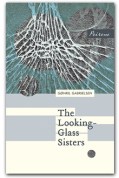
I must give a nod to Peirene Press, which I discovered by reading White Hunger.  This small British press specializes in publishing novellas translated into Looking Glass SistersEnglish.  Their books may be small, but they pack a powerful, emotional punch.  One of the best books of the year, in my humble opinion, is their novella The Looking Glass Sisters.  This book did not get as much attention as I think it should have; it is one of those reads where you think about its plot and characters long after you close the last page.
And the final independent press that I discovered late in the year thanks to Joe over at Roughghosts, is Istros Books.  I would say that their novel Dry Season is one of my favorites of the entire year.  Since finishing this book I have acquired several more of their titles which I am very excited to read and review in 2016.  Istros specializes in translating fiction from Eastern Europe.

There are two very special small publishers that I must mention from whose catalogues I own many, many books.  These two publishers deserve their own special categories as they have entire shelves on my bookcases dedicated to their titles.

Persephone Books:
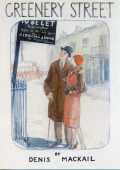
Original-Greenery-Street-cover-422x600A friend of mine, who is always spot on with his recommendation for me, turned me on to Persephone Books.  Persephone is an Independent British publisher that specializes in reissuing lost classics which are mostly written by female authors.  I fell in love with the first book I read from them, Greenery Street, and even since I have read one or two of their books per month.  I just can’t get enough of them.  It was very difficult to come up with only a couple of my favorites from 2015 but I have to go with Greenery Street and Patience.  Both books are funny, sweet and so well-written.   Persephone has quite an extensive catalogue and I would eventually like to work my way through all of their books.  There will most definitely be many more Persephone reviews to come in 2016.


New York Review of Books Classics:
AkenfieldThe first book I read from the NYRB classics collection was Stoner and ever since then I cannot get enough of their books.  This year I once again read several titles from their catalogue.  The Door, a book translated from the Hungarian which has been on many top ten book lists of the year, was also one of my favorites.  I would also add two additional books to my favorites list which they published in 2015.  Akenfield: Portrait of an English Village by Blythe was on of my favorite non-fiction books of 2015.  This book gives us a glimpse into all the of aspects of an English village in the 20th Century.  This is a must read for anyone who is a fan of British Literature.  The final book on my list for 2015 from NYRB classics is  Ending Up by Kingsley Amis.  This book is absolutely hilarious as it chronicles the final days of a group of septuagenarian roommates.  I have big plans to review several more of the NYRB books in 2016!

That pretty much wraps it up for me as far as 2015 is concerned.  In the new year I have titles on my TBR piles that include books from all of these Indie Presses.  Merry Christmas, Happy Holidays, Io Saturnalia and Happy New Year!

-Melissa, The Book Binder’s Daughter


17 Comments

Filed under British Literature, Classics, Favorites, Literature in Translation, Literature/Fiction, New York Review of Books, Nonfiction, Novella, Opinion Posts, Persephone Books, Short Stories

Review: Boredom by Alberto Moravia

This book was originally written and published in Italian in 1960 and this English translation has been done by Angus Davidson.

My Review:
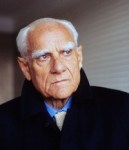
BoredomThis is another selection from the New York Review of Books Classics category.  My first experience with Moravia was another NYRB Classic release of his entitled Agostino  which I thoroughly enjoyed.  One notices immediately from these books that Moravia is an author who is interested in exploring the depths of the human, male psyche.  He is not afraid to explore taboo subjects and depict flawed characters who are trying to grapple with the trappings of their own minds.
Dino has grown up in the lap of luxury due to the fact that his mother is rather wealthy.  She lives in an opulent home on the Via Appia in Italy and employs several servants, a gardener and a cook.  Dino, however, decides that he wants to be a painter and he rejects his mother’s wealth and lives on his own in a shabby apartment in Rome.  Since he is a thirty-five year old man, it should come as no surprise that he wants freedom from any type of parental control.  But his rejection of wealth does not come from an altruistic motivation to spread social and economic equality.  His basic problem, as he tells us, is that he is bored.  Dino has been bored for as long as he can remember, going all the way back to early childhood.  Even when he takes up something for which he has an initial passion, like painting, he inevitably becomes bored with it.

Dino’s long and tiresome explanation of his boredom was, indeed, boring.  He is not a sympathetic character at all and at times his boredom comes across more as depression than as boredom.  He has no interest in things around him, he alienates himself from his family, especially his mother, and he suddenly wants nothing to do with tasks that he used to have a passion for.  This sounds more to me like depression than boredom.

When Dino meets a very young woman named Cecelia he begins an intense sexual relationship with her.  She shows up at his flat every day at the same time, takes her clothes off, and they instantly make love.  But after a while, Dino finds all of this terribly mundane and he becomes bored with her.  In order to make her seem more interesting he even experiments with treating her cruelly, but he quickly comes to his senses and decides that the best thing to do is to end the relationship.  This is the point in the story where things become interesting for Dino.

Just as he is about to break the affair off with  Cecelia she starts to become detached from him and begins missing their daily meetings.  Dino is convinced that she is having an affair with someone else behind his back.  All of a sudden Dino’s boredom has turned to an obsession- an obsession to find out more about this woman, an obsession to find out what she does when she is not with him and an obsession to find out what her family is like.  At this point Dino can’t think of anything but Cecelia and he actually longs for boredom and to be rid of what he calls his love for Cecelia.  He proposes marriage to her because, in his twisted sense of logic, he feels that she will settle down and have children and then he will finally be bored of her and can finally cure himself of this love.  To use marriage in order to fall out of love and become bored with one’s spouse is Dino’s twisted, ridiculous and morally backwards plan.

The book does not have a conclusive ending, as one might expect with an existential novel such as this one.  But Dino does vow to get over Cecelia, one way or another.  But in the end, it was I who became bored with his never ending desire to attain boredom in his relationship with Cecelia.

Has anyone else read any other Moravia titles?  I have enjoyed both Boredom and Agostino.  Let me know if you have any other recommendations in the comments!

About the Author:


Alberto Moravia, born Alberto Pincherle was one of the leading Italian novelists of the twentieth century whose novels explore matters of modern sexuality, social alienation, and existentialism.


7 Comments

Filed under Literature in Translation, Literature/Fiction, New York Review of Books

Review: Call Me by Your Name by André Aciman

My Review:
Call me By Your nameThe twenty-four year old university student named Oliver who is one of the two main characters in this intense novel is writing a manuscript about the Pre-Socratic philosopher Heraclitus.  I took a Pre-Socratic seminar in graduate school and translated some of Heraclitus’ fragments which, to say the least, are mind boggling.  Even in antiquity he was known as Heraclitus “the obscure.”  Heraclitus could not be a more fitting author with which to compare the emotional turmoil, upheaval and even confusion that both Oliver and Elio share in this book.

Elio is a shy seventeen-year-old who is interested in music and literature.  He spends all of his summers at his parents’ villa on the Italian Riviera; and each summer Elio’s father, a university professor, invites a young scholar to come and live with the family for six weeks as a type of mentorship.  There have been a string of writers and house guests for Elio’s entire life, but this particular summer becomes unforgettable and life changing as soon as Oliver steps out of the cab and greets Elio.

The author is a genius at describing, in beautiful and intense prose, the initial resistance between lovers when the first stages of attraction are felt.  Elio finds that he cannot stop thinking about Oliver, he craves Oliver’s attention and wants Oliver’s approval in all he does.  When Oliver is not around the house and when Oliver is not in a talkative mood then Elio feels like he has had a bad day.  We have all had these experiences where our mood and our happiness are dependent on the small scraps of attention we may or may not receive from the one with whom we are in love.

One of the most significant and symbolic scenes in the book is when, after they play a tennis match together,  Oliver puts his arm around Elio and Elio at first leans into his embrace but then feels embarrassed and shrugs Oliver off.  Throughout the first part of the book Elio and Oliver repeat the scenario of this embrace by coming close to having a physical relationship but then resisting and pulling away from each other.

One of my favorite fragments of Heraclitus is one that is attributed to him by Plato (Cratylus 402A): “Heraclitus, you know, says that everything moves on and that nothing is at rest; and, comparing existing things to the flow of a river, he says that you could not step into the same river twice.”  As Elio and Oliver finally confess their feelings to one another and fall into a very intense physical relationship they know that the six weeks at the Italian countryside can never be replicated again.  They meet again at Christmas and several years later when they are older but they can never recapture the physical and emotional intensity of their summer on the Riviera.

The mutability of life, identity, and sexuality are all highlighted in this book through Elio and Oliver’s relationship.  This is one of those books that is very difficult to describe fully and to do justice in a short review but I promise that it will bring out a variety of emotions in every reader.

I first discovered this book on my of my favorite blogs, roughghosts.  Joe has a beautiful review of this book (and many others) so please check out his site as well.

About The Author:
Andre AcimanAndré Aciman was born in Alexandria, Egypt and is an American memoirist, essayist, novelist, and scholar of seventeenth-century literature. He has also written many essays and reviews on Marcel Proust. His work has appeared in The New Yorker, The New York Review of Books, The New York Times, The Paris Review, The New Republic, Condé Nast Traveler as well as in many volumes of The Best American Essays. Aciman received his Ph.D. in Comparative Literature from Harvard University, has taught at Princeton and Bard and is Distinguished Professor of Comparative Literature at The CUNY Graduate Center. He is currently chair of the Ph. D. Program in Comparative Literature and founder and director of The Writers’ Institute at the Graduate Center.

Aciman is the author of the Whiting Award-winning memoir Out of Egypt (1995), an account of his childhood as a Jew growing up in post-colonial Egypt. Aciman has published two other books: False Papers: Essays in Exile and Memory (2001), and a novel Call Me By Your Name (2007), which was chosen as a New York Times Notable Book of the Year and won the Lambda Literary Award for Men’s Fiction (2008). His forthcoming novel Eight White Nights (FSG) will be published on February 14, 2010

5 Comments

Filed under Literature/Fiction