Category Archives: Literature in Translation

Review: The Red Notebook by Antoine Laurain

I received an advanced review copy of this title from Gallic Books.  It has been translated from the French by Jane Aitken and Emily Boyce.

My Review:
The Red NotebookIf you found a purse in the street with no identification in it what would you do with it?  Would you take it to the police? Would you throw it away?  When Laurent finds an expensive woman’s purse in the street that contains no wallet, all of these questions run through his mind.  He finally decides to take the purse to his apartment and see if he can find any information about its owner.  His decision to not throw the purse away and try to find it’s rightful owner says quite a bit about Laurent as an honest and sentimental character.

What Laurent does find inside the purse are very intimate details about a stranger’s life.  This unknown woman has placed pictures, a keychain with hieroglyphic script, and special rocks in her satchel.  Most importantly Laurent finds a red notebook in which this woman was recording her most private thoughts.  Laurent decides he must find this woman because he feels that, through his perusal of her mementos, he has gotten to know her and has developed a fondness for her.

The purse belongs to Laure who, at the very beginning of the story, has been hit on the head and mugged.  The thief takes her purse, removes everything of value from it and dumps it on the street in Paris.  Due to the trauma to her head Laure spends two weeks in the hospital in a coma.  When she wakes up and remembers the theft of her purse, it is the loss of her personal items that bothers her the most.

The book is suspenseful because we never know if Laurent can manage to put enough clues together to find Laure.  It is actually his teenage daughter, who at first appears to be a selfish little brat, that helps her father find Laure.  We know from the details given throughout the novel that Laurent and Laure are lonely and have been for quite some time.  They both also have a love of books.  So if they do manage to find each other they are obviously a perfect match.

THE RED NOTEBOOK is uplifting, heart-warming with the just the right amount of drama. I recommend it as the perfect novel to enjoy while you are sitting outside on a sunny spring day.

About The Author:
antoine_laurain150x200Antoine Laurain was born in Paris and is a journalist, antiques collector and the author of five novels. The President’s Hat, a charming fable set in the Mitterrand years, was awarded the Prix Landerneau Découvertes and the Prix Relay in 2012 and is published in English by Gallic. It was a Waterstones Book Club book and ABA Indies Introduce pick in 2013. Antoine was chosen to represent France at European Literature Night 2014.

4 Comments

Filed under France, Literature in Translation

Review: The Collected Poems of Proust

For my next installment of reviews for poetry month I decided to tackle this dual-language edition of the collection poems of Proust.  It was published in 2013 by Penguin and I bought a copy of it myself.

My Review:
Proust PoemsThese poems are a glimpse into Proust as a human being and not Proust the serious novelist.  The poems were collected from a wide variety of places, including letters to his friends, journals and notes, and some were even scrawled on scraps of paper or envelopes.  We often envision Proust as the asthmatic, shut away from society as he labored over his major work.  But these poems reveal to us a funny, playful, intelligent man who fully engaged in life and embraced all of its wonders.

It is rumored even when Proust was alive that he was homosexual.  The poems reveal a man who was definitely struggling with his sexuality in a time period in which homosexuality was completely unacceptable.  In the poem that opens the collection he writes to Daniel Halvey:

For what is manly mockery to me?
Let Sodom’s apples burn, acre by acre,
I’d savor still the sweat of those sweet limbs!
Behold a solar gold, a lunar nacre,
I’d…languish (an ars moriendi of my own),
deaf to the knell of dreary Decency!

There are also amorous poems in the collection written to women, such as “Lines to Laure Hayman” in which he recollects her beautiful form.  Another poem is written to an actress whom he saw play the role of Cleopatra.  These lines imply an admiration of the woman that goes beyond friendly recognition of her performance:

You have surely dethroned the Egyptian Queen
You are at once artist and work of art
Your spirit is deep as is your regard,
‘Though no beauty like hers was never seen.

The sentiments in the poems jump from love and friendship, “Love draws from the heart a scent of roses,” to loss and agony, “So tired of having suffered, more tired of having loved.” These lines represent the waves of emotions Proust rides and jots down as he is living his everyday life.

Proust is also petty, bawdy and even vulgar. In one poem he writes:

They say a Russian, may God preserve his soul,
Managed to rouse a flutter of sensation
In Ferdinand’s leathery, tanned, and well-worked hole
By slipping in up to the hilt his brave baton.

In a few of the poems written to his friends his instructs them to burn the poems after they have been read because the poems contains some unflattering verses about aristocrats within their social circle.

There are 104 poems in the collection in total.  None of them are very long which is appropriate as they are meant as little messages to friends in letters and oftentimes casually written on scraps of paper.  The notes in the back of the book are very helpful in understanding to whom the poems are written and what their relationships were to Proust.  For a amusing glimpse into the candid world of this famous poet I highly recommend perusing this dual-language edition.

About The Author:
ProustMarcel Proust is a French novelist best known for his 3000 page masterpiece À la recherche du temps perdu (Remembrance of Things Past or In Search of Lost Time), a pseudo-autobiographical novel told mostly in a stream-of-consciousness style. Born in the first year of the Third Republic, the young Marcel, like his narrator, was a delicate child from a bourgeois family. He was active in Parisian high society during the 80s and 90s, welcomed in the most fashionable and exclusive salons of his day. However, his position there was also one of an outsider, due to his Jewishness and homosexuality. Towards the end of 1890s Proust began to withdraw more and more from society, and although he was never entirely reclusive, as is sometimes made out, he lapsed more completely into his lifelong tendency to sleep during the day and work at night. He was also plagued with severe asthma, which had troubled him intermittently since childhood, and a terror of his own death, especially in case it should come before his novel had been completed. The first volume, after some difficulty finding a publisher, came out in 1913, and Proust continued to work with an almost inhuman dedication on his masterpiece right up until his death in 1922, at the age of 51. Today he is widely recognised as one of the greatest authors of the 20th Century, and À la recherche du temps perdu as one of the most dazzling and significant works of literature to be written in modern times.

7 Comments

Filed under Literature in Translation, Poetry

Review: The Physics of Sorrow by Georgi Gospodinov

I received a review copy of this book from Open Letter Press through Edelweiss. This book was originally written and published in Bulgarian in 2011.  It has been translated into English for this edition by Angel Rodel who won a PEN Translation Fund Grant in 2010 for Georgi Tenev’s short story collection. She is one of the most prolific translators of Bulgarian literature working today and received an NEA Fellowship for her translation of Gospodinov’s The Physics of Sorrow.

My Review:
Physics of SorrowIn The Physics of Sorrow  the story of the narrator, Georgi, and his family are told through the lens of the ancient Greek myth of the Minotaur, the half-man, half-bull creature that inhabits the dark tunnels of a Cretan labyrinth.  The story itself feels like a labyrinthine journey which the author leads us through; we feel like we are groping around in the dark, never sure towards which style of writing the author will lead us next.  Sometimes we encounter a story about the narrator’s grandfather, at other times we are launched into a tale about the narrator himself.  Short stories, anecdotes, memories, pictures and even lists are presented as part of the narrative.

Gospodinov uses the story of the Minotaur from Greek mythology to highlight three themes in his book: abandonment, isolation and misunderstanding.  Jorge Luis Borges, in his short story “The House of Asterion,” provides us with the Minotaur’s perspective of his dwelling and his pathetic hope of eventual redemption.  The Physics of Sorrow expounds on Borges’ characterization of the Minotaur as a creature who is worthy of sympathy and whose half-human, half-bull form are certainly not his fault.  At some point in his young life Asterion, the Minotaur, must have been abandoned by his mother and placed in this dark, isolated and lonely labyrinth.

Georgi grows up in Socialist Bulgaria, which itself is an isolated and lonely place.  The author points out that before 1989, 80% of Bulgarians had not left their native country.  Georgi’s parents have good jobs, but due to the strict controls by the government on housing, his family lives in a cramped basement apartment, their own type of dark labyrinth.  Georgi tells us that because of his enclosed childhood dwelling he is afflicted with the “Minotaur Syndrome.”  Left alone from the age of six in this basement apartment he must fend for and amuse himself until the adults come home at the end of a long day.

Abandonment and isolation are situations which Georgi’s grandfather struggles with first in the story.  At the age of three he is almost left behind by his mother at a mill and not until they are half-way home does one of his seven sisters realizes that he is missing.   I held my breath at the vivid description of the toddler’s abandonment and thought “hurry up” as his sister raced back to gather the distraught and afraid little boy.  The grandfather,  who later fights in World War II,  also has one of the toughest choices to make in the novel: which of his two sons should be abandon because he cannot live with and raise both of them.

Georgi has an issues with intimacy and he can’t seem to truly get close to a any woman. His fear of intimacy is part of the reason that,  shortly after his daughter is born, he falls into a deep melancholy.  At his doctor’s advice he travels around aimlessly and Europe itself becomes his labyrinth where he trudges from city to city and hotel to hotel trying to shake off his extreme gloominess.  He abandons his family to try and save his sanity but he ends up isolating himself from the world even further.  After he leaves his family, Georgi moves back into his boyhood home in the basement and now, living in this dark labyrinth all alone, the minotaurizing of himself has become complete.  At the end of the novel he tries to use the language of quantum physics to describe, sort out and even deal with his sorrow.

The greatest lesson we can take from The Physics of Sorrow is one of empathy and compassion.  At one point in the book the Minotaur is put on trial and given his day in court to defend himself against the charge of being a violent monster.  He is half-man and half-human and therefore never able to fully fit into to any society, man or animal.  We must also show compassion for characters like Georgi who, growing up under a totalitarian regime,  lost some of the most basic freedoms we take for granted in the West. This book shed a whole new perspective for me on the story of the Minotaur and the country of Bulgaria which, to be quite honest, I have never really given a second thought.

About The Author:
Georgi G.Georgi Gospodinov is the author of Lapidarium (a collection of poems, 1992) – National literary prize for debut book; The cherry tree of a nation (a collection of poems, 1996) – Annual prize of the Association of the Bulgarian writers for book of the year; Natural Novel (a novel, 1999) – Special prize in the national contest “Razvitie” for modern Bulgarian novel; And Other Stories (a collection of short stories, 2001). He is the co-author of: Bulgarian Crestomathy (1995); Bulgarian Anthology (1998). He works and lives in Sofia.  Follow this link to read an interview with Godpodinov about The Physics of Sorrow: http://bombmagazine.org/article/453046/georgi-gospodinov.

8 Comments

Filed under Literary Fiction, Literature in Translation

Review: Prometheus Bound by Aeschylus

I received a review copy of this title from The New York Review of Books through Edelweiss.  As my regular readers know, I am a big fan of their line of classics.  For more information on their titles visit their website: http://www.nybooks.com/books/imprints/classics/.

My Review:
PrometheusI have to admit that when I found out that the translator of this ancient classic drama is not himself a classicist and does not know Ancient Greek I was rather skeptical.  After reading the introduction to the work, however, I began to come around to the idea that Joel Agee was capable of giving us a modern rendition of this play while making it accessible to a 21st century audience.  Agee describes his process of consulting older, literal translations as well as consulting experts in Ancient Greek philology.  The result is an impressive translation of one of the oldest Greek dramas in existence.

Prometheus is a Titan and in Zeus’ fight against the generation of Titans, Prometheus knows that Zeus will reign supreme and so Prometheus wisely takes the side of the god of thunder.  Yet, after his defense of Zeus, Prometheus betrays him by stealing fire for mankind.  As his name in Greek tells us, Prometheus is literally “forethought,” he knows what will happen before anyone else.  So we might wonder why Prometheus chose to steal fire from Zeus and gift it to humans if he understands perfectly well that his punishment from Zeus will be long-lasting and most severe.

When the play opens Prometheus is being chained to a rock by Hephaistos for his crimes against Zeus.  Zeus is about to destroy man and create a new race of beings when Prometheus gives these pathetic humans the gift of fire.  Fire allows them many things, including warmth, food, light, and civilization.  Prometheus becomes the champion of civilized societies, artists and those who fight against any form of tyranny.

One of the most interesting aspects of this play is the fact that Zeus himself is not a character and never speaks a word.  Zeus’ thugs, or henchmen, which include Kratos (Power), Bia (Force), Hephaistos and Hermes speak on his behalf.  The Chorus in the play is a group of water-nymphs, the Oceanids, who are horrified at and sympathetic to Prometheus’ sufferings.  The other female in the play, which I have always found to be an interesting choice, is Io who also explains her path of suffering which is caused by Zeus.  Io and Prometheus commiserate with one another and Prometheus, even though he is tortured, still manages to give Io hope about her own situation and her release from torment.  It is Io’s progeny who will ultimately be responsible for freeing Prometheus.

Prometheus Bound is not the most action oriented of the early Greek dramas yet, it is one of the more thought-provoking: Is Prometheus the champion of mankind who opposes all manner of tyranny or is he a dangerous revolutionary who challenges the authority that is necessary to maintain order and justice?

Thanks to the New York Review of Books Classics series for providing us with another great translation of a classic.

About The Authors:
Aeschylus (525 BC–456 BC), the first of ancient Greece’s major dramatists, is considered the father of Greek tragedy. He is said to have been the author of as many as ninety plays, of which seven survive.

Joel Agee is a writer and translator. He has received several prizes, including the Berlin Prize of the American Academy in Berlin in 2008 and the Helen and Kurt Wolff Prize for his translation of Heinrich von Kleist’s verse play Penthesilea. He is the author of two memoirs—Twelve Years: An American Boyhood in East Germany and, more recently, In the House of My Fear. His translation of Prometheus Bound was produced at the Getty Villa in 2013. He lives in Brooklyn, New York.

Leave a comment

Filed under Classics, Literature in Translation, New York Review of Books

Review: Alien Hearts by Guy de Maupassant

The New York Review of books had a fantastic winter sale and I bought several books, including this one, at a fantastic discount.  This book was originally written and published in French in 1890.  This English version has been translated by Richard Howard.

My Review:
Alien HeartsAndré Mariolle is wealthy enough to pursue various arts without having to make a living from them.  He dabbles in a little bit of everything from playing music to writing.  He is content with mediocrity in his life and he is happy to surround himself with other artists and move in the creative and intellectual circles in Paris.  One day he is invited to the salon of Madame du Burne and his quiet, unassuming life is changed forever.

Madame du Burne survived an abusive, although brief, marriage and when her husband dies and leaves her a widow at the age of 30, she puts all of her wealth and energy into entertaining the most creative minds in 19th Century Paris.  Novelists, sculptors, musicians and singers all attend her salon and an invitation from her is the most coveted one in town.  But we learn that Madame du Burne has some deep-seated psychological issues as far as relationships with men are concerned.  She is an unrelenting coquette who makes men fall in love with her and she collects men like she collects art.  She toys with their emotions, but once they fall in love with her she never returns their feelings.

When Madame du Burne meets Mariolle he seems to have a different affect on her; she favors him more than the other men in her “collection,” but is she really capable of truly loving someone in return?  Mariolle falls hopelessly in love with her and writes her beautiful love letters and tries to be around her as much as possible.  Despite her sad experience with marriage, it is hard to feel sorry for Madame du Burne.  She appears to appreciate artists and intellectuals but it becomes obvious throughout the novel that she is just using them for her own selfish and vain ends.

Maupassant’s language, especially when he is describing the process of falling in love, is poetic and melodic.  His metaphors aptly capture the burning ardor of Mariolle’s feelings as well as the torment he feels when his love is not returned.  I was reminded several times throughout the novel of similar sentiments expressed by the Latin poets Catullus and Ovid who are also pulled in various emotional directions by romantic love.

The ending of this book is abrupt, unexpected and puzzling.  ALIEN HEARTS is a short read full of passion, love and frustration and I highly recommend this emotionally charged novel.


About The Author:
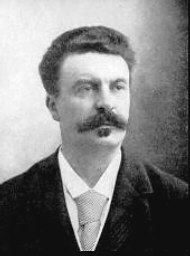
Guy de m.Henri René Albert Guy de Maupassant was a popular 19th-century French writer. He is one of the fathers of the modern short story. A protege of Flaubert, Maupassant’s short stories are characterized by their economy of style and their efficient effortless dénouement. He also wrote six short novels. A number of his stories often denote the futility of war and the innocent civilians who get crushed in it – many are set during the Franco-Prussian War of the 1870s.

Leave a comment

Filed under Classics, France, Literature in Translation, New York Review of Books