
I received an advanced review copy of this title from the publisher, Istros Books. This English version has been translated by John K. Cox.
My Review:
 This latest release from Istros Books is a fictional account of Lord Byron’s tour around parts of the Ottoman Empire in 1809 during which trip he is the guest of a local Albanian ruler, Ali Pasha. The story takes place during a period of two weeks on his travels when Byron is accompanied by a retinue of English servants as well as his good friend John Hobhouse. As they reach the city of Ali Pasha, they are greeted by a severed arm that is hanging from a tree and being slowly eaten by birds of prey. There is an undercurrent of uneasiness throughout their stay in Yannina as they immediately understand that the political and social landscape of The Ottoman Empire is very different from England.
When Byron and his retinue arrive in Yannina, Ali Pasha is not at his palace because he is off in the north fending off one of his enemies. So Byron is entertained and shown around the town by a man named Isak, who is a personal doctor of this local despot. Isak has lived all over Europe and his English is quite good so he serves as Byron’s interpreter. He also tells Byron many stories about the Balkans and also educates him about Eastern European customs. The most important lesson Isak teaches Byron is about the Balkan words Dert and Sevdah, which mean a yearning and a craving desire, love and passion. In the Balkans there is a woman born once every three hundred years, Isak tells him, who are known for their beauty throughout the Empire. Men feel Dert and Sevdah if they are lucky enough to set their eyes on one these beauties who are usually hidden by their families until they are given away to a Prince for marriage.
One such woman, whose name is Zuleiha, is rumored to be in the vicinity of Yannina. Isak starts acting very strangely when he hears this rumor and he disappears for long periods of time in an attempt to get information on her whereabouts. Byron listens to Isak’s story about this beautiful woman, but to him it is just a story, just a myth, until Byron sets eyes on Zuleiha himself.
It is apparent that Ali Pasha will not make it home in time to greet his British guest, so he invites them to his palace in the north. Byron and his fellow travelers are accompanied by Isak on a long, arduous journey during the rainy season through the Balkans. The rain is so intense at one point that they have to take shelter in a cave and then in a han, which is the Balkan word for hotel. It is at this han that Byron gets a glimpse at the rare beauty of Zuleiha. Byron is instantly smitten with her and at the sight of this woman he fully comprehends the meanings of Dert and Sevdah.
The exciting culmination of the book deals with Byron’s crazy plan to win Zuleiha as his wife. I thoroughly enjoyed the entire story which, although brief, brought to life the personal details about this famous English poet. We experience the fascinating mythology, cultural and landscape of the Balkans through Byron’s point-of-view and we better understand its influence on Byron’s writings. When I was reading this book the image of Byron in his elaborate Albanian costume, which in the book is given to him as a gift, kept coming to mind.
About the Author:
 Muharem Bazdulj, born in 1977, is one of the leading writers of the younger generation to appear in the countries of the former Yugoslavia. He writes in a wide variety of genres, including novels, short stories, poetry, and essays; he is also active as a journalist and a translator. Bazdulj’s work has been published `Best European Fiction 2012´ (Ed. Aleksandar Hemon, Dalkey Archive Press) alongside Milan Kundera, Ryszard Kapuscinski, Vladimir Sorokin, Victor Pelevin, Péter Esterházy and Andrzej Stasiuk. Short stories and essays in `World Literature Today´, `Creative Nonfiction´, `Habitus´, `Absinthe´ etc.Translations:One of his short story collections has appeared in English (The Second Book, Northwestern University Press, 2005). Bazdulj is the author of nine books in all, including his most recent set of stories, Magic. He currently lives in Travnik and Sarajevo. – See more at: http://istrosbooks.com/products/authors/muharem-bazdulj-68/#sthash.xWNOQwUS.dpuf
 This book was an unexpected surprise that pulled at my heart strings. Mattis and his sister Hege live in the Norwegian countryside in a simple cottage by a lake. Mattis is mentally challenged and he is constantly attempting to navigate a world that he doesn’t understand and that doesn’t understand him. He has the mind of a child; he becomes excited at the simplest things like the woodcock which flies over their cottage. He has a deep fear of abandonment and is afraid that his sister, who is his only caretaker, can be snatched from him at any moment. And when he cannot make others understand him he becomes bewildered and frustrated. I became completely absorbed in Mattis’ simple and constricted world.
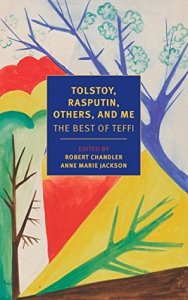 This book is a collection of autobiographical essays from the renowned, female Russian author Teffi. The essays were all written during the early part of the twentieth century and reflect Teffi’s own struggles with having to flee a turbulent and oppressive Russia. The collection is divided into four parts, the first of which is entitled “How I Live and Work.” These first few essays in the book capture her inner thoughts and self-doubts as she becomes Teffi “The Author.”
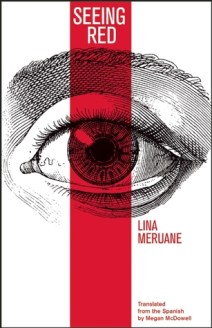 Our senses are our most precious natural gifts because it is through them that we are able to experience the world. At one point we have all probably wondered what it would be like to lose our hearing or our sight or our sense of smell. In Seeing Red, we are given a vivid understanding, through the character of Lina, of what it is like to lose one’s sight. Lina, a young woman attending graduate school in Manhattan and living with her boyfriend Ignacio, suddenly loses her vision. She has been a diabetic all of her life and from what we are told about her medical history in the book, the blood vessels in her eyes have burst and have caused her blindness. She knows that this is coming and the opening of the book is the moment at which her nightmare comes true.
 Lina Meruane is one of the most prominent and influential female voices in Chilean contemporary literature. A novelist, essayist, and cultural journalist, she is the author of a host of short stories that have appeared in various anthologies and magazines in Spanish, English, German and French. She has also published a collection of short stories, Las Infantas (Chile 1998, Argentina 2010), as well as three novels: Póstuma (2000), Cercada (2000), and Fruta Podrida (2007). The latter won the Best Unpublished Novel Prize awarded by Chile’s National Council of the Culture and the Arts in 2006. She won the Anna Seghers Prize, awarded to her by the Akademie der Künste, in Berlin, Germany in 2011 for her entire body of written work. Meruane received the prestigious Mexican Sor Juana Inés de la Cruz Prize in 2012 for Seeing Red. Meruane has received writing grants from the Arts Development Fund of Chile (1997), the Guggenheim Foundation (2004), and National Endowment for the Arts (2010). She received her PhD in Latin American Literature from New York University, where she currently serves as professor of World and Latin American Literature and Creative Writing. She also serves as editor of Brutas Editoras, an independent publishing house located in New York City, where she lives between trips back to Chile.
 I have been captivated by the plethora of post-Soviet literature that has been published just in the last year alone. The theme that is the most haunting to me is the one of waste: all of those wasted lives, all of that wasted time, and for what purpose? I remember the attitude towards the Soviets in the 1980’s with the “us”, the free American democracy, versus “them”, the oppressive Soviet totalitarian regime, propaganda. It seemed that the Soviet Union wanted everyone to believe that, not only was their system the best in the world, but their people were happy and thrived under that system. But recent post-Soviet books, like Oblivion, have proven that this ideal that their leaders put forth could not be further from the truth.
 Sergei Lebedev was born in Moscow in 1981 and worked for seven years on geological expeditions in northern Russia and Central Asia. Lebedev is a poet, essayist and journalist. Oblivion, his first novel, has been translated into many languages. Lebedev’s second novel, Year of the Comet, is coming out from New Vessel Press in 2017.


 The Book Binder's Daughter