 Umberto Saba’s unfinished novella Ernesto, published this year in a new English translation by The New York Review of Books, is part of an ever-growing body of recent literature that explores the idea that human sexuality is more pliable and fluid than the rigid labels to which we assign it. The latest novels by Bae Suah (A Greater Music), Andre Aciman (Enigma Variations), and Anne Garreta (Sphinx and Not One Day) have also opened up important conversations about experimentation with sexuality. But what sets Ernesto apart and makes it stand out among the works of these other authors is that it was written in 1953, a time in which many considered homosexuality scandalous, or often illegal.
Born in 1883, in the Mediterranean port of Trieste, Italy, Umberto Saba is best known for his deeply personal and honest poetry. Written at the age of seventy when, after suffering one of his many nervous breakdowns, and confined to a sanatorium in Rome, Ernesto tells a loosely autobiographical coming-of-age tale about a boy’s burgeoning sexuality. Estelle Gilson, the translator, writes in her introduction to the NYRB edition, “What he was writing was for himself alone—his adolescent experiences in Trieste as they suddenly welled up within him and demanded release.”
Like his teenage protagonist in Ernesto, Saba was abandoned by his father, raised in Trieste by an aunt and a single mother, worked in a flour factory at the age of sixteen, and had serious questions about his sexuality. Because of the autobiographical and sexual content of Ernesto, Saba showed his drafts to a few carefully chosen confidants. In addition to his doctor at the sanatorium, one of the only other people to read Ernesto was Saba’s daughter, Linuccia, to whom he would send parts of the manuscript with very strict instructions about keeping his writings secret. In his letters to Linuccia, Saba requests that his daughter keep his drafts in a locked container and that she send his writing back to him immediately after reading it. Linuccia took her father’s instructions seriously and didn’t publish Saba’s novella until 1975, nearly twenty years after the author’s death.
Composed in five “Episodes” with an additional section entitled “Almost a Conclusion,” the strength of Saba’s writing lies in the bold and, at times, brutally honest language that he employs throughout his text. Set in Trieste, in the last few years of the nineteenth century, the sixteen-year-old protagonist is raised by his single mother and his elderly aunt. Ernesto’s world reflects the diversity of Trieste which, because of its location in northeastern Italy between the Adriatic Sea and Slovenia, was influenced by Italian, Slavic and German cultures. During this period of time, Trieste is an Imperial Free City within the Austro-Hungarian Empire, and had been under Hapsburg rule since the fourteenth century. Although most of its citizens were Italian and loyal to an Italian Republic, Germans controlled the bustling business and commerce of the city and held positions of power.
Ernesto works as an apprentice in a German flour factory where he meets a laborer, a lower-class Triestine, identified as “the man” with whom he has his first sexual encounter. Ernesto’s erotic exploits with the man leave him bewildered, ashamed and confused not only because of the illicit nature of his experiences, but also because he is still sexually attracted to women. Ernesto’s sexual encounters with the man take place in the first Episode but the emotional consequences linger with Ernesto throughout the narrative. The language of Saba’s Ernesto is candid, especially when describing the titillating and erotic first sexual encounter between Ernesto and the man. The two negotiate the intimate details of what the sex will be like as Ernesto is both excited and scared about this new experience:
“There’s a lot of things you can do in an hour,” the man said urgently.
“And what do you want to do?”
“Don’t you remember what we were talking about yesterday? That you almost promised to do. Don’t you know what I’d like to do with you?”
“Yeah, put it up my ass,” Ernesto replied with quiet innocence.
In an essay entitled “What Remains for Poets to do,” Saba argues that “It remains for poets to write honest poetry.” Saba applies this pursuit of literary honesty to his prose as well when he inserts his own commentary into the text to explain and justify Ernesto’s explicit language. Saba’s interjection of his own voice into the narrative are some of the most beautiful and enlightening pieces of writing in the novella:
With that brief, precise utterance, the boy unwittingly revealed what many years later, after many experiences and much suffering would become his “style;” his going to the heart of things; to the red-hot center of life, overriding resistance and inhibitions, foregoing circumlocutions and useless word twistings. He dealt with matters considered coarse, vulgar (even forbidden) and those considered “exalted” just as Nature does—placing them all on the same level. Of course, he wasn’t thinking of any of that now. He had blurted the sentence (which practically had a laborer blushing) because the circumstance warranted it.
The episode ends with an act that deftly mixes emotions of both tenderness and shame: the man kindly turns over the stained sack of flour at Ernesto’s request so that no one will be suspicious of what happened between them.
Shame is a theme that Saba returns to repeatedly in his narrative as Ernesto attempts to find fulfillment, pleasure and love with a man and a woman. The fact that the man is never given a name is perhaps significant because Saba, likely through his own sense of shame at recalling these events, can’t bring himself to give Ernesto’s seducer a true identity. After two months, Ernesto decides that he can no longer keep having these sexual encounters with the man because they make him feel dirty and keeping such a secret from his mother feels shameful and wrong. After his trysts with the man, Ernesto has the overwhelming desire to prove himself a man and is impatient to have sex, for the first time, with a woman. He is ashamed because all of his friends have bragged about sleeping with women and the only sex he has had is with a man. Shame is what motivates him to seek out sex with a prostitute which erotic scene in the book is equally as tender and explicit as the one with the man. This time, however, he gives the prostitute a name because sex with a woman, even though it is a prostitute, is not as shameful as having sex with a man. Once Tanda undresses Ernesto, she finds the best position that will give Ernesto the most pleasure for his first time. And after he climaxes she washes him with a disinfectant and his sense of shame and embarrassment cause him to excessively overpay her and leave suddenly.
Themes of loneliness, alienation and sadness—demons with which Saba himself wrestled throughout his life—also pervade Saba’s coming-of-age narrative. Ernesto is initially drawn to the man who propositions him with sex because the man loves the boy. Because of the absence of a father in his life, Ernesto wants to please the man who shows him affection and adoration. He likes the prostitute because she is warm and tender with him and this causes him to eagerly anticipate his next visit with her. Ernesto’s mother is stern with him and shows him little affection although affection is something he craves more than anything. Like many young people inexperienced with matters of intimacy and sex he mistakenly equates physical attention with emotional connection and love.
Some of Ernesto’s sadness, alienation and even shame is relieved by the unlikeliest of characters, his dour mother. Ernesto’s mother is a presence that lingers throughout the entire story and even when the man is trying to seduce him, Ernesto mentions his mother and the guilt he feels over keeping a secret from her. The woman, who was abandoned by Ernesto’s father before the boy was born, is overbearing and overprotective of her only child. Yet, she believes that she must be harsh in her rearing of the boy and must not show him very much affection. When Ernesto no longer wants sex with the man, he gets himself fired from the factory so he never has to see him again. The loss of his job devastates Ernesto’s mother and he feels compelled to confess his true reasons for not wanting to return to the factory. When Ernesto tells his mother in great detail about the whole affair with the man, the full force of the emotional connection between mother and son is fully revealed. Saba writes a touching scene that is sympathetic to both the character of Ernesto and his mother:
With his mother’s kiss and the sense that he would be forgiven, Ernesto felt himself reborn. It was one of the few kisses she had ever given him. (The poor woman wanted so much to be, and even more to be seen as, a “Spartan mother.”)
The narrative structure of the novella centers around a triangulation of people—the man, the prostitute and Ernesto’s mother—who provide the boy with affection and comfort.
We can’t help but wonder if Saba’s own sense of shame and loneliness haunted him for the rest of his life and was the reason, at least partially, for his many depressive and nervous episodes for which he was hospitalized. He was married for many years, and although they remained married, the couple’s relationship was troubled and they spent quite a bit of time living apart. It is fitting that Saba writes Ernesto in the last few years in his life as part of his therapy in the sanatorium. But it appears that so many years of shame and hiding who he truly was became too exhausting for the author because he can’t gather enough strength to finish writing Ernesto. Saba writes about his decision to leave his novella unfinished: “Add to those pages Ernesto’s breakthrough to his true calling, and you would, in fact, have the complete story of his adolescence. Unfortunately, the author is too old, too weary and embittered to summon the strength to write all that.”
Even though Saba’s text is incomplete, he gives us enough of a glimpse into pivotal events in the life of Ernesto to make his novella an important, historical piece of gay and bisexual literature. It also helps us better understand Saba’s poetry which writing is equally as personal and intense as Ernesto. To this end, I include a particularly apt final poem of Saba’s called “To the Reader” filled with all the conflict and terror that Saba perhaps felt in composing Ernesto:
This book, Good Reader, though a balm to you,
shames its creator and should go unread.
Although he spoke as a living man, he was
(or should have been, for decency’s sake) dead.
(This review first appeared in the July issue of Numero Cinq.)


 Suah’s greatest strength as a writer lies in her ability to take what at first appears to be disjointed images and scenes and weave them together into a singularly beautiful story. The attic room, the poetry, the woman on the platform he longs to kiss are all connected in her character’s mind with a meditation on time and space: “When was it that he had last kissed a woman so ardently, his lips as passionate as when they pronounced poetry? In that city or this, at the house of his acquaintance or on the platform in the north station, while waiting for the train.”
 Adua, written by the Somali, Italian author Igiaba Scego and translated by Jamie Richards, moves among three different time periods and two different settings. The main character, Adua, emigrates from Somalia to Italy and her own story is a mix of her current, unhappy life and flashbacks to her childhood in Somalia. The third thread in the book deals with the protagonist’s father and his time spent as a servant for a rich Italian who is part of the Italian attempt at colonialism in East Africa just before World War II. My issue with the book is that I wanted more details about Adua and her father but the plot was too brief to provide the depth of plot and characterization that I craved. The author could have easily turned this story into three large volumes about Adua’s childhood, her father, and her adult life as an immigrant in Italy. Adua did prompt me to research and learn more about Italian colonialism in the 20th century but other than that I didn’t have strong feelings about the title after I finished it.
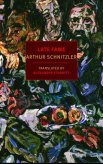 Late Fame, written by Arthur Schnitzler and translated by Alexander Starritt, involves an episode in the life of an older man named Eduard Saxberger who is suddenly reminded of a collection of poetry entitled Wanderings that he had written thirty years earlier and has long forgotten. A group of Viennese aspiring writers stumble upon Saxberger’s volume in a second hand bookshop and invite him to join their literary discussions at a local café. Saxberger, although he never married or had a family, considers his life as a civil servant very successful. The young poets, whom Schnitzler satirizes as bombastic and overly self-important, stage an evening of poetry readings and drama at which event Saxberger is invited to participate. Saxberger learns that although it is nice to get a little bit of late fame and recognition from this ridiculous group of writers, he made the correct decision in pursuring a different career. Trevor at Mookse and The Gripes has written a much better review of this book than I could have done and I highly encourage everyone to read his thoughts:
  Party Going by Henry Green describes exactly what the title suggests: a group of British upper class men and women are attempting to get to a house party in France but are stuck at the train station in London because of thick fog. Green’s narrative starts out on a rather humorous note as he describes these ridiculously fussy, British youth. They panic with what Green calls “train fever” every time they think they are in danger of missing their train. They fret over their clothes, their accessories, their luggage, their tea and their baths. As the story progresses they become increasingly mean and petty towards one another which made me especially uncomfortable. The men are portrayed as idiots and dolts who are easily manipulated by the vain and churlish women. In the end I found Green’s characters so unpleasant that I couldn’t write an entire post about them. I’ve read and written some words about his novels Back and Blindness both of which I thoroughly enjoyed. I still intend to read all of the reissues of his books from the NYRB Classics selections even though I wasn’t thrilled with Party Going.
 The setting of Patrick Leigh Fermor’s only novel entitled The Violins of Saint-Jacques is a tropical, volcanic island in the Antilles which is dominated by an old, French, aristocratic family that is holding onto their traditional, Jacobean politics. Not surprisingly, Fermor, most famous for his travel writing, begins his story with a detailed history and geographical description of his fictional island. He imagines it being occupied by Arawaks and Carib natives and eventually being discovered by Columbus who annexed it for the Spanish crown; he further envisages the island being neglected by Spain and later taken over by the French whose noble families settle on the island and make it as prosperous as Martinique. Fermor says that his island was little known and that “Cartographer and historian unconsciously conspired to ignore it.” But he does, however, include an obscure passage, written in Latin, by an Franciscan missionary who is not at all complimentary about this tropical location. In this addition of the text from NYRB Classics, the Latin is not translated. I offer my own translation here because it sets up a structure for the important themes and ideas that Fermor explores throughout his narrative:
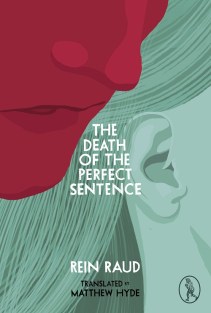 In Rein Raud’s latest novel he cleverly inserts his own voice into his narrative by including text boxes with personal stories, observations, anecdotes and proverbs. For example, one such text box in the novel states:
 Rein Raud was born in Estonia in 1961. Since 1974, he has published numerous poetry collections, short stories, novels, and plays. For his works he has received both the Estonian Cultural Endowment Annual Prize and the Vilde Prize. Having earned his PhD in Literary Theory from the University of Helsinki in 1994, Raud is also a widely published scholar of cultural theory as well as the literature and philosophy of both modern and pre-modern Japan. For more information on purchasing The Death of the Perfect Sentence visit


 The Book Binder's Daughter