
I received a review copy of this title from Seagull Books. These poems have been translated from the original German into this English version by James Reidel.
My Review:
 Georg Trakl died from a cocaine overdose while recovering from a nervous breakdown in a military hospital during World War I. He was awaiting the proofs of Sebastian Dreaming which he had requested despite the fact that the publication of this collection was put off indefinitely because of The Great War. Sebastian Dreaming was the second, and final collection that was prepared for publication by the author himself and James Reidel’s translation of this collection is the first that has appeared in English in its entirety. Although some of the poems have appeared in other collections, the translator has argued that these poems ought to be read as part of this single collection, which is what Trakl himself intended.
In my review of Trakl’s first collection of poems that was also published by Seagull Books and translated by James Reidel, I argued that, although Trakl’s struggle against depression and despair is evident, an underlying sense of triumph against these demons lingers; Trakl does not let his feelings of dejection overwhelm or destroy him. Not yet, anyway. But Sebastian’s Dreaming, which contains more overwhelming images of decay and dying, foreshadows Trakl’s impending overdose which many speculate was a suicide; by the time this collection was composed he had finally been overwhelmed and defeated by his emotional disturbances, excessive indulgences in drugs and alcohol and the incestuous relationship he shared with his sister. In short, the tone of these poems is more deeply melancholic than those in the previous collection. In Dream and Benightment he writes:
O, cursed breed. When every fate is consummated in filthy
rooms, death enters the household with mouldering footsteps.
O, that spring was outside and a lovely bird might sing in
the blossoming tree. But the sparse green withers grey at
the window of those who come by night and the bleeding
hearts still think about evil.
The collection is divided into five sections, the titles of which suggest something of a final scene, before the curtain of his life has fallen: “Sebastian Dreaming”, “The Autumn of One Alone”, “Song Septet of Death”, “Song of the Solitary,” and “Dream of Benightment.” In the poem Passion there exists a struggle against nature and our natural surroundings which bring about our inevitable demise. Orpheus, who was torn apart by wild beasts as he sings a lament for his lost wife, is an apt figure for the destruction that passion can wreak on a human soul:
When Orpheus strums the lyre silver,
Lamenting one dead in the evening garden,
Who are you, one reposed, under towering trees?
The autumn reeds rustle with the lament,
The blue pond,
Dying away under greening trees
And following the shadow of the sister;
Dark love
of a wild kind,
For whom the day rushes by on golden spokes.
Silent night.
Anyone familiar with Trakl’s complicated relationship with his sister Grete can’t help but notice the proximity of the word sister to those of Dark love/of a wild kind.
I found it interesting to learn from reading an introduction to Reidel’s manuscript, Some Uncommon Poems and Versions, that the Austrian pediatrician who lends his name to the disorder believed that Trakl displayed the symptoms of Asperger’s Syndrome. Trakl’s poetry demonstrates two of the hallmark symptoms of this syndrome: a gift with language and an emotional remoteness. As an expressionist poet it is natural that his poetic landscape is full of this movement’s angst, interactions with nature and vivid colors. But after reading Reindel’s comment about Asperger’s Syndrome I viewed his poems with a different eye, one towards someone who has difficulty with intimate connections and certain emotional cues. Trakl never tells us he is melancholy or sad or overcome with despair. But instead he describes Love as a pink angel appearing quietly to a boy or Joy as an evening sonata playing in cool rooms.
Finally, I would like to mention the pervasive use of colors in this collection. The pages are consumed with the various shades that Trakl sees in nature. Colors play an interesting role in expressing our emotions; we wear black at a funeral and a red dress to a festive party. Different colors are associated with different holidays and seasons. Trakl’s uses of color in his poetry brought to mind the vivid and bright pieces of the Expressionist painters. Perhaps color was the best way that Trakl knew how to deal with and process his complicated emotional struggles. He writes about a “blue soul” and a “black silence” in Autumn Soul. The poem By Night contains a different color in each line that captures the mood of what could be the beginning of a passionate night:
The blue of my eyes is put out in this night.
The red gold of my heart. O! How still burns the candle.
Your blue mantel enfolds the one falling;
Your red mouth seals the friend’s benightment.
Seagull Books will publish one final collection of poetry in the Trakl series. I look forward to reading that collection and comparing it with the previous two volumes.
About the Author and Translator:
 Georg Trakl was born in Salzburg, Austria. As a teenager he gravitated towards poetry, incest and drug addiction and published his first work by 1908, the year he went to Vienna to attend pharmacy school and became part of that city’s fin-de-siècle cultural life. He enjoyed early success and published his first book in 1913. A year later, however, he died of a cocaine overdose due to battle fatigue and depression from the wartime delay of his second book.
James Reidel is poet, translator, editor and biographer. In addition to the works of Georg Trakl, he has translated novels by Franz Werfel and poetry by Thomas Bernhard, among others. He is the biographer of poet Weldon Kees and author of two volumes of poetry.
 We are first introduced to Andres Egger in 1933 when he has had an unexplained instinct to pay a visit to his elderly neighbor, Horned Hannes. Hannes is a reclusive goatherd who lives in the same Austrian mountain village as Egger and when Egger finds the old man he is barely alive. Egger attempts to carry the goatherd on his back down the mountain but in a fit of madness due to his fever the goatherd runs off into the snow never to be seen again. Between the time that Egger loses the goatherd while carrying him down the mountain and the goatherd’s petrified body is found forty years later on a mountain ledge, we are told the story of Egger’s whole life.
 Robert Seethaler was born in Vienna in 1966 and is the author of four previous novels. He also works as an actor, most recently in Paolo Sorrentino’s Youth. He lives in Berlin.
 This collections defies classification as far as genre is concerned. The introduction to the book calls the writings a collection of eighty-one “brief texts” that were written throughout the course of Walser’s life. Some of the writings appear to be fictional short stories but others have a distinctly autobiographical feel to them. Walser even writes a few short dialogues and a book review. In addition, he has a wide range of topics and themes and writes about anything from nature, to fashion, to death and dying. This is a collection best absorbed a few pieces at a time so one can savor his pithy and didactic collection.
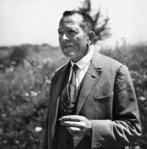 Robert Walser (1878–1956) was born into a German-speaking family in Biel, Switzerland. He left school at fourteen and led a wandering, precarious existence while writing his poems, novels, and vast numbers of the “prose pieces” that became his hallmark. In 1933 he was confined to a sanatorium, which marked the end of his writing career. Among Walser’s works available in English are Jakob von Gunten and Berlin Stories (available as NYRB Classics), The Tanners, Microscripts, The Assistant, The Robber, Masquerade and Other Stories, and Speaking to the Rose: Writings, 1912–1932.
 This story is told in the first person by a forty-five year old man named Germain who describes himself as being “soft in the head.” Germain tells us about his current circumstances and his life as well as his childhood and early years. He vividly describes his experiences in primary school with his teacher, “The strong get off on walking all over other people, and wiping their feet while they’re at it, like you would on a doormat. This is what I learned from my years at school. It was a hell of a lesson. All that because of some bastard who didn’t like kids. Or at least he didn’t like me. Maybe my life would have been different if I’d had a different teacher. Who knows? I’m not saying it’s his fault I’m a moron, I’m pretty sure I was one even before that. But he made my life a misery.” I don’t include very many quotes in my reviews, but when I read this part of the book I had tears in my eyes and I felt like someone punched me in the stomach.
 Born in Bordeaux in 1957, Marie-Sabine Roger has been writing books for both adults and children since 1989. Soft in the Head was made into a 2010 film, My Afternoons with Margueritte, directed by Jean Becker, starring Gerard Depardieu. Get Well Soon won the Prix des lecteurs de l’Express in 2012 and will be published by Pushkin Press in 2017.
 This book is a very slim volume and can be read in an hour or so. It attempts to answer the question that has been nagging historians and artists for centuries: Who, exactly, was the woman Mona Lisa that Da Vinci made so famous in his painting? In this plot it is a French aristocrat that becomes obsessed with the mysterious woman in Da Vinci’s painting.
 Alexander Lernet-Holenia was an Austrian poet, novelist, dramaturgist and writer of screenplays and historical studies who produced a heterogeneous literary opus that included poesy, psychological novels describing the intrusion of otherworldly or unreal experiences into reality, and recreational films.


 The Book Binder's Daughter