Category Archives: German Literature

Review: Cassandra by Christa Wolf

This title was published in 1983 in the original German and this English version has been translated by Jan van Heurck

My Review:
cassandraCassandra is most famous in Greek mythology for possessing the gift of prophecy but this unique gift came with one problem: no one ever believes her true predictions.  In Aeschylus’s Agamemnon, Cassandra says that she agreed to have sex with the God Apollo in exchange for the gift of prophecy, but when she went back on her promise and refused the Sun God’s advances, Apollo made sure that her prophecies would never be believed.  When she predicts the future her friends and family treat her as nothing more than a babbling and a raving mad woman.  I have a distinct memory of first translating the Agamemnon and how difficult Aeschylus’s Greek is to unpack.  But the parts in the narrative in which Cassandra is speaking were a nice break because oftentimes she just rants and raves; the various “oi” and “oimoi” noises she makes are a welcome respite from the complex grammatical structures of Aeschylus’s sentences.

Christa Wolf’s Cassandra is an ambitious novel in that it tries to cover the entire scope of the Trojan epic cycle by telling it through the eyes of this doomed and unlucky Trojan princess.  Priam, Hecuba, Helenus, Achilles, Aeneas, Troilus, Briseis, Calchas, Agamemnon, Menelaus, Polyxena and Paris, are just a few of the characters that make an appearance or are mentioned in Wolf’s narrative.  Cassandra, the narrator of this story,  is the daughter of Priam, King of Troy, and his first and most favored wife, Hecuba.  From a very young age Cassandra wants nothing more than to become a priestess of the God Apollo and possess the gift of prophecy.  But once she is given this gift she is subjected to a plethora of other misfortunes which lead to her tragic death.  Wolf’s narrative is so wide-ranging and covers so many characters and actions from the Trojan saga that it is impossible to mention everything she touches on in one review.  So I am going to write about the aspects of Wolf’s story that were the most striking and memorable for me.

In the original myths and stories involving the origin of the Trojan War, Paris, the prince of Troy, visits King Menelaus of Sparta and with the help of the Goddess Aphrodite, absconds with his wife Helen.  In order to get his wife back, Menelaus asks his warmongering brother, King Agamemnon of Mycenae, to help him get an army together, sack Troy, and find his wife.  Wolf makes her story less a matter of love, pride and recapturing a straying wife and instead makes the inception of the war more of a political issue.  Priam’s sister has been taken by the Greeks and there are three separate, and unsuccessful expeditions to bring her back; on the third and final ship, Paris sets sail with the other men and when he cannot get his aunt back he takes Menelaus’s wife instead.  Paris is portrayed as an arrogant and brash young man who uses the pretext of the expedition to take for himself a woman who is said to be the most beautiful in the world.  Christa’s Paris is much more bold than Homer’s Paris, but in both tales Paris has no forethought or concern for anyone other than himself.

When the Greeks attack Troy, Cassandra has already seen this event coming and predicted that it will destroy her home and her family.  She has a dream when she is a child that Apollo spits in her mouth and this is the sign that she can foretell the future but no one will believe her.  When she has one of her prophetic visions she foams at the mouth, has fits that mimic the symptoms of a seizure and drives everyone away from her because they think she is a babbling lunatic.  Cassandra’s narrative about her childhood, how she acquired her gift of prophesy, the destruction of Troy and its aftermath are all told in a stream-of-conscious narrative.  Wolf’s Cassandra constantly moves around between different time periods and this cleverly reflects the anxious ramblings of her tormented mind.  She oftentimes dwells on her earlier years when she was first given the ability to prophesy and became a priestess of the God Apollo.  She is King Priam’s favorite daughter and her position as favorite as well as her ability to predict the future cause her to have complicated relationships with her siblings, her mother, and other men in her life.

When Troy is sacked, all of the Trojan women who survive are divided up among the Greek Kings and taken back to Greece to become their household and sexual slaves.  Cassandra is taken back to Mycenae by King Agamemnon and her interactions with this narcissistic man cause her to reflect on the other complicated relationships she has had with men throughout her life.   Wolf portrays Cassandra as having a great desire to be a priestess of Apollo and remain a virgin, but even her desire to remain untouched is conflicted.  There is a strange scene that Wolf includes in which all of the young women in Troy are placed within the sanctuary of a temple and one by one they are chosen by Trojan youth for a ritual deflowering.  It is oftentimes the tendency for non-Greek, Eastern cultures to be portrayed as being more sexually open and even promiscuous.  In the Ancient Greek myths Priam is basically described as possessing a harem with multiple wives and fifty children. Even though this is not necessarily emphasized in Homer, Wolf seems to pick up on the sexual differences between the Greeks and the Trojans.  When Cassandra does finally become a priestess, she puts up with the head priest visiting her nightly for sexual trysts and she endures it because she pretends she is sleeping with Aeneas whom she loves very much.

Cassandra views Agamemnon as a self-centered, rash and dangerous man who is also sexually impotent.  In Cassandra’s eyes Achilles is not any better a man than Agamemnon and  she describes Achilles as a murderous, selfish brute who takes what he wants, including Cassandra’s sister Polyxena.  The only male in the story that Cassandra has any positive thoughts for is Aeneas, a Trojan youth who is the only hero to escape from Troy when it is burning.  In the ancient Greek myths Aeneas and Cassandra are cousins but they don’t have any real connections other than Cassandra’s prediction that Aeneas will escape Troy.  I am curious as to why Wolf chose Aeneas at the only male in the Trojan saga with any redeemable characteristics.  The depressed, hopeless, confused, Cassandra in Wolf’s narrative becomes a completely different person when Aeneas is around.  The only time when Cassandra has positive, loving thoughts are when she is around Aeneas:

At the new moon Aeneas came…I saw his face for only a moment as he blew out the light that swam in a pool of oil beside the door.  Our recognition sign was and remained his hand on my cheek, my cheek in his hand.  We said little more to each other than our names; I had never heard a more beautiful love poem.  Aeneas Cassandra.  Cassandra Aeneas.  When my chastity encountered his shyness, our bodies went wild.  I could not have dreamed what my limbs replied to the questions of his lips, or what unknown inclinations his scent would confer on me.  And what a voice my throat had at its command.

One final male in the story that is not portrayed in a positive light is Hector, the prince of Troy and first son and heir of King Priam.  In the Iliad he is, I would argue, the most heroic of the men on either side because he has a sense of honor and courage that no other warrior possesses.  So I was disappointed that Wolf refers to him as “Dim-Cloud” and Cassandra remarks, “A number of my brothers were better suited than he to lead the battle.”  To have veered so far off the mark from the Hector of the Iliad was disappointing to me.

When I teach about the God Apollo and Cassandra and her doomed gift of prophecy, my students always have a hard time with the fact that time and again Cassandra prophesies the truth but not a single person ever believes her.  My interpretation of Cassandra has always been that she represents that person who tells us the very thing we don’t want to hear about ourselves or our actions that we continue to ignore.  Cassandra is the classic case of being mad at and ignoring the person who tells us the truth and is honest but who we will cast aside anyway because the truth is too hard to bear.  Wolf writes a spectacular rendition of  Cassandra and brings to the forefront this allegory of ignoring our better judgement and the better judgement of others and suffering the negative consequences for it.

I could really go on and on about my impressions of Wolf’s writing and her exploration of the Trojan saga through the eyes of Cassandra.  I would love to hear what other readers have thought about this book.  What were the most memorable parts of the book for you?  Had you read any of the original myths before encountering this books?  Why do you think Wolf chose Aeneas as a companion for Cassandra?  What do you think of Wolf’s rendition of Cassandra?

About the Author:

c-wolfAs a citizen of East Germany and a committed socialist, Christa Wolf managed to keep a critical distance from the communist regime. Her best-known novels included “Der geteilte Himmel” (“Divided Heaven,” 1963), addressing the divisions of Germany, and “Kassandra” (“Cassandra,” 1983), which depicted the Trojan War.

She won awards in East Germany and West Germany for her work, including the Thomas Mann Prize in 2010. The jury praised her life’s work for “critically questioning the hopes and errors of her time, and portraying them with deep moral seriousness and narrative power.”

Christa Ihlenfeld was born March 18, 1929, in Landsberg an der Warthe, a part of Germany that is now in Poland. She moved to East Germany in 1945 and joined the Socialist Uni A citizen of East Germany and a committed socialist, Mrs. Wolf managed to keep a critical distance from the communist regime. Her best-known novels included “Der geteilte Himmel” (“Divided Heaven,” 1963), addressing the divisions of Germany, and “Kassandra” (“Cassandra,” 1983), which depicted the Trojan War.

She won awards in East Germany and West Germany for her work, including the Thomas Mann Prize in 2010. The jury praised her life’s work for “critically questioning the hopes and errors of her time, and portraying them with deep moral seriousness and narrative power.”

Christa Ihlenfeld was born March 18, 1929, in Landsberg an der Warthe, a part of Germany that is now in Poland. She moved to East Germany in 1945 and joined the Socialist Unity Party in 1949. She studied German literature in Jena and Leipzig and became a publisher and editor.

In 1951, she married Gerhard Wolf, an essayist. They had two children.


11 Comments

Filed under German Literature, Historical Fiction, Literature in Translation, Uncategorized

Tempus, Aevum, Aeternitas: a review of December by Alexander Kluge and Gerhard Richter

This title was published in the original German in 2010 and this English version has been translated by Martin Chalmers and published by Seagull Books.

My Review:
decemberDecember comes from the Latin word decem, meaning ten because in the original Roman calendar December was the tenth month of the year.  When two new months were added to the beginning of the Julian calendar, thus pushing back December to become the twelfth month, no one bothered to change the name.  As the month which concludes the Julian and Gregorian calendar years it is naturally a month of reflection, of looking back, of becoming more aware of the passage of time.  Kluge and Richter use this last month of the year for the inspiration behind their collection of stories and photographs; there is one entry for each day of the month in December and together the writings and art work serve as a philosophical and poetic commentary about time, fate, choice and even love.

The entries or pieces of writing for each day in December are a mixture of short story, poetry and philosophy.  The dates for the entries vary widely, from 12,999 B.C. to 2009 A.D.  Kluge does tend to favor the events of December 1941 and 2009 as many of the entries are set during one of these two years.  My favorite entry is the one for December 18th, 1941 entitled, “A WRONG DECISION IN WARTIME.”  Kluge describes Marita, the wife of the surgeon Dalquen, who had come to Berlin from her provincial town to stay at the Grand Hotel Furstenberg on Potsdamer Platz.  She falls in love with First Lieutenant Berlepsch but refuses to make love to him on that night because she had not wanted to prematurely hasten their relationship by engaging in one evening of unbridled passion.  Kluge writes, “Only three weeks later she would regret her decision.  The young officer fell in the fighting in northern Russia.”  Marita is deeply upset because she did not take the chance to be with the First Lieutenant when she was presented with a choice.  When Marita is faced with the opportunity later in the war to have one night of passion she takes it, and although it is not with Berlepsch whom she truly loved, she does not regret it.  Kluge’s last quotation in this story is very striking:

For one night full of bliss

 I would give my all

december-1

Kluge’s story about Marita and her fallen love brings up many more questions than answers.  Do we live our lives to the fullest and take advantage of every precious moment, whether there is a war or a crisis raging around us or not?  Do we take time to embrace and appreciate those whom we love?  And if we make the wrong choice is it irrevocable? Or can we find a way to learn from our mistakes and move on?

December is the month of the winter solstice in the northern hemisphere, so the cold and the snow and the shorter days feature  prominently in Kluge’s stories and in Richter’s photographs.  Another story that stands out is the one dated the 20th of December, 1832: “UNEXPECTED CONVERSION OF A HEATHEN.”  Dr. Wernecke has just helped a woman give birth in the village and is setting out through the snow and the woods to go back home.  Kluge writes:

At first he took the path which the villagers, either out of habit or out of superstition, had created as a kind of VILLAGE EXIT INTO DEAD NATURE, because in this hard-frozen winter such a ‘track’ led into nothingness.

As the doctor gets farther along on his snowy journey he becomes increasingly tired and bewildered.  He keeps on moving so he doesn’t freeze but he is becoming tired and disoriented.  The snow and the woods around him are closing in:

The endless expanse of snow produced a certain brightness in the night.  Wernecke could neither say ‘I don’t see anything at all’ nor ‘I see something.’ For that a clue would have been needed, a difference in the monotony of the snow-covered land.

december-2The doctor estimates that he has about four or five hours to live when suddenly he sees a faint, flickering light in the distance.  He isn’t sure if this light is a figment of his bewildered mind but he chooses to follow it anyway.  The light, which is indeed the very thing that saves him, was the lamp of the cathedral verger who at that precise moment was climbing the stairs of the cathedral to ring the nightly bells.

Dull-eyed, Dr. Wernecke nevertheless resolved to trust the light that had soon disappeared.  The light had guided his obstinate heart.  So the doctor found his way to the first houses of the town.

Because the good doctor is saved by this light, he, the “heathen” pays to have an iron lamp installed in the tower next to the bells.  Once again, Kluge poses many deep, philosophical questions with this brief story.  Why do we choose to follow certain paths and not others?  When a light appears in life do we choose to let it guide us, or do we let our obstinate heart convince us to take a less fortunate and unhappy path?  Do we choose to trust and to follow the light like Dr. Wernecke did, or do we ignore it at our own peril?

Each of the 39 photographs in the collection are a variation of trees in a forest that are covered with snow.  The photos are taken up close and give one the feeling of being closed in by the forest and the snow.  Dr. Wernecke’s description of his time in the snow-covered forest, as being able to see something and yet nothing at all, is a fitting description for Richter’s art.  In one picture there is, in the distance, a tiny image of a deer and in the very last photo in the collection a small cottage appears in a clearing through the trees.  Like Dr. Wernecke, can we make our way out of this claustrophobic woods and find that faint glimmer of light?

The second part of the book entitled, “CALENDARS ARE CONSERVATIVE” contains various discussions and meditations on calendars, time, and the passage of time.  One passage in particular caught my attention because of its reference to Latin words for time.  In “Tempus, Aevum, Aeternitas’, an Islamic astrophysicist from Bangladesh and a European ambassador who is a medievalist are discussing different kinds of time by using the Latin names for them.  TEMPUS is time associated with the clock, with checking our watches, it is earthly time that we are always fighting against.  AEVUM, however, is celestial time, experienced only by the angels or other celestial beings.  In Latin it can be literally translated as “Time regarded as the medium in which events occur, indefinite continuous duration, the time series.”  It is oftentimes translated as a “span of time,” a “generation,” or an “age.”  Finally AETERNITAS is brought up by the scholars which, they argue, is the sense of time experienced only by the highest divinity.  It is translated as “infinite time,” eternity,” or “immortality.”  This tricolon crescendo of time presented by the men makes us step outside ourselves and think about time as something other than that ticking clock on the wall or that alarm that wakes us up or that watch which is constantly staring up at us from our wrists.

Seagull Books has published another extraordinary, thought-provoking, beautiful book.  This book is worth owning not only for the literature, philosophy and poetry contained within, but the beautiful prints reproduced on glossy, heavy weight paper make it a very special piece.

About the Author:
Alexander Kluge is one of the major German fiction writers of the late- twentieth century and an important social critic. As a filmmaker, he is credited with the launch of the New German Cinema movement.

About the Artist:
Gerhard Richter is one of the most respected visual artists of Germany, and his seminal works include Atlas (1964), October 18, 1977 (1988) and Eight Grey (2002).

december-3


4 Comments

Filed under Art, German Literature, History, Literature in Translation, Seagull Books, Short Stories

Review: Medea—A Modern Retelling by Christa Wolf

This title was translated from the original German by John Cullen.

My Review:
medeaI have to admit that as a classicist I try to avoid retellings of ancients myths and texts because they never live up to the brilliance of the original authors.  I had passed over Wolf’s Medea and Cassandra for this very reason, but a fellow bibliophile with similar reading tastes to my own convinced me to give Wolf’s books a try and I am so glad that I did.

Jason is portrayed as the archetypal Greek hero in the ancient myths; he has unusual circumstances surrounding his birth, he is not raised by his parents but instead by a Centaur, he goes on a quest during which his strength and intelligence are greatly tested, and he has a complicated relationship with women.  Although, in Jason’s case it is actually one very powerful woman named Medea.  While on his quest with his fellow Argonauts, to get the Golden Fleece from King Aeëtes  in the dark, unknown city of Colchis, he encounters Medea.  Euripides and Seneca both portray Medea as a sinister and violent woman who uses her magic arts to get what she wants and to exact revenge on her enemies.  As she is leaving Colchis with Jason on the Argo, she chops up the body parts of her young brother so that their father, the King, has to stop his ship and collect the pieces of his son.  And when Jason breaks off his marriage with Medea to marry the young princess in Corinth, Medea makes him pay the price by murdering their children.

Wolf’s Medea is an intense, passionate,  assertive woman who questions and even challenges the power of two kings.  At home in Colchis, there is a movement among the lower classes, which is supported by Medea, to invoke an old law that will force King Aeëtes to step down in deference to his son, the next in line for the throne.  It is Medea’s father who is responsible for her brother’s murder because in eliminating his heir to the throne he rejects the will of the people and retains his crown.  Medea is so sickened by her father’s choice to murder his own child that when the Argonauts arrive in Colchis she views her chance to help Jason as a means of escape from the King’s absolute rule.  Medea betrays her father, helps Jason capture the Golden Fleece, and on the way back to Iolcus on the Argo she scatters the bones of her murdered brother as a type of funeral service and tribute to him.

Wolf’s begins each chapter in her Medea with a quotation fitting for the character that is speaking;  many of the quotes that Wolf chooses are from the ancient plays of Seneca and Euripides.  But the quotations that are especially striking are those that Wolf borrows from René  Girard’s book Violence and the Sacred.  Leukon, an astronomer for King Creon who sympathizes with Medea and tries to warn her about the treachery of her enemies, has a speech during which he recounts seeing an angry mob of citizens who chase Medea through the streets of Corinth.  A rumor that has been started about Medea that she is the cause of Corinth’s misfortunes and that she was the one who murdered her brother.  Wolf quotes this fitting passage from Girard:

People want to convince
themselves that their misfortunes
come from one single responsible person
who can easily be got rid of.

The people of Corinth insist that, despite a lack of evidence, Medea is the cause of all their evils and she will be their scapegoat.  They distrust foreigners, especially the darker skin people from Colchis whose traditions and culture they do not understand.  The Colchians who came to Corinth with Medea are referred to as refugees, are marginalized and forced to live in poor conditions in a seedy side of town.  Medea is viewed as the leader of these unwanted refugees and so all of the Corinthians’ frustration is misdirected at her and they believe that by eliminating her that their city will once again be prosperous.

In addition, Wolf’s portrayal of Jason shows a man who is much more conflicted than the archetypal hero of Greek myth.  When Jason and Medea find themselves guests of King Creon there is a deep level of mistrust for Colchians, and Medea in particular with her gifts of healing and astrology.  King Creon ejects Medea and her two children from the palace and she is forced to live in a hut adjacent to the royal dwelling.  But Jason still loves her deeply and craves the physical and sexual attentions that he gets from Medea.  As Corinth begins to suffer a series of catastrophes such as drought, earthquake and plague, Medea’s enemies conspire against her to help make her the scapegoat for all of the evils that Corinth is suffering.  King Creon, who had secretly sacrificed his youngest daughter to keep his throne, is on the verge of being exposed by Medea’s questions and investigations.  In the end, Jason chooses to side with the King in order to save himself.  But Wolf shows us a Jason who is truly conflicted, weeps openly, and whose decisions do not come lightly.

Finally, something must be said about Wolf’s brilliant writing.  The book is a series of eleven monologues, each given my a different character who is involved in this series of circumstances in Corinth.  Wolf is a master at altering her writing to reflect the different characters which she is trying to portray.  Medea’s monologues, for instance,  are very eloquent and intelligent.  She understands the impossible circumstances that surround her and she is very reflective about what brought her to this place.  Jason, on the other hand, is brash and his dialogue has more short sentences and imperatives.  One of the other monologues that is masterfully written is that of Glauce, King Creon’s youngest daughter.  She is very naïve and immature and the run on sentences in her monologue reflect her confusion and misunderstanding about what is going on around her.

I can say that Wolf’s retelling of this ancient text has not only impressed me but has also given me a renewed interest in revisiting the original authors and viewing them from a new perspective.

About the Author:
c-wolfAs a citizen of East Germany and a committed socialist, Christa Wolf managed to keep a critical distance from the communist regime. Her best-known novels included “Der geteilte Himmel” (“Divided Heaven,” 1963), addressing the divisions of Germany, and “Kassandra” (“Cassandra,” 1983), which depicted the Trojan War.

She won awards in East Germany and West Germany for her work, including the Thomas Mann Prize in 2010. The jury praised her life’s work for “critically questioning the hopes and errors of her time, and portraying them with deep moral seriousness and narrative power.”

Christa Ihlenfeld was born March 18, 1929, in Landsberg an der Warthe, a part of Germany that is now in Poland. She moved to East Germany in 1945 and joined the Socialist Uni A citizen of East Germany and a committed socialist, Mrs. Wolf managed to keep a critical distance from the communist regime. Her best-known novels included “Der geteilte Himmel” (“Divided Heaven,” 1963), addressing the divisions of Germany, and “Kassandra” (“Cassandra,” 1983), which depicted the Trojan War.

She won awards in East Germany and West Germany for her work, including the Thomas Mann Prize in 2010. The jury praised her life’s work for “critically questioning the hopes and errors of her time, and portraying them with deep moral seriousness and narrative power.”

Christa Ihlenfeld was born March 18, 1929, in Landsberg an der Warthe, a part of Germany that is now in Poland. She moved to East Germany in 1945 and joined the Socialist Unity Party in 1949. She studied German literature in Jena and Leipzig and became a publisher and editor.

In 1951, she married Gerhard Wolf, an essayist. They had two children.

23 Comments

Filed under German Literature, Literature in Translation

Review: Twenty-Four Hours in the Life of a Woman by Stefan Zweig

I received a review copy of this title from Pushkin Press via Netgalley.  This novella was published in the original German in 1925 and this English version has been translated by Anthea Bell.

My Review:
twenty-four-hoursStefan Zweig is a master at writing short stories that are full of descriptive details, interesting characters and surprise plot twists.  It is truly amazing that he manages to do this all within the span of 100 pages.  The setting of this short piece is a hotel on the French Riviera where a group of upper class citizens from various countries are vacationing.  A shocking social incident has occurred within their social circle and this scandal has all of the guests arguing and gossiping.
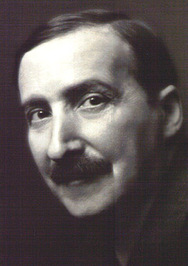
The narrator, who never gives us his name, is staying on the Riveria and interacts with the other guests, incluing a German husband and wife, a “portly” Dane, an Italian married couple, and a distinguished and older English lady.  This group of strangers usually just engage in small talk and mild jokes while eating their meals, but the disappearance of Madame Henriette has disturbed their peaceful routine.  A young, handsome and garrulous Frenchman arrived at the hotel on the previous day and captivated everyone’s attention.  Zweig shows his skill at describing characters with just the right mix of adjectives and metaphors:

Indeed everything about him was soft, endearing, charming, but without any artifice or affectation.  At a distance he might at first remind you slightly of those pink wax dummies to be seen adopting dandified poses in the window displays of large fashion stores, walking-stick in hand and representing the ideal of male beauty, but closer inspection dispelled any impression of foppishness, for—most unusually—his charm was natural and innate, and seemed an inseparable part of him.

The shock comes when Madame Henriette, the wife of a wealthy businessman, disappears with the Frenchman after knowing him for only a couple of days.  All of the guests at the hotel are very quick to condemn and judge Henriette for throwing away her marriage, her children and her reputation.  The narrator is the only person who comes to Henriette’s defense and reminds the guests that it might have been possible that Henriette was caught in a “tedious, disappointing marriage” and thus had a valid reason for running off with a young man who was virtually a stranger.  This heated debate has a profound effect on Mrs. C, the distinguished English lady, who requests a private meeting with the narrator.

The story that Mrs. C. tells the narrator involves an incident in her life when she was forty-two, some twenty years earlier.  The incident had left her so embarrassed and mortified that she never told a word of it to another soul, until now.  Henriette’s impulsive decision to run away with the Frenchman has brought up old memories for Mrs. C. and she wants to unburden her soul from the guilt of her own folly.  Mrs. C. tells the narrator that, as a widow who lost her husband to an unexpected illness, she traveled around Europe while grieving for her beloved spouse.  Alone and miserable, she finds herself in Monte Carlo, one of her husband’s favorite places for entertainment, and meets a twenty-four-year old man with a serious gambling problem.

The events that unfold between Mrs. C. and the gambler bring up feelings of passion, anger, redemption, impulsivity and regret.  I don’t want to give away what happens between the widow and the young man, but I will say that Zweig has a gift for writing shocking and unexpected plot turns.  I never would have guessed the ending to Mrs. C’s story and I was riveted until the very last page of this short book.  Zweig shows us that he is an astute observer of human emotions; love, loneliness, passion and sexual desire can make us lose our minds and do irrational things which are completely out of character.

One final aspect of Zweig’s writing that must be mentioned is his careful attention to detail, even in a short work like this novella.  When Mrs. C. arrives at the casino, she describes the chiromancy—guessing a person’s moves by observing their hands— that her husband had taught her.  This English woman spent hours observing the players’ hands which are much more telling than facial expression.  Zweig writes about Mrs. C’s practice of chiromancy:

All those pale, moving, waiting hands around the green table, all emerging from the ever-different caverns of the players’ sleeves, each a beast of prey ready to leap, each varying in shape and colour, some bare, others laden with rings and clinking bracelets, some hairy like wild beasts, some damp and writhing like eels, but all of them tense, vibrating with a vast impatience.

Zweig’s description of the players via their hands is absolutely fascinating and absorbing and is another surprising gem found within the pages of this short piece.

November is German Lit. Month hosted by Lizzy’s Literary Life and Beauty is a Sleeping Cat.  The full list of reviews for this event can be found here: http://germanlitmonth.blogspot.co.uk/ and on Twitter #GermanLitMonth.

About the Author:
Stefan Zweig was one of the world’s most famous writers during the 1920s and 1930s, especially in the U.S., South America and Europe. He produced novels, plays, biographies and journalist pieces. Among his most famous works are Beware of Pity, Letter from and Unknown Woman and Mary, Queen of Scotland and the Isles. He and his second wife committed suicide in 1942.

Zweig studied in Austria, France, and Germany before settling in Salzburg in 1913. In 1934, driven into exile by the Nazis, he emigrated to England and then, in 1940, to Brazil by way of New York. Finding only growing loneliness and disillusionment in their new surroundings, he and his second wife committed suicide.

Zweig’s interest in psychology and the teachings of Sigmund Freud led to his most characteristic work, the subtle portrayal of character. Zweig’s essays include studies of Honoré de Balzac, Charles Dickens, and Fyodor Dostoyevsky (Drei Meister, 1920; Three Masters) and of Friedrich Hlderlin, Heinrich von Kleist, and Friedrich Nietzsche (Der Kampf mit dem Dmon, 1925; Master Builders). He achieved popularity with Sternstunden der Menschheit (1928; The Tide of Fortune), five historical portraits in miniature. He wrote full-scale, intuitive rather than objective, biographies of the French statesman Joseph Fouché (1929), Mary Stuart (1935), and others. His stories include those in Verwirrung der Gefhle (1925; Conflicts). He also wrote a psychological novel, Ungeduld des Herzens (1938; Beware of Pity), and translated works of Charles Baudelaire, Paul Verlaine, and mile Verhaeren.

Most recently, his works provided inspiration for the 2014 film ‘The Grand Budapest Hotel’

12 Comments

Filed under Classics, German Literature, Novella, Pushkin Press

Review: The Empress and the Cake by Linda Stift

I received a review copy of this title from Peirene Press.  The book was published in the original German in 2007 and this English version has been translated by Jamie Bulloch.

My Review:
the-empress-and-the-cakeThis psychological thriller starts innocently enough with a kind old woman offering to split a cake with a young woman she meets outside of a bakery in Vienna.  But Stift’s novella becomes gruesome, disturbing and haunting very quickly.

The old woman, whose name is Frau Hohenembs, is oddly dressed in all black and the young woman discovers that the old woman’s apartment is even stranger.  Frau Hohenembs has an extensive collection of pictures and mementos of the Empress Elizabeth of Austria or Empress Sissi as many referred to her.  The apartment is also packed with furniture, two caged parrots, an enormous dog and a portly servant named Ida. The young woman patiently observes these strange women while she has tea and eats her share of Gugelhupf.  The first shocking twist in the book happens when the young woman returns home to her own flat, finishes the rest of her Gugelhupf as well as everything else in her refrigerator and forces herself to throw up the entire contents of her stomach.

googlehupf_10564761126

        Gugelhopf Photo by Dirk Vorderstraße

There are two eerie and gruesome threads that run throughout the story, the first of which is an obsession with food, weight and vomiting. Stift vividl describes the narrator’s grisly decent into the full grip of bulimia and her constant obsession with the cycle of binging and purging:

I was learning a new vomiting technique and was eating by colours.  I started with chemical sweets such as bright-green gummy frogs or pink foam bacon bits or claret so-called laces and snakes.  These took time to mix with the mush of food that followed, which meant that my vomiting could be monitored.  I would puke until I’d arrived at this tough, lurid mass, so I could be sure I’d got everything out.

The narrator also weighs herself incessantly every few minutes on a pair of scales she purchases.  She becomes obsessive about her weight and the size of her stomach.  She is so consumed with food and vomiting that she stops working and only goes out of her flat every few days to go on a grocery shopping binge.  She reveals throughout the course of the story that her mother and maternal grandfather also had an unnatural preoccupation with being thin and this fixation on weight affected her from a  very early age.  Her deep-seated psychological issues make her easy prey for the manipulative and controlling Frau Hohenembs.

Empress Sissi 1862 by Ludwig Angerer

       Empress Sissi 1862 by Ludwig Angerer

The second theme that is woven throughout the narrative is that of control, both losing it and gaining it over others.  Frau Hohenembs has an obsession with the Empress Sissi and pulls the young narrator into her plots to steal relics and artifacts that once belonged to the Empress.  Frau Hohenembs first invites the narrator to a picnic after which they take a bizarre tour through a sex museum.  Stift is a master at slowly developing the ways in which the older woman gains control over the younger woman’s life.  At first she can’t say no to innocent outings that involve picnics and museums.  The next significant turning point in this disturbing relationship is when Frau Hohenembs uses the young woman to steal a duck press from another museum in Vienna.  This rather macabre kitchen instrument is used to squeeze the blood, bone marrow and other juices out of duck carcasses. Frau Hohenembs loves to drink the meat juices extracted from the press and throughout the novel she has Ida use the press so that she can always have her favorite drink on hand.

Frau Hohenembs uses this theft of the duck press to gain more control over the narrator’s life.  She tells the young woman that if she doesn’t go on outings with her or help her out on her secret missions then she will report her to the police.  Frau Hohenembs becomes progressively sinister and appears to have connections around Vienna that would help her to have the young woman prosecuted.  The final, and most disturbing, theft that the trio carry out is stealing a cocaine syringe that belonged to the Empress Sissi from a pathology museum in Vienna.  Frau Hohenembs then instructs the young woman on how to use it properly to inject the old woman with daily doses of cocaine.

By the end of the novella, the young narrator is trapped and completely controlled, not only by her eating disorder but also by this strange old woman and her maid.  Straft is a master at building suspense and presenting an unexpected and frightening conclusion to her psychological thriller.

This is the third and final installment in the Peirene Fairy Tale series.  All three books in the collection are very different but are all excellent.  I don’t think I can choose a favorite from the series.  I have also reviewed the other two Fairy Tale books:

Review: Her Father’s Daughter by Marie Sizun

Review: The Man I Became by Peter Verhelst

About the Author:
l-stiftLinda Stift in an Austrian writer. She was born in 1969 and studied Philosophy and German literature. She lives in Vienna. Her first novel, Kingpeng, was published in 2005. She has won numerous awards and was nominated for the prestigious Ingeborg Bachmann Prize in 2009.

 

8 Comments

Filed under German Literature, Literature in Translation, Novella