
This is my second review for National Poetry Month and is, once again, another unique volume published by Seagull Books. The translator of this volume is Mark Hutchinson.
My Review:
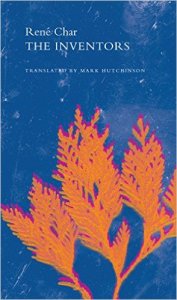 As I first read the introduction to this volume, the piece of information that stuck out to me immediately was that Char was influenced by Heraclitus, the pre-Socratic philosopher. Char imitates Heraclitus’ style of short and puzzling works as well as his theme of strife. The pre-Socratic course I took in graduate school was one of the most challenging yet rewarding courses in my career as a student. The Ancient Greek, which is fragmentary, is difficult to put together and even more difficult to analyze when one has come up with an English version. Heraclitus acquired the nickname “The Obscure” for good reason. I had the same feelings, both of obscurity and difficulty, as I was reading Char.
The poems are in various lengths and some of the are not poems at all, but actually prose that still read like poems. “Pontoneers” is an excellent example of a shorter work in the Heracletian style:
Two riverbanks are needed for truth: one for our outward
journey, the other for truth’s return. Paths that soak up their
mist. That preserve our merry laughter intact. That, even when
broken, are a haven for our juniors, swimming in icy waters.
I could spend a lifetime trying to unpack these few short lines and each time I look at them I find something different. They are reminiscent to me of Heraclitus’ famous line about never being able to step into the same river twice. But here Char reminds us of the ever-changing nature of our existence by posing two rivers and suggesting that what we experience, our own personal truth, may be different depending on which path we take.
Char struggles with the idea of existence and whether or not something of us serves in an afterlife. Sometimes he comes across as a Stoic, such as in these few lines from “Loins.”
In taking leave of the world, we return to what was out there
before the earth and stars were formed; to space, that is. We
are that space, in all its prodigality. We return to aerial day and
its black rejoicing.
The Stoic idea that something of us, of our spirit, survives seems to be lurking in these lines. But there are also times when I thought that Char leaned toward the Epicurean. A line in “How Did I Ever Get this Late?” stood out to me as particularly Epicurean. He imagines a deity that sets the human experience in motion but then steps back and has nothing else to do with its own creations. The “Master Mechanic” watches his own chaos for his amusement:
In the immense community of the heavely clock
face, the Master Mechanic, it would seem, has greased the
motors and slipped away, chuckling, to amuse himself elsewhere.
This volume of poetry is nearly impossible to write a coherent review for. The selections that are chosen for this edition are a sampling of the poet’s wide range of styles and topics. Char’s enigmatic messages and obscure writing style are as difficult to unpack as Heraclitus. But this is absolutely a volume that any lover of poetry will want to have on his or her shelf. I find that the most challenging volumes of poetry are the most rewarding.
Finally, I have to say something about beautiful book jackets that are all designed by Sunandini Banerjee of Seagull Books. Each volume is wonderfully colorful and captures the spirit of the poems contained within.
About the Author:
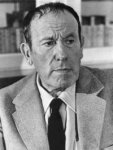 He spent his childhood in Névons, the substantial family home completed at his birth, then studied as a boarder at the school of Avignon and subsequently, in 1925, a student at L’École de Commerce de Marseille, where he read Plutarch, François Villon, Racine, the German Romantics, Alfred de Vigny, Gérard de Nerval and Charles Baudelaire.
Char was a friend and close associate of Albert Camus, Georges Bataille and Maurice Blanchot among writers, Pablo Picasso, Joan Miró and Victor Brauner among painters.
 This collection of poems begins with a series of short pieces that have some common themes, the most striking of which is a reflection on memory. The poems appear to the reader as snippets of the poet’s memory as he is trying to reflect on pieces of his life that have passed. Sometimes the images are very clear and precise. For example, the end of one poem reads:
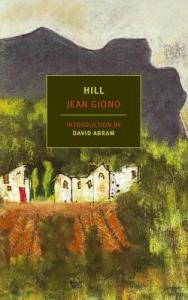 Four families live quiet and simple lives at the foot of a hill in Provence in the early twentieth century. Their small community consists of four white houses and a small shack for an old bachelor that also lives among these peasants. Their days consist of working the land, drinking wine and telling stories. But their bucolic life is threatened when day when a black cat crosses their paths.
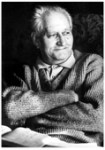 Jean Giono, the only son of a cobbler and a laundress, was one of France’s greatest writers. His prodigious literary output included stories, essays, poetry,plays, filmscripts, translations and over thirty novels, many of which have been translated into English.
 Even though this book is a fictional account of the process of a heart transplant I learned quite a bit of information about the entire, complex procedure. The storyline in the book takes place over a twenty-four hour period that begins with a surfing adventure. Simon and his two best friends have woken up at the crack of dawn to pursue their favorite pastime, chasing waves. I enjoyed the description of their love for this sport and how they go about finding the best waves. They are young, fearless, and don’t have a care in the world which makes the tragedy that happens to Simon all the more shocking and upsetting.
 Maylis de Kerangal is a French author. Raised in Le Havre, Maylis de Kerangal went on to study history and philosophy in Rouen and Paris. She worked at Paris-based Éditions Gallimard, then travelled in the United States, and went back to studies at the School for Advanced Studies in the Social Sciences.
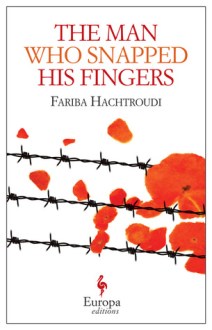 This intense story is told in alternating views of two people who survived the brutality of a fictional totalitarian regime called the Theological Republic. Although the homeland of these two characters is fictional, it is evident from clues in the text that this country is in the middle east and that both characters are refugees somewhere in Russia. The female character, Vima, was know in the republic as their most stubborn political prisoner and given the name Bait 455. Vima is arrested and repeatedly raped and tortured by her captors who are trying to get information about her husband’s political subterfuge. Vima’s love and devotion for her husband runs so deep that the only words she ever speaks during these torture sessions is a defiant, “No.” One day, without any warning, a high ranking official interrupts one of these torture sessions by snapping his fingers and Vima is rescued.
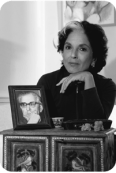 Fariba Hachtroudi was born in 1951 in Tehran. She comes from a family of scholars and professors. Her paternal grand-father was a religious leader who supported the constitutionalists in 1906, against other religious leaders who advocated for governance by Sharia law and the absolute rule of God as a monarchic authority.


 The Book Binder's Daughter