Category Archives: Classics

A Father’s Day Review: Seamus Heaney’s Translation of Aeneid VI

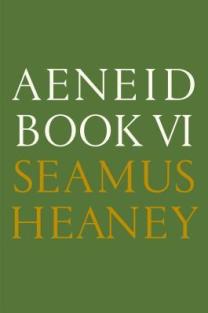
Heaney Aeneid VIWhen I bought this translation of Aeneid VI and read Heaney’s introduction, I thought it would be a fitting review on the blog for Father’s Day.  In the introduction to the translation, Heaney says that he gravitated towards this book of the Aeneid when his own father who passed away shortly before he began his translation.  The Aeneid is full of father and son relationships and Heaney recognizes that Aeneid VI in particular highlights the special relationship between Vergil’s hero and his father Anchises.

As Troy is burning because of the Greek treachery of the horse, Aeneas manages to escape the city while carrying his elderly father on his back.  Aeneas could have easily left the old man behind, but he would never have considered abandoning his parent.  As Aeneas is sailing the Mediterranean in search of a new home, Anchises eventually succumbs to a peaceful and natural death.  In Book VI, Aeneas tells the priestess of Apollo that his greatest wish is to see his father and have one more conversation with him.

In these shadowy marshes the Aceron floods

To the surface, vouchsafe me one look,

One face-to-face meeting with my dear father

Point out the road, open the holy doors wide.

On these shoulders I bore him through flames

And a thousand enemy spears. In the thick of fighting

I saved him and he was at my side then

On all my sea-crossings, battling tempests and tides

A man in old age, worn out, not meant for duress.

Most men would not have dared to venture into the land of the dead to have a last conversation, but Aeneas is no ordinary man and the relationship with his father was no ordinary relationship.  Aeneas must first visit the Sibyl of Cumae, the priestess of Apollo, to get instructions on how to approach and gain access to the land of the dead.  Aeneas knows that this undertaking is dangerous and that very few men or heroes have succeeded in traveling down to the underworld and then regaining access to the land of the living.

Aeneas sees awful things on his journey to the nether regions.  He witnesses countless souls standing on the banks of the river Styx trying to gain passage on Charon’s boat to bring them across to their final, peaceful resting places.  He also witnesses the souls of men being tortured and punished in Tartarus; these men were horrible and wicked in their earthly lives and the Sybil tells him that the punishments being doled are fitting for their crimes.  But witnessing all of this sorrow and horror is worth it to Aeneas just to have that one final conversation with his father.

When Aeneas finally sees Anchises, his father is in the Elysian Fields, the place where good and kind and blessed souls wander in peace.  Anchises’ role, like that of any good father,  becomes that of mentor, of cheerleader, of counselor to his son who still has many challenges in front of him.  Anchises shows Aeneas that the result of his efforts and tribulations will be a progeny which the entire world will celebrate and revere.  It is Anchises’ encouraging words that Aeneas uses as inspiration to embark on the second half of his journey, on the part of the story to which Vergil refers as arma.

Seamus Heaney’s translation of Aeneid VI is poetic and beautiful.  It adheres to the spirit of the original Latin while rendering Vergil’s words into a graceful and elegant story in English.  For those who have wanted to read Vergil’s epic poem but find the idea of reading all twelve books too daunting, Heaney’s translation of Aeneid VI serves as the perfect introduction to this Latin classic.

4 Comments

Filed under Classics

Review: Mona Lisa by Alexander Lernet-Holenia

I received a review copy of this title from Pushkin Press.  The book was originally published in German in 1937 and this English version has been translated by Ignat Avsey

My Review:
Mona LisaThis book is a very slim volume and can be read in an hour or so.  It attempts to answer the question that has been nagging historians and artists for centuries: Who, exactly, was the woman Mona Lisa that Da Vinci made so famous in his painting?  In this plot it is a French aristocrat that becomes obsessed with the mysterious woman in Da Vinci’s painting.
In 1502, King Louis XII of France has dispatched his Marshal Louis de La Trémouille and a small army of men to Florence in order to acquire fine art.  They, of course, stop at Leonardo’s famous home and workshop on their artistic quest.  Leonardo is a humorous figure in the brief plot as he is portrayed as a man with a very short attention span.  He goes from one project to the next without ever completely finishing anything.   As Trémouille and his men are wandering around Leonardo’s home, one of them discovers a painting of a woman behind a curtain.  Leonardo assures the young nobleman,  Bougainville, that the painting is unfinished and not worth so  much attention.  But Bougainville is instantly obsessed with the woman in the painting and has convinced himself that he is desperately in love with her.

The only facts about Mona Lisa that Bougainville can get out of Leonardo is that she was the wife of a man named Giocondo and died a couple of years ago when there was an outbreak of plague in the city.  Bougainville cannot believe that this amazing woman is dead so he goes to visit her grave at Santa Croce.  The small size of the space in which she is supposed to be buried convinces him that she could not possibly be buried in this tomb.  He gathers together a few of his men and comes back to the church under the cover of darkness and digs up Mona Lisa’s grave.

When Bougainville finds that her tomb is in fact empty he is determined to figure out this mystery and is convinced that she is still alive.  His efforts to find her cause mayhem and fighting between the Florentines and the French.  Bougainville believes that Giocondo, Mona Lisa’s husband, is holding her hostage somewhere in the city and the French nobleman does some rash and brazen things to find her.  He is certain beyond a doubt that she will be his lover either in this life or the next.

I thoroughly enjoyed this short book because of the characterization of Da Vinci and the little mystery surrounding the empty tomb of Mona Lisa.  When written records and archaeological evidence are scarce it is amusing to project our own stories onto the lives of famous men from generations past.

About the Author:
A LernetAlexander Lernet-Holenia was an Austrian poet, novelist, dramaturgist and writer of screenplays and historical studies who produced a heterogeneous literary opus that included poesy, psychological novels describing the intrusion of otherworldly or unreal experiences into reality, and recreational films.
5 Comments

Filed under Classics, German Literature, Novella

Review: Grand Hotel by Vicki Baum

I received a review copy of this title from the New York Review of Books.  The original book was published in 1929 in German and this English version has been translated by Basil Creighton.

My Review:
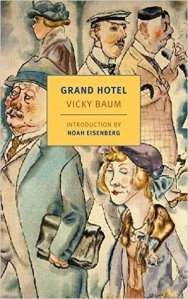
Grand HotelThe Grand Hotel is the place to stay for anyone who wishes to be surrounded by luxury and high society in 1920’s Berlin.  The guests that have all checked into the hotel in March of 1929 are an interesting mix of misfits whose stories all collide in a cleverly intertwined plot.

The first character to whom we are introduced is Dr. Otternschlag.  He sits for hours each day reading the paper and watching people go in and out of the revolving doors of the hotel.  He asks the porter several times if a letter has come for him and it is sad that no letters ever arrive for this lonely man.  He suffered a horrible injury during World War I which has left his face horribly scared.  He is utterly lonely, sad and has no zest for life.  He is the absolute opposite of Baron Gaigern who is also a guest at the hotel.

The Baron wears the finest clothes, has impeccable manners, is charming and extremely handsome.  He enjoys life to its fullest with gambling, fast cars, and lots of women.  But little does everyone know that the Baron is actually a petty thief and has no money other than that which he steals from his unsuspecting victims.  He latest mark is an aging ballerina named Grusinskaya whose famous string of pearls are said to be worth over 500,000 marks.  He has been secretly following the dancer around so that he can best ascertain how to get his hands on those pearls without being caught.  His plan for the heist is one of the most amusing and thrilling parts of the plot.  In the course of carrying out his carefully laid out plan, the unexpected happens to the normally cool and collected Baron–he falls in love with the woman who is supposed to be his victim.

The next person to check into the Grand Hotel is Otto Kringelein who is a lowly and badly paid clerk from a small town.  He is very sick and has only been given a few weeks to live so he gathers up all of his life savings, leaves his miserable wife and books a room at the hotel where he intends to have an exciting adventure before he passes away.  When his boss, Mr. Preysing, also checks into the hotel, he won’t let this angry and horrible bully spoil his fun. Kringelein finds a companion in the doctor for a while and even goes to the ballet with him.  But it is not until Kringelein meets up with the Baron that he really starts to feel alive.  The adventures that the Baron takes this provincial and naïve man on, which include boxing, gambling and flying, are absolutely hilarious.

The final adventure that Kringelein takes is of his own making as he comes to the aid of a beautiful young woman.  The story ends well for Kringelein even though it is still likely that he doesn’t have long to live.  He, like many others, checked into the Grand Hotel, as a solitary misfit.  But his exploits with the other guests turn him into a more worldly and confidant man who yearns to experience all that life has to offer.  The New York Review of Books has managed to reissue another fantastic classic that I devoured in just a few sittings.  I can’t recommend this book highly enough.

About the Author:
Vicki BaumVicki Baum (penname of Hedwig Baum) was born in a Jewish family in Vienna, Austria. She moved to the United States in 1932 and when her books were banned in the Third Reich in 1938, she started publishing in English. She became an American citizen in 1938 and died in Los Angeles, in 1960.

24 Comments

Filed under Classics, German Literature, Literature in Translation, New York Review of Books, Summer Reading

Review: The Village by Marghanita Laski

My Review:
The VillageThis novel opens in 1945 on the day in which the end of World War II has just been announced in the small village of Priory Dean.  Everyone is celebrating and dancing in the streets but Martha Trevor and Edith Wilson still show up to their post duty at the Red Cross.  During the course of their conversation we learn that they are from very different social classes; Martha is part of the upper-class gentry that live on the Hill in town and Edith is part of the working class families that live on the other end of town.  At one point Edith worked as Martha’s housekeeper before Martha’s family hit some financially hard times.

The war was able to break down these long-standing class barriers and allowed people to mingle who otherwise would not have anything to do with one another in social situations.  During the war the town holds a series of dances to which all members of the town, regardless of social status, are able to attend.  These are just the circumstance under which Edith’s son, Roy and Martha’s daughter, Margaret are able to meet.  The very last war-time dance is Margaret’s first real social outing and she feels awkward and unsure of herself until Roy asks her to dance with him.

Laski provides us with a full picture of life in a small English town in the mid-twentieth century.  In addition to the Wilson’s and the Trevor’s we also get the town spinster, Miss Porteous, a retired school mistress, and her sidekick, the town gossip, Miss Beltram.  The town physician, Dr. Gregory and the town pastor, Rev. Robinson are also important figures in this village.  Finally, the town “outsiders,” the Wetheralls, who move into the largest house in town also feature prominently in the action.  There is a complete cast of characters representing the gentry and the working class and Laski provides a list of these characters with descriptions in the index which is very helpful to remember everyone that appears in the plot.

Once the war is over, everyone goes back to their proper place in town and it is no longer acceptable for upper-class and working-class citizens to interact with one another.  Martha Trevor is particularly adamant about not mixing with anyone outside of her social class.  She is also bitter and angry that she can no longer afford hired help to run her household; she must scrub her own floors and wash her own laundry which she finds beneath her lot in life.  Martha often takes out her frustration on her oldest daughter Margaret whom she feels is not pretty or clever.  Martha fears that Margaret will never be able to attract a husband or find employment that is worthy of her high social rank in society.

The relationship that develops between Margaret and Roy is sweet and romantic.  Because they are forbidden to have anything to do with each other due to their different social classes, they meet each other in secret.  They go to the movies and dinner together and then Roy starts to show up to Margaret’s place of employment every day just so he can spend an hour with her at lunch.  The culminating romantic interlude they have during which they confess their love and become engaged involves a bike ride and a picnic in the countryside.  Roy is kind, gentle, respectable and has a great job as a printer.  He is the perfect husband but Margaret’s parents are angry when they find out because of Roy’s lower social position.

This story has elements of Ovid’s Pyramus and Thisbe as well as Shakespeare’s Romeo and Juliet.  Even though the town is scandalized by the intermarriage of this sweet couple, the outcome for Roy and Margaret is much happier than these other star crossed lovers.

This is the third Laski title that I have read from Persephone Books and my favorite of the three.  Here are the links to my other two Laski reviews:

Review: To Bed with Grand Music by Marghanita Laski

Review: Little Boy Lost by Marghanita Laski

Please visit Persephone’s website for more information on these titles as well as their selection of wonderful British Classics: http://www.persephonebooks.co.uk/

About the Author:
M LaskiEnglish journalist, radio panelist, and novelist: she also wrote literary biography, plays, and short stories.

Lanksi was to a prominent family of Jewish intellectuals: Neville Laski was her father, Moses Gaster her grandfather, and socialist thinker Harold Laski her uncle. She was educated at Lady Barn House School and St Paul’s Girls’ School in Hammersmith. After a stint in fashion, she read English at Oxford, then married publisher John Howard, and worked in journalism. She began writing once her son and daughter were born.

A well-known critic as well as a novelist, she wrote books on Jane Austen and George Eliot. Ecstasy (1962) explored intense experiences, and Everyday Ecstasy (1974) their social effects. Her distinctive voice was often heard on the radio on The Brains Trust and The Critics; and she submitted a large number of illustrative quotations to the Oxford English Dictionary.

An avowed atheist, she was also a keen supporter of the Campaign for Nuclear Disarmament. Her play, The Offshore Island, is about nuclear warfare.

14 Comments

Filed under British Literature, Classics, Persephone Books

Review: The Birds by Tarjei Vesaas

I received an advanced review copy of this title from Archipelago Books through Edelweiss.  This was published in the original Norwegian in 1957 and this English version has been translated by Torbjørn Støverud and Michael Barnes.

My Review:
The BirdsThis book was an unexpected surprise that pulled at my heart strings.  Mattis and his sister Hege live in the Norwegian countryside in a simple cottage by a lake.  Mattis is mentally challenged and he is constantly attempting to navigate a world that he doesn’t understand and that doesn’t understand him.  He has the mind of a child; he becomes excited at the simplest things like the woodcock which flies over their cottage.  He has a deep fear of abandonment and is afraid that his sister, who is his only caretaker, can be snatched from him at any moment.  And when he cannot make others understand him he becomes bewildered and frustrated.  I became completely absorbed in Mattis’ simple and constricted world.

The hardest parts of the story to read were those in which Mattis goes out into the surrounding countryside to look for work.  His sister supports them both by knitting sweaters so money is always tight and they live very simply.  Even though Mattis has a hard time doing the simplest tasks, like thinning turnips and stacking hay, his sister still insists on sending him into town to find a way to make some income.  His mind cannot coordinate with his hands and he becomes easily confused and frustrated.  Whenever he goes to beg for work he is humiliated because everyone in town knows who he is and they call him “Simple Simon.”  The people in town, however, are never cruel to him; they came up with what is supposed to be a harmless nickname for Mattis who is a well-known figure in town.  But every time someone calls him Simple Simon he is embarrassed and frustrated because he hates being defined by this phrase which he can never escape.  There is a deeper lesson in this book about being careful with our names or labels for others even when we are not intentionally being hurtful.

One day at the suggestion of Mattis’ sister, he decides that he will use his old, worn out boat to ferry people across the lake.  Rowing is something that he is good at and he loves spending time on the water.  On his first day of work, Mattis is lucky enough to come upon one customer, a lumberjack who has arrived in town looking for work.  Jørgen is the first and only person to take a ride on Mattis’ ferry service.  That fateful ferry ride brings Mattis’ sister Hege joy and companionship while it brings Mattis frustration and loneliness.

Although the story is mostly told from Mattis’ point of view, we do get a glimpse of what Hege’s life has been like trying to take care of Mattis.  Hege is forty years-old, has never married or had a family of her own and she doesn’t seem to have any friends either.    She has pretty much devoted her whole existence to taking care of her brother.  Hege becomes easily agitated with Mattis’ constant questions and emotional neediness. When Hege has the chance to find love and companionship with Jørgen, she begins to act differently towards Mattis because her time and attention are no longer completely devoted to him alone.  One the one hand Hege has the right to her own life and her own happiness, but on the other hand she still has an obligation to care for and protect her brother.

This is a quiet novel that deserves much more attention.  As a teacher I am confronted with students who have a vast array of mental, emotional and physical disabilities.  But seeing the world through the eyes of Mattis has made me even more sensitive and acutely award of what it is like to be labeled as “different” by the rest of the world.

About the Author:
T VessassTarjei Vesaas was a Norwegian poet and novelist. Written in Nynorsk, his work is characterized by simple, terse, and symbolic prose. His stories are often about simple rural people that undergo a severe psychological drama and who according to critics are described with immense psychological insight. Commonly dealing with themes such as death, guilt, angst, and other deep and intractable human emotions, the Norwegian natural landscape is a prevalent feature in his works. His debut was in 1923 with Children of Humans (Menneskebonn), but he had his breakthrough in 1934 with The Great Cycle (Det store spelet). His mastery of the nynorsk language, landsmål (see Norwegian language), has contributed to its acceptance as a medium of world class literature.

10 Comments

Filed under Classics, Literary Fiction, Literature in Translation
