Category Archives: British Literature

Review: Winter by Christopher Nicholson

I received an advanced review copy of this book from the publisher, Europa Editions.

My Review:
WinterI always thought it was sad that the Roman Stoic philosopher Cicero, in his moral treatise De Senectute (On Old Age), argues that not only do old men not engage in the pleasures of a lover any longer, but they are actually relieved to be free from such sensations.  Seneca, in one of his Stoic epistles, agrees with Cicero’s sentiment by telling Lucilius that it is a relief to have tired out one’s appetites and be done with such things.

Christopher Nicholson, in his fictional autobiography about the last few years of Thomas Hardy’s life, greatly disagrees with Cicero and Seneca’s views on old age.  Nicholson gives us an example, through the life of this famous author, of an old man enjoying love and fantasizing about pleasure even though such enjoyments are not necessarily attainable.  The focus of the book is the winter of Hardy’s eighty-fourth year when he decides to become involved in an amateur production of Tess.  He has resisted turning what is his most famous novel into a staged production, but when he meets Gertrude Bulger, a local townswoman, he believes she is the only one that can do his heroine justice.

Hardy lives a very quiet life in the small town of Wessex where he was born.  He doesn’t go out and socialize very much, so it is truly remarkable when he agrees to become involved with the local theater company to stage this production of Tess.  He develops a heart-warming relationship with the lead actress, whom he affectionately refers to as “Gertie.”  He enjoys having her over for tea and talking to her about books, philosophy and life in general.  He realizes that, even though he is in the winter of his life, he still has strong feelings of love and desire for this twenty-eight year-old woman.  She inspires him to write love poems again and he produces over twenty such poems in the course of a few months.

The imagery and backdrop of winter is appropriate for Hardy’s reflections on what he feels could be the last few months, weeks or days of his life.  The cold and ice and bleak landscape reflect what he feels is going on in the natural progression of his life.  He, however, is not sad or bitter about this .  And when he has the opportunity to interact with Gertie he embraces the opportunity and does not deny himself feelings of love, pleasure and desire just become of his advanced age.  One of the sweetest moments of the book is when he finds one a piece of her hair and tucks it into one of the books in his library as a keepsake.

The other forceful character in the book is Hardy’s wife who is about forty years his junior.  Although Florence is much younger than her husband she acts like she is the octogenarian in the relationship.  She is obsessed with her health, paranoid, whiny and jealous.  When she sees that Thomas has developed feelings for Gertie she is relentless in her nagging at him and does everything she can to make sure that they do not see each other again.  I understand that Hardy could be a quiet, brooding, stubborn man and was not the easiest person to live with.  But Florence’s constant obsession about her health and the perceived wrongdoings against her made it difficult to have any sympathy for her.

The reader should be warned that the ending is not necessary a happy one.  There is, however,  a larger message in the book to be found which is that Cicero and Seneca did not quite have the correct perceptions on old age.  Human beings have the capacity to experience love, desire and pleasure right up until our final days.  Cicero and Seneca most definitely would have judged Hardy to be a bad Stoic.

About the Author:

C NicholsonChristopher Nicholson was born in London in 1956 and brought up in Surrey. He was educated at Tonbridge School in Kent, and read English at Gonville and Caius College, Cambridge. After university he worked in Cornwall for a charity encouraging community development. He then became a radio scriptwriter and producer, and made many documentaries and features mainly for the BBC World Service in London. He was married to the artist Catharine Nicholson, who died in 2011. He has two children, a son and a daughter. For the past twenty-five years he has lived in the countryside on the border between Wiltshire and Dorset.


8 Comments

Filed under British Literature, Historical Fiction

Review: Every Eye by Isobel English

I am so excited to start the new year with another Persephone title.

My Review:
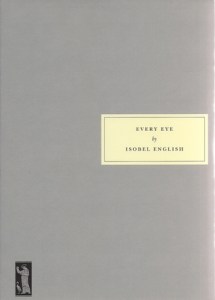
Every EyeHattie is a shy and awkward girl who is unsure of herself even into young adulthood.  She was born with an eye that turns in and what she views as a gross, physical deformity harms her self esteem and her ability to connect with other people in her life.  Hattie’s father died when she was very young, so she is raised by her mother and her father’s brother, Uncle Otway and his wife Aunt Cynthia.
The narrative moves back and forth between two distinct periods of time in Hattie’s life.  When the book opens she is a thirty-five year old woman, recently married to a younger man and they are about to go on a honeymoon to Ibiza.  Hattie is acutely aware of her husband’s age and mentions it several times throughout the narrative.  Age and its effect on a relationship are a consistent theme throughout the book and something that Hattie dwells on.  As Hattie and her husband are traveling from England to the Mediterranean she reflects back on the first real relationship she had with a man named Jasper.  Hattie meets Jasper at a party when she is in her early twenties and doesn’t realize, at first, that he has romantic feelings for her.  She doesn’t think any man would want a woman with a deformed eye.

There are a few difficulties that Hattie must face in her relationship with Jasper.  He is many years older than Hattie and is actually a peer and an old friend of her father’s.  He has gray hair and sagging skin but he seems to truly care for her so she decides to overlook his advancing age.  But Jasper and Hattie’s relationship also stumbles because of the interference of her Aunt Cynthia.  Whenever Hattie asks Aunt Cynthia for advise her aunt is very negative about the relationship; Cynthia seems to have some kind of insight into Jasper’s character that she will not fully share with Hattie.

Since Hattie is reminiscing about her relationship with Jasper on her honeymoon, it seems that she cannot fully enjoy herself or relax.  She is uncomfortable for most of the trip and doesn’t enjoy the time with her new husband.  Hattie’s skepticism and negativity stay with her at a time when she should be the happiest.  It is interesting that she occupies the position of much younger woman and much older woman in her relationships; neither part suits her or makes her happy.

In the end, Isobel English makes the point that it really doesn’t matter what age two people are when they fall in love.  Hattie’s husband is a calming force in her life and he doesn’t care if her eye was ever deformed or what her previous relationships were like.  If there is kindness and caring and tenderness in a relationship then age is irrelevant.

About the Author:
Isobel English, the pseudonym of June Braybrooke (1920-94), wrote little but what she published was of outstanding quality. ‘Sometimes, but not often, a novel comes along which makes the rest of what one has to review seem commonplace. Such a novel is Every Eye,’ John Betjeman said in the Daily Telegraph on its first publication.

13 Comments

Filed under British Literature, Classics, Persephone Books

2015: A Banner Year for Indie Presses

I have been very quiet on the blog for the last couple of weeks because decking the halls and wrapping the gifts have taken up much of my time.  But like my fellow bloggers on the web, I have been thinking about my list of favorite books for 2015.  As I was looking through my reviews and thinking about all of the fantastic books I have read throughout the year, I immediately noticed a similarity among the books: most of them are published by independent presses.  I have gravitated more and more to independent press releases and have come to the point at which I seek out books from these brave, hardworking and smart publishers.  So here is my list for 2015.

Indie Press Favorites for 2015:
I have to start out with one of the very first small press books I read in 2015 and absolutely adored and that is Guys Like Me from New Vessel Press.  When I read this book I was so moved by its simple, character driven plot that I wanted to read anything else I could get my hands on by this publisher.  And I was not Guys Like Medisappointed.  I have read many of the books in their catalogue and I would add two more of their titles to my 2015 favorites list as well:  I Called Him Necktie and Alexandrian Summer.  If you want books with interesting characters and thought-provoking, emotional themes then I highly recommend giving these titles a try.
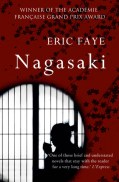
Next up, I have on  my list two titles from Gallic BooksGeorge’s Grand Tour and Nagasaki.  Gallic Books was founded in 2007 and it’s mission is to find the best books written in French and make them available to the English-speaking world.  Both of these titles will warm your heart and restore your faith in humanity.  They are actually great books to read around the holidays.Nagasaki

The Physics of Sorrow appealed to me because of the parallels drawn between the main character in the book and the Greek mythological figure of the Minotaur.  However, I learned so much more in this book than I ever expected.  The lasting effects of communism on a country like Bulgaria are astounding.  This book made me reflect on the fact that as Americans we oftentimes take our freedom for granted and we forget what citizens of countries like Bulgaria suffered under decades of oppressive regimes.  This title is published by Open Letter and since reading this I have been very excited to explore their wide range of translated titles.

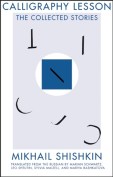
Speaking of communism and its aftermath, another favorite title of mine this year was Calligraphy Lesson, which is actually a collection of short stories.  In this Calligraphy Lessoncollection, Shishkin, one of Russia’s most famous contemporary authors, offers stories about himself and various members of his family and the devastating impact of Soviet rule had on their lives for generations.This title is brought to us by Deep Vellum , which has a catalogue rich with titles in translation from all over the world.
A list of small presses with fantastic titles published in 2015 would not be complete without a mention of a  Melville House title.  You might have heard of them because of their famous Twitter war with Penguin Random House.  If you haven’t read this little exchange, it is definitely worth a quick look for the hilarious jokes and barbs.  My first introduction to their books was through the novel The Scapegoat.  This novel is translated from the Greek and not only contains an interesting murder mystery, but it also teaches us an important lesson about what we can learn from history.  In addition,  Melville House has also published a fantastic collection of classic novellas which are definitely worth a look.  I have bought and reviewed several titles from their novella collection this year as well.

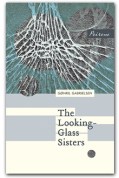
I must give a nod to Peirene Press, which I discovered by reading White Hunger.  This small British press specializes in publishing novellas translated into Looking Glass SistersEnglish.  Their books may be small, but they pack a powerful, emotional punch.  One of the best books of the year, in my humble opinion, is their novella The Looking Glass Sisters.  This book did not get as much attention as I think it should have; it is one of those reads where you think about its plot and characters long after you close the last page.
And the final independent press that I discovered late in the year thanks to Joe over at Roughghosts, is Istros Books.  I would say that their novel Dry Season is one of my favorites of the entire year.  Since finishing this book I have acquired several more of their titles which I am very excited to read and review in 2016.  Istros specializes in translating fiction from Eastern Europe.

There are two very special small publishers that I must mention from whose catalogues I own many, many books.  These two publishers deserve their own special categories as they have entire shelves on my bookcases dedicated to their titles.

Persephone Books:
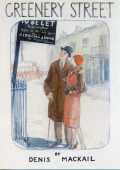
Original-Greenery-Street-cover-422x600A friend of mine, who is always spot on with his recommendation for me, turned me on to Persephone Books.  Persephone is an Independent British publisher that specializes in reissuing lost classics which are mostly written by female authors.  I fell in love with the first book I read from them, Greenery Street, and even since I have read one or two of their books per month.  I just can’t get enough of them.  It was very difficult to come up with only a couple of my favorites from 2015 but I have to go with Greenery Street and Patience.  Both books are funny, sweet and so well-written.   Persephone has quite an extensive catalogue and I would eventually like to work my way through all of their books.  There will most definitely be many more Persephone reviews to come in 2016.


New York Review of Books Classics:
AkenfieldThe first book I read from the NYRB classics collection was Stoner and ever since then I cannot get enough of their books.  This year I once again read several titles from their catalogue.  The Door, a book translated from the Hungarian which has been on many top ten book lists of the year, was also one of my favorites.  I would also add two additional books to my favorites list which they published in 2015.  Akenfield: Portrait of an English Village by Blythe was on of my favorite non-fiction books of 2015.  This book gives us a glimpse into all the of aspects of an English village in the 20th Century.  This is a must read for anyone who is a fan of British Literature.  The final book on my list for 2015 from NYRB classics is  Ending Up by Kingsley Amis.  This book is absolutely hilarious as it chronicles the final days of a group of septuagenarian roommates.  I have big plans to review several more of the NYRB books in 2016!

That pretty much wraps it up for me as far as 2015 is concerned.  In the new year I have titles on my TBR piles that include books from all of these Indie Presses.  Merry Christmas, Happy Holidays, Io Saturnalia and Happy New Year!

-Melissa, The Book Binder’s Daughter


17 Comments

Filed under British Literature, Classics, Favorites, Literature in Translation, Literature/Fiction, New York Review of Books, Nonfiction, Novella, Opinion Posts, Persephone Books, Short Stories

Review: Our Spoons Came from Woolworths by Barbara Comyns

My Review:
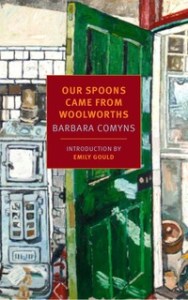
Our Spoons come from WoolworthsThis book is narrated by Sophia Fairclough, the main character of the book and deals with her rather difficult life during the 1930’s in London.  The language is very simple and straightforward, which is so fitting for Sophia; it’s as if we are reading her diary or sitting and listening to her story over an afternoon cup of tea.

Sophia meets Charles and they instantly fall in love and decide that they want to get married.  Even though they are only twenty-one years old and his family does not approve of her at all, they decide to get married.  They settle on a “secret” and “private” marriage at the local church, but they tell so many people that on the day of the ceremony the church is full of friends, family and odd acquaintances.

The book starts out on a very humorous tone as Sophia is extremely naïve about marriage, sex and motherhood.  Charles is an artist, a bit of a delicate genius, who can’t possibly put aside his art to get a proper job to support his wife.  Sophia is the main bread winner of the family and Charles is a terrible manager of their money.  Whenever they have a few extra shillings he spends it on frivolous things like painting supplies, wine and dinners.  Sophia is too naïve about living life as an adult to ask that her husband go out and get a job.  When she becomes pregnant and is forced to quit her job Charles is annoyed at having a baby in the house and having his only source of income cut off.

The scenes in which Sophia finds out about her pregnancy are absolutely hilarious.  She is genuinely surprised that she could be having a baby at all;  she thinks that if she wills herself not to be pregnant then she won’t have a baby.  When she goes to the hospital to have the baby she is shocked by the poking and prodding and the indignity of the whole process, right down to the horrible hospital bed clothes that she is forced to wear.

It is obvious from the very first sentence of the book that Sophia and Charles’ marriage does not end well.  As their marriage becomes increasingly difficult financially, emotionally and physically, Charles stays away from their home for longer and longer periods of time.  The humor that was spread throughout the first part of the book is noticeably absent in the send half of Sophia’s tale.  She suffers a great deal as her marriage disintegrates.

But in the end, Sophia learns an important lesson about resiliency and happy endings.  Even though she has suffered many trials and tribulations with and because of Charles she never becomes jaded or bitter.  She is guarded, yes, but never bitter.

The New York Review of Books has brought another brilliant classic to our attention.  I highly recommend this book for its humor, interesting storyline, and strong female character in the form of Sophia.


About the Author:
B ComynsBarbara Comyns Carr was educated mainly by governesses until she went to art schools in Stratford-upon-Avon and London. Her father was a semi-retired managing director of a Midland chemical firm. She was one of six children and they lived in a house on the banks of the Avon in Warwickshire. She started writing fiction at the age of ten and her first novel, Sisters by a River, was published in 1947. She also worked in an advertising agency, a typewriting bureau, dealt in old cars and antique furniture, bred poodles, converted and let flats, and exhibited pictures in The London Group. She was married first in 1931, to an artist, and for the second time in 1945. With her second husband she lived in Spain for eighteen years.

11 Comments

Filed under British Literature, Classics, Literary Fiction, New York Review of Books

Review: The Blue Guitar by John Banville

I received an advanced review copy of this title from the publisher through Edelweiss.

My Review:
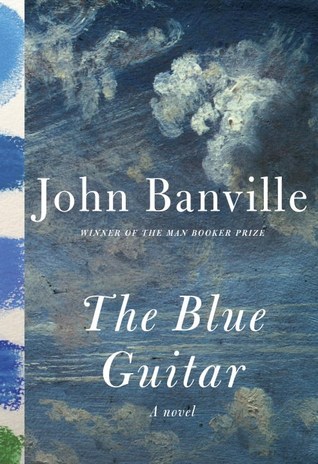
The Blue GuitarOliver Orme, in the opening part of the novel, is fleeing his home, his career and his life.  He has had an affair with his friend’s wife and the torrid details of the tryst has been uncovered.  Oliver is not sure how his own wife, Gloria, will react and he isn’t even sure how his lover, Polly will react to his sudden departure.  All Oliver knows is that his life is spiraling out of control and his instinct is to flee.

The first part of the book describes Oliver’s relationship with his wife and his meetings with his lover.  Oliver has fled to his boyhood home so there are also many scenes in which Oliver reminisces about his family and his childhood.  He is the youngest boy in a large family and was particularly close to his mother.  When he is a child Oliver picks up a very bad habit of stealing minor things.  He relates in great detail his first theft which was a tube of paint in a local art store.  The rush that Oliver feels when he is engaging in his kleptomania is like a drug that compels him to keep stealing from his friends and family well into middle age.  The latest thing he has stolen is Polly and now that the affair is out in the open he wants nothing more than to flee the entire unpleasant situation.

In the second part of the book Polly shows up at Oliver’s boyhood home with her two-year-old daughter Pip.  Polly has decided to leave her husband and is on her way to her parents’ house and asks Oliver to accompany her.  This episode in the second part of the book is very bizarre as Polly’s eccentric family is described in great detail.  Oliver stays there overnight and manages to escape the house secretly without anyone noticing.  It is really unclear why Polly wanted Oliver to accompany her home in the first place.  It is, however, very evident that this passionate, nine month affair has run its course and Polly and Oliver no longer love each other.  Banville provides us with unique insight into an affair because this is one that never could have lasted.  It leaves the characters wondering whether having a brief relationship was really worth disturbing the lives of so many people.

The final part of the book deals with Oliver’s return home and his confrontation with his wife Gloria.  At this point Gloria has some disconcerting news of her own to share in return.  The third part of the book actually has two shocking twists to the tale that I never saw coming.  To be perfectly honest, Oliver was such an unlikeable and almost despicable character in the first part of the book that I almost gave up reading it.  However, I am very glad that I pressed on because the reasons for his emotional instability are revealed further into the book.  Oliver is a well-recognized and talented painter and because of the tragedy he has suffered in his life he has pretty much given up on his career.  Banville demonstrates, through the characters of Oliver and his wife that grief is a tricky emotion that we all deal with very differently.

Finally, I have to mention the beautiful prose and language that Banville uses to relate this story.  The entire book is told in the first person, through the eyes of Oliver himself.  There are a number of interesting rhetorical devices and plays on words and language that Banville uses throughout the writing.  I highly recommend this novel just to experience a taste of Banville’s clever and elegant prose.

About The Author:
J BanvilleBanville was born in Wexford, Ireland. His father worked in a garage and died when Banville was in his early thirties; his mother was a housewife. He is the youngest of three siblings; his older brother Vincent is also a novelist and has written under the name Vincent Lawrence as well as his own. His sister Vonnie Banville-Evans has written both a children’s novel and a reminiscence of growing up in Wexford.

Educated at a Christian Brothers’ school and at St Peter’s College in Wexford. Despite having intended to be a painter and an architect he did not attend university. Banville has described this as “A great mistake. I should have gone. I regret not taking that four years of getting drunk and falling in love. But I wanted to get away from my family. I wanted to be free.” After school he worked as a clerk at Aer Lingus which allowed him to travel at deeply-discounted rates. He took advantage of this to travel in Greece and Italy. He lived in the United States during 1968 and 1969. On his return to Ireland he became a sub-editor at the Irish Press, rising eventually to the position of chief sub-editor. His first book, Long Lankin, was published in 1970.

After the Irish Press collapsed in 1995, he became a sub-editor at the Irish Times. He was appointed literary editor in 1998. The Irish Times, too, suffered severe financial problems, and Banville was offered the choice of taking a redundancy package or working as a features department sub-editor. He left. Banville has been a regular contributor to The New York Review of Books since 1990. In 1984, he was elected to Aosdána, but resigned in 2001, so that some other artist might be allowed to receive the cnuas.

Banville also writes under the pen name Benjamin Black. His first novel under this pen name was Christine Falls, which was followed by The Silver Swan in 2007. Banville has two adult sons with his wife, the American textile artist Janet Dunham. They met during his visit to San Francisco in 1968 where she was a student at the University of California, Berkeley. Dunham described him during the writing process as being like “a murderer who’s just come back from a particularly bloody killing”. Banville has two daughters from his relationship with Patricia Quinn, former head of the Arts Council of Ireland.

Banville has a strong interest in vivisection and animal rights, and is often featured in Irish media speaking out against vivisection in Irish university research.

9 Comments

Filed under British Literature, Literary Fiction