Author Archives: Melissa Beck

Melissa Beck's avatar

About Melissa Beck

My reading choices are rather eclectic. I enjoy reading a wide range of books especially classics, literature in translation, history, philosophy, travel writing and poetry. I especially like to support small, literary presses.

Review: Colonel Fitzwilliam and The Countess of Sainte Toulours

I received an advanced review copy of this title from the author.

My Review:
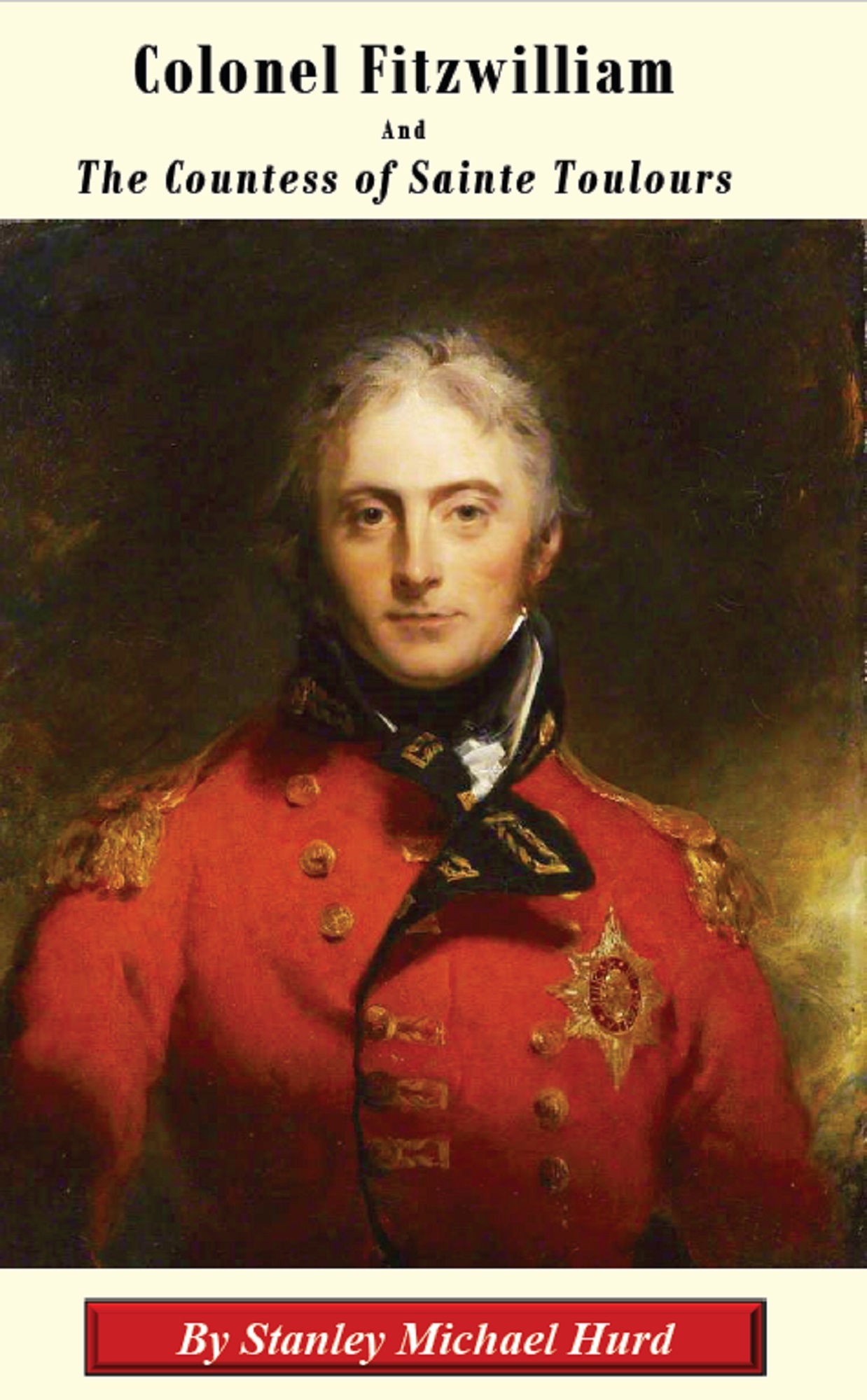
Colonel Fitzwilliam and the Countess of Sainte Toulours - Stanley Michael HurdHistorical fiction, mystery, espionage and romance are all part of Stanley Hurd’s new novel that centers around the character of Colonel Fitzwilliam.  Hurd takes Austen’s beloved character from Pride and Prejudice and creates a story just for the Colonel.  When the story opens Fitzwilliam is working in the War Department trying to figure out Napoleon’s next move.  A peace has been declared and French ports are starting to open back up to British trade, but no one in the British government trusts Boney to keep his word.  So the government decides to send Fitzwilliam undercover as a spy to see whether or not Napoleon is sincere about peace or if he is using this time to build more ships and gear up for war.

Before he is shipped off to France for his mission, Fitzwilliam is invited to his cousin Darcy’s house for a social dinner.  At this gathering he meets a lovely young woman named Emily for whom he instantly develops romantic feelings.  Love and romance spring up very quickly between Fitzwilliam and Emily and just as they are getting to know each other Fitzwilliam has to go off on his spy mission in France.  One of the best aspects of the writing of this book are the heartfelt letters that Fitzwilliam sends to Emily.  Since their acquaintance is new he doesn’t want to be overbearing or inappropriate towards her; his letters contain just the perfect amount of amorous sentiments and a description of his time spent spying on the French.

While he is in France, Fitzwilliam meets up with his spying partner, a feisty and charismatic man named Esparaza.  The situation gets especially interesting when they rescue an upper class French woman who claims she is a Countess.  They bring the Countess back to England where she reveals to them that the French have captured her mother and are holding her ransom until the Countess provides them intelligence about the English war plans.  Fitzwilliam and Esparaza have quite a mission on their hands at this point; they need to somehow rescue the Countess’ mother from a French jail and keep her safe from French spies watching her in England.

The entire novel comes to a rather exciting and unexpected conclusion.  A duel, a stint in a French prison and a rescue all play a part in Fitzwilliam’s adventure.  I like the fact that Hurd is not trying to change or rewrite the Colonel’s story as it is handed down to us by Austen.  He gives us a truly unique and exciting story that is in line with Austen’s original character.

About The Author:
HurdStan Hurd is a Ph.D. neurochemist who currently occupies himself writing, teaching fencing and Karate, and polishing samurai sword blades. He was introduced to Jane Austen’s works late in life, but became immediately captivated by the unlabored beauty of her prose. Having read one of the many adaptations written to extend the story of “Pride and Prejudice”, while he was delighted to be back in that world, he found the exclusively female perspective of the author was at times intrusive; since he could not let himself complain if he did not attempt it himself, he set out to write “Darcy’s Tale”.

Many of his friends are amazed that he should be writing a Regency romance; he takes a particular delight in that fact.


Giveaway:
The author is generously giving away two e-book copies of his novel.  This giveaway is open internationally as long as you can accept a Mobi version of the book for Kindle.  Just leave a comment letting me know you want to win.  I will pick a winner on Friday.

6 Comments

Filed under Historical Fiction

Review: Nagasaki by Éric Faye

I received an advanced review copy of this title from Gallic Books through NetGalley. This book was originally published in French and this English translation is done by Emily Boyce.  This is also my first post for Novella November hosted by Poppy Peacock Pens.  Please visit her site for more great reviews of novellas throughout the month.

My Review:
NagasakiShimura Kobo leads a very quiet and regimented life in the suburbs of Nagasaki.  He is a meteorologist who avoids the company of his coworkers and every night returns to his neat, orderly and lonely apartment.  When food starts to disappear from his refrigerator and items appear out of place in his apartment he takes notice and is really bothered by this disruption in his organized life.  At first he thinks that he is just going crazy but in order to verify his missing items he starts cataloguing the contents of his refrigerator and measuring the liquid in his juice containers.  He finally decides to buy a webcam which is linked to his laptop so he can spy on his visitor while he is at work.

Shimura eagerly watches his laptop at work waiting for the intruder to appear on his screen.  He has to wait several days but he finally glimpses a woman standing in his kitchen, enjoying the sunlight and making herself a cup of tea.  He immediately calls the police who go over to his apartment to catch the suspected intruder.  But when the police arrive, there are no signs of a break in.  The doors and windows are locked and the police are about to give up their search when they discover a woman hiding in the closet in Shimura’s spare bedroom.

The woman, as it turns out, had lost her job in the economic recession and had to give up her apartment.  She was living on the streets of Nagasaki until one day she noticed Shimura leave for work.  She also noticed that he left the door to his house unlocked and so she let herself in, just intending to have a warm and dry place to stay for a few hours.  But when she discovers Shimura’s extra bedroom which is rarely used, she basically lives with him unnoticed for the better part of a year.

The most fascinating part of the story is the lasting psychological impacts that their inadvertent cohabitation has on both of them.  Shimura is forced to contemplate his lonely and solitary existence and he never feels comfortable again living in his apartment.   The woman does a short stint in jail and writes Shimura a very detailed letter about why she chose his house to stay in.  But she too is changed from her sojourn at Shimura’s home.  Their individual isolation and loneliness is cast into sharp relief when they each see how the other one lives.

This is a quick yet powerful read that I highly recommend. My only complaint is that I didn’t want the book to end; I wanted to know more about the fate of Shimura and his secret roommate.   This is a fantastic choice to kick off Novella November!

About The Author:
Eric FayeBorn in Limoges, Éric Faye is a journalist and the prize-winning author of more than twenty books, including novels and travel memoirs. He was awarded the Académie Française Grand Prix du Roman in 2010 for Nagasaki.


13 Comments

Filed under Literature in Translation, Novella

Celebrating School Library Month

islmonthlargeIn order to celebrate School Library Month I was asked by MyVoucherCodes to write an opinion piece about e-books and their role in reading.  I thought this would be a great opportunity for me to throw in my two cents about e-readers versus good, old-fashioned, paper books.

I recently posted an article on my Facebook page about the use of e-readers versus paper books and it was one of the most viewed and commented on articles that I have posted.  Readers are very passionate, it seems, about being able to obtain paper versions of their favorite books.  I have to admit that I am definitely a book hoarder and that an entire room in my house is dedicated to my books.  I have had a collection of books going back as far as high school.  When I moved to a new city to attend graduate school in my early twenties, my car was filled with mostly books and very few other essentials.  And when my family and I were house hunting several years back, we opted for the four bedroom so that one room could be devoted to our precious books.

I have amassed quite a collection of paper books of which I am very proud.  Although these books would have little value to anyone else, I love the fact that I have many Latin and Greek books that are out of publication.  I also have the rather worn copies of some of my favorite classics like Pride and Prejudice and Jane Eyre that I first read when I was in high school.  I also love walking by my shelves and perusing the various collections of books I have gathered, such as my ever-expanding New York Review of Books selections, my growing collection of Persephone Books and my new collection of signed Indie author books.

But I also own an e-reader for many reasons, the most important of which is the offering of books in the ever-expanding world of self-publishing.  I currently have over 300 books on my Kindle, many of which are books from self-published authors.  My favorite author actually publishes his books on Amazon first as a Kindle edition only and if I didn’t have an e-reader then I would still be waiting to read his latest book.  This reason alone is worth it to me to own an e-reader.  And as much as I love my room full of books, it does cut down in a small way on the number of paper books in my house.  In addition, many publishers offer galley or early copies of new books to book bloggers as electronic copies only through sites like NetGalley and Edelweiss.  So if one is a blogger and wants to accept galley copies of books then an e-reader, particularly a Kindle, is a necessity.

This year the school at which I teach has given all of the students I-pads.  The I-pads also come with reading apps such as the Kindle app and I definitely see the convenience of such apps in my students’ lives.  In general students can have access at their fingertips to literally hundreds of books that they don’t have to carry around.  In my opinion, getting students to read and even getting them excited about reading is much easier when they have easy access to a variety of choices.  With that said, the most popular place on our campus to study and hang out is still the school library and in all of my classes I still see kids carrying around their favorite old-fashioned paper books.

I would love to hear my readers’ opinions on this topic.  I am sure you all have passionate feelings about the use of books versus e-readers, so leave me your comments below!  And don’t forget to celebrate School Library Month by visiting and supporting your local library.


7 Comments

Filed under Opinion Posts

Review: The Blue Guitar by John Banville

I received an advanced review copy of this title from the publisher through Edelweiss.

My Review:
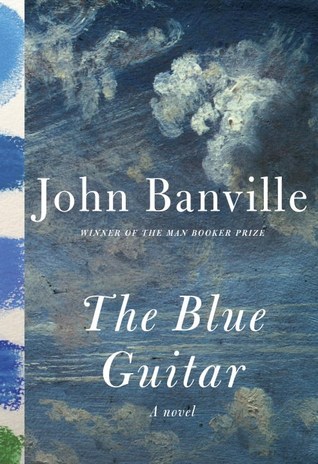
The Blue GuitarOliver Orme, in the opening part of the novel, is fleeing his home, his career and his life.  He has had an affair with his friend’s wife and the torrid details of the tryst has been uncovered.  Oliver is not sure how his own wife, Gloria, will react and he isn’t even sure how his lover, Polly will react to his sudden departure.  All Oliver knows is that his life is spiraling out of control and his instinct is to flee.

The first part of the book describes Oliver’s relationship with his wife and his meetings with his lover.  Oliver has fled to his boyhood home so there are also many scenes in which Oliver reminisces about his family and his childhood.  He is the youngest boy in a large family and was particularly close to his mother.  When he is a child Oliver picks up a very bad habit of stealing minor things.  He relates in great detail his first theft which was a tube of paint in a local art store.  The rush that Oliver feels when he is engaging in his kleptomania is like a drug that compels him to keep stealing from his friends and family well into middle age.  The latest thing he has stolen is Polly and now that the affair is out in the open he wants nothing more than to flee the entire unpleasant situation.

In the second part of the book Polly shows up at Oliver’s boyhood home with her two-year-old daughter Pip.  Polly has decided to leave her husband and is on her way to her parents’ house and asks Oliver to accompany her.  This episode in the second part of the book is very bizarre as Polly’s eccentric family is described in great detail.  Oliver stays there overnight and manages to escape the house secretly without anyone noticing.  It is really unclear why Polly wanted Oliver to accompany her home in the first place.  It is, however, very evident that this passionate, nine month affair has run its course and Polly and Oliver no longer love each other.  Banville provides us with unique insight into an affair because this is one that never could have lasted.  It leaves the characters wondering whether having a brief relationship was really worth disturbing the lives of so many people.

The final part of the book deals with Oliver’s return home and his confrontation with his wife Gloria.  At this point Gloria has some disconcerting news of her own to share in return.  The third part of the book actually has two shocking twists to the tale that I never saw coming.  To be perfectly honest, Oliver was such an unlikeable and almost despicable character in the first part of the book that I almost gave up reading it.  However, I am very glad that I pressed on because the reasons for his emotional instability are revealed further into the book.  Oliver is a well-recognized and talented painter and because of the tragedy he has suffered in his life he has pretty much given up on his career.  Banville demonstrates, through the characters of Oliver and his wife that grief is a tricky emotion that we all deal with very differently.

Finally, I have to mention the beautiful prose and language that Banville uses to relate this story.  The entire book is told in the first person, through the eyes of Oliver himself.  There are a number of interesting rhetorical devices and plays on words and language that Banville uses throughout the writing.  I highly recommend this novel just to experience a taste of Banville’s clever and elegant prose.

About The Author:
J BanvilleBanville was born in Wexford, Ireland. His father worked in a garage and died when Banville was in his early thirties; his mother was a housewife. He is the youngest of three siblings; his older brother Vincent is also a novelist and has written under the name Vincent Lawrence as well as his own. His sister Vonnie Banville-Evans has written both a children’s novel and a reminiscence of growing up in Wexford.

Educated at a Christian Brothers’ school and at St Peter’s College in Wexford. Despite having intended to be a painter and an architect he did not attend university. Banville has described this as “A great mistake. I should have gone. I regret not taking that four years of getting drunk and falling in love. But I wanted to get away from my family. I wanted to be free.” After school he worked as a clerk at Aer Lingus which allowed him to travel at deeply-discounted rates. He took advantage of this to travel in Greece and Italy. He lived in the United States during 1968 and 1969. On his return to Ireland he became a sub-editor at the Irish Press, rising eventually to the position of chief sub-editor. His first book, Long Lankin, was published in 1970.

After the Irish Press collapsed in 1995, he became a sub-editor at the Irish Times. He was appointed literary editor in 1998. The Irish Times, too, suffered severe financial problems, and Banville was offered the choice of taking a redundancy package or working as a features department sub-editor. He left. Banville has been a regular contributor to The New York Review of Books since 1990. In 1984, he was elected to Aosdána, but resigned in 2001, so that some other artist might be allowed to receive the cnuas.

Banville also writes under the pen name Benjamin Black. His first novel under this pen name was Christine Falls, which was followed by The Silver Swan in 2007. Banville has two adult sons with his wife, the American textile artist Janet Dunham. They met during his visit to San Francisco in 1968 where she was a student at the University of California, Berkeley. Dunham described him during the writing process as being like “a murderer who’s just come back from a particularly bloody killing”. Banville has two daughters from his relationship with Patricia Quinn, former head of the Arts Council of Ireland.

Banville has a strong interest in vivisection and animal rights, and is often featured in Irish media speaking out against vivisection in Irish university research.

9 Comments

Filed under British Literature, Literary Fiction

Review: Aurora Leigh by Elizabeth Barrett Browning

My Review:
Aurora LeighAurora Leigh is a beautiful, sublime poem written in blank verse.  The language, however, is not the only strong point of the poem.  The character of Aurora is fierce and compassionate, as she adapts to her new life in Britain despite her stern aunt.  Aurora is born to an English father and an Italian mother and happily spends her childhood among the mountains in Italy.  Aurora’s mother dies when she is only four, but her father continues to raise her in Italy among her mother’s people.  Aurora’s father also tragically dies when she is at the young and pivotal age of thirteen, and Aurora is shipped off to live in England with her father’s sister.  Her aunt is a stern spinster who makes Aurora learn what she believes are appropriate skills for a proper English girl.

But Aurora is resilient and even though her life is more restrained and cumbersome in England, she still finds pleasure in books and poetry.  The beautiful estate on which her aunt lives becomes the inspiration for Aurora to begin writing her own poetry.  She takes quiet walks in the early morning before the rest of the house is awake and develops her skill as a writer.  Furthermore, Aurora doesn’t take what would be the easy way out by marrying her cousin Romney Leigh when he proposes to her.  Marriage and financial security would have been a much easier fate for Aurora; but even when her aunt dies and Aurora is disinherited, she moves to London where she works and supports herself as an author.

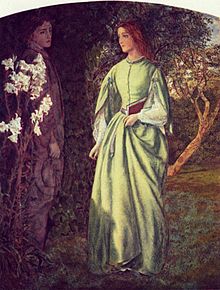
Browning weaves the theme of class struggles throughout the poem and she especially highlights this social problem through the character of Romney.  The  poor are depicted as wreteched and even ugly; Romney makes it his life’s work to help out the poor and destitute.  After his marriage proposal is Aurora's Dismissal of Romneyrejected by Aurora, he saves a woman named Marian Erle from her miserable life and proposes to her next.  Marian is the daughter of tramps that roam around the countryside finding any work they can.  Marian’s father is abusive and when her mother tries to sell her off to a local squire,  Marian finally runs away from her parents in horror.  Romney decides that, even though Marian is well-below his social class, she will make a perfect wife to help him in his charitable missions. But we are left wondering if these two are really suited as husband and wife.  Does Marian truly love Romney or does she simply worship him as her savior.  Does Romney really have feelings of love for Marian or is he still in love with his cousin Aurora?

The upper class don’t fair any better in Browning’s verse.  They are depicted as vain, judgmental, and petty.  The character of Lady Valdemar is the epitome of a greedy upper class English woman who will do everything in her power to fulfill her selfish desires.  Lady Valdemar is in love with Romney and once she finds out that he is going to marry a lower class woman like Marian, she sets in motion a series of events that have devastating consequences for all involved in this love triangle.  Lady Valdemar’s singular focus of getting Romney to the altar makes her a despicable and opportunistic character.

At the end of the poem Browning brings the characters back to the place where everything was simpler and happier: Aurora’s native land of Italy.  There Aurora finds peace once again as she is finally away from the petty gossip and prying eyes of the upper classes in England.  Aurora does, however, admit that despite her new surroundings,  there is still something missing in her life.  She is a successful author who has become famous for her poems and novels about love.  But will she ever experience this elusive feeling for herself?  You will have to read Browning’s beautiful poem to find out.

About The Author:
Elizabeth Barrett BrowningElizabeth Barrett Browning was one of the most respected poets of the Victorian era.
Born in County Durham, the eldest of 12 children, Browning was educated at home. She wrote poetry from around the age of six and this was compiled by her mother, comprising what is now one of the largest collections extant of juvenilia by any English writer. At 15 Browning became ill, suffering from intense head and spinal pain for the rest of her life, rendering her frail. She took laudanum for the pain, which may have led to a lifelong addiction and contributed to her weak health.

In the 1830s Barrett’s cousin John Kenyon introduced her to prominent literary figures of the day such as William Wordsworth, Mary Russell Mitford, Samuel Taylor Coleridge; Alfred, Lord Tennyson, and Thomas Carlyle. Browning’s first adult collection The Seraphim and Other Poems was published in 1838. During this time she contracted a disease, possibly tuberculosis, which weakened her further. Living at Wimpole Street, in London, Browning wrote prolifically between 1841 and 1844, producing poetry, translation and prose. She campaigned for the abolition of slavery and her work helped influence reform in child labour legislation. Her prolific output made her a rival to Tennyson as a candidate for poet laureate on the death of Wordsworth.

Browning’s volume Poems (1844) brought her great success. During this time she met and corresponded with the writer Robert Browning, who admired her work. The courtship and marriage between the two were carried out in secret, for fear of her father’s disapproval. Following the wedding she was disinherited by her father and rejected by her brothers. The couple moved to Italy in 1846, where she would live for the rest of her life. They had one son, Robert Barrett Browning, whom they called Pen. Towards the end of her life, her lung function worsened, and she died in Florence in 1861. A collection of her last poems was published by her husband shortly after her death.


4 Comments

Filed under British Literature, Classics, Literary Fiction, Poetry