

My Review:
 My tour of post-Soviet literature continues with a book that describes the last few months of life in the German Democrat Republic (G.D.R.). The story is told from the point of view of Maria, a seventeen year old girl who is trying to find her way in the world while living through some very tough circumstances. This book has three important aspects to explore, the first and foremost of which is a coming-of-age storyline. Maria is on the cusp on adulthood and has never had much guidance or supervision in her life. She has never known her father very well because he keeps leaving on trips to Russia throughout her childhood. She finds out that this distant father is about to marry a Russian woman that is Maria’s own age.
Maria’s mother is not someone she can rely on because of her constant sadness and depression that is the result of her failed marriage. Maria doesn’t hesitate to leave her mother’s home when she is given the chance to live with her boyfriend Johannes and his family on their farm. For the first time in her life Maria feels at home on the family farm; as she begins to help with the cooking and the daily chores on the farm her life suddenly has meaning and value and she is genuinely happy.
The next aspect of the book, which is arguably the most interesting, is the intense love story. But it is not a love story between Maria and her boyfriend Johannes. There is a man named Henner, a loner with a reputation for excessing drinking who lives on the farm next door, that attracts Maria’s attention. Henner is enigmatic and handsome and although he is twice her age, Maria is inexplicably drawn to him. Their love affair is passionate and intense and Henner is even rough when he makes love to Maria.
But Henner also has a tender side and as they spend time together he slowly reveals his story and his personality to Maria. Maria knows that what she feels for Henner is true love and she is living a double life. Maria has a much deeper and more mature connection with Henner despite their differences in age. She is torn apart trying to decide whether or not she should leave the comfort and safety of Johannes, his family and their farm in order to try to make a real life with Henner. Living with Henner as his lover will surely shock the whole town and Maria will be shunned for it.
Finally, this story is about a very interesting time period in German history as the G.D.R. falls and the country is once again reunited. The contrast between east and west in the novel is stark. Johannes has an uncle who, as a young man twenty years earlier, managed to escape to the west and get an education and work as an engineer. When the uncle comes to visit Maria feels frumpy and backwards compared to the uncle and his western-born and sophisticated wife. Maria is excited but also nervous about the anticipation of being able to experience all of the exotic things that the west has to offer.
This book is an intense and quick read that I highly recommend. This was actually the first book I read from Maclehose Press and I look forward exploring more of their catalog.
About the Author:
Daniela Krien was born in 1975 in what was then East Germany and lives in Leipzig, where she is an editor and scriptwriter for Amadelio Film. Someday We’ll Tell Each Other Everything is her first novel.
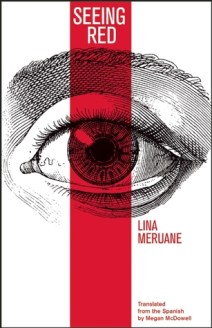 Our senses are our most precious natural gifts because it is through them that we are able to experience the world. At one point we have all probably wondered what it would be like to lose our hearing or our sight or our sense of smell. In Seeing Red, we are given a vivid understanding, through the character of Lina, of what it is like to lose one’s sight. Lina, a young woman attending graduate school in Manhattan and living with her boyfriend Ignacio, suddenly loses her vision. She has been a diabetic all of her life and from what we are told about her medical history in the book, the blood vessels in her eyes have burst and have caused her blindness. She knows that this is coming and the opening of the book is the moment at which her nightmare comes true.
 Lina Meruane is one of the most prominent and influential female voices in Chilean contemporary literature. A novelist, essayist, and cultural journalist, she is the author of a host of short stories that have appeared in various anthologies and magazines in Spanish, English, German and French. She has also published a collection of short stories, Las Infantas (Chile 1998, Argentina 2010), as well as three novels: Póstuma (2000), Cercada (2000), and Fruta Podrida (2007). The latter won the Best Unpublished Novel Prize awarded by Chile’s National Council of the Culture and the Arts in 2006. She won the Anna Seghers Prize, awarded to her by the Akademie der Künste, in Berlin, Germany in 2011 for her entire body of written work. Meruane received the prestigious Mexican Sor Juana Inés de la Cruz Prize in 2012 for Seeing Red. Meruane has received writing grants from the Arts Development Fund of Chile (1997), the Guggenheim Foundation (2004), and National Endowment for the Arts (2010). She received her PhD in Latin American Literature from New York University, where she currently serves as professor of World and Latin American Literature and Creative Writing. She also serves as editor of Brutas Editoras, an independent publishing house located in New York City, where she lives between trips back to Chile.
 I have been captivated by the plethora of post-Soviet literature that has been published just in the last year alone. The theme that is the most haunting to me is the one of waste: all of those wasted lives, all of that wasted time, and for what purpose? I remember the attitude towards the Soviets in the 1980’s with the “us”, the free American democracy, versus “them”, the oppressive Soviet totalitarian regime, propaganda. It seemed that the Soviet Union wanted everyone to believe that, not only was their system the best in the world, but their people were happy and thrived under that system. But recent post-Soviet books, like Oblivion, have proven that this ideal that their leaders put forth could not be further from the truth.
 Sergei Lebedev was born in Moscow in 1981 and worked for seven years on geological expeditions in northern Russia and Central Asia. Lebedev is a poet, essayist and journalist. Oblivion, his first novel, has been translated into many languages. Lebedev’s second novel, Year of the Comet, is coming out from New Vessel Press in 2017.
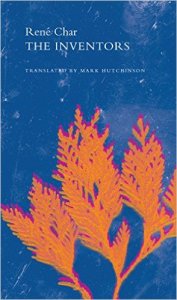 As I first read the introduction to this volume, the piece of information that stuck out to me immediately was that Char was influenced by Heraclitus, the pre-Socratic philosopher. Char imitates Heraclitus’ style of short and puzzling works as well as his theme of strife. The pre-Socratic course I took in graduate school was one of the most challenging yet rewarding courses in my career as a student. The Ancient Greek, which is fragmentary, is difficult to put together and even more difficult to analyze when one has come up with an English version. Heraclitus acquired the nickname “The Obscure” for good reason. I had the same feelings, both of obscurity and difficulty, as I was reading Char.
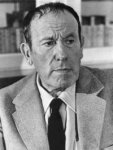 He spent his childhood in Névons, the substantial family home completed at his birth, then studied as a boarder at the school of Avignon and subsequently, in 1925, a student at L’École de Commerce de Marseille, where he read Plutarch, François Villon, Racine, the German Romantics, Alfred de Vigny, Gérard de Nerval and Charles Baudelaire.
 The Ashby family has maintained their estate in the south of England for many generations. The current family members who inhabit the estate are best known for their stables of beautiful horses. Aunt Bee, the matriarch of the family, oversees the care of her ten-year-old nieces Jane and Ruth. Bee supervises and runs the horse estate with the help of her niece Elenor and nephew Simon who are young adults. Although to visit them for afternoon tea, one would believe that this is a happy and well-adjusted family, the Ashby’s have suffered some terrible tragedies.



 The Book Binder's Daughter