

My Review:
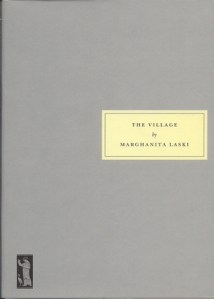 This novel opens in 1945 on the day in which the end of World War II has just been announced in the small village of Priory Dean. Everyone is celebrating and dancing in the streets but Martha Trevor and Edith Wilson still show up to their post duty at the Red Cross. During the course of their conversation we learn that they are from very different social classes; Martha is part of the upper-class gentry that live on the Hill in town and Edith is part of the working class families that live on the other end of town. At one point Edith worked as Martha’s housekeeper before Martha’s family hit some financially hard times.
The war was able to break down these long-standing class barriers and allowed people to mingle who otherwise would not have anything to do with one another in social situations. During the war the town holds a series of dances to which all members of the town, regardless of social status, are able to attend. These are just the circumstance under which Edith’s son, Roy and Martha’s daughter, Margaret are able to meet. The very last war-time dance is Margaret’s first real social outing and she feels awkward and unsure of herself until Roy asks her to dance with him.
Laski provides us with a full picture of life in a small English town in the mid-twentieth century. In addition to the Wilson’s and the Trevor’s we also get the town spinster, Miss Porteous, a retired school mistress, and her sidekick, the town gossip, Miss Beltram. The town physician, Dr. Gregory and the town pastor, Rev. Robinson are also important figures in this village. Finally, the town “outsiders,” the Wetheralls, who move into the largest house in town also feature prominently in the action. There is a complete cast of characters representing the gentry and the working class and Laski provides a list of these characters with descriptions in the index which is very helpful to remember everyone that appears in the plot.
Once the war is over, everyone goes back to their proper place in town and it is no longer acceptable for upper-class and working-class citizens to interact with one another. Martha Trevor is particularly adamant about not mixing with anyone outside of her social class. She is also bitter and angry that she can no longer afford hired help to run her household; she must scrub her own floors and wash her own laundry which she finds beneath her lot in life. Martha often takes out her frustration on her oldest daughter Margaret whom she feels is not pretty or clever. Martha fears that Margaret will never be able to attract a husband or find employment that is worthy of her high social rank in society.
The relationship that develops between Margaret and Roy is sweet and romantic. Because they are forbidden to have anything to do with each other due to their different social classes, they meet each other in secret. They go to the movies and dinner together and then Roy starts to show up to Margaret’s place of employment every day just so he can spend an hour with her at lunch. The culminating romantic interlude they have during which they confess their love and become engaged involves a bike ride and a picnic in the countryside. Roy is kind, gentle, respectable and has a great job as a printer. He is the perfect husband but Margaret’s parents are angry when they find out because of Roy’s lower social position.
This story has elements of Ovid’s Pyramus and Thisbe as well as Shakespeare’s Romeo and Juliet. Even though the town is scandalized by the intermarriage of this sweet couple, the outcome for Roy and Margaret is much happier than these other star crossed lovers.
This is the third Laski title that I have read from Persephone Books and my favorite of the three. Here are the links to my other two Laski reviews:
Please visit Persephone’s website for more information on these titles as well as their selection of wonderful British Classics: http://www.persephonebooks.co.uk/
About the Author:

Lanksi was to a prominent family of Jewish intellectuals: Neville Laski was her father, Moses Gaster her grandfather, and socialist thinker Harold Laski her uncle. She was educated at Lady Barn House School and St Paul’s Girls’ School in Hammersmith. After a stint in fashion, she read English at Oxford, then married publisher John Howard, and worked in journalism. She began writing once her son and daughter were born.
A well-known critic as well as a novelist, she wrote books on Jane Austen and George Eliot. Ecstasy (1962) explored intense experiences, and Everyday Ecstasy (1974) their social effects. Her distinctive voice was often heard on the radio on The Brains Trust and The Critics; and she submitted a large number of illustrative quotations to the Oxford English Dictionary.
An avowed atheist, she was also a keen supporter of the Campaign for Nuclear Disarmament. Her play, The Offshore Island, is about nuclear warfare.
 This book was an unexpected surprise that pulled at my heart strings. Mattis and his sister Hege live in the Norwegian countryside in a simple cottage by a lake. Mattis is mentally challenged and he is constantly attempting to navigate a world that he doesn’t understand and that doesn’t understand him. He has the mind of a child; he becomes excited at the simplest things like the woodcock which flies over their cottage. He has a deep fear of abandonment and is afraid that his sister, who is his only caretaker, can be snatched from him at any moment. And when he cannot make others understand him he becomes bewildered and frustrated. I became completely absorbed in Mattis’ simple and constricted world.
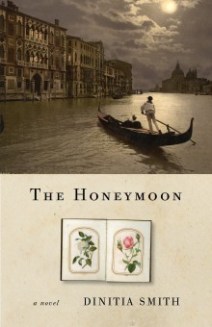 The most upsetting aspect of this fictional biography of George Eliot was the message forced upon her by her family that she was not a beautiful person and never would be. From the time she was a five-year-old girl she was told that she was physically ugly and that no man would ever marry her. Her mother favors her other two children over her; her father dotes on her but it seems that he pays her extra attention out of a sense of pity for his ugly child. It was difficult and sad to read that from an early age the emphasis on her physical appearance greatly affected every aspect of her life. Her father provided her with the best education because no man would marry her and she would have to be able to support herself.
 This book can only be described as a literary Odyssey, a roaming adventure through the crumbling town of Voroshilovgrad and its surroundings in the post-Soviet period. The plot offers so much more than Herman’s bizarre story as he attempts to run his brother’s gas station; we are confronted by a poetic journey through the landscape of Ukraine and a up close look at the unique people who inhabit this part of what once was Soviet territory.
 Serhiy Zhadan is one of the key voices in contemporary Ukrainian literature: his poetry and novels have enjoyed popularity both at home and abroad. He has twice won BBC Ukraine’s Book of the Year (2006 and 2010) and has twice been nominated as Russian GQ’s “Man of the Year” in their writers category. Writing is just one of his many interests, which also include singing in a band, translating poetry and organizing literary festivals. Zhadan was born in Starobilsk, Luhansk Oblast, and graduated from Kharkiv University in 1996, then spent three years as a graduate student of philology. He taught Ukrainian and world literature from 2000 to 2004, and thereafter retired from teaching. Zhadan’s poetry, novels, and short stories have been translated into over a dozen languages. In 2013, he helped lead the Euromaidan demonstrations in Kharkiv, and in 2014, he was assaulted outside the administration building in Kharkiv, an incident that gained notoriety around the world, including a feature article in the New Yorker. He lives and works in Kharkiv.
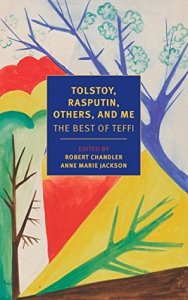 This book is a collection of autobiographical essays from the renowned, female Russian author Teffi. The essays were all written during the early part of the twentieth century and reflect Teffi’s own struggles with having to flee a turbulent and oppressive Russia. The collection is divided into four parts, the first of which is entitled “How I Live and Work.” These first few essays in the book capture her inner thoughts and self-doubts as she becomes Teffi “The Author.”



 The Book Binder's Daughter