Monthly Archives: February 2015

Edmund Persuader is FREE today on Kindle

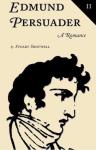
Edmund PersuaderI do not put buying links or ads on my blog for the books that I review.  Everyone has his or her own preferred book vendors, whether it is an independent book store, Amazon, Barnes and Noble, etc.  However, I am breaking my rule today for what I believe is the best book I have ever read, Edmund Persuader by Stuart Shotwell.  The author has an amazing gift for writing and I would be remiss if I did not let my readers know that he is generously giving away the book for free today (Saturday, February 7th) on Kindle.  Click HERE for your free copy.


The sequel which is entitled Tomazina’s Folly, is equally as stunning.  Click on the image of each book to read my reviews.Tomazina's Folly


1 Comment

Filed under Favorites, Historical Fiction, Literary Fiction

Review: While The Gods Were Sleeping by Erwin Mortier

I have been reading and enjoying a raft of literature in translation lately.  I was thrilled to receive an ARC of this book that was originally written and published in Dutch in 2008.  This version has been translated into English by Paul Vincent.

My Review:
Gods Were SleepingHelena is a very old woman who has outlived all of her friends, acquaintances and relatives.  She is homebound and needs round-the-clock care which is provided by a kind young woman named Rachida.  We get the feeling that Helena is waiting for death which she feels is imminent and while she waits she writes down the memories of her life, especially those that revolve around the period of World War I.

Helena’s father is Belgian and her mother is French, so she grows up living between these two countries.  She spends the summers in her mother’s family home in France, and when World War I breaks out Helena is forced to wait out the war with her mother, brother, uncle and aunts in their French countryside home.  Helena’s father is left back in Belgium and the family suffers this long separation.

The main characters in Helena’s memoir are her mother, brother and husband.  She has an uneasy relationship with all three.  Throughout her life Helena feels that, as a young woman growing up in a European bourgeois family, she is deprived of many freedoms.  Her mother, who still wears the stiff corsets of the 19th century and is always acutely aware of the gossip from the neighbors, will not let Helena wander out of their home unaccompanied.  Helena resents her mother for keeping her prisoner under these strict, and what she views as, old-fashioned mores.

Helena loves her brother Edgar and is very close to him yet she is jealous of the freedom he is allowed.  As a stark contrast to Helena, he can walk through the city streets at his leisure, have countless affairs, and travel off to war.  When Edgar is wounded during the Great War, he is finally sent home and Helena listens in horror to his vivid details of trench warfare.  One of the aspects of this book that is most impressive is the writer’s ability to graphically describe the tragedies of the war suffered by everyone who witnessed it; sounds, colors, textures, smells, and ruined landscapes are all described in order to capture the scale and destruction of The Great War.

When Helene marries a British soldier named Matthew who has a penchant for wandering and being on the open road, she admires his sense of adventure and his freedom.  But it is his wanderlust that keeps her separated from him for long periods of time.  When they have a child together, a daughter, I was surprised that Helena’s relationship with her was just a contentious as Helena’s relationship with her own mother.

The language and prose of the book feels disintegrated, as Helena jumps from one period of time to the next.  It is almost as if we are looking through an album of old photographs with Helena and she tells us stories of her life as they pop up in her mind.  She oftentimes goes on tangents as one story will remind her of another which she will launch into.  I think some readers will find this writing style confusing and disruptive, but it is appropriate for the setting of the book.  Helena is a very old woman, reflecting back on a long life and as images and narratives randomly appear in her memory she writes them down for us to read.

I have read quite a few historical fiction novels set during World War I this past year and WHILE THE GODS WERE SLEEPING is among the best for capturing the emotions, heartache, lasting effects of this war.

About The Author:
Erwin Mortier is a Dutch-language Belgian author. Spending his youth in Hansbeke, he later moved to nearby Ghent, where he became city poet (2005-2006).He wrote as a columnist for newspapers like De Morgen and has published several novels including Marcel, My Fellow Skin, Shutter Speed, and While the Gods Were Sleeping.


1 Comment

Filed under Historical Fiction, Literature in Translation, World War I

Review: The Door by Magda Szabo

The Door was originally published in 1987 in the original Hungarian. The New York Review of Books has released this edition which has been translated by Len Rix.

My Review:

The DoorEmerence was the sole inhabitant of her empire-of-one, more absolute than the Pope in Rome.”

The Door is about the unlikely relationship forged between two very different women.  Magda is a writer and an intellect and the pressures of her schedule force her to seek out a cleaning lady who will keep her home in order while she pursues her career.  Emerence, an old woman who lives in their neighborhood in Budapest, is well-known for her intense work ethic as well as her singular personality.

As the book progresses, one wonders why Magda puts up with some of Emerence’s eccentricities.  Magda at several points suffers from extremely harsh words and criticism when she argues with Emerence.  The housekeeper actually mocks Magda’s faith and religion to the point where Magda sneaks off to Church on Sunday so she will not have to endure Emerence’s verbal attacks.  As time goes on it is evident that, although they fight and argue, Magda and Emerence cannot live without each other; their lives are entangled together to the point that they cannot stand to be apart.

Emerence has a plethora of eccentricities, all of which are gradually explained throughout the book.  She has an intense fear of thunderstorms, she will only sleep in a loveseat, and she completely objects to religion or faith of any kind.  Emerence has also made a lot of money which she is saving up to buy an elaborate crypt in which to be buried.  But the most mysterious quirk of hers is the fact that she will not allow anyone, under any circumstances to enter her home.  Her door is permanently barred to her family, her close friends and her employer of 20 years.

Throughout the novel, Magda comes to truly care for the old woman and she tries to figure out what is behind the door to Emerence’s apartment.  Magda also attempts to get behind the figurative doors that Emerence has put up in order to emotionally protect herself from other people.  Can Magda ever truly break down these barriers and obtain the close and tender relationship with Emerence that she so desires?  Or will Magda’s attempts to break down these literal and figurative doors end up destroying this woman whom she has come to love as family?

THE DOOR is a unique and intense novel about relationships, loyalty, and love which I highly recommend.  Thanks to the New York Review of Books for bringing this brilliant Hungarian author to our attention.

About The Author:
Magda Szabó was a Hungarian writer, arguably Hungary’s foremost woman novelist. She also wrote dramas, essays, studies, memories and poetry.

Born in Debrecen, Szabó graduated at the University of Debrecen as a teacher of Latin and of Hungarian. She started working as a teacher in a Calvinist all-girl school in Debrecen and Hódmezővásárhely. Between 1945 and 1949 she was working in the Ministry of Religion and Education. She married the writer and translator Tibor Szobotka in 1947.

She began her writing career as a poet, publishing her first book Bárány (“Lamb”) in 1947, which was followed by Vissza az emberig (“Back to the Human”) in 1949. In 1949 she was awarded the Baumgarten Prize, which was – for political reasons – withdrawn from her on the very day it was given. She was dismissed from the Ministry in the same year.

During the establishment of Stalinist rule from 1949 to 1956, the government did not allow her works to be published. Since her unemployed husband was also stigmatized by the communist regime, she was forced to teach in an elementary school within this period.

Her first novel, Freskó (“Fresco”), written in these years was published in 1958 and achieved overwhelming success among readers. Her most widely read novel Abigél (“Abigail”, 1970) is an adventure story about a schoolgirl boarding in eastern Hungary during the war.

She received several prizes in Hungary and her works have been published in 42 countries. In 2003 she was the winner of the French literary prize Prix Femina Étranger for the best foreign novel.

 

5 Comments

Filed under Classics, Literature in Translation, New York Review of Books

Review and Giveaway: The Last Campaign of Marianne Tambour by David Ebsworth

Today I welcome France Book Tours back to the blog with a historical fiction novel set during the last campaign of Napoleon at Waterloo.  I invite you to read my review, learn a bit about the author, and enter to win your own copy (open internationally).

My Review:
The Last CampaignThe historical novels that I seem to enjoy the most are the ones that provide the most rich detail about the period in which they are set.  David Ebsworth’s novel about The Battle of Waterloo is one such novel.  It is the story of Marianne Tambour who is the canteen mistress to Napoleon and his troops.  She rides around camp with a barrel on her hip, doling out brandy to the Emperor and his men.  The camp is a dangerous place and an especially harsh environment for a woman.  Marianne must stay alive, carry out her duties as canteen mistress, and also try to keep her daughter safe.

Ebsworth makes the camp and the battlefield come alive for the reader.  The scenes are bloody, and raw and realistic; we feel the awful circumstances of soldiers marching, living in camp and dying in battle.  This period in French history is also very complex and the author is able to sort out the various sides of this conflict for us.  Napoleon has been in exile after being deposed and the Bourbon king, whom the characters in the book call “Fat Louis” has been on the throne for about a year.  But when Napoleon manages to call up a few hundred thousand troops, Louis immediately flees and the country is once again divided along various political alliances.

It is also worth mentioning that the author includes several detailed maps of the battlefield and troop movements at the end of the book.  Once again, this is a detail that is not only impressive, but will be very much appreciated by readers who like a visual outline of the routes that are mentioned in the narrative.  Ebsworth also gives us a glossary of French terms which I found most helpful in deciphering some of the vocabulary that he uses throughout the text.

Ebsworth provides us with strong female characters that we want to see survive amid a horrible and futile battle.  If you are in search of a historical fiction novel that brings to life Napoleon’s last battle and the volatile political scene of 19th century France, then I highly recommend THE LAST CAMPAIGN OF MARIANNE TAMBOUR.

About The Author:
EbsworthDavid Ebsworth is the pen name of writer, Dave McCall, a former negotiator and Regional Secretary for Britain’s Transport & General Workers’ Union. He was born in Liverpool (UK) but has lived for the past thirty years in Wrexham, North Wales, with his wife, Ann.  Since their retirement in 2008, the couple have spent about six months of each year in southern Spain. Dave began to write seriously in the following year, 2009, and The Last Campaign of Marianne Tambour is his fourth novel.

Visit his website. Follow him on Facebook, Twitter

Giveaway:
The author is generously giving away 5 copies of the book.  Winners will be able to choose print or kindle versions.  The giveaway is open internationally.  Please click on this Entry-Form to participate in the giveaway.

Click on the France Book Tour banner below to see the full list of blogs participating in the tour!

the-last-campaign-banner


13 Comments

Filed under France, Historical Fiction