Tag Archives: Short Stories

Review: The Curious Case of Dassoukine’s Trousers by Fouad Laroui

I received an advanced review copy of this title from Deep Vellum via Edelweiss.  This book was published in the original French in 2012 and this English version has been translated by Emma Ramadan.

My Review:
TrousersThis book contains a series of short stories told by a group of men sitting around at café in Morocco.  It appears that they have been friends for quite some time as there is a lot of teasing, interrupting, and jocularity mixed in with their stories.  Their tales range from the funny to the rather serious and I found that the theme of being an outsider in a foreign land pervades the entire collection.

The funniest tale is the title story in which a man is sent to Belgium by the Moroccan government to make a very important deal to import grain to his starving country.  The man checks into a hotel and is very nervous that the fate of his country hangs on his ability to negotiate this most important deal.  Since he is only visiting for one day he packs lightly and brings a single pair of nice trousers.  He is awakened during his first night in his hotel room by a horrible noise and gets out of bed to find that an intruder has come through his window.  At first glance it seems that nothing valuable has been stolen from him; but further inspection by the light of day reveals that his pants, his only pair of nice pants have been taken!

The man absolutely panics and goes does to the front desk of the hotel in his pajamas to ask for help.  The clerk directs the man to a charity shop which has a single pair of pants that are just his size; but the pants are a ridiculous pair of golf pants.  The events of his meeting, while he is wearing these pants, are hilarious but everything does work out for the best for him and for the fate of Morocco.

By contrast, there are two rather serious stories that I would like to describe from the collection.  The first one, entitled “Dislocation,”  is particularly fitting for what is going on in the world as far as refugees seeking asylum and people displaying xenophobia to anyone who seems foreign.  I found his use of repeating the same lines in the story very Homeric but instead of repeating epithets he repeats the entire beginning lines of his story over and over again.  Each time he repeats his story he begins with the phrase, “What would it be like, he asked himself, a world where everything was foreign?”  Each time he repeats these lines he adds more details about his life.  We discover that the man does, in fact, feel like a foreigner because he is a Moroccan who feels more French than Moroccan and is living in The Netherlands.  He is treated as a foreigner, an outsider and his walk home becomes slower and slower as he contemplates his feeling of dislocation.  This story showcases Lauori’s talents as a writer as he uses an array of unique styles throughout this short collection of stories.

The final story I would like to mention is story about a couple who are from different countries and having a long distance relationship.  John is traveling from The Netherlands and Annie is traveling from France and they are on their way to Brussels to spend a long weekend together.  They speak different languages, grew up in different countries with different cultures but for a while they have made their relationship work.  But they have both arrived in Brussels with the intention of breaking up with one another.

The language barriers and cultural differences have taken their toll on the relationship and they both want out.  The best example of their communication issues is described by John who says that Annie never easily gets his dry sense of humor and by the time he has to explain all of his jokes to her they are no longer funny.  This story has a surprise ending which I don’t want to give away.  But I will say that this is one of the best stories in the collection.

Overall this is a unique collection of stories that I can recommend to anyone who wants to experience a wide range of literary styles in a single collection of stories.

About the Author:
LarouiFouad Laroui (born 1958) is a Moroccan economist and writer, born in Oujda, Morocco. Over the past twenty years, Laroui has been consistently building an oeuvre centered around universally contemporary themes: identity in a globalized world, dialogue/confrontation between cultures, the individual vs. the group, etc. With ten novels and five collections of short stories written in French, plus two collections of poems written in Dutch, a play, many essays and scientific papers (written in French or English), his on-going ambitious literary output has been recognized with many awards, including: Prix Albert Camus, Prix Mediterranée, Prix Goncourt de la Nouvelle, Grande médaille de la Francophonie de l’Académie française, Prix du meilleur roman francophone, Premio Francesco Alziator (Italy), Samuel-Pallache-Prijs (The Netherlands), E. du Perron Prijs (The Netherlands)

8 Comments

Filed under France, Humor, Literature in Translation, Short Stories

Review: Henri Duchemin and His Shadows by Emmauel Bove

I received an advanced review copy of this collection of short stories from The New York Review of Books.  The stories were written in 1928 in French and this English version has been translated into English by Alyson Waters

My Review:
Henri DucheminThis collection of short stories all feature men who are unhappy and looking for someone or something with which to identify.  In the first story entitled “Night Crime,”  Henri Duchemin, a forty-year-old man,  is alone on Christmas Eve in a pub lamenting over his poverty and loneliness and the last thing he wants to do is to go back to his cold, empty flat.  He wanders around the streets in the rain until he really has no choice but to go home.  But before he goes home, a woman whome he meets on the streets notices his sadness and abrasively suggests that he kill himself.  As he drifts off to sleep, thoughts of suicide and murder haunt his restless dreams.

My favorite story in the collection is written in the epistolary style.  “What I saw” is a letter written by Jean to an unnamed friend; Jean desperately wants his friend’s opinion about something that he saw involving his girlfriend that disturbed him greatly.  Jean’s letter begins with a description of his girlfriend, Henrietta, and her devotion to Jean.  One thinks she is the model woman until, one day, Jean sees her sitting in a taxi and kissing another man.

When Jean confronts Henrietta about the liaison, Henrietta adamantly denies ever being with another man.  Henrietta and Jean’s other friends try to convince Jean that he must have been mistaken and only saw someone who resembled Henrietta.  Jean wants so much to continue his relationship with Henrietta and as he finishes his tale he begs the recipient of the letter to tell Jean his true opinion about Henrietta’s alleged indiscretion.  Jean, like the other characters in the story, has a tenuous grasp on an important relationship in his life and he is eager and even desperate not to lose it.

Another story worth mentioning is “The Story of a Madman.”  Fernand, the narrator, makes it a point at the beginning of his tale to address the reader and inform him or her that he is not, in fact, crazy or out of his mind.  He goes on for a few pages giving us some background about his activities and frame of  mind so that when he carries out his plan, the reader will think he is perfectly sane in doing so.

Fernand then proceeds to have a meeting with his father and tells his parent that he never wants to see him again.  Fernand then makes his way to his girlfriend, Monique’s apartment;  He assures us that he is deeply in love with Monique and they have a fantastic relationship, but he informs her that he never wants to see her again either.  The next stop on Fernand’s list is his best friend, with whom he also breaks off all contact.

Fernand’s final stop on his break-up tour is with his sister and brother-in-law.  After a friendly conversation, he also informs them that he never wants to see them again.  So, we are left wondering why Fernand would alienate all of the people in his life that he loves.  There are hints throughout the story that Fernand is exercising his willpower and that he is attempting to make a plan and adhere to it no matter what others may think.  But the last few sentences of the story leave us with a haunting suggestion that maybe his motives for leaving are a bit more depressing and sinister.

This is a small yet powerful collection of stories that will leave you thinking about these men and their feelings of alienation and unhappiness.  Bove’s language is sometimes curt and sometimes poetic.  He weaves these small tales in such a way that we are never sure where they will end.  I highly recommend this brilliant collection of writing brought to us by The New York Review of Books classics collection.
About The Author:
E BoveEmmanuel Bove, born in Paris as Emmanuel Bobovnikoff, died in his native city on Friday 13 July 1945, the night on which all of France prepared for the large-scale celebration of the first ‘quatorze juillet’ since World War II. He would probably have taken no part in the festivities. Bove was known as a man of few words, a shy and discreet observer. His novels and novellas were populated by awkward figures, ‘losers’ who were always penniless. In their banal environments, they were resigned to their hopeless fate. Bove’s airy style and the humorous observations made sure that his distressing tales were modernist besides being depressing: not the style, but the themes matched the post-war atmosphere precisely.

9 Comments

Filed under France, Literature in Translation, New York Review of Books, Short Stories

Review: The One Before by Juan José Saer

July is Spanish literature month and Stu over at Winstonsdad’s Blog and Robert at Carvana de recuerdos are co-hosting this fantastic event.  Visit their sites to see which bloggers are participating and to read lots of great reviews of books by Spanish authors.  I chose as my first book The One Before by Juan Jose Saer, an Argentine author; this copy was given to my by Open Letters Press via Edelweiss and is translated by Roanne Kantor.

My Review:
The One BeforeThis collection of stories do not necessarily have a plot or read like traditional stories.  They are more like intense philosophical observations made about various aspects of life by the author.  The book is divided into three sections, the first of which is called “Arguments.”  The “Arguments” are short pieces that range from one to three pages and include the author’s thoughts on a variety of topics such as insomnia, geography, dreams, existence and memory.

A few of the “Arguments” were exceptionally well-written and astute, especially the one that deals with insomnia.  The author’s struggle with sleeplessness appears in several of the pieces, but the story which describes it most vividly is “A Historian’s Insomnia.”  He works as late as he can and when there are finally no more excuses he forces himself into his pajamas and into bed next to his already sleeping wife.  He writes:

The procession begins immediately, the mute creaking of insomnia, interwoven with changing forms that assault me and never leave until daybreak. Almost always, it ends with increasingly wild disintegration, whose final phase I forget most of the time, or perhaps I’m already asleep, or perhaps I believe that I’m already asleep, or perhaps I’m absorbed in a thought of which I’m not conscious, but that nevertheless I believe I understand.

Even if we don’t have chronic insomnia like the author, everyone at one point in life experiences a sleepless night or two.  The meandering, almost frantic, prose of this story relates perfectly the panic we feel when we cannot sleep and toss and turn and wonder if sweet drowsiness will ever come to us.

The last two sections of the book are longer stories entitled “The One Before”  and “Half-Erased.”  In the latter story, Pidgeon Garay is packing up and saying his final goodbyes as he is preparing to leave Argentina for Paris.  I found this particular plot interesting because the author himself spent much of his life in a self-imposed exile in Paris in order to avoid the oppressive political regime in his native country.  Pidgeon is clearly struggling with leaving his native home; he goes into great detail describing and taking in all of the sights, sounds, smells and scenery of his home in what, I perceived,  as his attempt to store as many memories as possible before his departure.  Memory and how we remember and what we remember is a common theme in this story as well as in the “Arguments.”

Also, as Pidgeon is trying to leave Argentia, there is a rising flood that keeps threatening to overtake his home town.  The army is desperately trying to do what they can to save the city and the suspension bridge that connects the city to other parts of Argentina, but the flood shows no signs of stopping.  I wondered if this flood is a metaphor for the political regime that swallowed up Saer’s native land, so much so that Saer never felt like he could return and died in exile in Paris.

Pidgeon also seems to have a crisis of identity due to the fact that he has an identical twin named Cat.  People are always mistaking him for Cat and we can’t help but wonder if part of his reason for fleeing to Europe is to try and discover his own identity and become his own man.  At one point his visits Cat at his home but Cat is not there.  Cat’s roommate, a man name Washington talks to Pidgeon but the entire time Pidgeon keeps wondering if Washington realizes the difference between the identical twins.

These stories are stream of consciousness writing, sometimes rambling, and oftentimes profound.  Saer’s prose is abundantly descriptive and he is fond of the long sentences which use little or no punctuation.  This is a short book at only 130 pages, but it took me a few days to read it at a slow pace so that I could understand and absorb Saer’s thoughts and ideas.  I highly recommend giving Saer a try if you are interested in Argentine literature.


About The Author and Translator:
SaerJuan José Saer was one of the most important Argentine novelists of the last fifty years.  Born to Syrian immigrants in Serodino, a small town in the Santa Fe Province, he studied law and philosophy at the National University of the Littoral, where he taught History of Cinematography. Thanks to a scholarship, he moved to Paris in 1968. He had recently retired from his position as a lecturer at the University of Rennes, and had almost finished his final novel, La Grande(2005), which has since been published posthumously, along with a series of critical articles on Latin American and European writers, Trabajos (2006).

Saer’s novels frequently thematize the situation of the self-exiled writer through the figures of two twin brothers, one of whom remained in Argentina during the dictatorship, while the other, like Saer himself, moved to Paris; several of his novels trace their separate and intertwining fates, along with those of a host of other characters who alternate between foreground and background from work to work. Like several of his contemporaries (Ricardo Piglia, César Aira, Roberto Bolaño), Saer’s work often builds on particular and highly codified genres, such as detective fiction (The Investigation), colonial encounters (The Witness), travelogues (El rio sin orillas), or canonical modern writers (e.g. Proust, in La mayor, or Joyce, in Sombras sobre vidrio esmerilado).

His novel La ocasión won the Nadal Prize in 1987. He developed lung cancer, and died in Paris in 2005, at age 67.

Roanne Kantor is a doctoral student in comparative literature at the University of Texas at Austin. Her translation of The One Before won the 2009 Susan Sontag Prize for Translation. Her translations from Spanish have appeared in Little Star magazine, Two Lines, and Palabras Errantes.

15 Comments

Filed under Literature in Translation, Spanish Literature

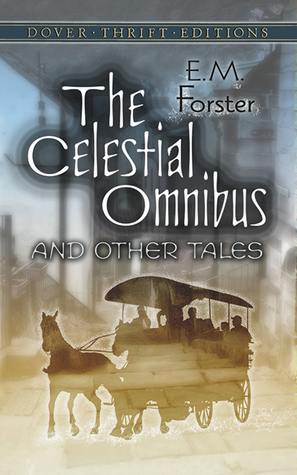
Review: The Celestial Omnibus and Other Tales by E.M. Forster

I received an advanced review copy of this title from Dover Publications through NetGalley.

My Review:
Celestial OmnibusThis brief collection of stories show the true depth of Forster’s literary talent and his ability to infuse fantasy and imagination into his writing.  My favorite stories were two in the collection into which Forster incorporates many classical references.

In the “Celestial Omnibus”, a boy discovers a sign for an omnibus in the lane across from his house.  The alley is a very odd place for an omnibus to pass through so the boy gets up very early one morning to investigate it.  When the sun rises a carriage does appear out of the fog and the driver picks the boy up.  The boy goes on a journey of a lifetime through the clouds and he meets nymphs and great writers and heroes from famous books.  The omnibus driver is Sir Thomas Browne, the famous essayist, but the boy doesn’t recognize or understand any of the famous people he meets; he just knows that he has had a wonderful time and has seen amazing things.  The story is full of literary allusions and classical references but I won’t give any of them away here so as not to spoil them for other readers.

When the boy comes home after having disappeared all day, his father canes him for telling lies about his supposed journey to heaven.  The boy’s neighbor, Mr. Bons, which happens to cleverly be “snob” spelled backwards, decides he will bring the boy back to the allow and show him that no such omnibus could possibly exist.  But when the omnibus shows up in the alley and picks up Mr. Bons and the boy, Mr. Bons does not have the same magical experience on his journey as the boy; for Mr. Bons’ imagination is not as carefree and vast as the boy and he does not witness the same remarkable landscape as the boy does.  It is no wonder in the end that Mr. Bons meets a horrible fate.

My other favorite in the collection is a story entitled “Other Kingdom.” In this story, an upper class aristocrat named Mr. Worters has taken a fiancé from Ireland, Evelyn Beaumont, who is much below his social status.  In order to better educate his new fiancé, Mr. Worters hires a classics teacher, Mr. Inskip, to teach her Latin.  It is evident from the beginning that Miss Beaumont does not have the intellectual capacity to learn ancient languages, but she does have a whimsical imagination and a carefree spirit.

Mr. Worters decides to buy his fiancé a wood, named Old Kingdom, for a wedding present.  When Worters decides that the wood needs fences and paths and bridges, Miss Beaumont gets very upset that he is trying to organize and tame the natural wood.  Through several allusions, the reader, or at least this reader, is quickly reminded of Ovid’s story of Daphne and Apollo in the Metamorphoses in which Apollo attempts to capture and tame Daphne the wood nymph.  Similar to Apollo, Worters learns the harsh lesson that he cannot tame nature or the spirit of this woman.  Miss Beaumont has a metamorphosis of her own but it is not the type that Worters had hoped for.

This is a collection of stories that I will reach for and reread over and over again and every time I read them I will discover something new and different.  I highly recommend THE CELESTICAL OMNIBUS AND OTHER TALES from Dover Publications.

About The Author:
ForsterEdward Morgan Forster, generally published as E.M. Forster, was an novelist, essayist, and short story writer. He is known best for his ironic and well-plotted novels examining class difference and hypocrisy in early 20th-century British society. His humanistic impulse toward understanding and sympathy may be aptly summed up in the epigraph to his 1910 novel Howards End: “Only connect”.

He had five novels published in his lifetime, achieving his greatest success with A Passage to India (1924) which takes as its subject the relationship between East and West, seen through the lens of India in the later days of the British Raj.

Forster’s views as a secular humanist are at the heart of his work, which often depicts the pursuit of personal connections in spite of the restrictions of contemporary society. He is noted for his use of symbolism as a technique in his novels, and he has been criticised for his attachment to mysticism. His other works include Where Angels Fear to Tread (1905), The Longest Journey (1907), A Room with a View (1908) and Maurice (1971), his posthumously published novel which tells of the coming of age of an explicitly gay male character.

4 Comments

Filed under British Literature, Classics, Short Stories

Review: Please Talk to Me-Selected Stories by Liliana Heker

I received an advanced review copy of this title from Yale University Press through NetGalley.  This edition has been translated by Alberto Manguel and Miranda France.

My Review:
Please Talk To MeHeker shows us in these short stories her ability to successfully write about a wide range of topics: from the relationship of servant and master, to the Oedipus Complex, to the toll that mental illness takes on an entire family.  The stories follow a stream-of-consciousness style, oftentimes involving abrupt and confusing transitions, that weaves us through the minds of many different types of characters.

The most clever story in the collection is “Strategies Against Sleeping.”  Señora Eloisa is being driven by a chauffer on a long ride during which she is very tired; she wants nothing more than to close her eyes and take a good long nap.  But the driver starts talking to her about how he could not sleep a wink on the previous night.  As a result he is very tired and wants her to talk to him so that he stays awake while he is driving.

We feel the pain and discomfort of the woman and the driver who are both fighting to stay awake for different reasons.  At one point during her forced conversations the woman becomes desperate for any kind of relief:  “For a very brief moment she had to suppress a desire to open the door and throw herself onto the road.”  In her delirium,  Señora Eloisa lets slip a very dark and personal family story that horrifies the driver and will definitely serve to keep him awake.

The story “Early Beginnings or Ars Poetica” includes the most extreme examples of the author’s abrupt transitions; this story reads like a dream sequence.  The narrator begins the story by imagining that a lion or a horse is present in his apartment when he goes to sleep .  The narrator then transitions to a philosophical musings about God and the beginnings of the earth.  Then the narrator transitions to imagining that he is four years old and is sitting in from of four cups of chocolate and a yellow plastic tablecloth on his birthday.  The story continues on in this fashion until the ending which is equally jarring.

This is my first taste of Argentinian literature and I will definitely look for more authors from this country.  I highly recommend PLEASE TALK TO MY as a quirky and symbolic collection of stories from Liliana Heker.


About The Author:
Liliana HekerLiliana Heker began her literary career at age 17, mentored by Argentine writer Abelardo Castillo. She was a collaborator in Argentina literary magazine “The Paper Cricket” and founded, along with Castillo, The Golden Bug and The Platypus. She has published several short story books which have been collected in “Cuentos” (Alfaguara). She has also written two novels, “El fin de la historia” and “Zona de clivaje”, and a collection of essays called “Las hermanas de Shakespeare”.

2 Comments

Filed under Literature in Translation, Short Stories