
 In the Foreword to the German Library (Volume 44) edition of Gottfried Keller’s stories Max Frisch writes:
Assuming that the American reader still has this volume in his hands, I would like to point out to him that Gottfried Keller fought for liberalism but was not naïve; he soon grew bitterly apprehensive that middle-class liberalism, the great social achievement of his century, might disintegrate into a profit society pure and simple, without utopias, without transcendent values. And that is what we have today. Or so I fear. If you read further you will find there is something strangely disturbing about these stories: One life after another ends in quiet failure. You won’t notice it immediately because the man who tells these tales has a sense of humor. He likes people even though he sees through them. He is kind. He knows a lot about the relationship between money and morals, for example, and he doesn’t cover it up; because he still has hope.
He would be horrified at his country—as he would be at other “democracies” as well.
Frisch’s words about Keller ring true even more so today than when he wrote them in 1982. Keller’s novellas in the first part of this volume are set in an imaginary place that he calls Seldwyla, a small town where everyone knows each other and gossip is rampant. The men he depicts are hard working but because of their stubbornness and narrow views of the world they bring about their own downfall.
In “The Three Righteous Combmakers,” Jobst, Fridolin and Dietrich are all craftsmen who work for a Seldwylan combmaker. The craftsmen in Seldwyla are usually itinerant, never working for one employer for very long. But these three men refuse to leave their present employer and they all start saving money and pinching pennies to the extreme in order to eventually buy the combmaking business. Gottfried deals with the ridiculous frugality of these men with his typical humor. The men are too cheap, for instance, to even think about taking a wife because of what it would cost them: “He was not accustomed to think of marriage, because he could conceive of a wife only as a person who wanted something from him that he did not owe her…” One day, however, Zus, the daughter of a local laundress, captures the attention of all three men when they learn she is in possession of a small inheritance. They argue, fight, and make fools of themselves to win her hand in marriage; their uncompromising adherence to their plans to get Zus’s money causes the “quiet failure” of all three men.
In the story entitled “A Village Romeo and Juliet,” the farmers that Keller depicts from Seldwyla are equally as stubborn and uncompromising as the combmakers. Marti and Manz are diligent men whose farms are prosperous because of their work ethic. But when a land dispute arises between the men, their focus on this petty issue causes them to neglect their farms and their families. Both men end up penniless and are forced to give up their once productive and beautiful farms. In addition their children, Sali and Verena, fall in love but understand the impossibility of any marriage because of the disapproval of their fathers. What makes Keller’s story different from the typical star crossed lovers tale is that Sali and Verena willingly and even enthusiastically take their own lives in order to control their own fate.
What I appreciated most about Keller’s writing in “A Village Romeo and Juliet” was his detailed descriptions of nature and the Seldwylan countryside. Like the landscape, the feelings that the lovers have for each other are beautiful, raw and natural. When the couple meets for the first time, Keller sets the scene:
Sali went directly out to the quiet, beautiful hillside over which the two fields extended. The magnificent, quiet July sun, the passing white clouds floating above the ripe, waving grain, the blue shimmering fiver flowing below—all this filled him once more, for the first time in years, with happiness and contentment instead of pain, and he stretched out full length in the transparent half-shade of the grain, on the border of Marti’s desolate field, and gazed blissfully towards heaven.
And when the lovers unite in that same field, their words are passionate and genuine, making their ending that much more tragic: “‘Oh Verena,’ he exclaimed, gazing into her eyes with candor and devotion, ‘I’ve never looked at a girl; I’ve always felt that I must love you some day, and without my wishing it or realizing it, you’ve always been in my mind.'”
Keller himself had an interesting life and his writings all have some kind of an autobiographical element. He said, “I have never produced anything which did not have its impetus in my outer and inner life.” Even though was a rather short man, he was quick-tempered and got into a lot of fist fights over the course of his life. He was also quick to fall in love and preferred young, tall and beautiful women. But he was never able to find that one special woman with whom to settle down and marry; every time he got close something got in the way (one of his brides-to-be committed suicide, for instance). His tendency towards fist fights, his unfilled love life , and his struggles with money are all carefully and meticulously reflected in these humorous yet tragic stories.
This collection from The German Library includes ten of Keller’s novellas. A very worthwhile literary purchase. What else is everyone reading this year for German Literature Month?

 Suah’s greatest strength as a writer lies in her ability to take what at first appears to be disjointed images and scenes and weave them together into a singularly beautiful story. The attic room, the poetry, the woman on the platform he longs to kiss are all connected in her character’s mind with a meditation on time and space: “When was it that he had last kissed a woman so ardently, his lips as passionate as when they pronounced poetry? In that city or this, at the house of his acquaintance or on the platform in the north station, while waiting for the train.”
 This fascinating collection of Russian Christmas stories, many of which have been published here in English for the first time, is a glimpse into the celebration of this holiday from a simpler age which is long past. Christmas in the twenty-first century has become the season of massive and ugly consumerism, a time when obscene amounts of money are spent on the latest and greatest toys and gadgets. The Christmas tales in A Very Russian Christmas, penned by Tolstoy, Dostoyevsky, Teffi, Chekov, Korolenko, Zoshchenko, Lukashevich, and Gorky bring us back to the holidays of the late nineteenth and early twentieth centuries when children were thrilled to receive fruits and small trinkets that decorated the Christmas trees. In these stories we encounter festive gatherings of different classes of people, reflections on what it meant to live a good life, and lastly, and most importantly, merry making that involves lots of vodka. Lots and lots of vodka. Klaudia Lukashevich describes young, Russian children who are eager with anticipation for the Christmas tree to be decorated and are so excited about celebrating Christmas with their extended family:
 December comes from the Latin word decem, meaning ten because in the original Roman calendar December was the tenth month of the year. When two new months were added to the beginning of the Julian calendar, thus pushing back December to become the twelfth month, no one bothered to change the name. As the month which concludes the Julian and Gregorian calendar years it is naturally a month of reflection, of looking back, of becoming more aware of the passage of time. Kluge and Richter use this last month of the year for the inspiration behind their collection of stories and photographs; there is one entry for each day of the month in December and together the writings and art work serve as a philosophical and poetic commentary about time, fate, choice and even love.
 The doctor estimates that he has about four or five hours to live when suddenly he sees a faint, flickering light in the distance. He isn’t sure if this light is a figment of his bewildered mind but he chooses to follow it anyway. The light, which is indeed the very thing that saves him, was the lamp of the cathedral verger who at that precise moment was climbing the stairs of the cathedral to ring the nightly bells.
 This collections defies classification as far as genre is concerned. The introduction to the book calls the writings a collection of eighty-one “brief texts” that were written throughout the course of Walser’s life. Some of the writings appear to be fictional short stories but others have a distinctly autobiographical feel to them. Walser even writes a few short dialogues and a book review. In addition, he has a wide range of topics and themes and writes about anything from nature, to fashion, to death and dying. This is a collection best absorbed a few pieces at a time so one can savor his pithy and didactic collection.
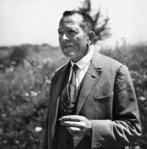 Robert Walser (1878–1956) was born into a German-speaking family in Biel, Switzerland. He left school at fourteen and led a wandering, precarious existence while writing his poems, novels, and vast numbers of the “prose pieces” that became his hallmark. In 1933 he was confined to a sanatorium, which marked the end of his writing career. Among Walser’s works available in English are Jakob von Gunten and Berlin Stories (available as NYRB Classics), The Tanners, Microscripts, The Assistant, The Robber, Masquerade and Other Stories, and Speaking to the Rose: Writings, 1912–1932.


 The Book Binder's Daughter