
The stunned knight came upon a field
Where nothing lived, just scattered skills and bones.
What battle had been fought, what did it yield?
No one remembered why the screams and groans.
Why are you mute, field?
Why overgrown with grasses of oblivion?
—Alexander Pushkin, Ruslan and Ludmilla
I received a review copy of this title from New Vessel Press. The original title was written in Russian and this English edition has been translated by Antonina W. Bouis. This review is a bit longer than most of my posts, but Sergei Lebedev’s books are captivating and worthy of a longer analysis. The Year of the Comet will be on my favorite books list of 2017, as well as my list of all-time favorite books of literature in translation.
 The unnamed narrator of The Year of the Comet was born in a Moscow hospital in the late 1970’s in the midst of an earthquake which natural phenomena prematurely hastened his birth. This seismic event is a harbinger of the feelings of turmoil and unease that will pervade the narrator’s childhood. “The earthquake was my first impression of being,” he writes, “the world was revealed to me as instability, shakiness, and wobbliness of foundations.” In this coming-of-age tale, the protagonist feels a constant sense of danger and shifting throughout his boyhood; he grows up trying to understand vague bits and pieces of family stories he hears about hardships suffered during Stalinist Russia and World War II. At the same time as he is becoming more aware of his family’s hidden past, the Soviet Government is beginning to show signs of its impending collapse.
The Year of the Comet is the follow-up to Sergei Lebedev’s stunning and lyrical debut novel, Oblivion which focuses on one man’s quest to uncover the horrors of the gulag in Soviet Russia when he travels to the Siberia as a geologist in the late 1990’s. Both Oblivion and The Year of the Comet, although fictional accounts of life in Soviet and Post-Soviet Russia, have elements of Lebedev’s own experiences. Both novels are written from the point-of-view of an unnamed narrator who is attempting to understand the dark secrets of his country’s history while perestroika pushes the Soviet Union to its end. What is markedly different about Lebedev’s second novel, The Year of the Comet, is that it center on the narrator’s memories of his childhood spent in Moscow in the mid 1980’s during which time the first cracks in the façade of the Soviet Regime are beginning to appear.
It was a literary risk for Lebedev to create a narrator who takes on the mindset, the point-of-view of his childhood; writing a story that deals with the complexities of family history and the collapse of The Iron Curtain while at the same time employing a child’s view that is not jejune is a literary feat that Levedev successfully achieves. The narrator never explicitly states the age at which he experienced the events depicted in the book, but based on clues within the text, he appears to be describing the 9th and 10th years of his life. The similarity in narrative style with Karl Ove Knausgaard’s third installment of his fictional autobiography, subtitled Boyhood, came to mind as I was reading The Year of the Comet. Similar to Knausgaard’s narrative, Lebedev combines the first person point-of-view with the past tense so that we get a child’s view of the story without the author having to use a child narrator. Where Lebedev differs from Knausgaaard is that the Russian author never gives a name to his narrator, thereby reinforcing the fact that although this story might have pieces or hints of autobiography, it is a work of fiction. As he tells his story, Lebedev’s protagonist maintains the innocence, mystery and mindset of his adolescence yet he is still free to make observations about complex themes such as loss, deficiency, pain and concealment. From a very young age the unnamed narrator of Lebedev’s novel has a sense that there are ominous family and national secrets he does not know and he turns the uncovering of these secrets into his own personal and interesting scavenger hunt.
Two Grandmothers, Two USSRs:
The Year of the Comet is divided into four parts all of which are focused on the narrator’s rearing by his grandmothers. His mother works for the Ministry of Geology which studies the causes and consequences of natural disasters and his father is a scholar who specializes in catastrophe theory. Since his parents are busy with their careers he is oftentimes entrusted to the care of his grandmothers:
My grandmothers, who had suffered so much, lost brothers, sisters, and husbands, but had survived all the events of the age, were to give me refuge in the peaceful flow of their lives, bring me up on the margins, far from real time, as if deep in the woods or on a lost farmstead. But—and I will tell you about this later—the nearness of my grandmothers merely intensified the sensation it was supposed to heal.
Most of Part One—the longest of the book—portrays with a compelling mixture of humor and sadness the lives of these women who are wartime widows. They have suffered numerous loses throughout their lives but their strong wills have given them the fortitude to live on despite those loses. Grandmother Mara and Grandmother Tanya are very different characters, but one thing they have in common is their devotion to their young grandson. He is the only grandchild of both of these women so that all of their love, attention, affection, adoration and hopes for the future are focused on the boy. More than his parents, more than his teachers, and even more than his friends, the grandmothers are the central figures in the book who have the most influence on his adolescence.
Grandma Tanya, the narrator’s maternal grandmother, is from a long line of Russian nobility, is well educated and worked as an editor at Politizdat. She is also nearly deaf and since she refuses to wear a hearing aid, the narrator has to put his arm around her and speak directly into her ear when he wants to have a conversation with her. “The skill of dealing with time and darkness was given to me by my Grandmother Tanya,” is the narrator’s introduction to this gentle woman with whom he spends most of his time when not at school. By contrast, Grandma Mara, his paternal grandmother, is of peasant stock, a zealot of communism and Stalin, enjoys cooking large family meals, loves lipstick, perfume and sweets, and is a rather loud presence in the narrator’s life. He says about Grandmother Mara, “Even in insignificant situations she spoke aggressively, pushing, harsh, trying to tear the words apart, use them all up so that the final silence could come.”
Both grandmother’s refuse to talk about their family histories but the narrator, through astute observations of his surroundings, knows that there are family members whom he has not met that died or disappeared under tragic circumstances. Grandmother Tanya has a wall of photos hanging in her apartment of people that the narrator has never met and about whom she refuses to answer any questions. Furthermore, the narrator finds it unsettling that Grandmother Tanya oftentimes recites the lines from Pushkin, “Why are you mute, field.” Grandma Mara, whenever there is a family gathering, sets the table for more people than is necessary. The empty place settings at family dinners are an eerie reminder of relatives that are gone and whom she refuses to name or mention. He decides that the best way to put an end to this “conspiracy of silence” is to excavate Grandmother Tayna’s and Grandmother Mara’s apartments to undercover clues about these lost relatives.
Lebedev’s subtle humor shines through in this part of his story as the narrator describes his boyhood days snooping around his grandmothers’ apartments as if he is some sort of secret agent on a mission. Whenever he finds himself alone in Grandma Tanya’s Moscow apartment, he performs a thorough and comical search that could only be undertaken by a precocious and inquisitive child. He sets up an alarm clock in the middle of the apartment so he doesn’t lose track of time before she returns and then he fingers the linings of clothes, looks between spaces in the radiator, studies the inside of the washing machine, and opens forbidden drawers in her desk. He is frustrated to the point of despair when he finally finds an untitled book, which he thinks is a secret diary, hidden in plain sight on the bookshelf. Grandma’s book, however, which is written in some kind of an invisible ink, is unintelligible to him so whenever he is alone in Grandmother’s apartment he keeps searching.
The narrator concentrates his search of Grandma Mara’s apartment on a room that was strictly off limits to him: “There was a storeroom near the toilet that served as a kind of Siberian exile.” Items that were old and broken were relegated to this storeroom and he was forbidden to go in there without any explanation. He is nervous as he attempts to break into the locked room, so he finds one of his deceased grandfather’s war medals and pins it on his shirt to give him courage. With the Red Star serving as his apotropaic protector he finds, much to his wonder and excitement, a set of volumes of the Great Soviet Encyclopedia (GSE) from the 1920’s and 1930’s.
I had stepped on the Atlantis of books, the continent of the past that had floated up from the ocean depths. Gradually there appeared a world about which I knew nothing. Those names, events, and phenomena did not exist in my time, or if they did, I intuitively sensed that they were presented in a completely different way.
By doing more snooping, more research and comparing the GSE to the Small Soviet Encyclopedia, the narrator figures out that Grandma’s encyclopedia contains names that had vanished, had been erased in later editions of the books. He also comes to the chilling realization that not only does his family have a secret past to hide, but so does his country: “I began to understand that the USSR I knew and inhabited was just a copy, a piece of the other, earlier one.” There are, in effect, two USSRs.
Throughout Part One, the narrator also depicts his boyhood as one in which he has a constant, prescient suspicion that something big and significant is about to happen. He senses it and he can feel it from his observations and bits of conversations he gleans from the adults around him. Some of his anticipation is due to childhood bravado, but some of it is also the innate sense that children have when a big change is about to occur. As he is searching his Grandmothers’ apartments for family secrets he intuits a faint hint, a faint shaking of the foundation that will bring about the collapse of the Soviet Union. The narrator, however, doesn’t describe what we would expect when a government starts to collapse—there are no scenes of riots, political turmoil or military occupation. He never mentions words like “perestroika”, “revolution”, or “Gorbachev.” Instead he notes “a brink-of-war disorder in daily life.” There are plenty of shoes available in stores but no shoelaces. There is a plethora of pots available to buy at the local hardware store but not a single frying pan. The most obvious items he notices that are missing from hardware stores are materials used to bind and fasten: nails, screws, wires, cement and glue all become scarce. As an American who also grew up in the 1970’s and 1980’s and having only a vague understanding of everyday life behind the Iron Curtain, I found his descriptions of these insignificant items that go missing absolutely fascinating. I think many of us have in mind an image of protests and rioting in the streets, but the collapse of the Soviet Union, as seen through the eyes of a child, was much more subtle than that. The Soviet Union is literally coming apart at the seams and there are no materials left with which to bind it back together.
The Celestial Guest and the Nuclear Disaster
Part Two of the book focuses on the year during which two major scientific events, one natural and one man-made, threaten to cause more upheaval in the narrator’s young life. Grandma Tanya and Grandma Mara take a keen interest in Haley’s Comet, which “celestial guest” was predicted to make an appearance over the skies of Moscow. Both Grandmothers are nervous and on edge about the comet and eagerly read any piece of news about it in the papers.
They were preparing for the comet’s arrival, and while preparations were not manifest in action, they were palpable. Grandmother Mara softened, and contrary to her personality she let go of her old feuds and worried that she would not be able to forgive everything in time. Grandmother Tanya, an incredible tranquil person, became calmer still, more tactful, as if apologizing even to the dust she wiped away or the salt she tossed into the soup.
Lebedev’s clever humor comes through, once again, as he describes the Grandmother’s waiting for The Comet as if it will somehow usher in an apocalypse. The behavior of the Grannies makes the narrator so anxious that he works up the nerve to ask Grandma Tanya about this heavenly phenomena. Her answer unsettles him even more: the last time the Comet visited was in 1910, she tells him, four years before The Great War, which she vividly remembers; to her, the reappearance of the comet was a sign of great misfortune to come.
The other event that absorbs the narrative of Part Two is the nuclear disaster at Chernobyl. Since the narrator’s father specializes in catastrophe theory, he is one of the first scientists to get a phone call about the meltdown of the nuclear reactor. The theme of secrecy, which encompasses both his family and his country, also pervades part two. School is canceled and no one knows what is going on: “My parents did not sleep at home, I did not go to school, and it was only on the third day that the word Chernobyl appeared” is how the narrator describes the early days of the disaster.
When the narrator witnesses the aftermath of this disaster, he, too, notes that the Soviet government was keeping a veil of secrecy around this catastrophe, not sharing the details of the fallout with its own citizens. The narrator shares various rumors about war breaking out, planes crashing and nuclear explosions of all sorts being circulated around Moscow. He recalls what he learned as a boy from his Book for a Young Commander about nuclear war: “If the capitalists provoke us into a third world war, our goal will be noble and beautiful—to make that war the last in the history of humanity.” This startling declaration from his childhood book is a reminder that we are viewing this scene through a young boy’s perspective; he cannot fully comprehend or describe the implications of a nuclear war. There is a gap left in the text that we must fill in for ourselves with all of the eerie and horrible thoughts that the boy’s statement evokes.
The Dacha and the Serial Killer
In addition to writing fiction, Lebedev is also a talented poet. The author’s lyrical and mellifluous prose and personal, sometimes philosophical, writings are evident throughout the narrative. But his talent in poetics especially comes through in part three with his descriptions of the hot summer the narrator spends in the dacha, the family summer home in the country:
It was June, close to the solstice; the summer was dry, hot, and scorchingly sunny; It made the heavy fir forest beyond the dacha fence seem even blacker. Late evening and nighttime, when children are usually afraid, did not seem scary that summer; scary and horrible were the afternoons, when the streets were empty, hot haze shimmering above the asphalt, distorting and hiding perspective and the horizon; in the boiling jelly of that haze, the figures of passersby could suddenly appear very close, shimmering, inaccurate, flowing and worrying; blessed was the cool of the evening, cleaning the air and chasing away the ghosts of the day.
This paragraph is a typical example of Lebedev’s style, in both Oblivion and The Year of the Comet, of ubiquitously using semicolons to give multiple layers to the poetic descriptions of his scenes. We slowly absorb Lebedev’s writing one small piece at a time, from semicolon to semicolon. The semicolon makes us pause, reflect a bit and then grasp another piece of the setting; if he used a series of sentences instead of these independent clauses, his lengthy and vivid scenes would not have the same cohesion or fluidity. Lebedev’s description of the haze being like “boiling jelly” drops us right into the midst of the oppressively hot summer, the most dangerous time of day, when a serial killer is on the prowl in the dacha neighborhood.
Much of Part Three is taken up with relating of the story of a serial killer targeting children, a man whom the police call “Mister.” The boy decides that the killer is probably a spy and he will look for him, have him arrested, and be the hero of the dacha. His hope is that he will only be seriously wounded and not killed in his brave, selfless act of heroism. One day as he is wandering the deserted, sweltering summer roads and looking for Mister in the dacha’s hiding places, he nearly gets kidnapped by a non-descript man who at first appears harmless. The description of his near-abduction was horrifying because the boy doesn’t fully understand that catching a serial killer is not a game and he just barely escapes being harmed. It is in this scene that we experience the brilliance of Lebedev’s use of a child’s view, one that we would normally not consider as adults when reading about a dangerous situation. We are put into the mindset, the very existence of the narrator’s harrowing escape from abduction but we still sense that element of innocence because he doesn’t fully grasp the danger he has put himself in. After this shocking event, the boy simply goes home and collapses on his bed until his Grandmother wakes him up. He never tells a living soul about what happened and now it is the narrator who carries around his very own secret.
The Earthquake Subsides:
Part Four is the shortest and final piece of the story and by this point the protagonist is a few years older, in his early teenage years. The Grandmothers, who served as the tectonic plates, the solid foundation of his upbringing, have weakened, have become rather elderly and feeble and require a lot of attention and medical care. Despite their declining health they maintain their affection and devotion to their only grandchild and their only grandchild still retains a certain uneasiness in their presence:
I was uncomfortable and embarrassed, I noticed signs of their frailty that should not be noticed, I was clumsy, self-conscious, pathetic, and unable to respond to their love. Grandmother Mara kept talking about my future, my wonderful wife, and my good apartment—she meant hers, and this kindly rejection of her own future grated on me. Grandmother Tanya was much quieter, but she started holding my hand much more frequently, as if trying to slip something into it or seeking support.
Because he is no longer dependent on them for care, a poignant shift occurs in his life as he grows closer to his parents and is more distant from his Grandmothers. Even though at this point the collapse of the Soviet Union is playing out in the streets of Moscow, there is an unexpected and strange sense of calmness and serenity that suffuses this final part of the book. After an earthquake, when the foundations have finally stopped moving, a sense of calm descends on the victims as they crawl out of their hiding places and survey the effects of the shifting earth. The final part of Lebedev’s book feels as if the narrator comes to the realization that his foundations have stopped quaking and he is attempting to survey the aftermath of those childhood tremors. As he wanders the streets of Moscow and sees masses of people saying farewell to communism, as barricades and bonfires fill up city squares, he finally comes to an understanding of what the turmoil he experienced throughout his boyhood meant.
In the last scene of the book he once again finds Grandma Tanya’s secret book he had discovered a few years ago in her apartment. She had been writing a memoir, directly addressed to the narrator, chronicling the entire history of their family. “The history of our family goes back to the XIV century,” Grandmother Mara writes to him. And she proceeds to lay out all the minute details of their family history and ancestry. He experiences a final moment of calm because at last there are no more secrets, about his family or about his country, for him to unravel.
 Caveat lector. Let the reader beware. This book is deeply sad and does not have a happy ending. But for many readers a happy ending is not a necessary factor for a book to be considered successful The narrator of Ismailov’s novel is a child nicknamed Mbobo whose mother is from Siberia and whose father is an unknown African athlete that visited Moscow, and his mother, during the Olympics in 1980. The boy’s sad story of a tumultuous childhood fraught with domestic violence and racism is told posthumously: “My mother died when I was eight, and I died four years later.”
 Born in an ancient city in what is now Kyrgyzstan, Hamid Ismailov is an Uzbek novelist and poet who was forced to leave his home in Tashkent when his writing brought him to the attention of government officials. Under threat of arrest, he moved to London and joined the BBC World Service, where he is now Head of the Central Asian Service. In addition to journalism, Ismailov is a prolific writer of poetry and prose, and his books have been published in Uzbek, Russian, French, German, Turkish, English and other languages. His work is still banned in Uzbekistan. He is the author of many novels, including Sobranie Utonchyonnyh, Le Vagabond Flamboyant, Two Lost to Life, The Railway, Hostage to Celestial Turks, Googling for Soul, The Underground, A Poet and Bin-Laden, and The Dead Lake; poetry collections including Sad (Garden) and Pustynya (Desert); and books of visual poetry including Post Faustum and Kniga Otsutstvi. He has translated Russian and Western classics into Uzbek, and Uzbek and Persian classics into Russian and several Western languages.
 This fascinating collection of Russian Christmas stories, many of which have been published here in English for the first time, is a glimpse into the celebration of this holiday from a simpler age which is long past. Christmas in the twenty-first century has become the season of massive and ugly consumerism, a time when obscene amounts of money are spent on the latest and greatest toys and gadgets. The Christmas tales in A Very Russian Christmas, penned by Tolstoy, Dostoyevsky, Teffi, Chekov, Korolenko, Zoshchenko, Lukashevich, and Gorky bring us back to the holidays of the late nineteenth and early twentieth centuries when children were thrilled to receive fruits and small trinkets that decorated the Christmas trees. In these stories we encounter festive gatherings of different classes of people, reflections on what it meant to live a good life, and lastly, and most importantly, merry making that involves lots of vodka. Lots and lots of vodka. Klaudia Lukashevich describes young, Russian children who are eager with anticipation for the Christmas tree to be decorated and are so excited about celebrating Christmas with their extended family:
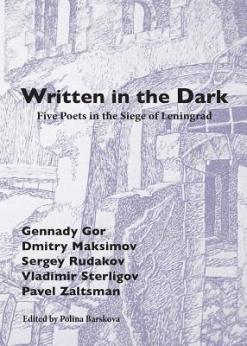 The official, state sponsored view of the Siege of Leningrad was one of heroism and valor and any piece of writing whether it be fiction, non-fiction or poetry that did not align with the Soviet vision of the Siege was suppressed. The dark and shocking works of the five poets in this collection were written in secret and not uncovered or published until many years after the war and after the fall of the Soviet Union. The Nazi siege of this Russian city lasted from September 1941 until January of 1944 with an estimated death toll reaching nearly 1,000,000 lives. The Soviet Union propogated a version of this event that portrayed stoic Russians valiantly enduring the long, German offensive; the brutality and horror that occurred in the city were buried with those who died during the Siege. In the introduction to the collection, Polina Barskova writes about the official, state approved, Soviet poetry that was allowed to be published about the Siege:
 Babel’s band of Jewish gangsters, thieves and smugglers make up the first part of this collection of highly entertaining and lively stories. The setting is the author’s hometown of Odessa, the Russian city on the Black Sea which saw a population boom in the nineteenth century and became a place for Jews to settle and seek out their fortunes. Babel begins his stories by introducing the Godfather of all Jewish gangsters, Benya Krik, also known as “The King” in Odessa. The occasion is the wedding of Benya’s ugly forty-year-old sister and he is delivered some news by an informant that the cops are going to stage a raid on the King’s headquarters. The clipped, rapid fire sentences are reminiscent of a scene from Pulp Fiction or Scarface.
 Isaak Emmanuilovich Babel (Russian: Исаак Эммануилович Бабель; 1901 – 1940) was a Russian language journalist, playwright, literary translator, and short story writer. He is best known as the author of Red Cavalry, Story of My Dovecote, and Tales of Odessa, all of which are considered masterpieces of Russian literature. Babel has also been acclaimed as “the greatest prose writer of Russian Jewry.” Loyal to, but not uncritical of, the Communist Party of the Soviet Union, Isaak Babel fell victim to Joseph Stalin’s Great Purge due to his longterm affair with the wife of NKVD chief Nikolai Yezhov. Babel was arrested by the NKVD at Peredelkino on the night of May 15, 1939. After “confessing”, under torture, to being a Trotskyist terrorist and foreign spy, Babel was shot on January 27, 1940. The arrest and execution of Isaak Babel has been labeled a catastrophe for world literature.
 Boris Dralyuk is an award-winning translator and the Executive Editor of the Los Angeles Review of Books. He holds a PhD in Slavic Languages and Literatures from UCLA, where he taught Russian literature for a number of years. He is a co-editor of the Penguin Book of Russian Poetry, and has translated Isaac Babel’s Red Cavalry and Odessa Stories, both of which are published by Pushkin Press.


 The Book Binder's Daughter