Tag Archives: Poetry

Review: The Inventors and Other Poems by René Char

This is my second review for National Poetry Month and is, once again, another unique volume published by Seagull Books.  The translator of this volume is Mark Hutchinson.

My Review:
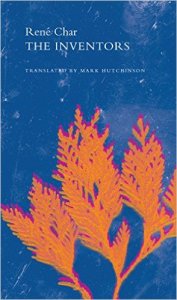
The InventorsAs I first read the introduction to this volume, the piece of information that stuck out to me immediately was that Char was influenced by Heraclitus, the pre-Socratic philosopher.  Char imitates Heraclitus’ style of short and puzzling works as well as his theme of strife.  The pre-Socratic course I took in graduate school was one of the most challenging yet rewarding courses in my career as a student.  The Ancient Greek, which is fragmentary, is difficult to put together and even more difficult to analyze when one has come up with an English version. Heraclitus acquired the nickname “The Obscure” for good reason.  I had the same feelings, both of obscurity and difficulty, as I was reading Char.

The poems are in various lengths and some of the are not poems at all, but actually prose that still read like poems.  “Pontoneers” is an excellent example of a shorter work in the Heracletian style:

Two riverbanks are needed for truth: one for our outward

journey, the other for truth’s return. Paths that soak up their

mist.  That preserve our merry laughter intact.  That, even when

broken, are a haven for our juniors, swimming in icy waters.

I could spend a lifetime trying to unpack these few short lines and each time I look at them I find something different.  They are reminiscent to me of Heraclitus’ famous line about never being able to step into the same river twice.  But here Char reminds us of the ever-changing nature of our existence by posing two rivers and suggesting that what we experience, our own personal truth, may be different depending on which path we take.

Char struggles with the idea of existence and whether or not something of us serves in an afterlife.  Sometimes he comes across as a Stoic, such as in these few lines from “Loins.”

In taking leave of the world, we return to what was out there

before the earth and stars were formed; to space, that is.  We

are that space, in all its prodigality.  We return to aerial day and

its black rejoicing.

The Stoic idea that something of us, of our spirit, survives seems to be lurking in these lines.  But there are also times when I thought that Char leaned toward the Epicurean.  A line in “How Did I Ever Get this Late?” stood out to me as particularly Epicurean.  He imagines a deity that sets the human experience in motion but then steps back and has nothing else to do with its own creations.  The “Master Mechanic” watches his own chaos for his amusement:

In the immense community of the heavely clock

face, the Master Mechanic, it would seem, has greased the

motors and slipped away, chuckling, to amuse himself elsewhere.

This volume of poetry is nearly impossible to write a coherent review for.  The selections that are chosen for this edition are a sampling of the poet’s wide range of styles and topics.  Char’s enigmatic messages and obscure writing style are as difficult to unpack as Heraclitus.  But this is absolutely a volume that any lover of poetry will want to have on his or her shelf.  I find that the most challenging volumes of poetry are the most rewarding.

Finally, I have to say something about beautiful book jackets that are all designed by Sunandini Banerjee of Seagull Books.  Each volume is wonderfully colorful and captures the spirit of the poems contained within.

About the Author:
CharHe spent his childhood in Névons, the substantial family home completed at his birth, then studied as a boarder at the school of Avignon and subsequently, in 1925, a student at L’École de Commerce de Marseille, where he read Plutarch, François Villon, Racine, the German Romantics, Alfred de Vigny, Gérard de Nerval and Charles Baudelaire.

Char was a friend and close associate of Albert Camus, Georges Bataille and Maurice Blanchot among writers, Pablo Picasso, Joan Miró and Victor Brauner among painters.


5 Comments

Filed under France, Poetry, Seagull Books

Review: The Anchor’s Long Chain by Yves Bonnefoy

In order to celebrate National Poetry Month, I decided to review some of the poetry collections from Seagull Books.  Thanks so much to Naveen for sending me some beautiful offerings from their catalogue.  First up is an edition of Bonnefoy’s poetry translated by Beverley Bie Brahic.

My Review:
Layout 1This collection of poems begins with a series of short pieces that have some common themes, the most striking of which is a reflection on memory.  The poems appear to the reader as snippets of the poet’s memory as he is trying to reflect on pieces of his life that have passed.   Sometimes the images are very clear and precise.  For example, the end of one poem reads:
 

Do you remember

Our first bedroom?  Do you remember the ad

Flowered wallpaper?  We wanted to strip it off

Only there was other paper underneath,

Layers of it,

And the last, on the grey plaster, newsprint,

With words from the other century

That we rolled under our wet fingers. At last

We craped the wall clean with pen knives.

You were laughing, so was I, night was falling.

But the images that flit across the poet’s memory are not always this transparent.  He oftentimes struggles to grasp at a fleeting memory and it is at these times where the poetry also becomes more blurred for the reader.  One of the most poignant images that he evokes to demonstrate his frustration at the ephemeral nature of memory is that of the Greek god Erebus:

Oh, memories: our Erebus,

A great shapeless sob is at the bottom of us.

Erebus is the perfect symbol for Bonnefoy’s struggle with memory as he is grasping around the dark recesses of his mind to find his past.  As I noted above, the passages in which his memory is not clear come across as muddled and harder for the reader to understand.  One such passage, which I read over and over, is:

She dreams

She is up on the ladder, she knocks at the

closed door.

The engines roar.

Fro the plane’s belly no one responds

And the world takes off.

She hangs there adrift between birth and death

In the calm sky,

The sky where just a few puffs of cloud

Melt into the blue, that is, God–no, the eternal.

One more aspect of these poems that I have to mention is the recurring images of the ocean, the sand and the waves.  They are prominently feature in these short pieces and these images seem to have made an especially lasting impression on the poet’s memory.  He remembers a relationship with a woman as they are walking on the beach; he remembers a summer’s eve when he is crumbling up newspapers to make a fire by the sea.

The next part of the collection actually features short pieces of prose.  Each of these short stories, which I would argue can be considered flash fiction, revolve around the innocence of childhood.  The most striking story is the one entitled “The Long Name.”  The story begins with a boy wandering in the woods and he hears what he thinks is singing.  He stumbles upon a little girl who is setting out things for her tea.  The boy learns that the little girl is a princess and the song isn’t a song at all but her servant calling out her extremely long name.  The girl, who is a princess, explains why the king gave her such a long name.  These stories all have a fairytale quality to them and the poet seems to  envy the innocence and simplicity of childhood.  A little girl who wants to play with her toys and have tea should not be burdened by the adults in her life with such a long and cumbersome name.

The final part of the collection features a series of nineteen sonnets.  I so much enjoyed reading these and I have read a few of them over and over again.  This is the type of poetry collection that will sit on my coffee table and I will pick up and will reread and find something different and interesting every time.  Many of the sonnets are tributes, a tombeau in the French as the note in the text tells us, to artists and writers of the past.  The collection starts with a tribute to Leon Battista Alberti and also includes sonnets about Maupassant, Descartes and Poussin.

My favorite sonnet, which should be no surprise to anyone who knows about my classics background, is the one entitled “Ulysses Sails Past Ithaca.”  In this poem we are given an image of Ulysses as he sail past a place he once knew as his home of Ithaca.  “Remember, with the bees and olive tree,/ The faithful wife and the old dog.”  But this is all gone now, just a fading memory.  The poem ends with the wish that Ulysses might be able to go back to the child he once was that played in the surf.   This sonnet ties together the entire collection perfectly; in its subtle nod to the poetry of Homer the poet uses the images of the fleeting nature of memory and the innocence of childhood.

This is a difficult collection of poetry to review because it is impossible to capture its brilliance in a few short paragraphs.  Thanks to Seagull Books for translating and bringing to English readers this beautiful and thought-provoking collection.

About the Author:
Y BonnefoyYves Bonnefoy (born June 24, 1923) is a French poet and essayist. Bonnefoy was born in Tours, Indre-et-Loire, the son of a railroad worker and a teacher.

His works have been of great importance in post-war French literature, at the same time poetic and theoretical, examining the meaning of the spoken and written word. He has also published a number of translations, most notably Shakespeare and published several works on art and art history, including Miró and Giacometti


7 Comments

Filed under France, Literature in Translation, Poetry, Seagull Books

Review: Georg Trakl Poems

My Review:
G Trakl PoemsI loved the first novel I read from Seagull Books so I decided to give some of their poetry a try.  I was not disappointed; and, in fact, this small but powerful little book captivated my attention.  I had intended to read a few poems a day over the course of several weeks.  But I finished the collection in a couple of sittings because once I started reading the poems I could not put the book down.

After reading this collection of Trakl poems I was not surprised to discover that he had a very brief and tragic life.  His poems are filled with the language of decay, dying, sunset, twilight, birds of carrion and shadows.  But I got the feeling that despite his internal struggles, Trakl desperately wanted to fight his way out of the abyss and find some meaning, some bright spot, some redemption in what was otherwise a depressing existence.

A common theme in this collection of poems is nature and the natural decay that every living thing experiences.  But mixed within this decay there is also a natural, cyclical process of death and rebirth.  In the opening poem a flock of ravens sense that a meal is near.  They fight over their meal and once sated they fly away, almost gracefully “like a funeral cortege/Into winds tingling with ecstasy.”  Dinner for ravens means rot and decay is present but it is also nourishment and continues their lifespan; it is the fuel that allows them to make that flight at the end of the poem.

One of my favorite poems in the collection “In Autumn” perfectly describes Trakl’s struggle against death and decay.  Although fall is the season where everything starts to wither and die, the poet captures the beauty of this time of the year.  He describes sunflowers that “blaze along the fence” and women who labour “singing in the fields.”  And although he mentions death, the poem ends on a high note:

The dead houses have been opened wide
And painted beautiful with sunshine.

Scenes that capture the essence of autumn and winter abound in this collection.  These are my favorite seasons in New England and may be why these poems resonated so much with me.

Trakl also captures the calm of twilight and evening, the declining of the day,  in several of these poems.  In the poem “Decay,” he manages to bring together decay, autumn and the evening into one short and descriptive poem.  He asks us to imagine him following the birds “in their glorious flight” as they are “disappearing into autumn’s clear breadths.”  And as he wanders “through the twilight-filled garden” Trakl imagines the birds taking flight and he has dreams that follow them along their paths into the sky and onto “brighter destinies.”  Once again, we feel him fighting against his melancholy and wanting to take flight from it like those birds he so admires.

Finally, I have to mention the artwork that Seagull books chose to adorn the cover of this beautiful collection.  The bright red is striking against the backdrop of a scene of nature which is outlined in black.  The choice of a crow on the cover perfectly captures the themes of nature and decay contained within the volume.  Seagull has another volume of Trakl poems forthcoming which I am very eager to get my hands on.

About the Author and Translator:
G TraklGeorg Trakl was born in Salzburg, Austria. As a teenager he gravitated towards poetry, incest and drug addiction and published his first work by 1908, the year he went to Vienna to attend pharmacy school and became part of that city’s fin-de-siècle cultural life. He enjoyed early success and published his first book in 1913. A year later, however, he died of a cocaine overdose due to battle fatigue and depression from the wartime delay of his second book.
James Reidel is poet, translator, editor and biographer. In addition to the works of Georg Trakl, he has translated novels by Franz Werfel and poetry by Thomas Bernhard, among others. He is the biographer of poet Weldon Kees and author of two volumes of poetry.

14 Comments

Filed under Classics, German Literature, Poetry, Uncategorized, World War I

Review: Aurora Leigh by Elizabeth Barrett Browning

My Review:
Aurora LeighAurora Leigh is a beautiful, sublime poem written in blank verse.  The language, however, is not the only strong point of the poem.  The character of Aurora is fierce and compassionate, as she adapts to her new life in Britain despite her stern aunt.  Aurora is born to an English father and an Italian mother and happily spends her childhood among the mountains in Italy.  Aurora’s mother dies when she is only four, but her father continues to raise her in Italy among her mother’s people.  Aurora’s father also tragically dies when she is at the young and pivotal age of thirteen, and Aurora is shipped off to live in England with her father’s sister.  Her aunt is a stern spinster who makes Aurora learn what she believes are appropriate skills for a proper English girl.

But Aurora is resilient and even though her life is more restrained and cumbersome in England, she still finds pleasure in books and poetry.  The beautiful estate on which her aunt lives becomes the inspiration for Aurora to begin writing her own poetry.  She takes quiet walks in the early morning before the rest of the house is awake and develops her skill as a writer.  Furthermore, Aurora doesn’t take what would be the easy way out by marrying her cousin Romney Leigh when he proposes to her.  Marriage and financial security would have been a much easier fate for Aurora; but even when her aunt dies and Aurora is disinherited, she moves to London where she works and supports herself as an author.

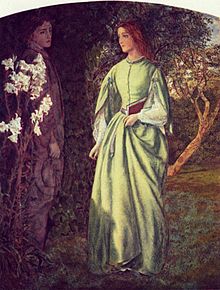
Browning weaves the theme of class struggles throughout the poem and she especially highlights this social problem through the character of Romney.  The  poor are depicted as wreteched and even ugly; Romney makes it his life’s work to help out the poor and destitute.  After his marriage proposal is Aurora's Dismissal of Romneyrejected by Aurora, he saves a woman named Marian Erle from her miserable life and proposes to her next.  Marian is the daughter of tramps that roam around the countryside finding any work they can.  Marian’s father is abusive and when her mother tries to sell her off to a local squire,  Marian finally runs away from her parents in horror.  Romney decides that, even though Marian is well-below his social class, she will make a perfect wife to help him in his charitable missions. But we are left wondering if these two are really suited as husband and wife.  Does Marian truly love Romney or does she simply worship him as her savior.  Does Romney really have feelings of love for Marian or is he still in love with his cousin Aurora?

The upper class don’t fair any better in Browning’s verse.  They are depicted as vain, judgmental, and petty.  The character of Lady Valdemar is the epitome of a greedy upper class English woman who will do everything in her power to fulfill her selfish desires.  Lady Valdemar is in love with Romney and once she finds out that he is going to marry a lower class woman like Marian, she sets in motion a series of events that have devastating consequences for all involved in this love triangle.  Lady Valdemar’s singular focus of getting Romney to the altar makes her a despicable and opportunistic character.

At the end of the poem Browning brings the characters back to the place where everything was simpler and happier: Aurora’s native land of Italy.  There Aurora finds peace once again as she is finally away from the petty gossip and prying eyes of the upper classes in England.  Aurora does, however, admit that despite her new surroundings,  there is still something missing in her life.  She is a successful author who has become famous for her poems and novels about love.  But will she ever experience this elusive feeling for herself?  You will have to read Browning’s beautiful poem to find out.

About The Author:
Elizabeth Barrett BrowningElizabeth Barrett Browning was one of the most respected poets of the Victorian era.
Born in County Durham, the eldest of 12 children, Browning was educated at home. She wrote poetry from around the age of six and this was compiled by her mother, comprising what is now one of the largest collections extant of juvenilia by any English writer. At 15 Browning became ill, suffering from intense head and spinal pain for the rest of her life, rendering her frail. She took laudanum for the pain, which may have led to a lifelong addiction and contributed to her weak health.

In the 1830s Barrett’s cousin John Kenyon introduced her to prominent literary figures of the day such as William Wordsworth, Mary Russell Mitford, Samuel Taylor Coleridge; Alfred, Lord Tennyson, and Thomas Carlyle. Browning’s first adult collection The Seraphim and Other Poems was published in 1838. During this time she contracted a disease, possibly tuberculosis, which weakened her further. Living at Wimpole Street, in London, Browning wrote prolifically between 1841 and 1844, producing poetry, translation and prose. She campaigned for the abolition of slavery and her work helped influence reform in child labour legislation. Her prolific output made her a rival to Tennyson as a candidate for poet laureate on the death of Wordsworth.

Browning’s volume Poems (1844) brought her great success. During this time she met and corresponded with the writer Robert Browning, who admired her work. The courtship and marriage between the two were carried out in secret, for fear of her father’s disapproval. Following the wedding she was disinherited by her father and rejected by her brothers. The couple moved to Italy in 1846, where she would live for the rest of her life. They had one son, Robert Barrett Browning, whom they called Pen. Towards the end of her life, her lung function worsened, and she died in Florence in 1861. A collection of her last poems was published by her husband shortly after her death.


4 Comments

Filed under British Literature, Classics, Literary Fiction, Poetry

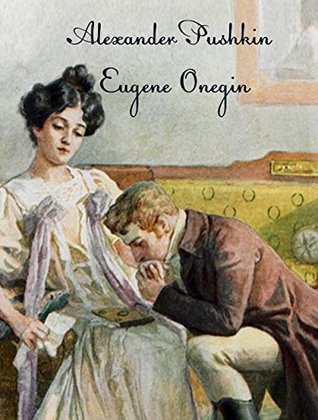
Review: Eugene Onegin by Alexander Pushkin

I have become very interested in reading Russian Literature lately and I decided that I have neglected this classic for too long.  The English translation I got was the one offered for free on Kindle and translated by Henry Spalding.

My Review:

OneginThis is a beautiful poem that contains so many layers of meaning and allusions that I am sure each time I read it I will discover something new.  This poem, more than anything else I have read, makes me want to learn Russian so I can experience the poem in its original language.  The entire poem is made up of 389 stanzas of iambic tetrameter.

At the heart of the story is the eponymous hero, Eugene Onegin, who is a spoiled, upper class, Russian youth who spends his time attending balls, drinking and flirting with pretty girls.  He has no ambitions in life except to satisfy his own pleasures.  When, one day, his uncle dies and leaves him an estate in the country, Eugene decides that he is tired of his vapid lifestyle and decides to retire to the country.  While in the county he becomes withdrawn and takes on a cynical view of society; his only close friend is an emotional, young poet named Vladimir Lensky.

Lensky is engaged to a woman named Olga who is a vain and shameless flirt.  Her sister, Tatiana, who is sensitive, intelligent and kind, is a sharp contrast to Olga.  When Tatiana meets Eugene she falls hopelessly in love with him and cannot stop thinking about him.  She writes Eugene a beautiful love letter that declares her undying love.  When Eugene receives it he treats her with cold indifference and even mocks poor Tatiana for not being able to keep her emotions in check.

Through a series of unfortunate circumstances, Eugene kills his friend Lensky in a dual and as a result Eugene flees from his home in horror and remorse.  When he finally returns to St. Petersburg years later, he meets a beautiful woman who is the wife of an elderly count.  He realizes that this confidant and enchanting princess who has captivated him is none other than the once naïve woman, Tatiana, whom he had met years earlier while living in the country.  This time their roles are greatly reversed–Eugene cannot get Tatiana out of his mind and he sends her several desperate letters declaring his love.  But how will Tatiana receive Eugene’s advances?  Will she bestow him an answer with the grace and kindness he lacked when he rejected her years earlier?  You will have to read this beautiful poem to find out for yourself.

Some other interesting aspects of the poem deserve mention. Pushkin oftentimes inserts his own voice into the narrative and cleverly addresses his audience and writes about his intentions for the story.  The author was also adept at literary allusions and jokes which he inserts throughout the narrative.  This particular translation I read had fantastic notes, without which I would not have understood the depth or cleverness of the allusions.  The themes that Pushkin weaves throughout his narrative are timeless, a few of which include pride and selfishness and the ultimate consequences of such vices, the cruelty of the world and fate and our lack of appreciation for someone until it is too late.

I am eager to reread this poem and to read different translations of it.  If you want to explore more Russian Literature in translation but do not want to tackle something as monstrous as War and Peace or Crime and Punishment, then I highly recommend beginning with Pushkin’s brilliant poem.

About The Author:
PushkinAlexander Sergeevich Pushkin was a Russian Romantic author who is considered to be the greatest Russian poet and the founder of modern Russian literature Pushkin pioneered the use of vernacular speech in his poems and plays, creating a style of storytelling—mixing drama, romance, and satire—associated with Russian literature ever since and greatly influencing later Russian writers.

Born in Moscow, Pushkin published his first poem at the age of fifteen, and was widely recognized by the literary establishment by the time of his graduation from the Imperial Lyceum in Tsarskoe Selo. Pushkin gradually became committed to social reform and emerged as a spokesman for literary radicals; in the early 1820s he clashed with the government, which sent him into exile in southern Russia. While under the strict surveillance of government censors and unable to travel or publish at will, he wrote his most famous play, the drama Boris Godunov, but could not publish it until years later. His novel in verse, Eugene Onegin, was published serially from 1825 to 1832.

Pushkin and his wife Natalya Goncharova, whom he married in 1831, later became regulars of court society. In 1837, while falling into greater and greater debt amidst rumors that his wife had started conducting a scandalous affair, Pushkin challenged her alleged lover, Georges d’Anthès, to a duel. Pushkin was mortally wounded and died two days later.

Because of his liberal political views and influence on generations of Russian rebels, Pushkin was portrayed by Bolsheviks as an opponent to bourgeois literature and culture and a predecessor of Soviet literature and poetry. Tsarskoe Selo was renamed after him


14 Comments

Filed under Classics, Literature in Translation, Russian Literature