
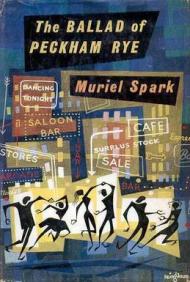
 This is my first Muriel Spark book (thanks to Grant at 1st Reading for giving me the nudge to try her) and I knew from these opening sentences that I would enjoy her writing very much:
‘Get away from here, you dirty swine,’ she said.
‘There’s a dirty swine in every man,’ he said.
‘Showing your face round here again,’ she said.
The “he” is Humphrey, who has recently jilted his bride-to-be, Dixie, at the altar and the “she” is Dixie’s mother. Spark’s narrative is full of surprises, the first, and most obvious of which, is that the author begins her story at the end. My impression after reading the first page was poor Dixie, what an awful thing to happen to her. But over the course of the next 140 pages Spark convinces me that Humphrey probably made the right decision. Men might have something of the dirty swine in them, but the ladies don’t fair much better in this humorous and strange book.
Dougal Douglas, the new guy in town, is blamed not only for the failed wedding, but also for the other mayhem that has recently broken out in town—fighting, absenteeism at the local textile factory, and even murder. He keeps showing everyone that he used to have two horns on his head that were surgically removed and so many people believe that he is, physically and mentally, a devil. Although Dougal is shrewd and quirky, his intentions are not really evil. And, unlike everyone else in Peckham, he is rather forthcoming about his greatest weakness—he can’t stand any type of sickness. At the first sign of a disease he will flee as fast as he possibly can.
The two subplots in the text that entertained and intrigued me the most were those that involved Mr. Druce, a manager at the local factory and Dixie’s thirteen year-old brother, Leslie. Mr. Druce is in a rather unhappy marriage of twenty years and is having a an affair with the head of the typing pool. When Dougal questions Druce about his reasons for staying in the marriage, it seems that the wife has some sort of secret that she is holding over her husband. And what is even more interesting is that the pair having spoken in a few years, only communicating through notes. Mr. Druce and his odd behavior keep the tension building in this bizarre narrative right up to the final page.
Leslie, at first, seems like a typical, sulky teenager who is withdrawn from his family. But as the story goes on we learn that this boy has a much more sinister side and is involved with gangs, blackmail and roughing up old ladies. His parents argue over his upbringing, or lack thereof; his father thinks that since he works all day that the responsibility of childrearing falls on the maternal parent and his mother thinks that his father ought to take more of an interest in his son’s life. So the result of this parental stalemate is a wild boy who tortures his sister and his neighbors and never suffers any consequences for his bad behavior.
This was just the perfect book to enjoy poolside on a hot Sunday afternoon. I look forward to reading more of Spark over my summer holidays. I have Open to the Public, The Mandelbaum Gate and Memento Mori sitting on my TBR piles. Please let me know what other books of hers you would also recommend.
 I have to admit that I was drawn to this book because of its autobiographical aspect. Having just lately read quite a bit of Virginia Woolf’s extensive and varied forms of writing, I was curious to get a glimpse into her personal life with her husband. Published in 1914, Woolf began to compose this biting satire of English life in the early 20th century on his honeymoon. Harry Davis, the male protagonist in the novel who thinks he is very different from the other young people that live in his London suburb, is a harsher and more cantankerous version of Woolf himself. Harry has just moved outside of London to Richstead with his parents and his younger sister Hetty. Upon their arrival the Davis family is invited over by their new neighbors, The Garlands—four unmarried, virgin young women and their widowed mother. Harry hates everything about their ordered and conventional life and these women view Harry as a discontented man whose behavior is strange and sullen.
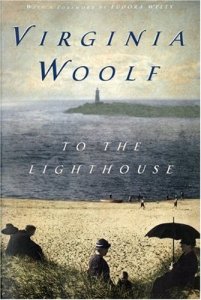 I realize that entire academic careers and volumes of dissertations and articles are dedicated to studying the influences of Vergil on Virginia Woolf. I have not looked at any of the scholarship nor do I wish to. My writing here, I am sure, will not be new or unusual but it is simply my own interaction with the texts of Vergil and Virginia Woolf. (Also, a bit of a warning that I do have a spoiler in my writing about the second part of the books.)
 This latest release from Persephone Books is a charming and entertaining look into the life of a middle-aged British couple that has been married for twenty-seven years. When the book begins Mary is being told by her second eldest daughter, Rosemary, that she is engaged to be married. Mary tries very hard to be stoic about this announcement even though she is upset because another one of her children is flying the coop. Mary married John at a very young age and she has been a devoted wife and mother for her entire adult life. The thought that of all three of her children no longer need her makes her sad and she feels lost.
 Max Costa is a scoundrel and a thief but you wouldn’t know it from his refined manner and elegant clothes. We first meet him in 1928 on board the Cap Polonio, a transatlantic luxury liner bound for Buenos Aires. Max is a professional ballroom dancer on the ship and he entertains the unaccompanied young women with his tangos and fox trots. But his work as a ballroom dancer is just a cover for his real profession which his stealing from his rich dance partners. The narrative takes place between 1928 and 1966 and alternates between three distinct periods of time during which Max meets a woman whom he cannot forget.



 The Book Binder's Daughter