
 One day at school young Joana, the female protagonist in Near to the Wild Heart, asks her teacher a philosophical question that shows she is more thoughtful than most other children: “What do you get when you become happy?” Her teacher is flummoxed at the child’s unusual question so asks Joana to repeat it. This time Joana asks, “Once you’re happy what happens? What comes next?” The teacher asks her to rephrase the question one more time in different words. Joana comes up with: “Being happy is for what?”
Joana spends the rest of the novel attempting to answer her own question. What will make her happy and how will she know when she is truly happy? When she is a little girl she is raised by her widowed father and from a young age Joana displays a unique curiosity about life. She enjoys role playing with her dolls and spending time with her father and making up spontaneous poems with him. When her father dies she is forced to live with an aunt and uncle who can’t seem to connect with their free-spirited niece so they send her off to a boarding school.
Despite the fact that Joana enjoys her solitude and likes to feel free and untethered, she marries a man named Octavio anyway. From the beginning of her marriage, Joana feels that her role as a wife causes her to abdicate her freedom and her identity. She is most comfortable in the morning when Octavio leaves for work. Did she marry Octavio because she thought it would bring her this elusive feeling of happiness? Now that she is living with him she is not so sure about anything. She contemplates leaving Octavio and when she discovers that he is having an affair with his ex-fiancé, Joana is handed the perfect reason to break off the marriage. With the exception of her father, all of Joana’s relationships are unsatisfactory and disappointing to her. She spends a great deal of time pondering the relationship with her husband and their marriage:
It was his fault, she thought coldly, anticipating a new wave of anger. It was his fault, it was his fault. His presence, and more than his presence: knowing that he existed took away her freedom. Only rarely now, in a quick escape, was she able to feel. That was it: it was his fault. How hadn’t she discovered it earlier? she wondered victoriously. He stole everything from her, everything.
The style of Lispector’s novel is very similar to her later work, Agua Viva. The story is told in the third person, but from the point of view of each character’s most inner thoughts. Piece of the plot, like Joana’s thoughts, are given in fragmented pieces of melodic prose. Joana’s thoughts linger over questions of life, death, solitude, freedom and happiness which are themes that Lispector continues to explore in her later works. Images of the sea are also prevalent in this novel as Joana feels an affinity to the freedom and boundless nature of the ocean. When she first goes to her aunt and uncle’s house, she consoles herself by lying on the beach, close to the sea.
The grains of sand nipped her skin, buried themselves in it. Even with her eyes closed she felt she felt that on the beach the waves were sucked back by the sea quickly, quickly, also with closed eyelids. Then they meekly returned, palms splayed, body loose. It was good to hear their sound. I am a person. And lots of things would follow. What? Whatever happened she would tell herself. No one would understand anyway.
It is fitting that at the end of the story Joana decides to take her father’s inheritance and roam. The last time we see her she is standing on the deck of a ship, looking out to sea and loving her freedom, her choice and her newly found serenity: “The ship floated lightly on the sea like on gentle open hands.”
I have found that Lispector’s novels, although brief, take quite a bit of time and concentration to understand and appreciate. What resonated with me about this book, in particular, is the idea of finding the right balance between solitude and company. But when I closed the last page of the book I had the distinct feeling that I ought to start the book over for fear of what I didn’t grasp in her writing the first time around.
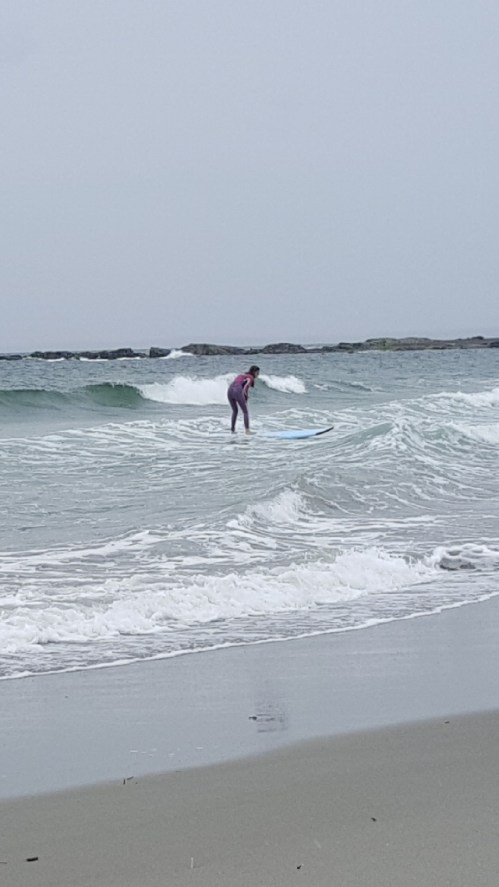
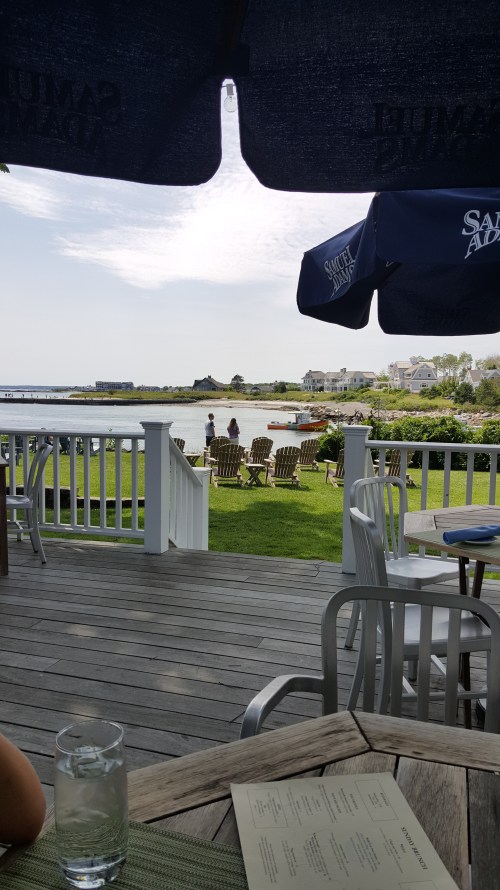
 I brought along a copy of Clarice Lispector’s Água Viva with me on my beach vacation last week thinking that a book whose title can be translated as “living water” or “jellyfish” would be quite fitting. I quickly realized that Lispector’s book, although a mere 86 pages, would take me some time to read and fully absorb. I had to approach this text as I would a dense, meditative, philosophical volume of poetry, something to be digested slowly, one small piece at a time.






 The Book Binder's Daughter