
 I have to admit that I was drawn to this book because of its autobiographical aspect. Having just lately read quite a bit of Virginia Woolf’s extensive and varied forms of writing, I was curious to get a glimpse into her personal life with her husband. Published in 1914, Woolf began to compose this biting satire of English life in the early 20th century on his honeymoon. Harry Davis, the male protagonist in the novel who thinks he is very different from the other young people that live in his London suburb, is a harsher and more cantankerous version of Woolf himself. Harry has just moved outside of London to Richstead with his parents and his younger sister Hetty. Upon their arrival the Davis family is invited over by their new neighbors, The Garlands—four unmarried, virgin young women and their widowed mother. Harry hates everything about their ordered and conventional life and these women view Harry as a discontented man whose behavior is strange and sullen.
Harry is restless and the last thing he wants to do is settle down with one of the virgins he meets in the suburbs and live a boring, formulaic life as a husband, father and businessman. He reads deep, philosophical novels, he paints and he prefers to spend his time with other interesting people. His painting at a local studio causes him to come in contact with a woman named Camilla Lawrence who is believed to be based on Virginia Woolf. Camilla, unlike the Garlands, is urbane, sophisticated, educated and aloof. Harry visits Camilla, her sister Katharine and their father and engages in witty conversation with people whom he feels are his equals. Harry’s interactions with her make him contemplate the meaning of love and how one falls into it. Camilla’s lack of mutual desire or interest in Harry is, at times, a harsh portrayal of Leonard and Virginia Woolf’s own courtship. Harry’s thoughts about love are depressing and confused:
It seemed ridiculous that one human being could affect another human being like this. Love? Was it all imagination, a fantastic dream of this absurd little animal, man? It was impossible at moments to believe that he felt anything for Camilla at all. After all, what had he asked of her? To say: ‘I love you.’ Would that have thrown him into ecstasies—for twelve hours, or at most, to judge from what seemed best among others, for a few hours spread over twelve months.
Even though he has fallen in love, Harry continues to mock people like the Garlands and when Gwen, the youngest daughter, asks to borrow one of Harry’s books he has some harsh opinions of her and the other virgins in Richstead:
Harry did not forget to send Dostoevsky’s Idiot to Gwen, and he laughed to himself not unkindly as he handed it to the Garlands’ maid. He was putting strong wine into the mouth of a babe with a vengeance. He hoped it would not completely upset her digestion, yet he had not much compunction if it should make her feel a little uncomfortable, because, after all, that was what in his opinion these virgins of Richstead really needed—something to show them that life was not all Richstead, virginity and vicars, needlework and teas. And when he had said ‘For Miss Gwen, please,’ he did not give very much thought to her or The Idiot.
In the end, however, Harry’s arrogance causes him to be hoisted with his own petard. A comment that Mr. Lawrence makes to Harry is rather fitting for his tragic fate in the novel: Video meliora proboque, deteriora sequor (I see better things and approve of them, but I follow worse things–Ovid, Met. 7.20) The ending was quite a surprise for me and I won’t give it away but I will say that the title of Woolf’s novel is both ironic and sarcastic. I highly recommend this book to those who are interested in taking a peek at Woolf’s mindset while he was on his honeymoon with Virginia.
 Dido and Aeneas are both refugees—Latin profugus, to have a forward flight, also a word in motion— attempting to escape the ruins of their respective cities and their former lives. My favorite character in Vergil’s Aeneid, even going as far back as my first attempt at translation of this epic in high school, has always been Dido. The love of her life, her husband Sychaeus, was murdered by her brother Pygmalion in order to steal Sychaeus’s fortune. Pygmalion’s greed and violence forces Dido to flee Tyre and abandon her former, happy life. Similar to the boatloads of homeless Syrians we see today also escaping the Levant, Dido travels across the Mediterranean to the shores of North Africa where she attempts to build a new home, a new kingdom in Carthage.
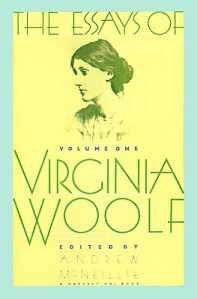 I am making my way through the first volume of Virginia Woolf’s essays that she composed between the years 1904 and 1912. In “The Decay of Essay Writing” (1904) she gives us some insight into her motivations behind writing her personal essays. She teaches us how to read her essays with a bit of a rant about the way in which writers in her day have approached the personal essay:
 The Satyricon, written by the emperor Nero’s arbiter elegentiae (judge of style), Petronius, in the first century B.C.E., is one of the most interesting pieces of realistic fiction that has survived from antiquity. The work, estimated to be the size of a modest modern novel, is highly fragmentary so that the plot as a whole can only be loosely reconstructed. The narrator, an amoral yet educated man named Encolpius, has done something to offend the Roman god of sexuality and fertility, Priapus, and as a result has been stricken with a horrible case of impotence. He travels around Italy with his companion and young lover Giton looking for a cure, for the Roman equivalent of Viagra. The work has been described as a satire, as a mock epic, and a picaresque novel; it is lewd, it is bawdy and it is funny.
 Clarissa Dalloway, the fifty-two-year-old wife of a British politician, is busy planning one of her famous dinner parties for her usual group of upper class British friends and acquaintances. She spends the day buying and arranging flowers, ordering around her maids and cooks, and laying out expensive silverware. In the first few pages of the novel as she is bustling about her home and then about London, Big Ben lingers in the background, reminding her of every hour that has slipped by, thus reminding her of her mortality. In the midst of her wealthy home and the luxuries she is setting out for her party, the clock faithfully strikes the hour:
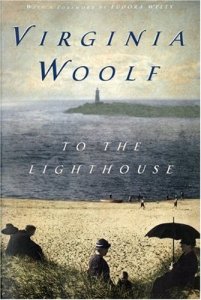 I realize that entire academic careers and volumes of dissertations and articles are dedicated to studying the influences of Vergil on Virginia Woolf. I have not looked at any of the scholarship nor do I wish to. My writing here, I am sure, will not be new or unusual but it is simply my own interaction with the texts of Vergil and Virginia Woolf. (Also, a bit of a warning that I do have a spoiler in my writing about the second part of the books.)


 The Book Binder's Daughter