
Henricus Respicit Futurum.
As I have mentioned in a previous post, The Woodstock Academy where I have had the privilege of teaching Latin and Classics for many years now, is one of the oldest public schools in the United States and has a simple yet profound Latin motto which reflects and respects this tradition: Respice Futurum–-translated literally as “Look back at your future.” These two simple Latin words capture the idea that one moves towards the future while also reflecting on the past— it is the equivalent of moving forward on a train while sitting in a seat that is facing backward. Respice Futurum is an fitting description for thinking about my reading plans for 2018
Respicio in Latin means more than “looking back.” One of my favorite translations of this word is “to have regard for another person’s welfare.” The Stoic philosopher Seneca, for example, applies respicio to the idea of self-improvement in his work De Clementia: sapiens omnibus dignis proderit et deorum more calamitosos propitius respiciet. (A wise man will offer help to those who are worthy and, in the manner of the gods, he especially will have regard for those in need.”) A good person, Seneca argues, always looks towards his future but uses experiences from the past to inform his decisions. So as I look forward to books I intend to read in 2018, I can’t help but consider which literary selections in 2017 have influenced my choices. Which books, based on previous choices, will give me a chance for deep reflection and even self-improvement?
Based on my past experiences, there are a few of my favorite publishers that put out spectacular books year after year. A few of these titles I am looking forward to are:
Seagull Books:
Villa Amalia, Pascal Quignard
Eulogy for the Living, Christa Wolf (trans. Katy Derbyshire)
The Great Fall, Peter Handke (trans. Krishna Winston)
Monk’s Eye, Cees Nooteboom (trans. David Colmer)
Lions, Hans Blumberg (trans. Kári Driscoll)
Requiem for Ernst Jandl, Friederike Mayröcker (trans. Rosalyn Theobald)
NYRB Classics:
The Juniper Tree, Barbara Comyns
Berlin Alexanderplatz, Alfred Döblin (trans. Michael Hofmann)
Kolyma Stories, Varlam Shalamov (trans. Donald Rayfield)
The Seventh Cross, Anna Seghers (trans. Margot Bettauer Dembo)
Anniversaries, Uwe Johnson (trans. Damion Searls)
Yale University Press:
Packing my Library, Alberto Manguel
A Little History of Archaeology, Brian Fagan
Journeying, Claudio Magris (trans. Anne Milano Appel)
I am also looking forward to more publications from Fitzcarraldo Editions, New Directions, Archipelago Press, Ugly Duckling Presse, Persephone Books (whose bookshop I hope to visit in the spring) and the Cahier Series. I’ve also heard that new books by Kate Zambreno and Rachel Cusk will be coming out later in 2018 and I am eager to read new titles by both of these women.
While I am waiting for the books listed above to be published, I will dip into German and British classics which I have loved reading over the last year. Here is what I have sitting on my shelf awaiting my attention in 2018:
German Literature:
Hyperion, Holderlin (trans. Ross Benjamin)
The Bachelors, Adalbert Stifter (trans. David Bryer)
The Lighted Windows, Heimito von Doderer (trans. John S. Barrett)
brütt, or The Sighing Gardens, Friederike Mayröcker (trans. Roslyn Theobald)
On Tangled Paths, Theodor Fontane (trans. Peter James Bowman)
British Literature:
Marriage, Susan Ferrier
The Voyage Out, Virginia Woolf (I’d also like to continue reading her volumes of essays and diaries)
To the Wedding and G., John Berger
Pilgrimage, Vols. 3 and 4, Dorothy Richardson
Russian Literature:
I was disappointed this year not to get around to this stack of Russian literature in translation books as well as Russian history books I have sitting on my shelves—
Gulag Letters, Arsenii Formakov (ed. Elizabeth D. Johnson)
Found Life, Lina Goralik
City Folk and Country Folk, Sofia Khvoshchinskaya (trans. Nora Seligman Favorov)
Sentimental Tales, Mikhail Zoshchenko (trans. Boris Dralyuk)
October, China Mieville
(I’ve toyed with the idea of starting War and Peace as well, but who knows where my literary moods will take me)
And for some Non-fiction:
I am very eager to read more George Steiner: Errata, The Poetry of Thought and Grammars of Creation are all on my TBR piles.
I am teaching a Vergil/Caesar class and an Ovid (Metamorphoses) class in the spring and in preparation for these authors I would like to read some of Gian Biaggio Conte’s books, especially Latin Literature: A History and Stealing the Club from Hercules: On Imitation in Latin Poetry.
I know, this list seems impossible, ridiculous, all over the place. But who knows what rabbit holes I will fall down, or where my journey will take me. All I can say for sure is that 2018, much like 2017, will be filled with great books and interactions with other wonderful readers. Happy New Year!

 Victor has been raised in the gentle and loving home of his foster mother and now that he has come of age, he will travel far from home to take a post as a civil servant. Stifter spends the first half of the book describing the tender relationship between foster mother and child and the arduous journey that Victor takes through scenic mountains and valleys. The author’s language is fittingly simple for the sentimental departure scenes he describes between Victor and his family.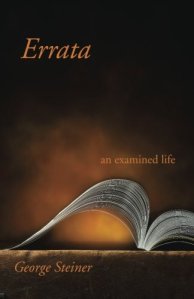
 Monsieur de Sainte Colombe, a virtuoso viol player and teacher in seventeenth-century France, is a man of extremes: he practices his instrument for extensive, solitary hours, he rejects any attention or spotlight for his talents, and he still feels a deep, passionate love for his long-deceased wife. When the novella begins, Colombe’s wife has died but his feelings for her have not faded in the least: “Three years after her death, her image was still before him. After five years, her voice was still whispering in his ears.” He becomes a recluse and music becomes the center of his life: “Sainte Colombe henceforward kept to his house and dedicated his life to music. Year after year he labored at the viol and became an acknowledged master. In the two years following his wife’s death he worked up to fifteen hours a day.”
 Even in reading this brief interview with literary critic, scholar and polyglot George Steiner one is impressed with the scope of his erudition. Born in Paris in 1929, his Jewish parents had fled Vienna because his father sensed the impending danger posed by the Nazis. Steiner’s father moved the family, once again, to America just as the Germans were invading Paris. The details of his upbringing and early years as a scholar that he discusses with his interviewer Laure Adler in this book are fascinating.


 The Book Binder's Daughter