Category Archives: Russian Literature

Review: Oblivion by Sergei Lebedev

The first book that I read from New Vessel Press was Guys Like Me and ever since then I have sought out their books again and again.  I received an advanced review copy of this title through Edelweiss.  This title was published in the original Russian in 2015 and this English version has been translated by Antonina W. Buois.

My Review:
Oblivion I have been captivated by the plethora of post-Soviet literature that has been published just in the last year alone.  The theme that is the most haunting to me is the one of waste: all of those wasted lives, all of that wasted time, and for what purpose?  I remember the attitude towards the Soviets in the 1980’s with the “us”, the free American democracy, versus “them”, the oppressive Soviet totalitarian regime, propaganda.  It seemed that the Soviet Union wanted everyone to believe that, not only was their system the best in the world, but their people were happy and thrived under that system.  But recent post-Soviet books, like Oblivion, have proven that this ideal that their leaders put forth could not be further from the truth.

When Oblivion opens, the narrator is middle-aged and living in Greece.  He is reminiscing about his childhood back in a dacha in the Soviet Union.  The one character from his childhood that looms over and dominates every memory he has is a man he calls Grandfather II.  He begins with an ominous sentence that states it was Grandfather II who decided his fate and the course of his entire life.  Grandfather II was an old, blind man who moved into the dacha and about whom no one asked any questions.

There are hints in the text that Grandfather II has a shady past that somehow involved the horrible gulag system.  He is adopted by his neighbors, especially the narrator’s family, as a sort of kindly and innocuous grandfather figure, and thus his nickname.  But the narrator has a very different view and opinion of this man which is chilling and frightening.  There is nothing that Grandfather II specifically does that is cruel to the boy or his family.  But Grandfather II has a presence and a demeanor that evokes feelings of fear and dread.

The narrator is further haunted by Grandfather II when, as a boy of about nine, he is attacked by a wild dog and Grandfather II comes to his rescue by crushing the dog’s spine.  The narrator is brought to the hospital on the brink of death because he has lost so much blood.  Grandfather II, despite being an old man, insists that he give his own blood to save the boy’s life.  Grandfather II’s heroic act saves the boy but in the end his own life is sacrificed because he was too old and weak to give up his blood.

The narrator is haunted for the rest of his like that he has this old man’s blood pulsing through his veins.  He decides that he must go on a quest to find out more about his mysterious man’s past and this leads him to a mining town near the Arctic Circle.  The mining town is a pathetic waste and shell of a town that was once home to a prison camp where its inhabitants worked in the mine.  When the narrator arrives in this northern town the prisoners are long gone, but the remains of the camp are still an eerie reminder of this wretched and miserable part of Soviet history.  The narrator confirms that Grandfather II was a founder of this mining town and in charge of the prison camps.  The most disturbing part of this this journey, however, is when the narrator realizes what a cruel and inhuman person Grandfather II really was.  The saddest part of the narrative, for me, was learning about Grandfather II’s seven year-old son was also subjected to this man’s insistence on dominating and controlling everyone and everything in his life.

Finally, I have to say a few words about the densely poetic language that the author uses for his tale.  It took me longer than it normally would to read a 300-page book because the sentences were so masterfully created that I oftentimes found myself reading entire sections more than once.  There is a dream sequence in the middle of the book during which the narrator has a series of three dreams just before he is about to embark on his journey to the north.  This section could almost stand on its own as a poetic and metaphorical reconstruction of the oppression and unjust treatment that so many suffered under this totalitarian regime.

Oblivion is a haunting, intense, descriptive literary Odyssey that you will not soon forgot.  The language that Lebedev employs and the detailed stories he tells ensures that the experiences of life under Soviet rule will indeed not fade into Oblivion.

About the Author:
S LebedevSergei Lebedev was born in Moscow in 1981 and worked for seven years on geological expeditions in northern Russia and Central Asia. Lebedev is a poet, essayist and journalist. Oblivion, his first novel, has been translated into many languages. Lebedev’s second novel, Year of the Comet, is coming out from New Vessel Press in 2017.

11 Comments

Filed under Literature in Translation, Russian Literature

Review: The Voronezh Notebooks by Osip Mandelstam

My Review:
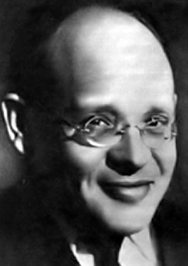
MandelstamThis edition of Mandelstam’s Voronezh Notebooks, recently published by the New York Review of Books, is a collection eighty nine verses the Russian poet wrote while he was exiled to the city of Voronezh.  During the early 1930’s Mandelstam wrote and published poetry that mocked and criticized Stalin and so it is no surprise that he was arrested and sent into exile.  During part of his exile he was allowed to live in Voronezh which was a bit more civilized as far as Russian exiles were concerned.  He was lucky that his wife Nadezhda was allowed to go with him and if it were not for her then much of his poetry would have been lost to us.

The first notebook contains poetry written between April and July of 1935.  All of the poems are numbered as well as dated.  In this first series of poems we understand that Mandelstam is relieved to be in Voronezh although he by no means feels at home in this city.  He lives is a crowded boarding house that he describes as a “coffin” in the first poem.  He and his wife have no privacy and they hear every movement and sound of their neighbors.  In the third poem he begs Voronezh to have mercy on him and “restore” him but throughout these poems we get the sense that he feels hemmed in, claustrophobic and hopeless.

The second Notebook beings in December of 1936 and goes through February of 1937.  The imagery of winter that one encounters in these poems are particularly striking.  He describes this season as a “postponed present” because the length of its extent is always uncertain.  Poem #37 is one of my favorites from this collection; he admires the goldfinch who “curses the sticks and perches of his prison.”  He admires this  bird who makes so much noise and is “disobedient.”

The final notebook is written between March and May of 1937.  As I have already hinted at through his writing of winter and the goldfinch, Mandelstam’s lines abound with images of nature and the forest.  In the introduction to this volume, Andrew Davis, the translator, tells us that Mandelstam composed these verses in his head while he was walking.  He seems to have done a great deal of exploring his natural surroundings and appreciated, even for a few hours, the illusion of freedom which they provided.  But Mandelstam realizes that his stay in Voronezh is not his own choice and he is still a captive of a fascist regime.  In Poem #72, for example, he writes of the night sky and the stars which he is fighting against as they hem him in and suffocate him; although the sky appears limitless, he is stuck under the sky that only encompasses this city.    In Poems #76 he declares, “I am ready to roam where the sky is greater.”

Finally, in his introduction to the collection Davis points out that the Notebooks were saved through the extraordinary efforts of his wife who, even after his death, saved pieces of them in teapots and other small places hidden around her apartment.  Each day she would practice memorizing them and Davis explains that “she made it her life’s work to preserve her husband’s poetry.”  Because of her act of devotion and bravery this seemed to me like a fitting collection to review as we celebrate and acknowledge those we love on this upcoming Valentine’s Day.


About the Author:
OsipOsip Mandelstam was a Russian poet and essayist who lived in Russia during and after its revolution and the rise of the Soviet Union. He was one of the foremost members of the Acmeist school of poets. He was arrested by Joseph Stalin’s government during the repression of the 1930s and sent into internal exile with his wife Nadezhda. Given a reprieve of sorts, they moved to Voronezh in southwestern Russia. In 1938 Mandelstam was arrested again and sentenced to a camp in Siberia. He died that year at a transit camp.

The translator has written a wonderful article about the difficulties of translating Mandelstam’s poems from Russian to English that I encourage everyone to read: https://psa.fcny.org/psa/poetry/crossroads/own_words/Osip_Mandelstam/


14 Comments

Filed under Literature in Translation, New York Review of Books, Osip Mandelstam, Poetry, Russian Literature

Review: Two Novellas from Flaubert and Dostoevsky

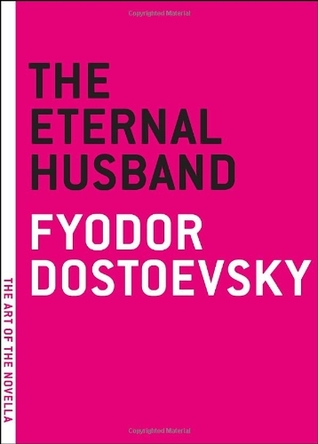
I recently stumbled across a sale that Melville House Publishers was having on their novella series.  They have released 56 novellas from famous authors across the world.  I chose two titles, A Simple Heart by Gustave Flaubert and The Eternal Husband by Fodor Dostoevsky to review here.  Please check out all of the great titles in their selection.  You can even buy a subscription to the novella series and have novellas show up on your doorstep every month: http://www.mhpbooks.com/series/the-art-of-the-novella/

A Simple Heart by Gustave Flaubert:
A simple heartThis novella introduces us to a simple servant woman who is cast out of her own home as an orphan at an early age and searches for intimacy and love for the rest of her life.  Felicite falls in love with a young man who ends up rejecting her so that he can marry a rich, old widow and avoid conscription.  After this disappointing heartache, Felicite never finds another man that she can trust her heart to.  When she comes into the service of Madame Aubain, a young widow with two small children, she is the most faithful and loyal servant anyone could ask for.  Felicite bestows love on the two children who eventually leave home for school and meet a sorrowful end due to illness.  Felicite is also given a parrot which she lavishes with love and attention.  But, like everyone else in her life that she has loved, he dies and leaves her.  This is not a tale with a happy ending but gives us a realistic view of life, love and loss.


The Eternal Husband by Fodor Dostoevsky:
The eternal husbandThe story opens with Velchaninov living in St. Petersburg in an apartment flat by himself trying to iron out the details of a lawsuit.  He has become increasingly depressed and melancholy and has eventually cut himself off from all of his friends and acquaintances.  One day an old friend, whom he has not seen for nine years, shows up on Velchaninov’s doorstep.  He is stunned to see his friend after so many years and further shocked when Trusotsky announces that his wife has died of consumption.  Velchaninov had an affair with Trusotsky’s wife and that is the main reason he hadn’t visited the couple for nine years.  When Trusotsky’s wife broke the affair off, Velchaninov vowed never to see either of the again.

Velchaninov describes Trusotsky as “an eternal husband,” which to him means a man that is subservient to a domineering wife.  Nowadays we might call Trusotsky “henpecked” or “whipped.”  Trusotsky descends into a depression that is fueled by excessive drinking; he turns out to be a man who cannot live without a wife, who cannot operate in the world without the confines of a marriage.  In typical Dostoevsky fashion, we get a glimpse into the male psyche and an interesting and ironic storyline.  I thoroughly enjoyed this story as much as his longer works.

According to the Melville House website, novellas are oftentimes ignored by academics and publishers.  I would love to hear about other readers’ favorite choices as far as this overlooked style of writing.  Do you like novellas and, if so, what are some of your favorites?


18 Comments

Filed under Classics, France, Literature in Translation, Novella, Russian Literature

Review: Eugene Onegin by Alexander Pushkin

I have become very interested in reading Russian Literature lately and I decided that I have neglected this classic for too long.  The English translation I got was the one offered for free on Kindle and translated by Henry Spalding.

My Review:

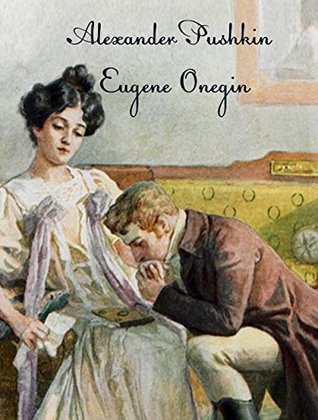
OneginThis is a beautiful poem that contains so many layers of meaning and allusions that I am sure each time I read it I will discover something new.  This poem, more than anything else I have read, makes me want to learn Russian so I can experience the poem in its original language.  The entire poem is made up of 389 stanzas of iambic tetrameter.

At the heart of the story is the eponymous hero, Eugene Onegin, who is a spoiled, upper class, Russian youth who spends his time attending balls, drinking and flirting with pretty girls.  He has no ambitions in life except to satisfy his own pleasures.  When, one day, his uncle dies and leaves him an estate in the country, Eugene decides that he is tired of his vapid lifestyle and decides to retire to the country.  While in the county he becomes withdrawn and takes on a cynical view of society; his only close friend is an emotional, young poet named Vladimir Lensky.

Lensky is engaged to a woman named Olga who is a vain and shameless flirt.  Her sister, Tatiana, who is sensitive, intelligent and kind, is a sharp contrast to Olga.  When Tatiana meets Eugene she falls hopelessly in love with him and cannot stop thinking about him.  She writes Eugene a beautiful love letter that declares her undying love.  When Eugene receives it he treats her with cold indifference and even mocks poor Tatiana for not being able to keep her emotions in check.

Through a series of unfortunate circumstances, Eugene kills his friend Lensky in a dual and as a result Eugene flees from his home in horror and remorse.  When he finally returns to St. Petersburg years later, he meets a beautiful woman who is the wife of an elderly count.  He realizes that this confidant and enchanting princess who has captivated him is none other than the once naïve woman, Tatiana, whom he had met years earlier while living in the country.  This time their roles are greatly reversed–Eugene cannot get Tatiana out of his mind and he sends her several desperate letters declaring his love.  But how will Tatiana receive Eugene’s advances?  Will she bestow him an answer with the grace and kindness he lacked when he rejected her years earlier?  You will have to read this beautiful poem to find out for yourself.

Some other interesting aspects of the poem deserve mention. Pushkin oftentimes inserts his own voice into the narrative and cleverly addresses his audience and writes about his intentions for the story.  The author was also adept at literary allusions and jokes which he inserts throughout the narrative.  This particular translation I read had fantastic notes, without which I would not have understood the depth or cleverness of the allusions.  The themes that Pushkin weaves throughout his narrative are timeless, a few of which include pride and selfishness and the ultimate consequences of such vices, the cruelty of the world and fate and our lack of appreciation for someone until it is too late.

I am eager to reread this poem and to read different translations of it.  If you want to explore more Russian Literature in translation but do not want to tackle something as monstrous as War and Peace or Crime and Punishment, then I highly recommend beginning with Pushkin’s brilliant poem.

About The Author:
PushkinAlexander Sergeevich Pushkin was a Russian Romantic author who is considered to be the greatest Russian poet and the founder of modern Russian literature Pushkin pioneered the use of vernacular speech in his poems and plays, creating a style of storytelling—mixing drama, romance, and satire—associated with Russian literature ever since and greatly influencing later Russian writers.

Born in Moscow, Pushkin published his first poem at the age of fifteen, and was widely recognized by the literary establishment by the time of his graduation from the Imperial Lyceum in Tsarskoe Selo. Pushkin gradually became committed to social reform and emerged as a spokesman for literary radicals; in the early 1820s he clashed with the government, which sent him into exile in southern Russia. While under the strict surveillance of government censors and unable to travel or publish at will, he wrote his most famous play, the drama Boris Godunov, but could not publish it until years later. His novel in verse, Eugene Onegin, was published serially from 1825 to 1832.

Pushkin and his wife Natalya Goncharova, whom he married in 1831, later became regulars of court society. In 1837, while falling into greater and greater debt amidst rumors that his wife had started conducting a scandalous affair, Pushkin challenged her alleged lover, Georges d’Anthès, to a duel. Pushkin was mortally wounded and died two days later.

Because of his liberal political views and influence on generations of Russian rebels, Pushkin was portrayed by Bolsheviks as an opponent to bourgeois literature and culture and a predecessor of Soviet literature and poetry. Tsarskoe Selo was renamed after him


14 Comments

Filed under Classics, Literature in Translation, Russian Literature

Review: Red Cavalry by Isaac Babel

I received an advanced review copy of this title from Pushkin Press through NetGalley.

My Review:
Red CavalryIsaac Babel, who was a journalist and propagandist for the Red Army in the 1920’s during the Russian war against Poland, used his diary as a source for the stories in this collection.  Babel’s narrator, like himself, is a Jewish intellectual who doesn’t quite fit in with the rest of the Cossack soldiers in the regiment to which he is assigned.  Also, his attempts at propaganda don’t quite benefit the Bolshevik cause, although they don’t really harm it either; it is surprising and sad that the Soviets had Babel killed after all.

Babel provides us with a vivid account of the scenes, horrors, sights, sounds and even the humor that comes from war.  One of my favorite stories is entitled “Pan Apolek.”  Apolek is a local artist who has been commissioned to paint the holy scenes in one of the churches that the narrator visits.  When Apolek decides to put the faces of local citizens on the most holy figures in the Bible, there is a religious uproar.  But the citizens themselves seem uplifted that their faces are captured in art in this most holy place.

The strongest parts of all of these stories are the many and varied scenes which Babel sets for us.  He describes not only churches, but towns and the everyday happenings of its citizens.  For example, as the narrator walks around a village waiting for the Sabbath he describes the various shops and shopkeepers he encounters.  Their stores seem to be closed but we are not sure if they are closed permanently because of the war.  He also describes the army on the march and the dead bodies they encounter as they make their way from one town to another.

The narrator describes cavalry leaders and infantrymen as well as some of the more unimportant or auxiliary positions.  He gives us the story of his wagon driver, for instance, and the story of a shepherd who contracted syphilis while sleeping with a prostitute bought by his own father.  There are so many different characters which the narrator encounters that it is impossible to sum them up neatly in one review.

This is not a typical story with a clearly delineated plot and developed characters.  It is a collection of meandering, stream of consciousness stories about one man’s reaction to the landscapes, sights, sounds and people he encounters during a war.   The story mimics the chaos of warfare and many of the narratives end abruptly, like the lives of the soldiers in the Red Cavalry.  Babel’s stories are an important piece of Russian history and literature which I am glad that Pushkin Press has decided to bring to our attention.

About The Author:
Isaac BabelIsaak Emmanuilovich Babel (Russian: Исаак Эммануилович Бабель; 1901 – 1940) was a Russian language journalist, playwright, literary translator, and short story writer. He is best known as the author of Red Cavalry, Story of My Dovecote, and Tales of Odessa, all of which are considered masterpieces of Russian literature. Babel has also been acclaimed as “the greatest prose writer of Russian Jewry.” Loyal to, but not uncritical of, the Communist Party of the Soviet Union, Isaak Babel fell victim to Joseph Stalin’s Great Purge due to his longterm affair with the wife of NKVD chief Nikolai Yezhov. Babel was arrested by the NKVD at Peredelkino on the night of May 15, 1939. After “confessing”, under torture, to being a Trotskyist terrorist and foreign spy, Babel was shot on January 27, 1940. The arrest and execution of Isaak Babel has been labeled a catastrophe for world literature.

4 Comments

Filed under Classics, Historical Fiction, Literature in Translation, Russian Literature