Category Archives: Persephone Books

Review: William – an Englishman by Cicely Hamilton

My Review:
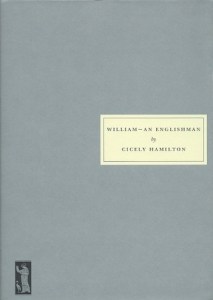
William EnglishmanI was not surprised to find out the author composed this novel in a tent on the front lines of World War I.  The novel is a gruesome, starkly honest portrayal of the horrors of war.  The author, however, draws the readers in at first with a light and satirical description of its gentle, naïve and optimistic main characters, William and Griselda.

When the story begins, William is twenty-six years old and still lives with his mother.  He has an extremely ordered and monotonous life working at a clerk’s office and handing over most of his weekly paycheck to his mother.  He doesn’t seem to have any genuine affection for his parent and when she suddenly dies he realizes that he never really loved her.  Her death means freedom for him; not only does he now have financial freedom since she left him a sizeable inheritance but he also has the freedom to make his own decisions about the course his life will take.

William asks some advice from one of his fellow clerks about what he should do with his time and money and it is through this interaction with Farraday that William becomes involved with political and social reform.  William leaves the tedious office where he has worked for many years and embarks on full-time career as a social activist who writes about, protests and goes to meetings about the suffragette movement, pacifism, and other socialist topics.

It is at these meetings that William meets Griselda, a feisty suffragette who shares the same ideals as William.  The tone in the book that describes these two is one of gentle parody as William and Griselda appear to fight for mostly vague causes.  They believe all government is evil and any attempt of a government to raise a military and train it is simply “playing” at warfare.  They love to go to meetings and hand out pamphlets and consider themselves strong and tough for fighting against social injustices.  They see themselves as the perfect couple and their courtship and devotion to each other is a sweet love story.

When William and Griselda take their honeymoon in the remote mountains of the Belgian Ardennes, they are uneasy with the slow-paced, quiet life of the village in which they are staying. But they settle in for a few weeks and enjoy each other’s company.  It is on the very last day of their vacation that things take a horrible and tragic turn for the worst.  They encounter a regiment of invading German soldiers who treat them brutally and inhumanely.  I have to say that the violence in this book shocked me and Hamilton does not gloss over or sugarcoat the atrocities of war.

William, the once naïve and optimistic Englishman who lived in his happy little bubble of bliss, now becomes the disillusioned and distraught victim of real warfare.  It is not a game or a joke when men are being blown apart and people’s lives are destroyed by gunfire and bombs.  I don’t want to give away the plot and the fate of William and Griselda.  But I will say that William’s story comes full circle and in the end his life becomes equally as monotonous and numb as it was when we first meet him living under the thumb of his mother.  What starts out as an amusing story about two naïve lovebirds becomes a harsh commentary on the gory realities of warfare.

I encourage anyone who enjoys World War I historical fiction to pick up this book.  Thanks to Persephone Press for reissuing another brilliant book from an important 20th century female author.

About the Author:
C HamiltonCicely Mary Hamilton (born Hammill), was an English author and co-founder of the Women Writers’ Suffrage League.

She is best remembered for her plays which often included feminist themes. Hamilton’s World War I novel “William – An Englishman” was reprinted by Persephone Books in 1999.

She was a friend of EM Delafield and was portrayed as Emma Hay in “A Provincial Lady Goes Further.”
 

6 Comments

Filed under British Literature, Classics, Historical Fiction, Persephone Books, World War I

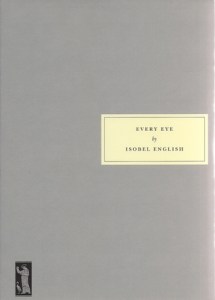
Review: Every Eye by Isobel English

I am so excited to start the new year with another Persephone title.

My Review:
Every EyeHattie is a shy and awkward girl who is unsure of herself even into young adulthood.  She was born with an eye that turns in and what she views as a gross, physical deformity harms her self esteem and her ability to connect with other people in her life.  Hattie’s father died when she was very young, so she is raised by her mother and her father’s brother, Uncle Otway and his wife Aunt Cynthia.
The narrative moves back and forth between two distinct periods of time in Hattie’s life.  When the book opens she is a thirty-five year old woman, recently married to a younger man and they are about to go on a honeymoon to Ibiza.  Hattie is acutely aware of her husband’s age and mentions it several times throughout the narrative.  Age and its effect on a relationship are a consistent theme throughout the book and something that Hattie dwells on.  As Hattie and her husband are traveling from England to the Mediterranean she reflects back on the first real relationship she had with a man named Jasper.  Hattie meets Jasper at a party when she is in her early twenties and doesn’t realize, at first, that he has romantic feelings for her.  She doesn’t think any man would want a woman with a deformed eye.

There are a few difficulties that Hattie must face in her relationship with Jasper.  He is many years older than Hattie and is actually a peer and an old friend of her father’s.  He has gray hair and sagging skin but he seems to truly care for her so she decides to overlook his advancing age.  But Jasper and Hattie’s relationship also stumbles because of the interference of her Aunt Cynthia.  Whenever Hattie asks Aunt Cynthia for advise her aunt is very negative about the relationship; Cynthia seems to have some kind of insight into Jasper’s character that she will not fully share with Hattie.

Since Hattie is reminiscing about her relationship with Jasper on her honeymoon, it seems that she cannot fully enjoy herself or relax.  She is uncomfortable for most of the trip and doesn’t enjoy the time with her new husband.  Hattie’s skepticism and negativity stay with her at a time when she should be the happiest.  It is interesting that she occupies the position of much younger woman and much older woman in her relationships; neither part suits her or makes her happy.

In the end, Isobel English makes the point that it really doesn’t matter what age two people are when they fall in love.  Hattie’s husband is a calming force in her life and he doesn’t care if her eye was ever deformed or what her previous relationships were like.  If there is kindness and caring and tenderness in a relationship then age is irrelevant.

About the Author:
Isobel English, the pseudonym of June Braybrooke (1920-94), wrote little but what she published was of outstanding quality. ‘Sometimes, but not often, a novel comes along which makes the rest of what one has to review seem commonplace. Such a novel is Every Eye,’ John Betjeman said in the Daily Telegraph on its first publication.

13 Comments

Filed under British Literature, Classics, Persephone Books

2015: A Banner Year for Indie Presses

I have been very quiet on the blog for the last couple of weeks because decking the halls and wrapping the gifts have taken up much of my time.  But like my fellow bloggers on the web, I have been thinking about my list of favorite books for 2015.  As I was looking through my reviews and thinking about all of the fantastic books I have read throughout the year, I immediately noticed a similarity among the books: most of them are published by independent presses.  I have gravitated more and more to independent press releases and have come to the point at which I seek out books from these brave, hardworking and smart publishers.  So here is my list for 2015.

Indie Press Favorites for 2015:
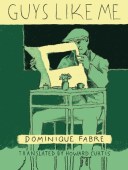
I have to start out with one of the very first small press books I read in 2015 and absolutely adored and that is Guys Like Me from New Vessel Press.  When I read this book I was so moved by its simple, character driven plot that I wanted to read anything else I could get my hands on by this publisher.  And I was not Guys Like Medisappointed.  I have read many of the books in their catalogue and I would add two more of their titles to my 2015 favorites list as well:  I Called Him Necktie and Alexandrian Summer.  If you want books with interesting characters and thought-provoking, emotional themes then I highly recommend giving these titles a try.
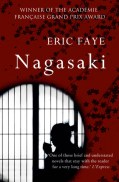
Next up, I have on  my list two titles from Gallic BooksGeorge’s Grand Tour and Nagasaki.  Gallic Books was founded in 2007 and it’s mission is to find the best books written in French and make them available to the English-speaking world.  Both of these titles will warm your heart and restore your faith in humanity.  They are actually great books to read around the holidays.Nagasaki

The Physics of Sorrow appealed to me because of the parallels drawn between the main character in the book and the Greek mythological figure of the Minotaur.  However, I learned so much more in this book than I ever expected.  The lasting effects of communism on a country like Bulgaria are astounding.  This book made me reflect on the fact that as Americans we oftentimes take our freedom for granted and we forget what citizens of countries like Bulgaria suffered under decades of oppressive regimes.  This title is published by Open Letter and since reading this I have been very excited to explore their wide range of translated titles.

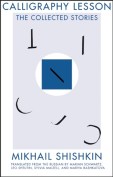
Speaking of communism and its aftermath, another favorite title of mine this year was Calligraphy Lesson, which is actually a collection of short stories.  In this Calligraphy Lessoncollection, Shishkin, one of Russia’s most famous contemporary authors, offers stories about himself and various members of his family and the devastating impact of Soviet rule had on their lives for generations.This title is brought to us by Deep Vellum , which has a catalogue rich with titles in translation from all over the world.
A list of small presses with fantastic titles published in 2015 would not be complete without a mention of a  Melville House title.  You might have heard of them because of their famous Twitter war with Penguin Random House.  If you haven’t read this little exchange, it is definitely worth a quick look for the hilarious jokes and barbs.  My first introduction to their books was through the novel The Scapegoat.  This novel is translated from the Greek and not only contains an interesting murder mystery, but it also teaches us an important lesson about what we can learn from history.  In addition,  Melville House has also published a fantastic collection of classic novellas which are definitely worth a look.  I have bought and reviewed several titles from their novella collection this year as well.

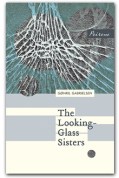
I must give a nod to Peirene Press, which I discovered by reading White Hunger.  This small British press specializes in publishing novellas translated into Looking Glass SistersEnglish.  Their books may be small, but they pack a powerful, emotional punch.  One of the best books of the year, in my humble opinion, is their novella The Looking Glass Sisters.  This book did not get as much attention as I think it should have; it is one of those reads where you think about its plot and characters long after you close the last page.
And the final independent press that I discovered late in the year thanks to Joe over at Roughghosts, is Istros Books.  I would say that their novel Dry Season is one of my favorites of the entire year.  Since finishing this book I have acquired several more of their titles which I am very excited to read and review in 2016.  Istros specializes in translating fiction from Eastern Europe.

There are two very special small publishers that I must mention from whose catalogues I own many, many books.  These two publishers deserve their own special categories as they have entire shelves on my bookcases dedicated to their titles.

Persephone Books:
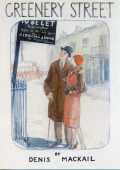
Original-Greenery-Street-cover-422x600A friend of mine, who is always spot on with his recommendation for me, turned me on to Persephone Books.  Persephone is an Independent British publisher that specializes in reissuing lost classics which are mostly written by female authors.  I fell in love with the first book I read from them, Greenery Street, and even since I have read one or two of their books per month.  I just can’t get enough of them.  It was very difficult to come up with only a couple of my favorites from 2015 but I have to go with Greenery Street and Patience.  Both books are funny, sweet and so well-written.   Persephone has quite an extensive catalogue and I would eventually like to work my way through all of their books.  There will most definitely be many more Persephone reviews to come in 2016.


New York Review of Books Classics:
AkenfieldThe first book I read from the NYRB classics collection was Stoner and ever since then I cannot get enough of their books.  This year I once again read several titles from their catalogue.  The Door, a book translated from the Hungarian which has been on many top ten book lists of the year, was also one of my favorites.  I would also add two additional books to my favorites list which they published in 2015.  Akenfield: Portrait of an English Village by Blythe was on of my favorite non-fiction books of 2015.  This book gives us a glimpse into all the of aspects of an English village in the 20th Century.  This is a must read for anyone who is a fan of British Literature.  The final book on my list for 2015 from NYRB classics is  Ending Up by Kingsley Amis.  This book is absolutely hilarious as it chronicles the final days of a group of septuagenarian roommates.  I have big plans to review several more of the NYRB books in 2016!

That pretty much wraps it up for me as far as 2015 is concerned.  In the new year I have titles on my TBR piles that include books from all of these Indie Presses.  Merry Christmas, Happy Holidays, Io Saturnalia and Happy New Year!

-Melissa, The Book Binder’s Daughter


17 Comments

Filed under British Literature, Classics, Favorites, Literature in Translation, Literature/Fiction, New York Review of Books, Nonfiction, Novella, Opinion Posts, Persephone Books, Short Stories

Review: To Bed with Grand Music by Marghanita Laski

I am so delighted that it is finally fall and the temperatures are getting cooler and the NFL season has begun here in the U.S.  I am a huge New York Giants fan and I am hoping for a stellar year.  Speaking of sports, this is another interesting Persephone title, the plot of which involves a woman using sex as a game while her husband is away at war.

My Review:
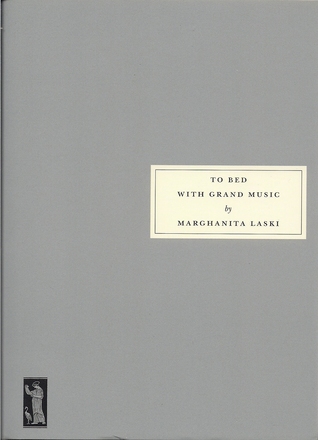
To BedI thought that the first scene in this book was quite shocking, but as it turns out the subject matter of the entire book is rather bold.  Deborah is in bed with her husband, Graham, who is about to leave for the middle east where he will be stationed during World War II.  Graham informs her that there is no way he can be expected to be faithful to her for the duration of the war.  Graham also gives Deborah permission to have a dalliance of her own since he will be away for so long.  I couldn’t decide what was more shocking: his declaration of intended unfaithfulness or his suggestion that his wife have an affair as well.

Deborah is the type of woman who needs a man to complete her identity.  When she is left alone with her three-year-old son and her housekeeper she thinks she will go crazy from the boredom and the monotony.  Deborah’s mother suggests that she get a job to help pass the time until the war is over.  Deborah eventually finds a job in London as a clerk and it is also in London that she has her first indiscretion with a man.  The first one night stand disgusts her and she runs off in shame, but she quickly changes her mind and her attitude towards having extramarital affairs.

Deborah eventually comes to the conclusion that it is acceptable to have lovers while her husband is gone so that she isn’t lonely.  The first prolonged affair that she has is with an officer named Joe who lavishes attention on Deborah and even gets along well with her son.  When Joe is sent to the frontlines Deborah takes on yet another lover.

The rest of the novel is an account of Deborah’s string of lovers.  Some of the book is very funny, especially when she finds ridiculous reasons to dump one man and move on to the next.  One of her lovers gets along very well with Deborah’s mother and Deborah is extremely irked by this.  So she casts him off and moves on to the next soldier.  Many of Deborah’s lovers provide her with lavish gifts, jewelry, expense differs and clothes.  Deborah is not a sympathetic characters since she is taking advantage of the situation of war to have a series of affairs which are all to her emotional and material benefit.

One part of the book that I found particularly sad is the fact that Deborah cannot bring herself to move back home and take care of her son.  The little boy craves his mother’s attention and the scenes in which she leaves him to go off to London with one of her many lovers is pathetic.  The boy becomes more and more attached to his nanny and we wonder whether or not his mother’s abandonment will have a lasting effect on his life.

This is a very interesting book to compare to Laski’s other World War II title, Little Boy Lost.  Both books bring up a very different side of the war that are somewhat controversial.  And children do not fair well in the lives of adults in either book.  If I found the subject matter of this book bold then I wonder what the reaction to it was in 1946 when it was originally published.

About The Author:
M LaskiEnglish journalist, radio panelist, and novelist: she also wrote literary biography, plays, and short stories.

Lanksi was to a prominent family of Jewish intellectuals: Neville Laski was her father, Moses Gaster her grandfather, and socialist thinker Harold Laski her uncle. She was educated at Lady Barn House School and St Paul’s Girls’ School in Hammersmith. After a stint in fashion, she read English at Oxford, then married publisher John Howard, and worked in journalism. She began writing once her son and daughter were born.

A well-known critic as well as a novelist, she wrote books on Jane Austen and George Eliot. Ecstasy (1962) explored intense experiences, and Everyday Ecstasy (1974) their social effects. Her distinctive voice was often heard on the radio on The Brains Trust and The Critics; and she submitted a large number of illustrative quotations to the Oxford English Dictionary.

An avowed atheist, she was also a keen supporter of the Campaign for Nuclear Disarmament. Her play, The Offshore Island, is about nuclear warfare.


6 Comments

Filed under British Literature, Classics, Historical Fiction, Persephone Books

Review: Little Boy Lost by Marghanita Laski

My Review:
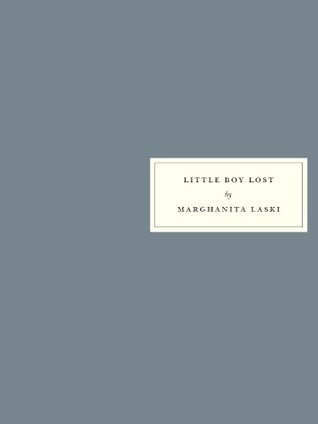
Little Boy LostIt’s about time that I reviewed another title from Persephone Books.  I haven’t found one yet that I didn’t like.  Although, I must admit, that I wasn’t sure if I would make it through this one because the beginning is so incredibly sad.

Hilary Wainwright returns to France after World War II in order to find his lost infant son.  He has only met his son once, on the day he was born, and so he has very little information to go on to track him down.  Hilary’s wife, Lisa, was living in Paris during the war and working for the resistance when the Nazis discovered her secret operations and arrested her.  Just before she is arrested, she passes off her baby to a family friend named Jean whom she hopes will be able to keep him safe.  But Jean is also arrested by the Nazis and she, too, has to relinquish the child before she is caught.  Jean’s fiancé, Pierre, is the only one who can help Hilary track down his son with the few clues that Jean left behind.

Hilary is so devastated by Lisa’s horrible and tragic death; she was the love of his life and his entire world and after the war he is not sure that he even wants to find his son.  To a lot of us this does not seem to make any sense.  Hilary’s son is a part of or an extension of his love with Lisa, but Hilary is afraid of more emotional turmoil if he fails to find his missing boy.  Hilary doesn’t want to open his heart again only to experience disappointment or hurt again.

Hilary’s search for his son leads him to an orphanage in a small town in France.  The scenes of the pathetic and abandoned children in the orphanage are heart wrenching.  When Hilary meets little Jean, the child whom they suspect is his son, Hilary is hesitant to become attached to the child for fear that he will experience another crippling emotional loss.   Hilary notices that Jean does not have any gloves and so he buys him a small pair of red gloves.  This is one of the most emotional scenes in the book because, although the gloves are too small for Jean, he insists on keeping them because he has never had such a nice gift before.

The end of the book deals with Hilary’s decision on whether or not to accept this son as his own.  For a while he even distracts himself from making a decision by entertaining a floozy he meets at his hotel.  The boy resembles Jean in a cursory way and we have to remember that there aren’t any DNA tests in the 1940’s.  Jean seems to want an obvious sign from the heavens pointing to the fact that this is his son.  It was my wish, though, that regardless of whether or not Jean was his biological son, that he would take pity on this small, abandoned boy anyway and decide it was worth opening up his heart again.

About The Author:
M LaskiEnglish journalist, radio panelist, and novelist: she also wrote literary biography, plays, and short stories.

Lanksi was to a prominent family of Jewish intellectuals: Neville Laski was her father, Moses Gaster her grandfather, and socialist thinker Harold Laski her uncle. She was educated at Lady Barn House School and St Paul’s Girls’ School in Hammersmith. After a stint in fashion, she read English at Oxford, then married publisher John Howard, and worked in journalism. She began writing once her son and daughter were born.

A well-known critic as well as a novelist, she wrote books on Jane Austen and George Eliot. Ecstasy (1962) explored intense experiences, and Everyday Ecstasy (1974) their social effects. Her distinctive voice was often heard on the radio on The Brains Trust and The Critics; and she submitted a large number of illustrative quotations to the Oxford English Dictionary.

An avowed atheist, she was also a keen supporter of the Campaign for Nuclear Disarmament. Her play, The Offshore Island, is about nuclear warfare.

6 Comments

Filed under British Literature, Classics, Persephone Books