
In order to celebrate National Poetry Month, I decided to review some of the poetry collections from Seagull Books. Thanks so much to Naveen for sending me some beautiful offerings from their catalogue. First up is an edition of Bonnefoy’s poetry translated by Beverley Bie Brahic.
My Review:
 This collection of poems begins with a series of short pieces that have some common themes, the most striking of which is a reflection on memory. The poems appear to the reader as snippets of the poet’s memory as he is trying to reflect on pieces of his life that have passed. Sometimes the images are very clear and precise. For example, the end of one poem reads:
Do you remember
Our first bedroom? Do you remember the ad
Flowered wallpaper? We wanted to strip it off
Only there was other paper underneath,
Layers of it,
And the last, on the grey plaster, newsprint,
With words from the other century
That we rolled under our wet fingers. At last
We craped the wall clean with pen knives.
You were laughing, so was I, night was falling.
But the images that flit across the poet’s memory are not always this transparent. He oftentimes struggles to grasp at a fleeting memory and it is at these times where the poetry also becomes more blurred for the reader. One of the most poignant images that he evokes to demonstrate his frustration at the ephemeral nature of memory is that of the Greek god Erebus:
Oh, memories: our Erebus,
A great shapeless sob is at the bottom of us.
Erebus is the perfect symbol for Bonnefoy’s struggle with memory as he is grasping around the dark recesses of his mind to find his past. As I noted above, the passages in which his memory is not clear come across as muddled and harder for the reader to understand. One such passage, which I read over and over, is:
She dreams
She is up on the ladder, she knocks at the
closed door.
The engines roar.
Fro the plane’s belly no one responds
And the world takes off.
She hangs there adrift between birth and death
In the calm sky,
The sky where just a few puffs of cloud
Melt into the blue, that is, God–no, the eternal.
One more aspect of these poems that I have to mention is the recurring images of the ocean, the sand and the waves. They are prominently feature in these short pieces and these images seem to have made an especially lasting impression on the poet’s memory. He remembers a relationship with a woman as they are walking on the beach; he remembers a summer’s eve when he is crumbling up newspapers to make a fire by the sea.
The next part of the collection actually features short pieces of prose. Each of these short stories, which I would argue can be considered flash fiction, revolve around the innocence of childhood. The most striking story is the one entitled “The Long Name.” The story begins with a boy wandering in the woods and he hears what he thinks is singing. He stumbles upon a little girl who is setting out things for her tea. The boy learns that the little girl is a princess and the song isn’t a song at all but her servant calling out her extremely long name. The girl, who is a princess, explains why the king gave her such a long name. These stories all have a fairytale quality to them and the poet seems to envy the innocence and simplicity of childhood. A little girl who wants to play with her toys and have tea should not be burdened by the adults in her life with such a long and cumbersome name.
The final part of the collection features a series of nineteen sonnets. I so much enjoyed reading these and I have read a few of them over and over again. This is the type of poetry collection that will sit on my coffee table and I will pick up and will reread and find something different and interesting every time. Many of the sonnets are tributes, a tombeau in the French as the note in the text tells us, to artists and writers of the past. The collection starts with a tribute to Leon Battista Alberti and also includes sonnets about Maupassant, Descartes and Poussin.
My favorite sonnet, which should be no surprise to anyone who knows about my classics background, is the one entitled “Ulysses Sails Past Ithaca.” In this poem we are given an image of Ulysses as he sail past a place he once knew as his home of Ithaca. “Remember, with the bees and olive tree,/ The faithful wife and the old dog.” But this is all gone now, just a fading memory. The poem ends with the wish that Ulysses might be able to go back to the child he once was that played in the surf. This sonnet ties together the entire collection perfectly; in its subtle nod to the poetry of Homer the poet uses the images of the fleeting nature of memory and the innocence of childhood.
This is a difficult collection of poetry to review because it is impossible to capture its brilliance in a few short paragraphs. Thanks to Seagull Books for translating and bringing to English readers this beautiful and thought-provoking collection.
About the Author:
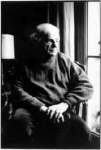
His works have been of great importance in post-war French literature, at the same time poetic and theoretical, examining the meaning of the spoken and written word. He has also published a number of translations, most notably Shakespeare and published several works on art and art history, including Miró and Giacometti
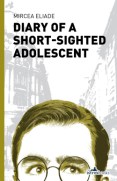 As a seventeen-year old adolescent living in the capitol of Romania in the twentieth century, Eliade faces the typical struggles of every teenage boy. Eliade records his thoughts in his diaries with the hopes that he will eventually turn his writings into a novel. When the entries in this diary begin, he is spending most of his time attending school at the lycee, hanging around with his friends and reading voraciously in his bedroom attic. He is trying to figure out what the plot of his novel will be and decides he wants to have a hero as the center character of his novel. He introduces us to his friends, especially Robert and Dinu, whom he contemplates basing the novel of his hero on.
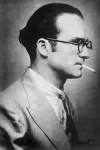 Mircea Eliade was born in 1907 in Bucharest, the son of an army officer. He lived in India from 1928-1932, after which he obtained a doctorate in philosophy with a thesis on yoga, and taught at the University of Bucharest for seven years. During the war he was a cultural attaché in London and Lisbon, and from 1945 taught at the École des haut études in Paris and several other European universities.
 This is a short yet powerful book that raises many more questions about the mental state of the main character than it answers. We are led to understand from the beginning that the narrator is living alone in the mountains in what is now an abandoned village. The only time he has interaction with other human beings is when he drives his car down the mountain to another small village. He seems to do this only when he needs food or supplies.
 Antonio Moresco did not find a publisher until late in his career, after being turned down by several editors. His output is centred on the monumental trilogy L’increato, whose three volumes are: Gli esordi (Feltrinelli 1998, republished by Mondadori in 2011 – 673 pages), Canti del caos (part 1 by Feltrinelli in 2001, part 2 by Rizzoli in 2003; republished by Mondadori in 2009 – 1072 pages), and Gli increati (Mondadori 2015).
 Even though this book is a fictional account of the process of a heart transplant I learned quite a bit of information about the entire, complex procedure. The storyline in the book takes place over a twenty-four hour period that begins with a surfing adventure. Simon and his two best friends have woken up at the crack of dawn to pursue their favorite pastime, chasing waves. I enjoyed the description of their love for this sport and how they go about finding the best waves. They are young, fearless, and don’t have a care in the world which makes the tragedy that happens to Simon all the more shocking and upsetting.
 Maylis de Kerangal is a French author. Raised in Le Havre, Maylis de Kerangal went on to study history and philosophy in Rouen and Paris. She worked at Paris-based Éditions Gallimard, then travelled in the United States, and went back to studies at the School for Advanced Studies in the Social Sciences.
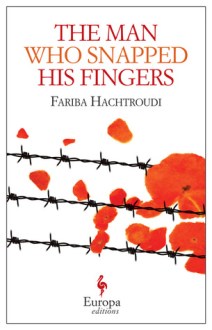 This intense story is told in alternating views of two people who survived the brutality of a fictional totalitarian regime called the Theological Republic. Although the homeland of these two characters is fictional, it is evident from clues in the text that this country is in the middle east and that both characters are refugees somewhere in Russia. The female character, Vima, was know in the republic as their most stubborn political prisoner and given the name Bait 455. Vima is arrested and repeatedly raped and tortured by her captors who are trying to get information about her husband’s political subterfuge. Vima’s love and devotion for her husband runs so deep that the only words she ever speaks during these torture sessions is a defiant, “No.” One day, without any warning, a high ranking official interrupts one of these torture sessions by snapping his fingers and Vima is rescued.
 Fariba Hachtroudi was born in 1951 in Tehran. She comes from a family of scholars and professors. Her paternal grand-father was a religious leader who supported the constitutionalists in 1906, against other religious leaders who advocated for governance by Sharia law and the absolute rule of God as a monarchic authority.


 The Book Binder's Daughter