
I received a review copy of this title from Hispabooks Publishing via Edelweiss. The book was originally written in Spanish and this English version has been translated by Samantha Schnee.
My Review:
 What would you do if the man sitting next to you on a plane flight died during landing? When this story begins, a young Dutch woman and an elderly Spanish man are sitting side by side on a plane flight from Barcelona to Holland. The kind and gentle man begins to tell the woman the story of his life and how he ended up on this plane to visit his eldest son. The Dutch woman nods off for a while and upon waking she discovers that the flight has landed and the nice Spanish gentleman has died.
My instinct in this situation would have been to immediately call for help and get the attention of the flight attendants and staff, but the unnamed female narrator acts very strangely and sits with the man until the plane has been completely emptied of passengers. Before she is discovered by the flight attendants, she takes a small wooden box that the man was holding and secretly puts it in her own bag. The box doesn’t seem to be anything of value but is a keepsake or a memento from the elderly man’s previous life.
The narrative is told in alternating voices between the Dutch woman, simply referred to as “Her,” and the elderly man also simply referred to as “Him.” Fabregas’s choice to not name her characters is part of an interesting pattern I have noticed in literature in translation, especially from European countries. Although both characters in this book have experienced loss and loneliness, the juxtaposition of the “him” versus “her” dialogue serves to highlight and bring to the forefront the profound differences between these two strangers.
The Spanish gentleman grew up in Extremadura with a large immediate family. He is in love with a woman named Mariana, but this beautiful woman whom he idolizes has chosen his brother Pedro over him. The narrator knows that he cannot stay in this town if he is to heal his wounds and make a life for himself. When the opportunity arises for him to move to Holland and work in a Philips lightbulb factory he enthusiastically embraces this fortuitous change in his life. As different obstacles are thrown in his way he always feels that his only choice is to move forward. His natural reaction to coping with tragedies and sorrows in life is to make connections with other human beings and this always pulls him out of his strenuous circumstances. When his future in-laws oppose his marriage, he reaches out to a local priest to intervene; when his beloved wife Willemien becomes sick, he reaches out to his neighbors for comfort and succor; when his wife dies and he is profoundly lonely he reaches out to old friends and his family for support.
The Dutch woman, by contrast, suffers some kind of traumatic experience in her life, the details of which are not fully revealed until later in the story. This event has had such a profound impact on her that she is stuck, she cannot move forward and is an empty shell going through the motions of her lonely life. She doesn’t have many friends and keeps her only family, a loving aunt and uncle, at a distance. Although she technically performs her job well in a government tax office, she is oftentimes scolded at work because she does not engage socially with her colleagues and is not viewed as a “team player.”
The only activity that keeps this woman going is a list of names of one-hundred people that she is searching for and interviewing one-by-one. This list is somehow connected to the tragedy she suffered early in her life and she feels that someone on this list will give her the answers she needs. The author gives us the names of several people on the list but, by contrast, she never names the narrator herself. She still simply remains “Her” all the way through to the conclusion of the book. This literary device seems appropriate for this character since she has never been able to forge a fulfilling life for herself or make deeper emotional connections to any other person. But it seemed more unsettling to me that the unnamed male narrator was never given a first name. He was more jovial, outgoing and optimistic and it would have felt more natural for someone to have called him by his name at least once in the story. At the very end he is given a surname, but we still never find out what his closest friends and family called him.
Fàbregas has written an absorbing book that explores themes of identity, human connections, art and language. This is one of those books that perfectly lends itself to a deep and interesting discussion with other bibliophiles and is deserving of multiple reads. This book has also inspired me to think more about books with unnamed narrators and perhaps write a longer essay about this topic.
What other books have you read lately that do not give a name to the main character(s)?
About the Author:
 Laia Fàbregas (Barcelona, 1973) has a degree in Fine Arts from the Universitat de Barcelona.
Between 1997 and 2010 she lived in the Netherlands, where she worked as a secretary in a bank, graphic designer in a company of industrial pumps, accounting assistant in an art festival and assistant in an art gallery. She also got the Certificate Arts and Culture management from the Erasmus University Rotterdam.
In 2003, she was working as a consultant while she enrolled at the Gerrit Rietveld art school in Amsterdam to study a new speciality of art and text. That year she regained some stories she had written in Catalan when she was nineteen, about a girl who only had nine fingers. She translated several paragraphs into Dutch, and continued writing.
In January 2008 the Dutch publishing house Anthos published Het meisje met de negen vingers. The book received praise from critics in the Netherlands and has been translated into Spanish, Catalan, French, Italian, Danish, Norwegian and Turkish.
In 2010 Landen was published, in Dutch, Spanish, Catalan and French, and in 2013 Gele Dagen came out, published in Catalan and Dutch.
Since February 2012, she teaches creative writing at the writing school Laboratori de Lletres in Barcelona. Since February 2014 she is also partner and co-director of the school with founder Laia Terrón. For more information about the author please visit her website: http://www.laia.nl/en/.
 Zeberjet, the middle-aged man who is the main character of this novel, says a few times throughout his story that he is “neither dead nor alive.” Zeberjet works in the same hotel in which he was born and he rarely ventures outside of its walls. It’s not that he hasn’t wanted to go outside, but it seems more the case that he just hasn’t been interested in the outside world. His hotel, handed down to him through generations of his maternal family, provides him all of the social outlet that he needs.
 Karma, comeuppance, what comes around goes around. There are many terms and phrases for the universal of idea of cause and affect. The Brother is a fast-paced, hard-hitting, short book that uses the plot structure of a western as an allegory for demonstrating the balance of good and evil in the world. The author himself has described the book as “a spaghetti western told in poetic prose, simultaneously paying tribute to both Clint Eastwood and Alessandro Baricco.” The plot of this book is a clever structure for the philosophical and existential ideas that the author explores. When a mysterious man, simply known as Brother, arrives in the unnamed town it is a dark and stormy day and the weather reflects the turmoil that three shady and crooked men have caused for the townspeople.
 Rein Raud is the author of four books of poetry, six novels, and several collections of short fiction. He’s also a scholar in Japanese studies and has translated several works of Japanese into Estonian. One of his short pieces appeared in Best European Fiction 2015.
 This collections defies classification as far as genre is concerned. The introduction to the book calls the writings a collection of eighty-one “brief texts” that were written throughout the course of Walser’s life. Some of the writings appear to be fictional short stories but others have a distinctly autobiographical feel to them. Walser even writes a few short dialogues and a book review. In addition, he has a wide range of topics and themes and writes about anything from nature, to fashion, to death and dying. This is a collection best absorbed a few pieces at a time so one can savor his pithy and didactic collection.
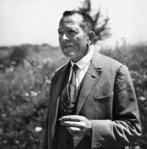 Robert Walser (1878–1956) was born into a German-speaking family in Biel, Switzerland. He left school at fourteen and led a wandering, precarious existence while writing his poems, novels, and vast numbers of the “prose pieces” that became his hallmark. In 1933 he was confined to a sanatorium, which marked the end of his writing career. Among Walser’s works available in English are Jakob von Gunten and Berlin Stories (available as NYRB Classics), The Tanners, Microscripts, The Assistant, The Robber, Masquerade and Other Stories, and Speaking to the Rose: Writings, 1912–1932.
 Máni Steinn lives on the fringes of society in 1918 in the city of Reykjavik; he has no family except for a great aunt who has taken him in, he has no friends and he is homosexual. It is very dangerous for him to be gay and if he is caught in any type of sexual act with another man he could be arrested and severely punished.



 The Book Binder's Daughter