Category Archives: Literary Fiction

Review: A Game of Hide and Seek by Elizabeth Taylor

I bought this title a few months back when the New York Review of Books had a fantastic winter sale.  Please visit their website for a full list of their amazing titles: http://www.nybooks.com/books/imprints/classics/

My Review:
A Game of Hide and SeekHarriet and Vessey have known each other for their entire lives.  When they turn eighteen there is a physical and emotional attraction between them which neither one feels comfortable or mature enough to acknowledge.  When they babysit Vessey’s younger cousins, they play hide and seek with the children so they can be together; they are so shy and naive that they don’t take advantage of this time alone while they are hiding to reveal their true feelings.

When Vessey moves away and goes to college and eventually begins his second rate acting career, Harriet settles down with a comfortable and safe man named Charles.  But for the duration of her married life she holds Charles up to her ideal image of Vessey against which fantasy Charles could never compete.  Harriet tries to make the most of her marriage by keeping a tidy home and taking care of their daughter Betsey.  But there is a feeling of loneliness and isolation that pervades Harriet’s life.

Taylor also shows us her comedic side in this otherwise serious novel through the introduction of a group of spinster ladies with whom Harriet works at a local dress shop.  They spend their days avoiding work, gossiping, primping themselves and discussing their latest male conquests.  They give Harriet who at this point is still unmarried, the worst relationship advice.

An aspect of Taylor’s writing style in this book that is worth mentioning is her transitions both within chapters and between chapters; time shifts very abruptly in the novel which is fitting for the topics of love, marriage and how our opinions of these things change, sometimes rather drastically, as we grow older.  When Vessey reappears in Harriet’s life she is middle-aged and well-settled in her marriage.  Will she choose a life with Vessey that she has idealized for so many years or will she stay with her husband and daughter and keep her family together.

A GAME OF HIDE AND SEEK is a wonderful novel to begin with if you want to sample Elizabeth Taylor’s work.  In June I will be reading and reviewing her novel A View of the Harbour, which is another reissue from The New York Review of Books.

About The Author:
Elizabeth TaylorElizabeth Taylor (née Coles) was a popular English novelist and short story writer. Elizabeth Coles was born in Reading, Berkshire in 1912. She was educated at The Abbey School, Reading, and worked as a governess, as a tutor and as a librarian.

In 1936, she married John Micael, a businessman. She lived in Penn, Buckinghamshire, for almost all her married life.

Her first novel, At Mrs. Lippincote’s, was published in 1945 and was followed by eleven more. Her short stories were published in various magazines and collected in four volumes. She also wrote a children’s book.

Taylor’s work is mainly concerned with the nuances of “everyday” life and situations, which she writes about with dexterity. Her shrewd but affectionate portrayals of middle class and upper middle class English life won her an audience of discriminating readers, as well as loyal friends in the world of letters.

She was a friend of the novelist Ivy Compton-Burnett and of the novelist and critic Robert Liddell.

Elizabeth Taylor died at age 63 of cancer.


7 Comments

Filed under Classics, Literary Fiction, New York Review of Books

Review: Love Maps by Eliza Factor

I received an advanced review copy of this book from Akashic books through Edelweiss.

My Review:
Love MapsSarah is an artist living in New York City in the 1980’s.  Even though she gets her own show at a New York gallery, she is always living in the shadow of her older sister, Maya, who is not only a famous singer but has also made a name for herself as a real estate tycoon.

Maya is self-centered and she is not a likeable character from the beginning of the story.  She seems focused on outward appearances and receiving constant attention and applause. Her disingenuous nature comes through even when she is trying to take an interest in Sarah’s life and career.  Sarah follows Maya around the world organizing the details for Maya’s singing engagements.

Maya is all set to go to Europe for an extended tour, but Sarah tells Maya that she wants to stay in Manhattan and finish a series of paintings which she has been hard at work on.  But when Sarah decides, for once, to put her own career first, Maya has a violent and outrageous reaction to Sarah’s decision.  This event foreshadows what Maya will do in the future to break up Sarah’s happy marriage with Philip.

Sarah meets Philip, of all places, at a funeral of a mutual friend.  It takes some time for them to get together in the book because they are both unsure of themselves and lacking in confidence.  But once they are together they have a loving and supportive marriage and the only thing that is a source of discomfort between them is the presence of Sarah’s overbearing sister, Maya.  Philip is not impressed with her opulent lifestyle and dramatic performances and mannerisms.

Philip is one of the few people, if not the only person, whom Maya is not able to impress and put under her spell.  Maya takes this as a challenge and plays a very cruel joke on Philip that ends in tragedy and alters Philip and Sarah’s happy life forever.  Philip is not able to mentally recover and he declares, in defeat, that Maya has won and he leaves New York, Sarah, his job and the life they have made together.  I was upset throughout the novel that Sarah was so passive when it comes to making important decisions; but growing up in the shadow of her sister conditioned her to living this way.  Can Sarah ever escape the grip of her overbearing sibling?

When the book opens, Sarah has a seven-year-old son named Max who has never met his father.  We discover that Sarah never told Philip that he had a son.  Philip has sent Sarah a letter stating that he will be on her doorstep the next day; we are left in suspense until the end of the book wondering if father and son and husband and wife will ever be united.

LOVE MAPS is a quick and absorbing read that deals with love, relationships, and art and I highly recommend this brief yet intense novel.  I have to admit that when I flipped to the last page I was disappointed that the story had ended.

About The Author:
ElizaFactor-131x200ELIZA FACTOR is a writer and the founder of Extreme Kids & Crew. She lives in Brooklyn, New York, with her husband and three children. Her debut novel, The Mercury Fountain, was published in 2012. Love Maps is her latest novel.

Leave a comment

Filed under Literary Fiction

Review: Dancing in the Dark-My Struggle Book 4 by Karl Ove Knausgaard

I received an advanced review copy of this book from Archipelago Books through NetGalley. It was published in the original Norwegian in 2009 and has been translated for this English edition by Don Bartlet.  Knausgaard has published his autobiographical novel in six parts and this is the fourth installment that has been translated into English.  You do not have to read the other books in the series first as this book stands on its own.  But after you do read Book 4 you will be clamoring to pick up the first three.

My Review:
My Struggle 4Music. Sex. Drinking.  These are the three main topics on eighteen-year old Karl Ove’s mind at any given time.  He has just graduated from high school, or gymnas as it is called in Norway, and has accepted a temporary teaching position at a school in a remote fishing village in the northern part of Norway.  Karl Ove wants to get as far away from his hometown as possible and he also wants the opportunity to write since this is what he forsees as his future career.

The first third of the book deals with Karl Ove’s settling into his new home in Norway and trying to teach a variety of subjects to middle school students.  He feels a certain sense of freedom while he is living by himself and earning his own way for the first time in his life.  A lot of music is mentioned in the book as it is one of his main areas of interest.  Karl Ove writes music reviews for a local paper and begins to appear on a radio program that discusses music. If you are nostalgic for pop and rock music from the mid to late 1980’s you will appreciate the discussion of Karl Ove’s collection of albums.

A large part of the book is a flashback to Karl Ove’s last two years in high school where he slowly begins to distance himself from life as a child, an existence that is constantly reliant on his parents.  A large part of his growing up has to do with the separation of his parent’s and the dissolution of their marriage.  Karl Ove’s father is a distant, cold and harsh man who beat and scared his children when they were younger.  Now that he father has moved out of their home, Karl Ove attempts to get beyond the issues he had with his father in the past and become his own independent man.

One incident in the book, in particular, that demonstrate Karl Ove’s struggles as he is coming of age is his attempt to keep in touch with his father.  One day when he has gotten out of school and has nothing to do he pays a surprise visit to his father.  When he arrives, his father is cold and distant and scolds Karl Ove for not calling first.  As a sixteen-year-old high school student, Karl Ove still craves a relationship with his father, despite their dysfunctional past.  Reading about his father’s reject of him in such a heartless way is distressing but this incident does not deter Karl Ove from still trying to forge a relationship with this undeserving and cruel man.

One of the things that surprised me is the amount of autonomy he has throughout the book.  His mother works full-time as a teaching nurse so he comes and goes as he pleases.  He only visits his father, who has developed a rather severe drinking problem and has gotten remarried, once in a while. Karl Ove starts to smoke and drink in excess, to the point where he blacks out and loses large chunks of time.  His mother finally catches on to how serious his problem has become and she throws him out of their home.  This has the opposite effect she intended and instead causes him to go on a drinking and hash binge for days on end.   Throughout the book I worried for him, I was concerned that no one keeps a better eye on this sixteen-year-old who is really still a boy and I felt his constant, underlying sadness and loneliness

Karl Ove also wants, more than anything, to be in some sort of a relationship with a girl but the situations involving his romantic life never quite work out.  He is desperately in love with a girl named Hanne who pays Karl Ove quite a bit of attention to the point of leading him on, but she never actually intends to start a relationship with him.  It seems that all of his friends have girlfriends, or are at least having sex, and Karl Ove is very self-conscious of the fact the he is still a virgin.  Time and again in the book he has an opportunity to be with a girl, but he has a severe case of premature ejaculation.  It is tragic that he is too young and immature to understand that patience and the right woman would solve all of his problems.

The style of the book is very unusual and does not read like a traditional novel.  The experience of feels more like perusing the very detailed diary of a teenage boy; there are minute descriptions of what he eats, where he goes, and his daily activities. I did not find this boring or mundane, but instead it helped to vividly set the scene of his life for me.  The only completely developed character in the novel is Karl Ove himself.  He has interactions with countless people but what he describes is his own reactions to them and their effect on him; we never get to know other characters that show up in his life in any depth.

What I enjoyed, and even admired the most about this autobiographical novel is that the author’s experiences are raw, unfiltered and completely honest.  Knausgaard could have censored some of his feelings and most embarrassing moments.  I think that by laying it all out there for the world to see is brave and makes MY STRUGGLE BOOK 4 an absorbing and emotional read.

About The Author:
Karl OveKarl Ove Knausgaard was nominated to the 2004 Nordic Council’s Literature Prize & awarded the 2004 Norwegian Critics’ Prize. He made his literary debut in 1998 with the widely acclaimed novel OUT OF THE WORLD, which was a great critical and commercial success and won him, as the first debut novel ever, The Norwegian Critics’ Prize. He has since received several literary prizes for his books.

2 Comments

Filed under Literary Fiction, Literature in Translation

Review: Ending Up by Kingsley Amis

I received an advanced review copy from The New York Review of books. Please visit their website for the full collection of their classics series: http://www.nybooks.com/books/imprints/classics/.

My Review:
Ending UpIn this comedy about old age, Amis provides us with a geriatric cast of characters living under the same roof who are basically trying to stay as comfortable and happy as possible before they die.  There are five septuagenarians in total, three men and two women.  Although they want nothing put peace in their final years, they manage to annoy each other and bicker to the point where peace is the last thing that any one of them is going find.

Adela is the one who holds the whole operation together by paying the bills, doing all of the cooking and shopping and generally trying to make peace among her roommates.  She is not the most attractive woman and she has never been married but she is the caretaker to everyone in the house to the point that she ignores her own health issues.

Adela’s brother Bernand, the most cantankerous one of the bunch, is also the most amusing.  He has a bad leg which seems to be better or worse, depending on whether or not he is asked to do physical labor.  He provokes the others into arguments during conversation for his own amusement and he is very fond of attempting practical jokes.  His favorite weapons are stink bombs, feces, a squirt gun and urine.

A happy drunk named Shorty is also one of the residents of the cottage.  Shorty loves alcohol and he thinks he is fooling everyone about his habit by hiding bottles all over the house.  He is also the servant of the group and is always cleaning up and serving tea.  Shorty and Bernard are actually ex-lovers, which fact produces a few bawdy jokes throughout the book.

The other woman in the group is a flighty woman named Marigold.  Marigold loves to write letters, spend time with her grandchildren and do everything she can to avoid Bernard.  When Marigold starts losing her memory, she is desperate to keep this secret from Bernard whom she is sure will use this information against her.

The last member of the household is George, a former brother-in-law of Bernard.  George is a kindly old professor who has had a stroke and cannot get around on his own.  The group has taken him in because he has no where else to go and Bernard is not happy about this situation.

ENDING UP is a funny novel about the inevitability of growing old and dealing with the vast array of issues that come along with this mortal condition.  It is ironic and funny that each of these septuagenarians are responsible for his or her own demise at the end of the book.  Thanks again to the New York Review of Books for reviving another great classics.

About The Author:
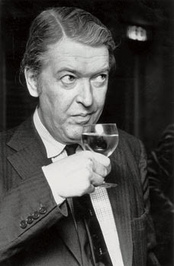
AmisSir Kingsley William Amis, CBE was an English novelist, poet, critic, and teacher. He wrote more than twenty novels, three collections of poetry, short stories, radio and television scripts, and books of social and literary criticism. He fathered the English novelist Martin Amis.

Kingsley Amis was born in Clapham, Wandsworth, Couty of London (now South London), England, the son of William Robert Amis, a mustard manufacturer’s clerk. He began his education at the City of London School, and went up to St. John’s College, Oxford April 1941 to read English; it was there that he met Philip Larkin, with whom he formed the most important friendship of his life. After only a year, he was called up for Army service in July 1942. After serving in the Royal Corps of Signals in the Second World War, Amis returned to Oxford in October 1945 to complete his degree. Although he worked hard and got a first in English in 1947, he had by then decided to give much of his time to writing.

7 Comments

Filed under Classics, Humor, Literary Fiction, New York Review of Books

Review: The Physics of Sorrow by Georgi Gospodinov

I received a review copy of this book from Open Letter Press through Edelweiss. This book was originally written and published in Bulgarian in 2011.  It has been translated into English for this edition by Angel Rodel who won a PEN Translation Fund Grant in 2010 for Georgi Tenev’s short story collection. She is one of the most prolific translators of Bulgarian literature working today and received an NEA Fellowship for her translation of Gospodinov’s The Physics of Sorrow.

My Review:
Physics of SorrowIn The Physics of Sorrow  the story of the narrator, Georgi, and his family are told through the lens of the ancient Greek myth of the Minotaur, the half-man, half-bull creature that inhabits the dark tunnels of a Cretan labyrinth.  The story itself feels like a labyrinthine journey which the author leads us through; we feel like we are groping around in the dark, never sure towards which style of writing the author will lead us next.  Sometimes we encounter a story about the narrator’s grandfather, at other times we are launched into a tale about the narrator himself.  Short stories, anecdotes, memories, pictures and even lists are presented as part of the narrative.

Gospodinov uses the story of the Minotaur from Greek mythology to highlight three themes in his book: abandonment, isolation and misunderstanding.  Jorge Luis Borges, in his short story “The House of Asterion,” provides us with the Minotaur’s perspective of his dwelling and his pathetic hope of eventual redemption.  The Physics of Sorrow expounds on Borges’ characterization of the Minotaur as a creature who is worthy of sympathy and whose half-human, half-bull form are certainly not his fault.  At some point in his young life Asterion, the Minotaur, must have been abandoned by his mother and placed in this dark, isolated and lonely labyrinth.

Georgi grows up in Socialist Bulgaria, which itself is an isolated and lonely place.  The author points out that before 1989, 80% of Bulgarians had not left their native country.  Georgi’s parents have good jobs, but due to the strict controls by the government on housing, his family lives in a cramped basement apartment, their own type of dark labyrinth.  Georgi tells us that because of his enclosed childhood dwelling he is afflicted with the “Minotaur Syndrome.”  Left alone from the age of six in this basement apartment he must fend for and amuse himself until the adults come home at the end of a long day.

Abandonment and isolation are situations which Georgi’s grandfather struggles with first in the story.  At the age of three he is almost left behind by his mother at a mill and not until they are half-way home does one of his seven sisters realizes that he is missing.   I held my breath at the vivid description of the toddler’s abandonment and thought “hurry up” as his sister raced back to gather the distraught and afraid little boy.  The grandfather,  who later fights in World War II,  also has one of the toughest choices to make in the novel: which of his two sons should be abandon because he cannot live with and raise both of them.

Georgi has an issues with intimacy and he can’t seem to truly get close to a any woman. His fear of intimacy is part of the reason that,  shortly after his daughter is born, he falls into a deep melancholy.  At his doctor’s advice he travels around aimlessly and Europe itself becomes his labyrinth where he trudges from city to city and hotel to hotel trying to shake off his extreme gloominess.  He abandons his family to try and save his sanity but he ends up isolating himself from the world even further.  After he leaves his family, Georgi moves back into his boyhood home in the basement and now, living in this dark labyrinth all alone, the minotaurizing of himself has become complete.  At the end of the novel he tries to use the language of quantum physics to describe, sort out and even deal with his sorrow.

The greatest lesson we can take from The Physics of Sorrow is one of empathy and compassion.  At one point in the book the Minotaur is put on trial and given his day in court to defend himself against the charge of being a violent monster.  He is half-man and half-human and therefore never able to fully fit into to any society, man or animal.  We must also show compassion for characters like Georgi who, growing up under a totalitarian regime,  lost some of the most basic freedoms we take for granted in the West. This book shed a whole new perspective for me on the story of the Minotaur and the country of Bulgaria which, to be quite honest, I have never really given a second thought.

About The Author:
Georgi G.Georgi Gospodinov is the author of Lapidarium (a collection of poems, 1992) – National literary prize for debut book; The cherry tree of a nation (a collection of poems, 1996) – Annual prize of the Association of the Bulgarian writers for book of the year; Natural Novel (a novel, 1999) – Special prize in the national contest “Razvitie” for modern Bulgarian novel; And Other Stories (a collection of short stories, 2001). He is the co-author of: Bulgarian Crestomathy (1995); Bulgarian Anthology (1998). He works and lives in Sofia.  Follow this link to read an interview with Godpodinov about The Physics of Sorrow: http://bombmagazine.org/article/453046/georgi-gospodinov.

8 Comments

Filed under Literary Fiction, Literature in Translation