Category Archives: Historical Fiction

Review: Georg Trakl Poems

My Review:
G Trakl PoemsI loved the first novel I read from Seagull Books so I decided to give some of their poetry a try.  I was not disappointed; and, in fact, this small but powerful little book captivated my attention.  I had intended to read a few poems a day over the course of several weeks.  But I finished the collection in a couple of sittings because once I started reading the poems I could not put the book down.

After reading this collection of Trakl poems I was not surprised to discover that he had a very brief and tragic life.  His poems are filled with the language of decay, dying, sunset, twilight, birds of carrion and shadows.  But I got the feeling that despite his internal struggles, Trakl desperately wanted to fight his way out of the abyss and find some meaning, some bright spot, some redemption in what was otherwise a depressing existence.

A common theme in this collection of poems is nature and the natural decay that every living thing experiences.  But mixed within this decay there is also a natural, cyclical process of death and rebirth.  In the opening poem a flock of ravens sense that a meal is near.  They fight over their meal and once sated they fly away, almost gracefully “like a funeral cortege/Into winds tingling with ecstasy.”  Dinner for ravens means rot and decay is present but it is also nourishment and continues their lifespan; it is the fuel that allows them to make that flight at the end of the poem.

One of my favorite poems in the collection “In Autumn” perfectly describes Trakl’s struggle against death and decay.  Although fall is the season where everything starts to wither and die, the poet captures the beauty of this time of the year.  He describes sunflowers that “blaze along the fence” and women who labour “singing in the fields.”  And although he mentions death, the poem ends on a high note:

The dead houses have been opened wide
And painted beautiful with sunshine.

Scenes that capture the essence of autumn and winter abound in this collection.  These are my favorite seasons in New England and may be why these poems resonated so much with me.

Trakl also captures the calm of twilight and evening, the declining of the day,  in several of these poems.  In the poem “Decay,” he manages to bring together decay, autumn and the evening into one short and descriptive poem.  He asks us to imagine him following the birds “in their glorious flight” as they are “disappearing into autumn’s clear breadths.”  And as he wanders “through the twilight-filled garden” Trakl imagines the birds taking flight and he has dreams that follow them along their paths into the sky and onto “brighter destinies.”  Once again, we feel him fighting against his melancholy and wanting to take flight from it like those birds he so admires.

Finally, I have to mention the artwork that Seagull books chose to adorn the cover of this beautiful collection.  The bright red is striking against the backdrop of a scene of nature which is outlined in black.  The choice of a crow on the cover perfectly captures the themes of nature and decay contained within the volume.  Seagull has another volume of Trakl poems forthcoming which I am very eager to get my hands on.

About the Author and Translator:
G TraklGeorg Trakl was born in Salzburg, Austria. As a teenager he gravitated towards poetry, incest and drug addiction and published his first work by 1908, the year he went to Vienna to attend pharmacy school and became part of that city’s fin-de-siècle cultural life. He enjoyed early success and published his first book in 1913. A year later, however, he died of a cocaine overdose due to battle fatigue and depression from the wartime delay of his second book.

James Reidel is poet, translator, editor and biographer. In addition to the works of Georg Trakl, he has translated novels by Franz Werfel and poetry by Thomas Bernhard, among others. He is the biographer of poet Weldon Kees and author of two volumes of poetry.

14 Comments

Filed under Classics, German Literature, Poetry, Uncategorized, World War I

Review: The Life and Loves of Lena Gaunt by Tracy Farr

I received an advanced review copy of this title from Gallic Books through NetGalley.

My Review:
Lena GauntWhen we first meet Lena Gaunt, she is a lonely octogenarian who has been invited to play her theremin at a music festival near her home in Perth, Australia.  Lena has had a long and interesting life and her most notable accomplishment has been as an innovative musician.  After her performance on her theremin, a odd looking electric instrument that one plays by manipulating one’s hands in the air without touching it, she relaxes in her trailer by smoking some heroin.  At first this seems funny that a woman her age is engaging in such extracurricular activities; but as we learn more about Lena’s life, we come to understand that her dependence on mind altering drugs helps numb the pain of the  devastating losses she has experienced.

Lena is actually born in Singapore in 1910 where her father is a successful and wealthy businessman.  When Lena is only four-years-old she is shipped off to Australia to attend a boarding school.  This is the first experience of lost love that Lena experiences.  She is alone at this school, far away from any family and her only comfort is her music.  Her mother’s brother, Uncle Valentine, drops in on her every once in a while and it is Uncle Val that eventually introduces her to the cello.  Music becomes, for Lena, an escape, a comfort; it soothes her and gives her something on which to focus.

When Lena is a young adult she finally settles in Sydney among a group of artists and their patrons.  It is during this period where she is introduced to a professor who has invented the theremin and her expert playing and manipulation of this innovate instrument are what launches her into the spotlight.  It is also during this time that Lena meets the love of her life, Beatrix, who is a talented painter and artist in her own right.

Lena has a full life during which she is showered with accolades and acknowledgement for her musical talent.  But despite her success,  a feeling of loss and loneliness pervade her life.  She moves around the world, from Paris to London to New York City, but in the end she finds her way back to Perth and to the beach and ocean which she loves so much.

This seems, at first, like a quiet and slow book but about half way through it grabs you and sneaks up on you until you can’t put it down because you so desparately want to know what happens to Lena and those she loves.  I will admit that I had to wipe a tear or two from my eyes after finishing her story.

Gallic Books has brought us another brilliant, character centered story that I highly recommend.  They were one of my favorite publishers last year and their winning streak continues with me.  Kudos to Tracy Farr for a successful first book that is being published not only in her native Australia, but in England and the United States as well.

About the Author:
Tracy FarrTracy Farr is an Australian novelist, short story writer, and former research scientist. Since 1996 she’s lived in Wellington, New Zealand

Tracy’s debut novel The Life and Loves of Lena Gaunt is published in Australia and New Zealand by Fremantle Press (2013), and in the UK by Aardvark Bureau (2016) for international release (excl. Aus/NZ).


4 Comments

Filed under Historical Fiction, Literary Fiction

Review: Colonel Fitzwilliam and The Countess of Sainte Toulours

I received an advanced review copy of this title from the author.

My Review:
Colonel Fitzwilliam and the Countess of Sainte Toulours - Stanley Michael HurdHistorical fiction, mystery, espionage and romance are all part of Stanley Hurd’s new novel that centers around the character of Colonel Fitzwilliam.  Hurd takes Austen’s beloved character from Pride and Prejudice and creates a story just for the Colonel.  When the story opens Fitzwilliam is working in the War Department trying to figure out Napoleon’s next move.  A peace has been declared and French ports are starting to open back up to British trade, but no one in the British government trusts Boney to keep his word.  So the government decides to send Fitzwilliam undercover as a spy to see whether or not Napoleon is sincere about peace or if he is using this time to build more ships and gear up for war.

Before he is shipped off to France for his mission, Fitzwilliam is invited to his cousin Darcy’s house for a social dinner.  At this gathering he meets a lovely young woman named Emily for whom he instantly develops romantic feelings.  Love and romance spring up very quickly between Fitzwilliam and Emily and just as they are getting to know each other Fitzwilliam has to go off on his spy mission in France.  One of the best aspects of the writing of this book are the heartfelt letters that Fitzwilliam sends to Emily.  Since their acquaintance is new he doesn’t want to be overbearing or inappropriate towards her; his letters contain just the perfect amount of amorous sentiments and a description of his time spent spying on the French.

While he is in France, Fitzwilliam meets up with his spying partner, a feisty and charismatic man named Esparaza.  The situation gets especially interesting when they rescue an upper class French woman who claims she is a Countess.  They bring the Countess back to England where she reveals to them that the French have captured her mother and are holding her ransom until the Countess provides them intelligence about the English war plans.  Fitzwilliam and Esparaza have quite a mission on their hands at this point; they need to somehow rescue the Countess’ mother from a French jail and keep her safe from French spies watching her in England.

The entire novel comes to a rather exciting and unexpected conclusion.  A duel, a stint in a French prison and a rescue all play a part in Fitzwilliam’s adventure.  I like the fact that Hurd is not trying to change or rewrite the Colonel’s story as it is handed down to us by Austen.  He gives us a truly unique and exciting story that is in line with Austen’s original character.

About The Author:
HurdStan Hurd is a Ph.D. neurochemist who currently occupies himself writing, teaching fencing and Karate, and polishing samurai sword blades. He was introduced to Jane Austen’s works late in life, but became immediately captivated by the unlabored beauty of her prose. Having read one of the many adaptations written to extend the story of “Pride and Prejudice”, while he was delighted to be back in that world, he found the exclusively female perspective of the author was at times intrusive; since he could not let himself complain if he did not attempt it himself, he set out to write “Darcy’s Tale”.

Many of his friends are amazed that he should be writing a Regency romance; he takes a particular delight in that fact.


Giveaway:
The author is generously giving away two e-book copies of his novel.  This giveaway is open internationally as long as you can accept a Mobi version of the book for Kindle.  Just leave a comment letting me know you want to win.  I will pick a winner on Friday.

6 Comments

Filed under Historical Fiction

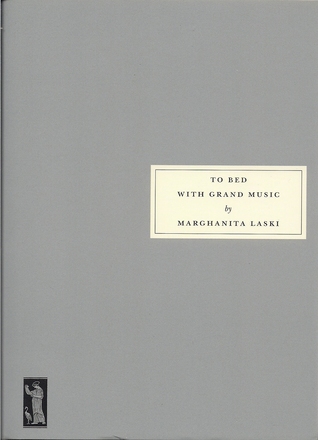
Review: To Bed with Grand Music by Marghanita Laski

I am so delighted that it is finally fall and the temperatures are getting cooler and the NFL season has begun here in the U.S.  I am a huge New York Giants fan and I am hoping for a stellar year.  Speaking of sports, this is another interesting Persephone title, the plot of which involves a woman using sex as a game while her husband is away at war.

My Review:
To BedI thought that the first scene in this book was quite shocking, but as it turns out the subject matter of the entire book is rather bold.  Deborah is in bed with her husband, Graham, who is about to leave for the middle east where he will be stationed during World War II.  Graham informs her that there is no way he can be expected to be faithful to her for the duration of the war.  Graham also gives Deborah permission to have a dalliance of her own since he will be away for so long.  I couldn’t decide what was more shocking: his declaration of intended unfaithfulness or his suggestion that his wife have an affair as well.

Deborah is the type of woman who needs a man to complete her identity.  When she is left alone with her three-year-old son and her housekeeper she thinks she will go crazy from the boredom and the monotony.  Deborah’s mother suggests that she get a job to help pass the time until the war is over.  Deborah eventually finds a job in London as a clerk and it is also in London that she has her first indiscretion with a man.  The first one night stand disgusts her and she runs off in shame, but she quickly changes her mind and her attitude towards having extramarital affairs.

Deborah eventually comes to the conclusion that it is acceptable to have lovers while her husband is gone so that she isn’t lonely.  The first prolonged affair that she has is with an officer named Joe who lavishes attention on Deborah and even gets along well with her son.  When Joe is sent to the frontlines Deborah takes on yet another lover.

The rest of the novel is an account of Deborah’s string of lovers.  Some of the book is very funny, especially when she finds ridiculous reasons to dump one man and move on to the next.  One of her lovers gets along very well with Deborah’s mother and Deborah is extremely irked by this.  So she casts him off and moves on to the next soldier.  Many of Deborah’s lovers provide her with lavish gifts, jewelry, expense differs and clothes.  Deborah is not a sympathetic characters since she is taking advantage of the situation of war to have a series of affairs which are all to her emotional and material benefit.

One part of the book that I found particularly sad is the fact that Deborah cannot bring herself to move back home and take care of her son.  The little boy craves his mother’s attention and the scenes in which she leaves him to go off to London with one of her many lovers is pathetic.  The boy becomes more and more attached to his nanny and we wonder whether or not his mother’s abandonment will have a lasting effect on his life.

This is a very interesting book to compare to Laski’s other World War II title, Little Boy Lost.  Both books bring up a very different side of the war that are somewhat controversial.  And children do not fair well in the lives of adults in either book.  If I found the subject matter of this book bold then I wonder what the reaction to it was in 1946 when it was originally published.

About The Author:
M LaskiEnglish journalist, radio panelist, and novelist: she also wrote literary biography, plays, and short stories.

Lanksi was to a prominent family of Jewish intellectuals: Neville Laski was her father, Moses Gaster her grandfather, and socialist thinker Harold Laski her uncle. She was educated at Lady Barn House School and St Paul’s Girls’ School in Hammersmith. After a stint in fashion, she read English at Oxford, then married publisher John Howard, and worked in journalism. She began writing once her son and daughter were born.

A well-known critic as well as a novelist, she wrote books on Jane Austen and George Eliot. Ecstasy (1962) explored intense experiences, and Everyday Ecstasy (1974) their social effects. Her distinctive voice was often heard on the radio on The Brains Trust and The Critics; and she submitted a large number of illustrative quotations to the Oxford English Dictionary.

An avowed atheist, she was also a keen supporter of the Campaign for Nuclear Disarmament. Her play, The Offshore Island, is about nuclear warfare.


6 Comments

Filed under British Literature, Classics, Historical Fiction, Persephone Books

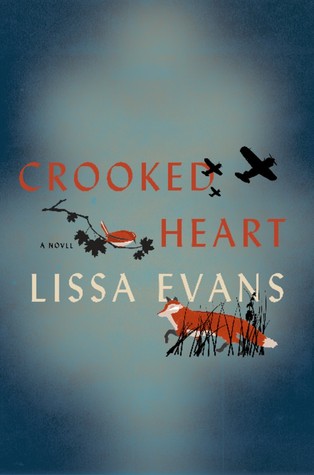
Review: Crooked Heart by Lissa Evans

I received an advanced review copy of this novel from the publisher through TLC Book Tours.

My Review:
Crooked HeartThis is the heartwarming tale of two lonely people that find each other amidst the turmoil of World War II in London.  Noel is an orphan living with his godmother when the novel opens and, although she is a tough old woman and a former suffragette, dementia is taking its toll on her health.  Due to her increasing confusion, she walks out of her home at night and dies in a sand pit.  Noel is then left with some of his godmother’s distant relatives who really don’t care to have the ten-year-old boy around.

When children are evacuated from London, Noel is placed with a woman named Vee who has an interesting and sad story of her own.  Vee got pregnant when she was seventeen, only to be abandoned by her lover.  Vee has raised her son as a single parent, not an easy thing to do in 1940’s London, and she also cares for her mute mother.  Vee is always trying some small scan to bring in money and put food on the table for her son and mother.  When she hears that she will be given a stipend for taking in Noel as an evacuee, she decides that any small inconvenience is worth the extra income.

The strength of this book lies in the development of the relationship between Vee and Noel.  Noel has pretty much been abandoned and is alone in the world.  At the same time, Vee”s mother remarries and her son Donald runs away because a scam of his own making has gone awry.  Vee has spent the better part of her life taking care of her mother and son, only to be left behind by both of them without so much as a thank you.

But Noel proves to be great company for Vee and together they run some minor scams to have a decent income.  When Noel disappears overnight, Vee misses him dearly and does everything she can to find him.  It is evident that this child has grown on her and she wants him in her life permanently.  The plot really pulls at the heartstrings as Noel realizes that there is suddenly a person in his life that cares about him and he has the potential for a true parent and a lasting home.

CROOKED HEART is a novel with a serious backdrop of World War II but the author manages to make the story heartwarming and funny.  For those who love World War II historical fiction, this book is a must read.


About The Author:
L EvansAfter a brief career in medicine, and an even briefer one in stand-up, Lissa Evans became a comedy producer, first in radio and then in television. She co-created Room 101 with Nick Hancock, produced Father Ted, and co-produced and directed The Kumars at Number 42. Her first novel, Spencer’s List, was published in 2002. Lissa Evans lives in north London.

2 Comments

Filed under Historical Fiction